


Window and door contractor lead generation works best when you approach property managers with a specific building need, such as recurring seal failures, an upcoming refurbishment, or a planned replacement programme. A property company is only a starting point; the useful prospect is a manager who can connect an opening problem to its maintenance plan, owner approval and site access.
Build your list around the properties and work your team can actually serve. Separate reactive repairs from measured replacement projects, then ask who controls specifications and resident access before proposing a visit. This B2B prospecting workflow helps you turn company research into a practical next step instead of treating every search result as a buyer.
Key takeaways
- Target property managers with a visible portfolio of buildings where window or door work can be planned across multiple units.
- Qualify opening type, repair history, access rules, specification requirements and the route to owner approval before pricing a job.
- Ask whether facilities, asset management or a site manager owns the maintenance issue, then write to that person about one relevant next step.
- Separate a measured replacement programme from emergency glazing or lock work so the buyer can route the request correctly.
Which property buyers need an openings contractor?
Section titled: Which property buyers need an openings contractor?Start with the person responsible for maintaining occupied buildings, not a broad list of construction firms. Property managers can surface repeat faults and coordinate access, while the owner or asset manager may approve a larger specification or replacement budget.
- Residential property managers: Look for managers responsible for apartment blocks or managed housing where similar windows, entrance doors or balcony doors recur across a portfolio. Repeated maintenance requests can justify reviewing repair records and grouping suitable work, but confirm ownership and lease responsibilities before suggesting a common replacement scope.
- Facilities teams in commercial buildings: Facilities leads can identify draughts, failed seals, difficult closers, damaged frames and access restrictions. They are useful first contacts when the building remains occupied during work, though a landlord or asset manager may still approve the specification and contractor appointment.
- Managing agents for refurbishment projects: A managing agent or project coordinator may assemble quotes for a planned common-area upgrade. Approach when the scope includes defined openings, survey access and a decision timetable, rather than assuming every refurbishment needs new windows or doors.
A building that needs commercial roof maintenance may share a refurbishment timetable, but openings need their own survey, specification and access plan.
Qualify each building before promising a replacement
Section titled: Qualify each building before promising a replacementA property manager is worth pursuing when the building, scope and approval path match the work your crew can deliver. A directory record cannot tell you whether the frames are repairable, which door rating is required or whether residents can provide access.
- Opening and frame condition: Ask whether the issue is a failed sealed unit, worn hinges, a damaged frame, water ingress, draughts or a door that no longer closes properly. Repair may be the right scope for one opening while repeated failures across a block call for a measured survey.
- Material and performance specification: Find out whether the buyer has a preferred frame material, glazing build-up, acoustic target, security hardware or colour requirement. Do not promise a thermal or noise outcome from a brief description; the survey and written specification should define what the proposed assembly can provide.
- Fire, escape and security constraints: For shared entrances or protected escape routes, identify the existing closer, latch, access control and any required certification or product documentation. Confirm who owns those requirements before changing a door set or hardware.
- Access and occupied-building plan: Clarify which flats or offices need entry, how residents are notified, whether a caretaker holds keys and when noisy work is allowed. Check lift, loading-bay and waste-removal arrangements because frames and glazed units affect delivery and installation logistics.
- Decision owner and project stage: Separate the person reporting faults from the person who approves expenditure. Ask whether the manager is collecting options, has a survey brief, or is preparing a tender, and what information a supplier must submit to be considered.
Use a practical cold-email structure to ask for the missing detail without implying that a public company profile proves a building needs work.
What the demo records represent
The walkthrough uses the fictional operator London Window installation service Services, three generic property-management company records, the fictional contacts Jordan Morgan and Taylor Reed, and invented inbox replies. These seeded records are examples for describing the workflow; they are not Anomalead customers, confirmed prospects, completed jobs or real campaign results.
Window and door contractor lead generation begins with building fit
Section titled: Window and door contractor lead generation begins with building fitSearch for property managers and managing agents inside a service area your team can reach for surveys, deliveries and installation. Use company results to create a research queue, then verify portfolio type and building responsibilities before deciding that any account belongs in an openings campaign.
Prioritize buildings where a manager can explain the fault pattern, the owner route and the maintenance window. A single broken pane may belong with an emergency glazier; repeated frame, seal or entrance-door issues across managed properties are a better fit for planned contractor outreach.
Set search filters for the territory you can survey
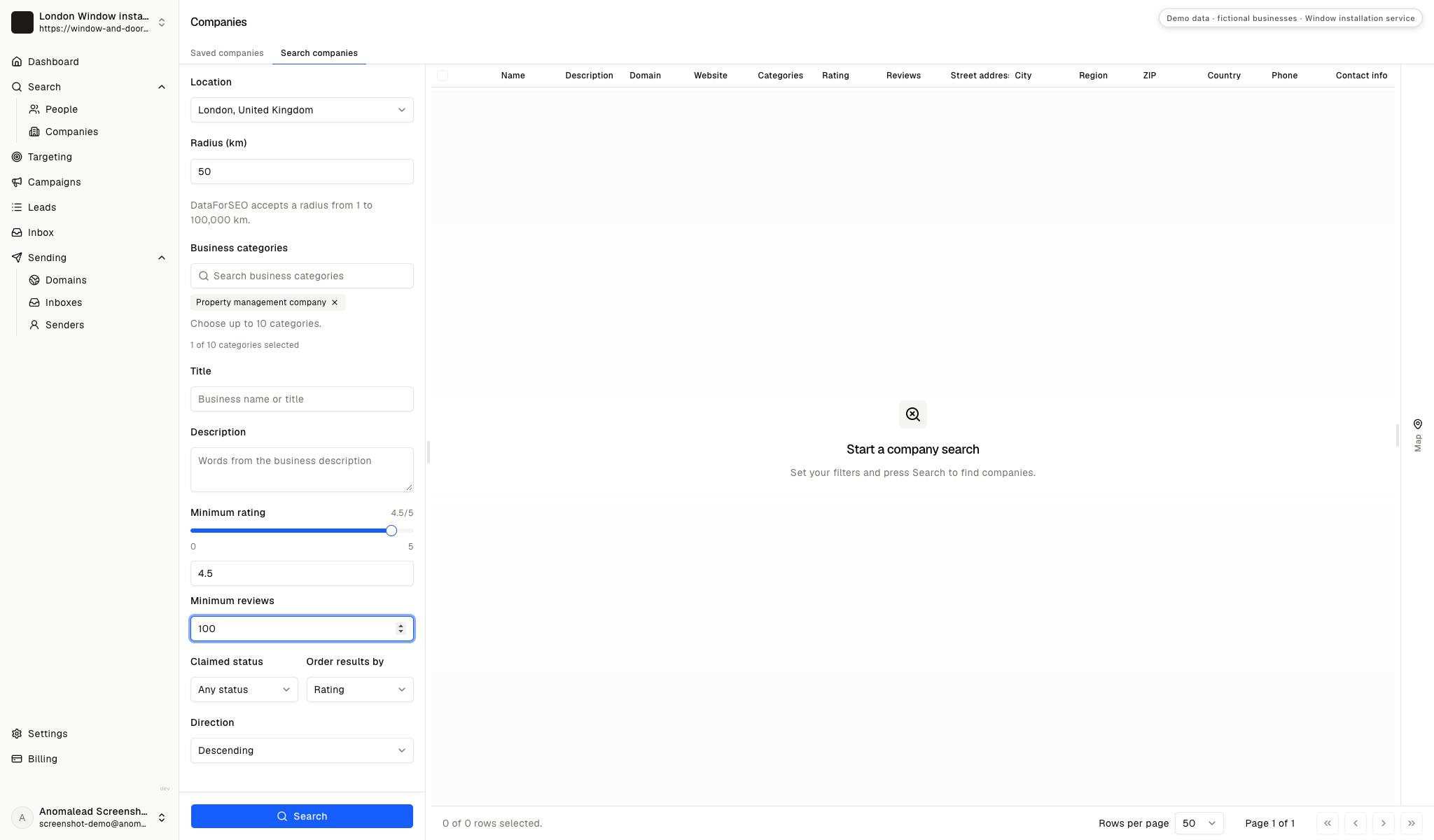
Section titled: Set search filters for the territory you can surveyChoose property-management companies and a location your surveyor and installation crew can cover. The search settings find organizations, not building openings, maintenance records or approved work.
Research company records before saving them
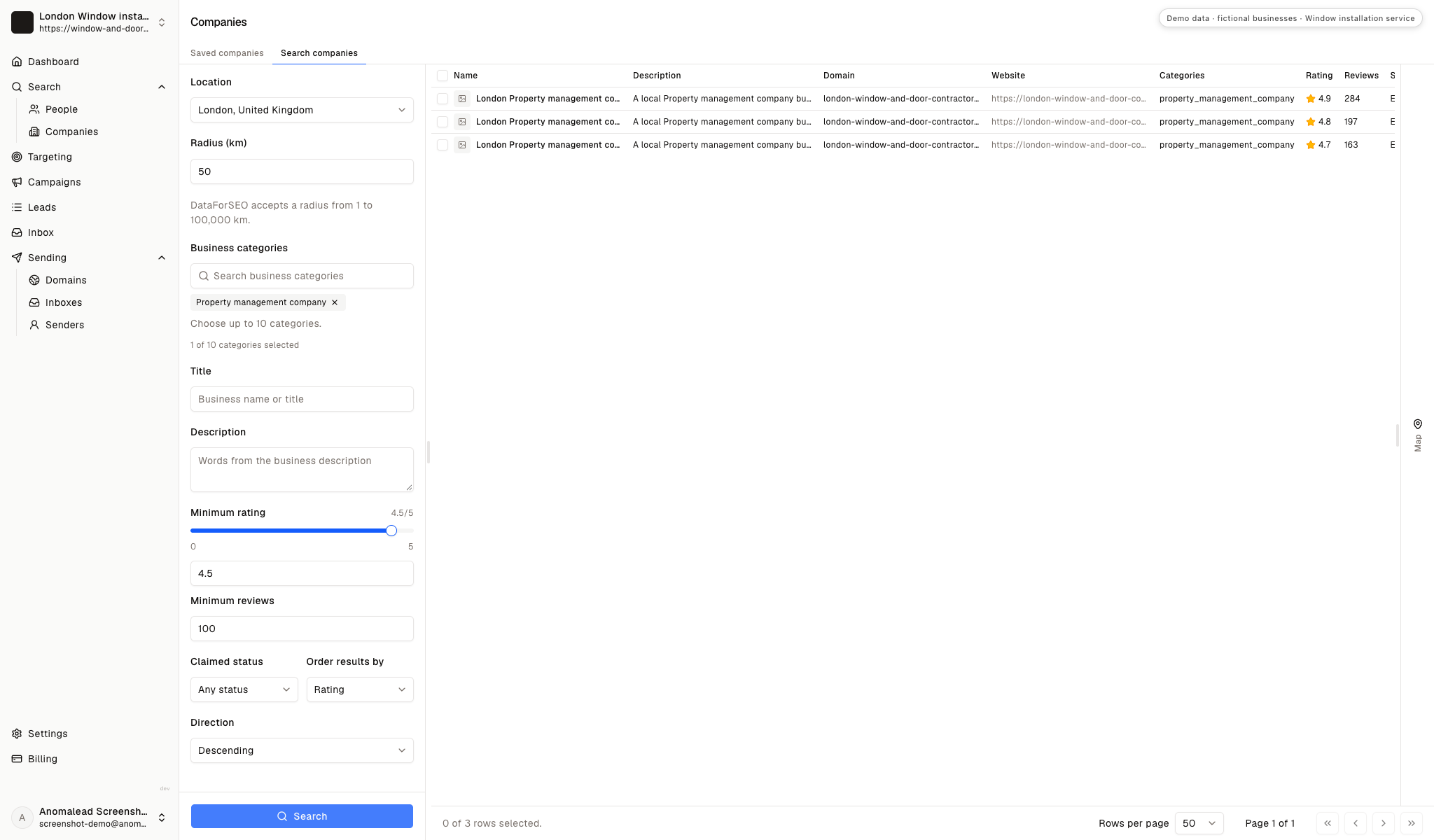
Section titled: Research company records before saving themThe results are fictional company profiles, not property surveys. Check each manager’s actual portfolio and service area elsewhere, then note whether it oversees residential blocks, commercial premises or only a narrow set of sites.
Save accounts with a plausible maintenance route
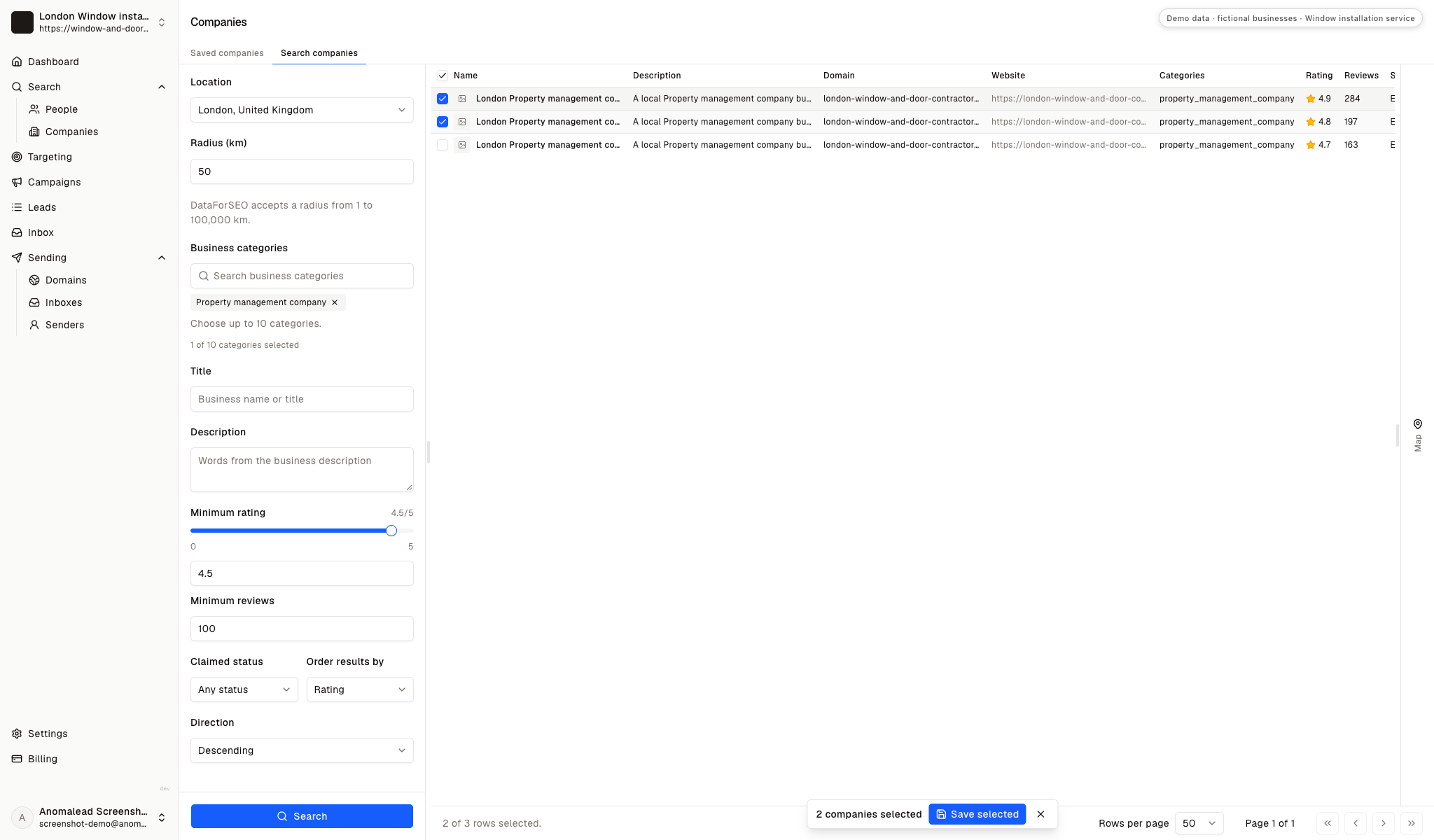
Section titled: Save accounts with a plausible maintenance routeSelect a company only when its role and territory make follow-up research worthwhile. The saved list is a work queue, not proof that a property has failed frames or an approved replacement plan.
Find who coordinates surveys and opening specifications
Section titled: Find who coordinates surveys and opening specificationsA property manager can explain who logs faults and schedules access, while a facilities manager may know the frame history, hardware and site rules. Neither title alone proves authority to select products or approve a replacement programme, so ask how the organization routes those decisions.
For an occupied block, the useful contact may coordinate a caretaker, resident notices and entry appointments. For a planned refurbishment, an asset manager, surveyor or project lead may own the specification and tender process. Keep the first message focused on one role and request an introduction when another person owns the detail.
Recheck the account before looking up people
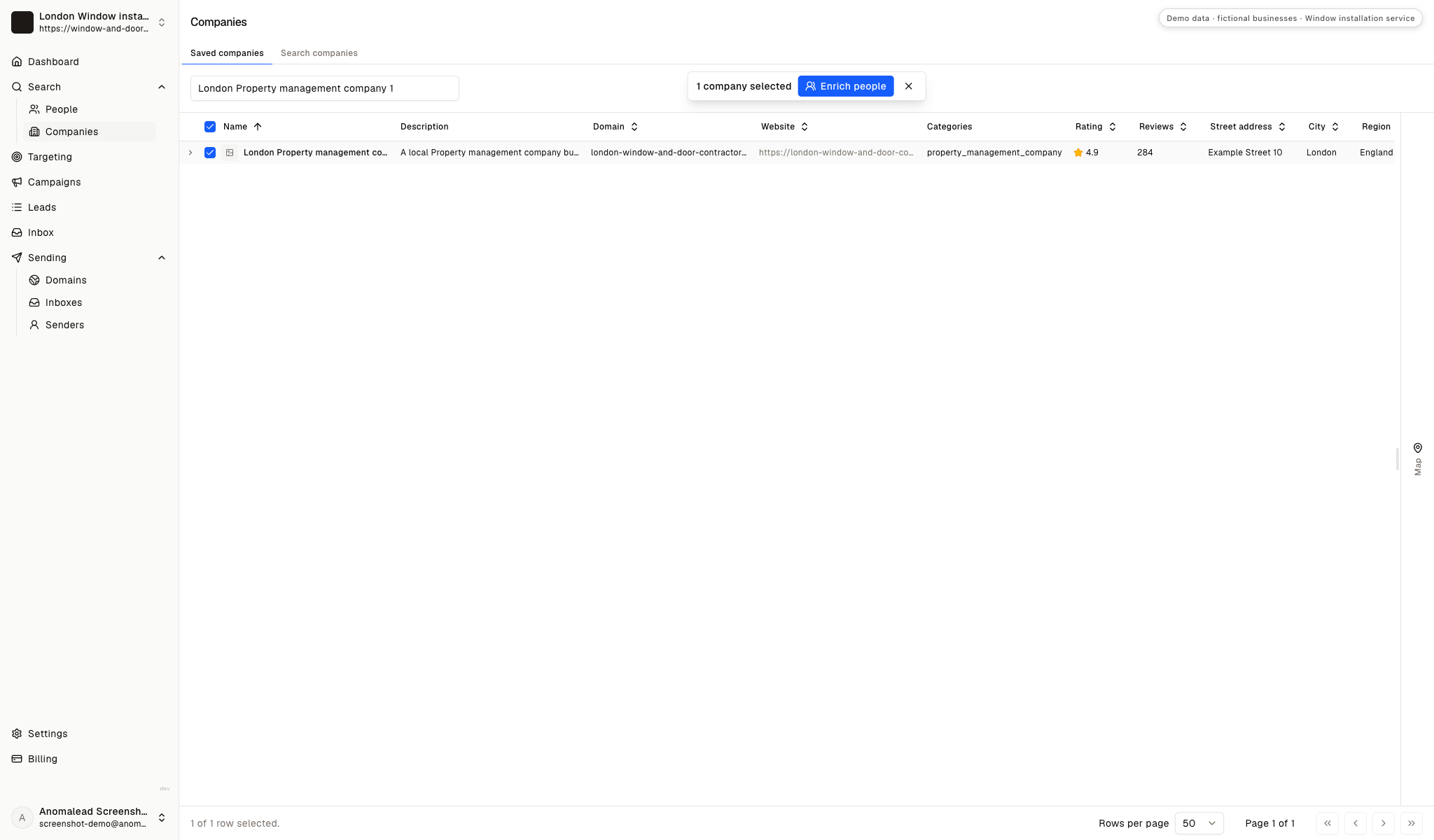
Section titled: Recheck the account before looking up peopleConfirm the saved company is a property manager in your coverage area and has a plausible route to building maintenance decisions. If its public profile says nothing about managed sites, verify the portfolio before spending time on contact research.
Compare contact roles with the work being discussed
Section titled: Compare contact roles with the work being discussedThe demo shows two contacts for one selected account. Verify their current roles and look for responsibility for facilities, property maintenance or supplier coordination; contact enrichment does not confirm authority over a building or tender.
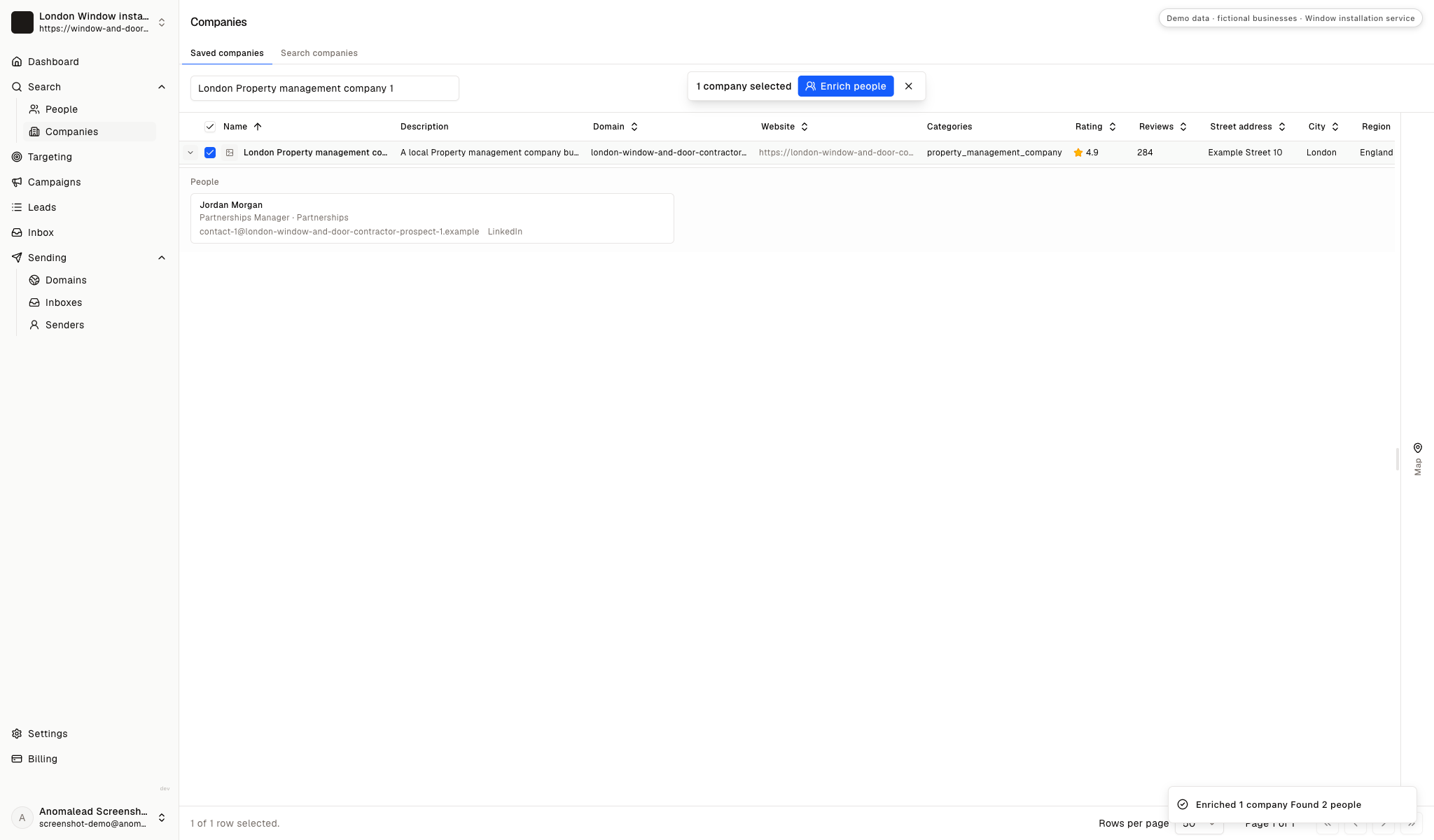
Keep the list tied to a building decision
Section titled: Keep the list tied to a building decisionSave a contact when their role can route a maintenance discussion or introduce the survey and asset team. Exclude unrelated partnership contacts unless they can direct the message to the person responsible for openings or building upgrades.
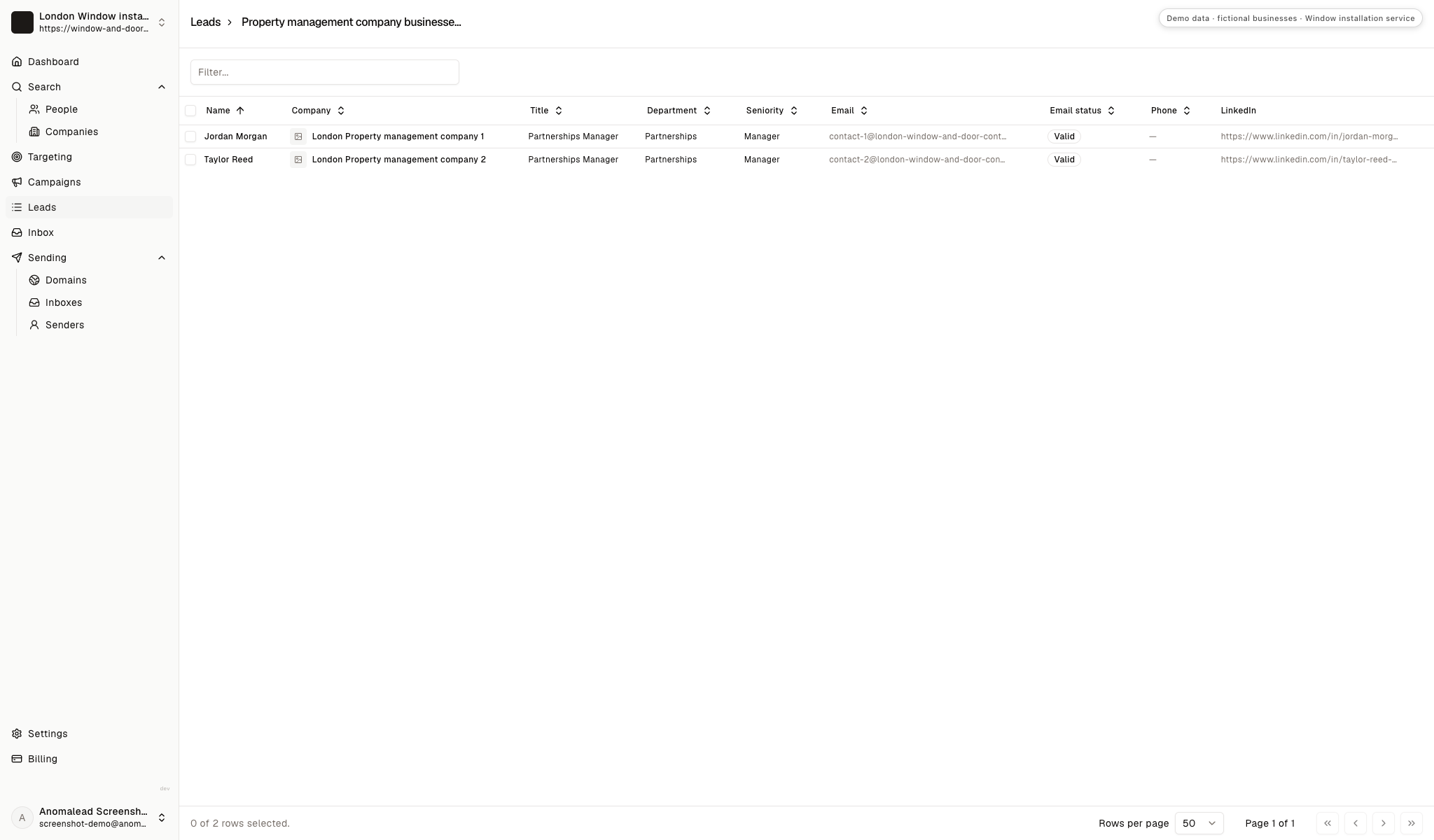
Estimate the commercial scope from your own project mix
Section titled: Estimate the commercial scope from your own project mixAn openings contractor may handle a single repair, a multi-unit replacement, new entrance doors or a phased refurbishment. Those jobs have different survey effort, materials, access coordination, disposal and installation requirements, so a company record cannot stand in for a scoped opportunity.
Use the calculator to test assumptions that belong to your business, such as the value you assign to a qualified project and the share of suitable conversations that progress. It does not price a building, estimate energy savings or predict whether a manager will approve the work.
Enter your own assumptions for project value, qualified conversations and close rate. The output is a planning aid only, not a quote, market benchmark or forecast of a property’s condition.
Do the math on one good deal
If one new customer is worth thousands, you don’t need magic. You need a few more meetings a month.
Projected monthly results
- Deals closed
- 2.0
- Projected revenue
- £10,000
- Growth plan (1 business)
- £79/mo
- ROI
- 12,558%
Conservative math on meetings you already believe you can book. One closed deal often pays for a year of Anomalead.
Before treating a figure as a real opportunity, confirm opening counts, measurements, frame condition, product specification, access arrangements and the person who can approve the scope.
Make the first message about a surveyable property issue
Section titled: Make the first message about a surveyable property issueA useful opening email names a problem a property manager can route: repeated seal failures, an entrance door that will not latch, or a planned window upgrade. Explain what you would check before preparing a proposal, and avoid claiming a building needs replacement when you have not seen it.
Keep one campaign focused on a defined buyer and one request, such as a short call about the manager’s maintenance process. These business email examples can help with structure, but your opening question should reflect whether the work is reactive, budgeted or part of a wider refurbishment.
Choose recipients who can route building work
Section titled: Choose recipients who can route building workThe draft contains two fictional contacts. Before adding real recipients, check their roles against the account and confirm that the message belongs with property operations, facilities or the refurbishment lead.
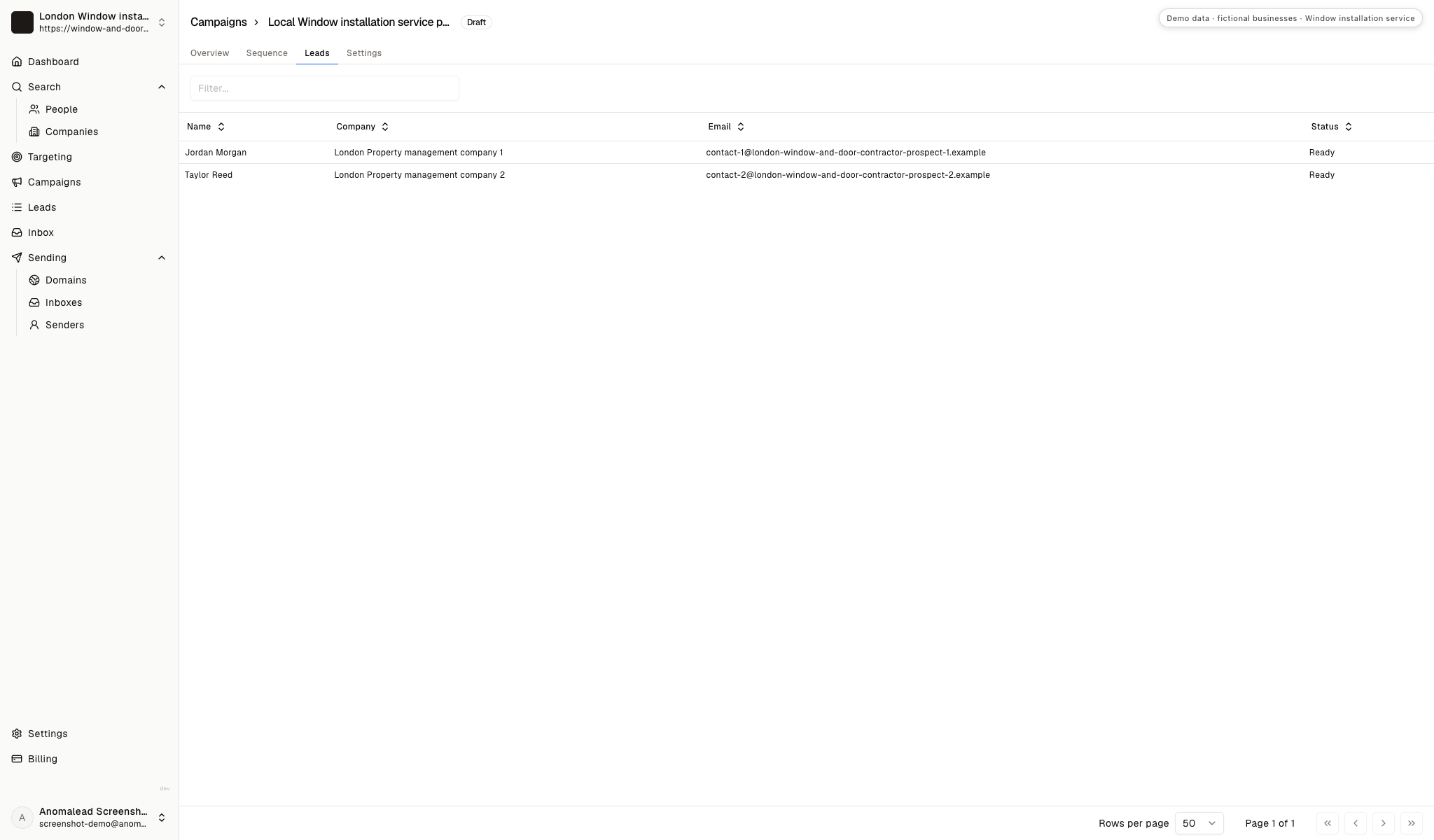
Replace generic follow-ups with a useful next step
Section titled: Replace generic follow-ups with a useful next stepThe sequence view shows an initial email and two scheduled follow-ups. Rewrite each note around a different useful action, and stop the sequence when a contact replies or asks not to be contacted.
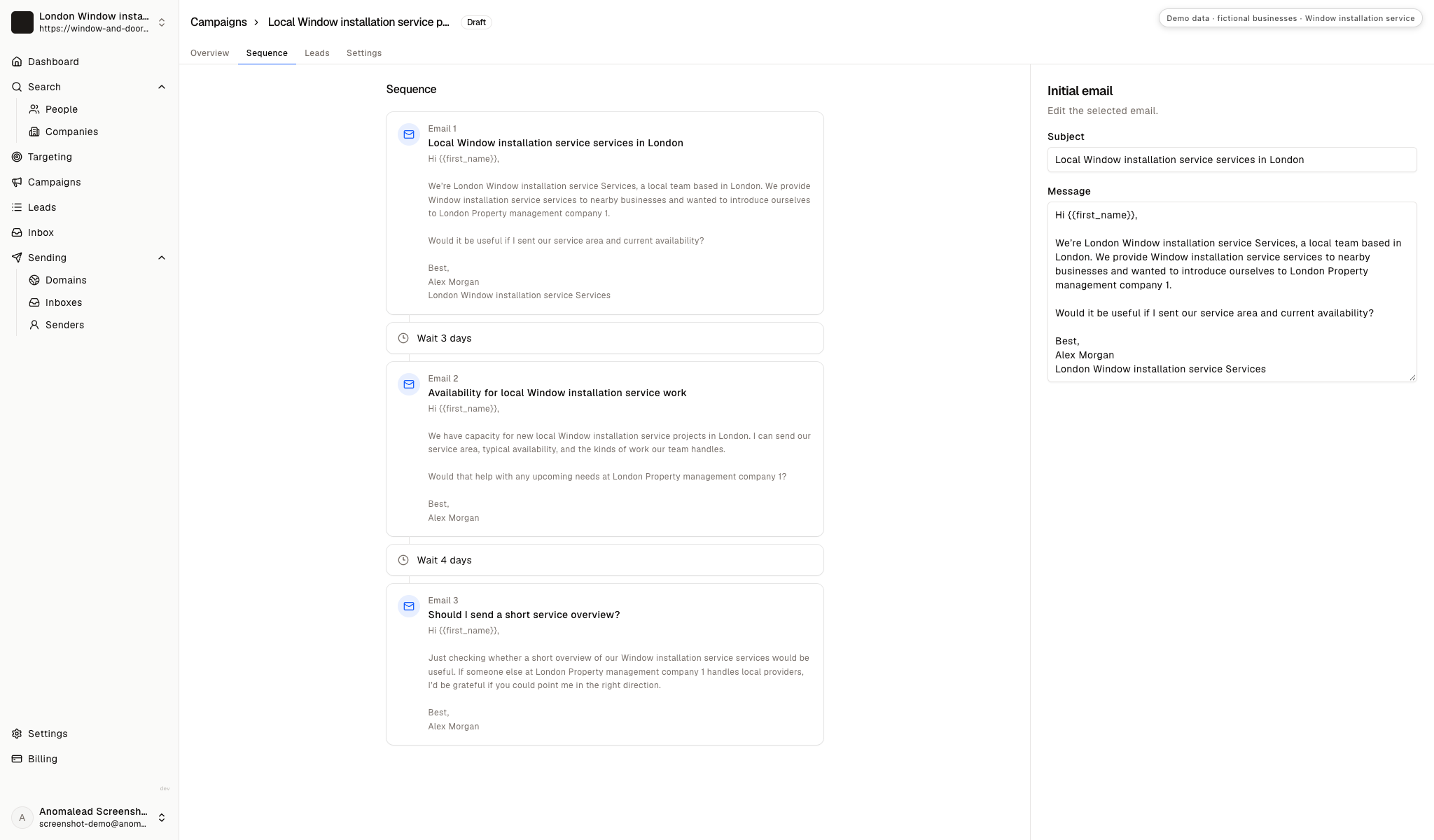
Ask one clear question about the building
Section titled: Ask one clear question about the buildingThese sample notes are for a property manager who can route maintenance or refurbishment work. Replace the fictional account context with a detail you have verified, and keep the request small enough for the recipient to answer.
First note to a property manager
Subject: Who coordinates window surveys for your buildings?
Hi Jordan,
I’m Alex Morgan from London Window installation service Services. We help property teams assess window and entrance-door repairs or planned replacements, including the survey, specification and access questions that need to be settled before installation.
Does your team coordinate those projects, or is there a facilities lead I should contact?
Best, Alex Morgan
Follow-up on a planned upgrade
Subject: Planning access for an openings survey
Hi Taylor,
I’m following up in case a window or door review is relevant to one of your managed buildings. Before arranging a visit, we would want to understand the affected openings, resident access process, existing specification and who approves the work.
Is there a planned survey or refurbishment where a contractor introduction would be useful?
Regards, Alex Morgan
The sender and contact names come from fictional fixture data. State only the products, service area, survey capacity and credentials your team can verify. For more cold email subject ideas, choose a line that describes the actual building question.
Treat the inbox replies as qualification prompts
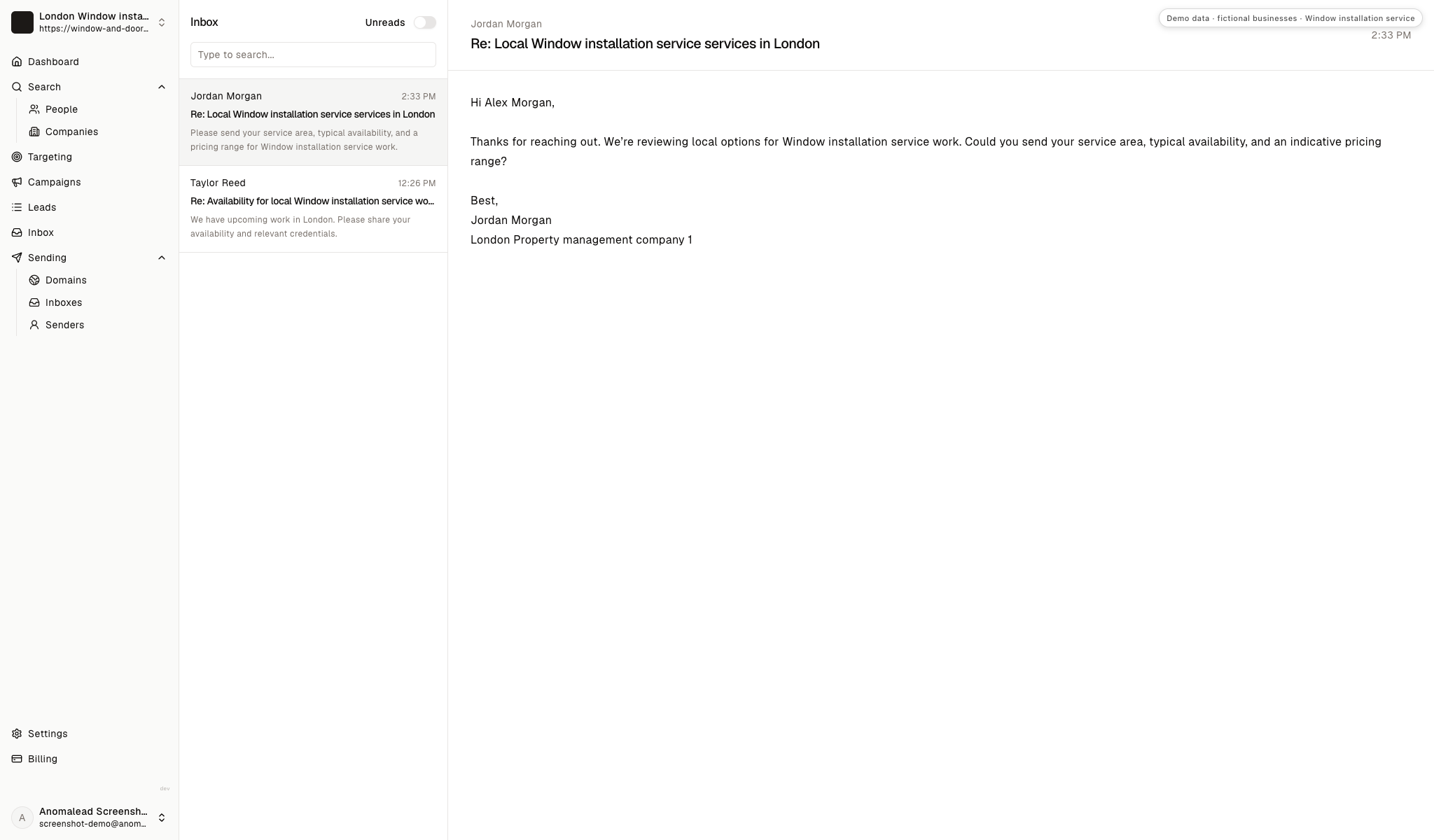
Section titled: Treat the inbox replies as qualification promptsThe demo inbox shows a request for service area, availability and pricing, plus a question about upcoming work and credentials. Neither reply identifies a surveyed property or authorizes a quote.
Move an openings enquiry toward a defined survey
Section titled: Move an openings enquiry toward a defined surveyAnswer the question asked, then identify the building, affected openings and decision route. A reply that mentions a possible project is a reason to qualify scope, not permission to quote a complete replacement or promise a performance result.
Jordan asks for coverage, availability and a price range
Section titled: Jordan asks for coverage, availability and a price rangeCould you send your service area, current availability and an indicative price range for window and door work?
This fictional reply from Jordan Morgan at London Property management company 1 is a real buying signal only after the scope is clearer. Share your actual territory and the types of repair or replacement your crew can handle, then explain which details affect a reliable estimate. Ask whether the request concerns one opening or a wider programme.
A concise first answer might be:
Thanks, Jordan. I can confirm our coverage and the repair or replacement work our team handles. Pricing depends on the opening type, measured condition, chosen specification and site access. Is this for a particular building or a planned group of replacements?
Taylor asks about an upcoming project and contractor credentials
Section titled: Taylor asks about an upcoming project and contractor credentialsWe may have work coming up. Please share your availability, the work your team covers and relevant credentials.
The fixture reply from Taylor Reed at London Property management company 2 does not name a site or timetable. Send only current insurance and qualification documents that relate to your work, then find out whether the project is at survey, budgeting or procurement stage.
Keep the next question tied to the project stage:
Thanks, Taylor. I can send our current service information and relevant documents. Could you share the building type, which windows or doors are in scope, and whether a survey brief or access plan is already available?
The manager says repairs are handled by an incumbent contractor
Section titled: The manager says repairs are handled by an incumbent contractorOur maintenance contractor already handles window and door call-outs.
Do not ask the manager to break an active arrangement. Planned replacement work may follow a different procurement route from small repairs, so ask only whether the organization uses an approved supplier process for larger or separately scoped projects. If not, record the preference and stop routine follow-up.
Respect the existing route while clarifying fit:
Understood. We will not disrupt your current call-out process. If larger replacement or refurbishment work is sourced separately, would you be able to point me to the supplier process?
A buyer requests a firm price before measurements are available
Section titled: A buyer requests a firm price before measurements are availableCan you price the replacement before arranging access to the flats?
Explain what can be budgeted from a written scope and what needs a site measure. Frame dimensions, reveal condition, making-good, glazing or hardware choices, safe access and resident coordination can change the work. Do not convert assumptions into a fixed offer.
State the limit and propose a practical way forward:
We can discuss the information needed for a budget, but we should not fix a price without a confirmed scope and measurements. Could we first review the opening schedule and agree how access to the affected units would be arranged?
Choose one property segment for the next outreach batch
Section titled: Choose one property segment for the next outreach batchPick a manageable group of properties, such as residential blocks with planned window renewal or commercial sites reviewing entrance-door hardware. Confirm the work type your team wants, the locations it can cover and the documents it can supply before adding contacts to a campaign.
Write down the building detail you still need, the person who can provide it and the smallest useful request you can make. If the manager identifies a wider façade programme, coordinate with the appropriate building contractor partners, but keep your own scope focused on openings, measurements and installation.
Questions window and door contractors ask about property work
Section titled: Questions window and door contractors ask about property workWho usually buys window and door work for a managed property?
Section titled: Who usually buys window and door work for a managed property?A property manager or facilities lead often reports faults and coordinates access, while an asset manager, landlord or project lead may approve a planned replacement. Ask how maintenance and capital work are routed before assuming your first contact can appoint a contractor.
Should I pitch repairs or full replacement?
Section titled: Should I pitch repairs or full replacement?Describe only the issue you can verify and ask whether the buyer wants a repair assessment or a broader survey. Failed seals, hardware faults and frame damage can call for different scopes, so let inspection and specification guide the recommendation.
What information should I request before a site visit?
Section titled: What information should I request before a site visit?Ask which openings are affected, what products or hardware are specified, whether drawings or schedules exist, and how the property arranges resident access. Also identify the person who can approve the survey and any supplier documentation required.
Are the companies and contacts in the screenshots real?
Section titled: Are the companies and contacts in the screenshots real?No. London Window installation service Services, the property-management businesses, Jordan Morgan, Taylor Reed and the inbox replies are fictional demo records. They are not Anomalead customers or verified opportunities.
Does the ROI calculator estimate a replacement project price?
Section titled: Does the ROI calculator estimate a replacement project price?No. It works with the assumptions you enter about project value and sales progression. It does not inspect frames, count openings, select a specification, price installation or forecast an approved contract.