


Commercial roofing lead generation works when a contractor finds property managers responsible for roofs the crew can inspect and maintain. A managed portfolio can include different roof systems, access rules, warranties, and service histories, so a company name alone cannot tell you whether the account fits. The useful first question is which buildings the manager oversees and how planned roof work is reviewed.
This guide explains how to research commercial property managers, qualify inspection and preventative-maintenance opportunities, and ask for the building information needed before a site visit or estimate. It focuses on planned roof coverage across managed properties, not residential repair calls or urgent leak dispatch. Use these commercial prospect research principles to organize an account list, then verify each roof through the appropriate manager.
Key takeaways
- Target commercial property managers whose buildings fall within your crew’s service area and match the roof systems your team can assess.
- Qualify a portfolio by roof inventory, maintenance history, inspection timing, warranty obligations, access rules, and the owner’s approval process.
- Separate inspection, preventative maintenance, and repair scopes so the property team can decide what to review at each site.
- Share only verifiable qualifications, insurance, safety procedures, and availability; do not promise roof life, repair outcomes, or uninspected conditions.
Commercial roofing lead generation starts with the property portfolio
Section titled: Commercial roofing lead generation starts with the property portfolioA strong prospect is a commercial property manager who coordinates planned roof care for buildings your team can reach and assess. Research the manager’s portfolio, but confirm who controls access, specifications, and owner approval before you propose a service.
- Commercial portfolio managers: They may oversee roof inspections and planned upkeep across office, retail, industrial, or mixed-use properties. Ask whether they maintain a roof asset record and how they review contractors. A portfolio page does not show roof condition or authorize work.
- Regional property operations leads: These contacts may coordinate inspection schedules, records, and vendor standards across a region. Explain which locations and roof types your crews can cover, then ask how a site is added to a maintenance plan. Do not promise uniform coverage until you have checked travel, access, and crew capacity.
- Asset managers and owner representatives: An asset manager may set maintenance priorities or approve spend, while the property manager arranges access and tracks work. Find out who funds an inspection, who signs a contract, and who receives the report before sending a proposal.
- Property teams preparing for a planned review: A manager may be compiling condition records, reviewing warranty dates, or coordinating upcoming maintenance. Ask what prompted the review and which buildings are in scope. Avoid implying that a roof needs repair based on age, tenant type, or an office listing.
A portfolio can open a conversation about several roofs, but each asset needs a verified system, access plan, and agreed scope.
Qualify the roof and the approval path
Section titled: Qualify the roof and the approval pathA useful commercial roofing lead has a plausible asset fit and a route to an authorized review. Gather the facts that shape a safe inspection and written scope before you price the work.
- The roof is within your technical scope: Ask what roof system is installed and whether your company has the equipment and qualifications to inspect it. A public building description rarely identifies membrane, covering, plant, penetrations, or past modifications.
- Records can be reviewed: Request available inspection reports, maintenance notes, warranty documents, and prior repair records through the property’s approved process. This context helps identify exclusions and questions for a qualified site assessment; it is not a substitute for inspecting the roof.
- Access and safety are arranged: Confirm who authorizes roof access, whether an escort or sign-in is required, and what site safety documents the manager needs. Do not ask a prospect to email access codes, alarm details, or sensitive building plans.
- The requested service is specific: Separate a condition inspection, routine preventative work, and a repair request in your notes. Clarify what the manager wants recorded, which issues need owner approval, and how excluded work would be handled.
- Contract and warranty responsibilities are visible: Find out whether an existing warranty or vendor agreement affects who may inspect or work on the roof. Confirm who can approve a site visit, a recommendation, and any follow-on repair before making a commitment.
- Your capacity and evidence match the request: Check travel, qualified crew availability, insurance, fall-protection procedures, and the format of reports your company can actually provide. Send current documents only, and decline assets outside your competence or coverage.
What appears in the demo
The walkthrough uses fictional London Commercial roofing contractor Services, generic London Property management company records, and the fictional contacts Jordan Morgan and Taylor Reed. The businesses and inbox replies are demo fixtures, not Anomalead customers or campaign results. They do not show roofs, condition reports, planned inspections, or an active vendor review.
Build an account list from commercial property records
Section titled: Build an account list from commercial property recordsUse the product screens to find local property-management companies, then research the portfolio outside the generic search result. The walkthrough shows location and category filters, three company records, two saved results, contact enrichment, a lead list, a campaign draft, a three-message sequence, and inbox replies. It contains no roof plan, inspection report, or evidence that a property manager is seeking a contractor.
Review public portfolio pages for property types and locations. Then verify the management company’s role, the likely owner approval path, and whether the buildings sit within your practical service area. Keep a note of the public reason for researching the account and use a property account research workflow to separate confirmed facts from questions for the first call.
Set a search around your inspection area
Section titled: Set a search around your inspection areaChoose an area your roofing crews can serve and the property-management category shown in the demo. The radius helps locate company records; it does not confirm which roofs a manager controls or whether travel between assets is practical.
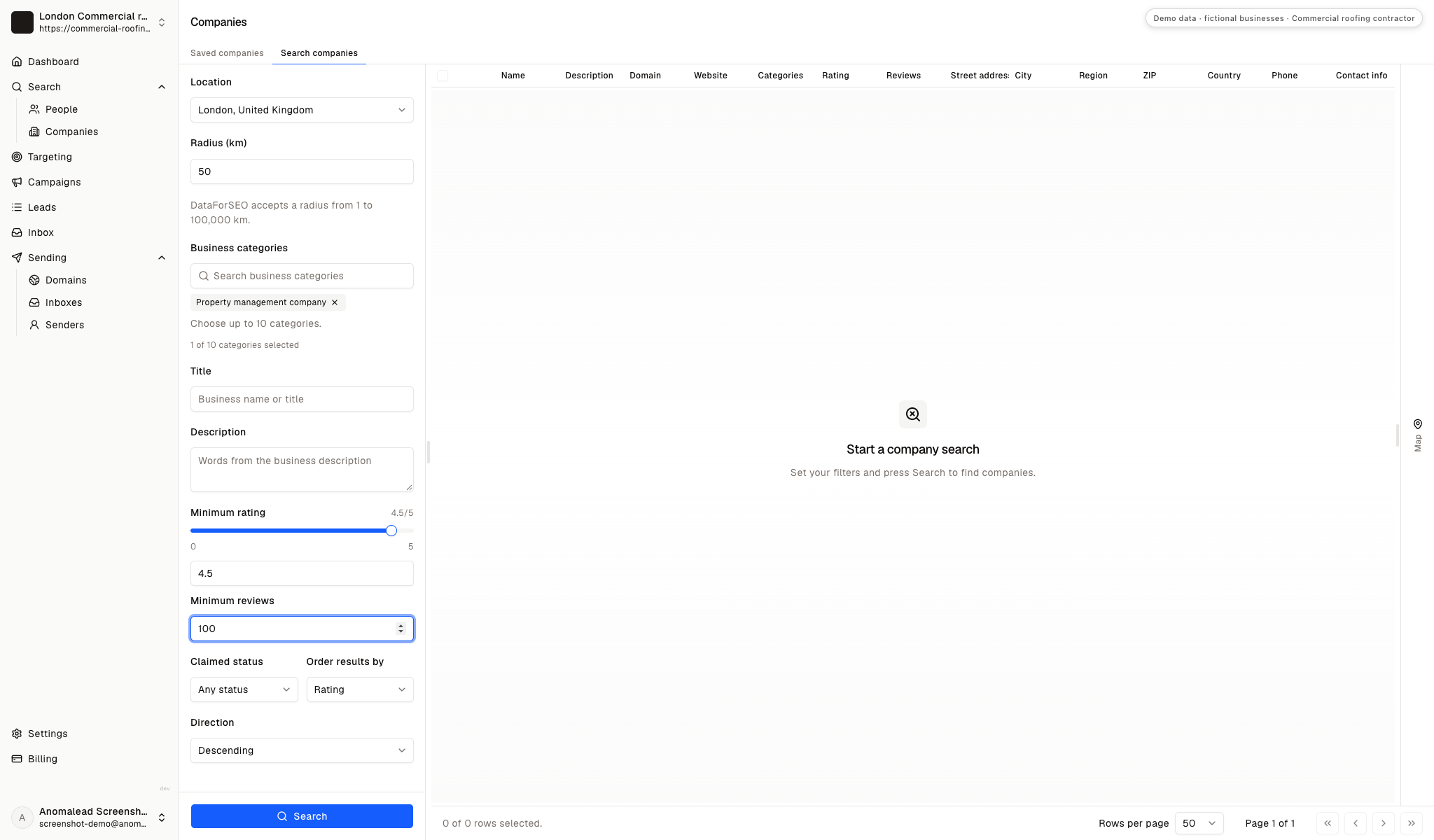
Review management firms before adding them
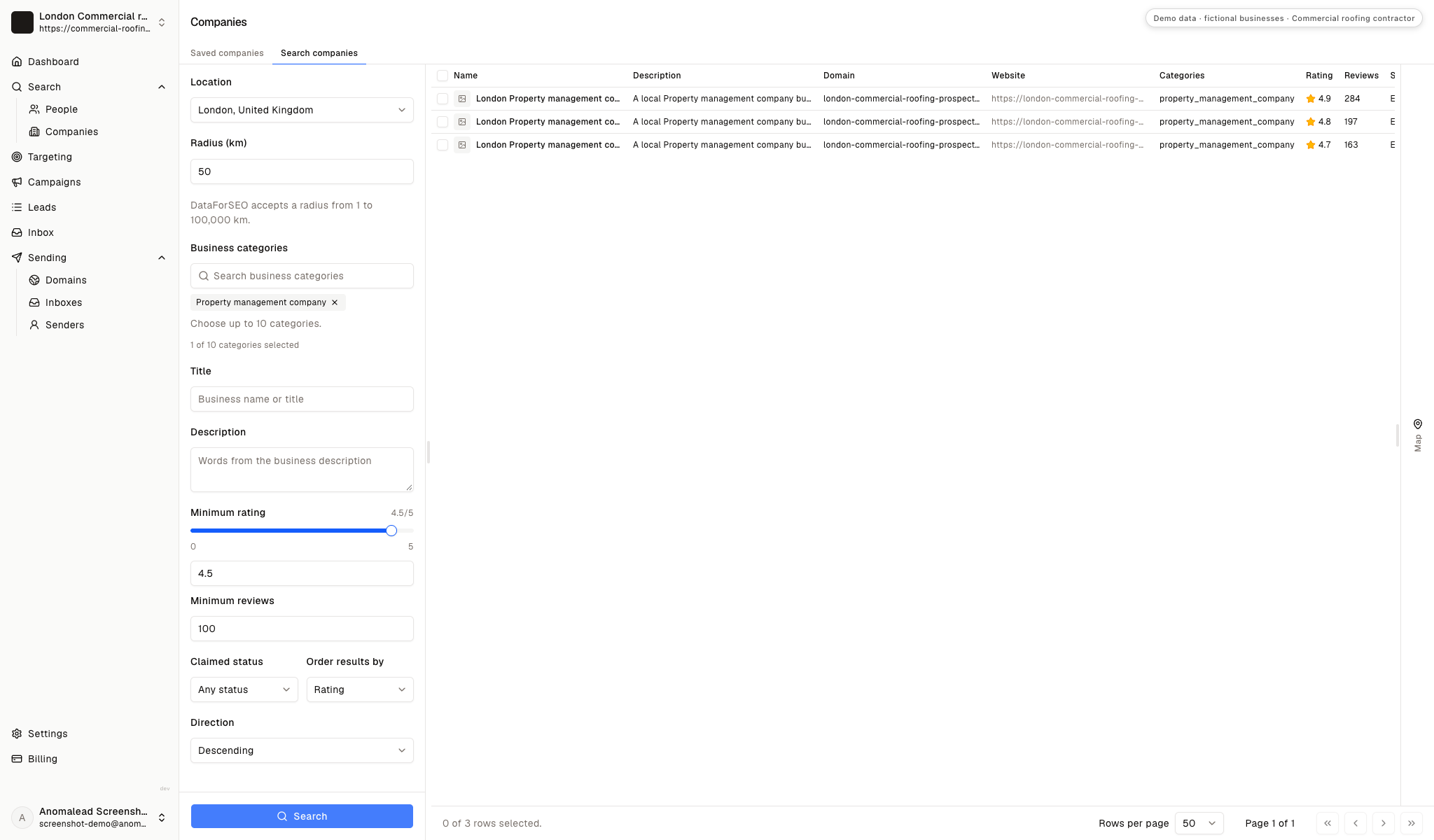
Section titled: Review management firms before adding themThe results list three fictional property-management companies with descriptions, domains, ratings, and review counts. Their records reveal no roof material, condition, warranty, or service calendar.
Save firms with buildings inside your service range
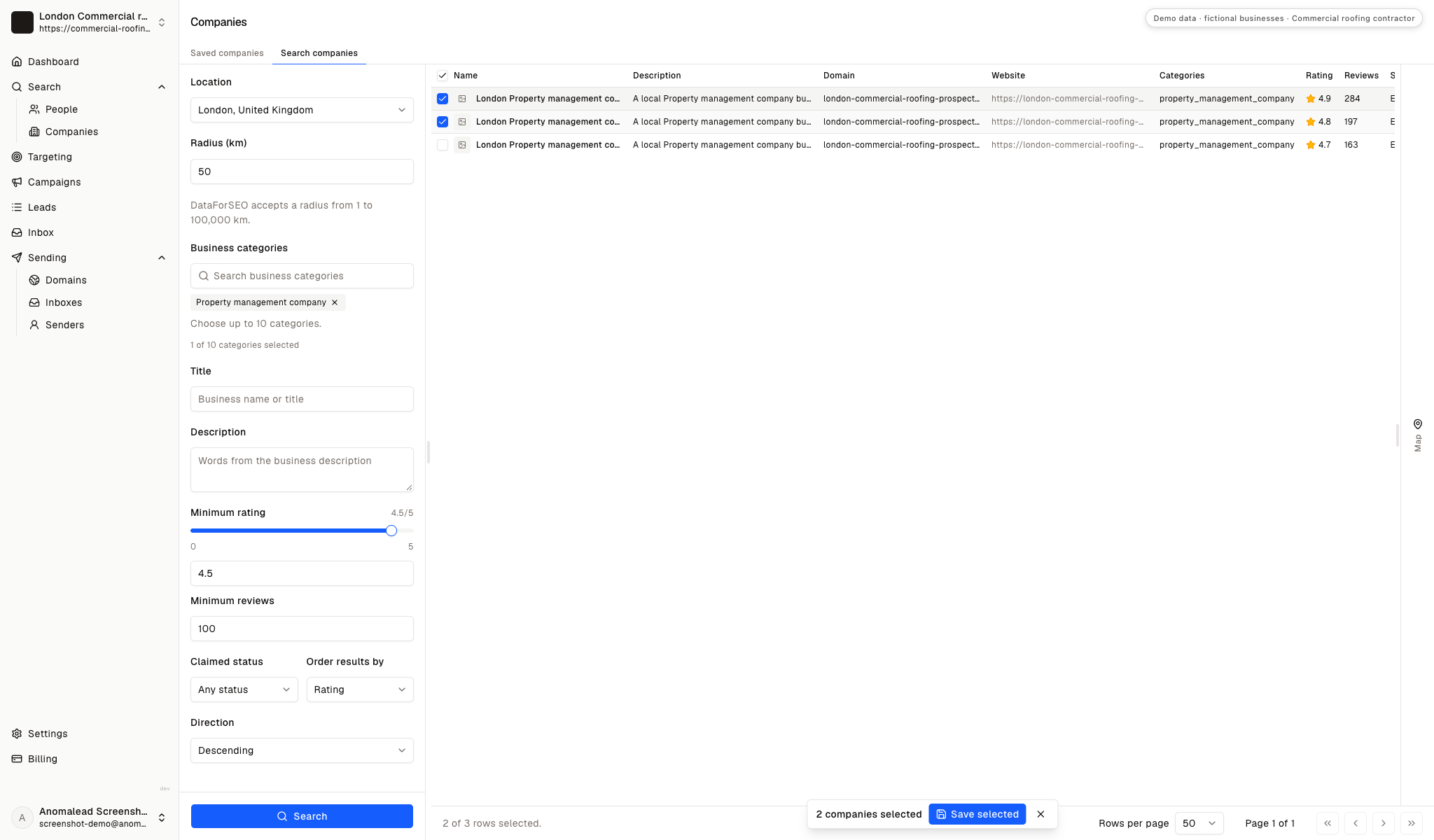
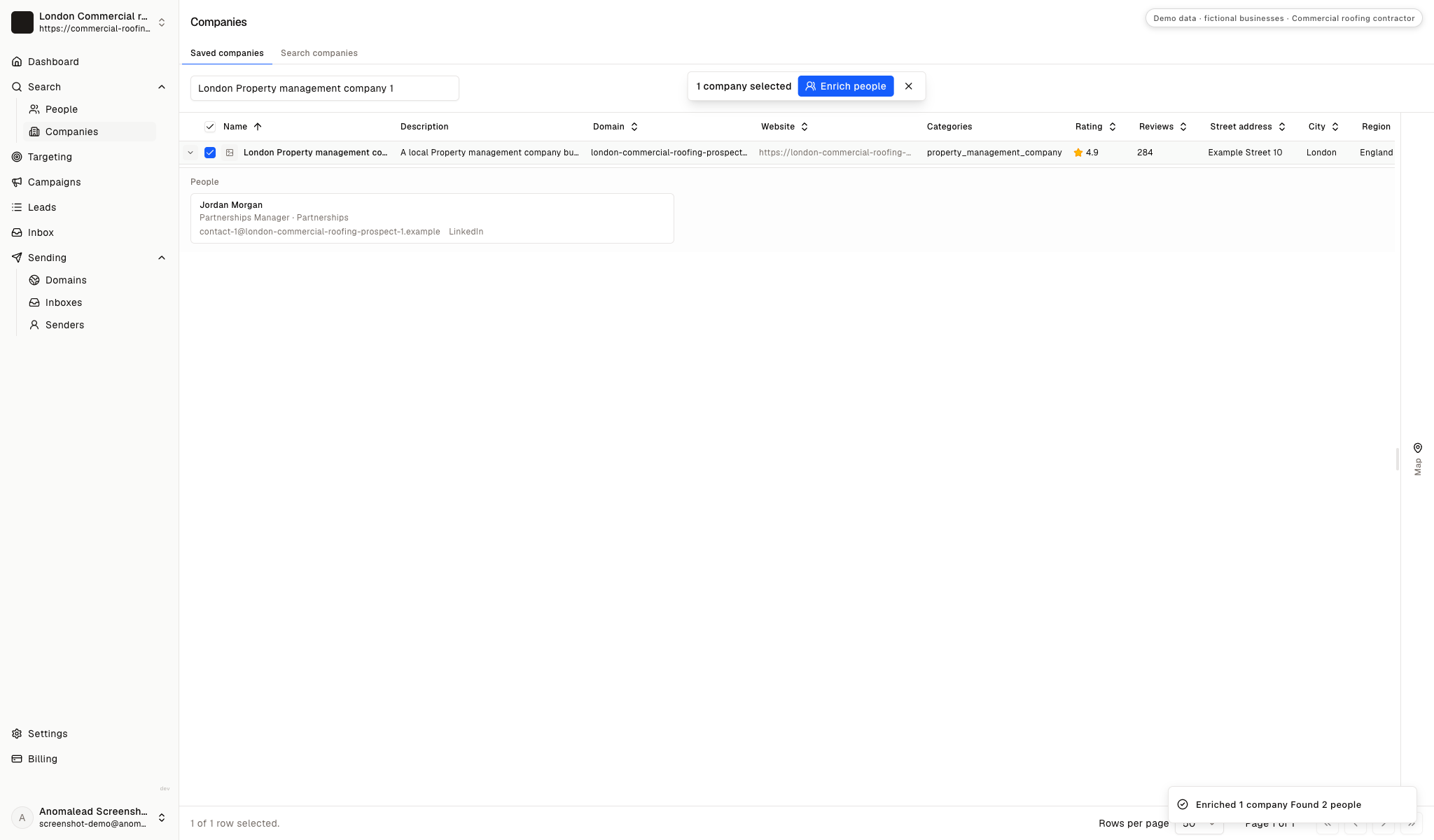
Section titled: Save firms with buildings inside your service rangeThe demo marks two of three company records for saving. Keep a management firm only when its public portfolio and locations justify checking roof types and inspection responsibility.
Estimate the effort behind a portfolio inspection plan
Section titled: Estimate the effort behind a portfolio inspection planA portfolio opportunity can involve travel, roof access coordination, inspection records, reporting, and separate estimates for follow-on work. Consider whether your team can deliver that effort while meeting existing commitments.
Enter your own assumptions for travel, inspection time, qualified labor, reporting, equipment, and the repair work your team could accept. The calculator does not predict defect findings, contract awards, roof life, or revenue.
Do the math on one good deal
If one new customer is worth thousands, you don’t need magic. You need a few more meetings a month.
Projected monthly results
- Deals closed
- 2.0
- Projected revenue
- £10,000
- Growth plan (1 business)
- £79/mo
- ROI
- 12,558%
Conservative math on meetings you already believe you can book. One closed deal often pays for a year of Anomalead.
Model only the assets and work your team can evaluate safely. A multi-building list is not a reason to promise access or capacity before confirming each site.
Find the person who controls roof access and vendor review
Section titled: Find the person who controls roof access and vendor reviewA property manager may coordinate the inspection while an owner representative approves spending or a regional operations lead maintains vendor standards. The demo lists Jordan Morgan and Taylor Reed as fictional Partnerships Managers; those titles do not establish authority over roof access or maintenance contracts. Verify who holds each responsibility for the buildings in scope.
Use a current public work source to confirm the contact’s remit. Ask for the person who can share the approved vendor process, provide roof records, and arrange a permitted site visit. Keep site security information out of prospect notes and do not request access credentials in an outreach email.
Check the saved firm before contact enrichment
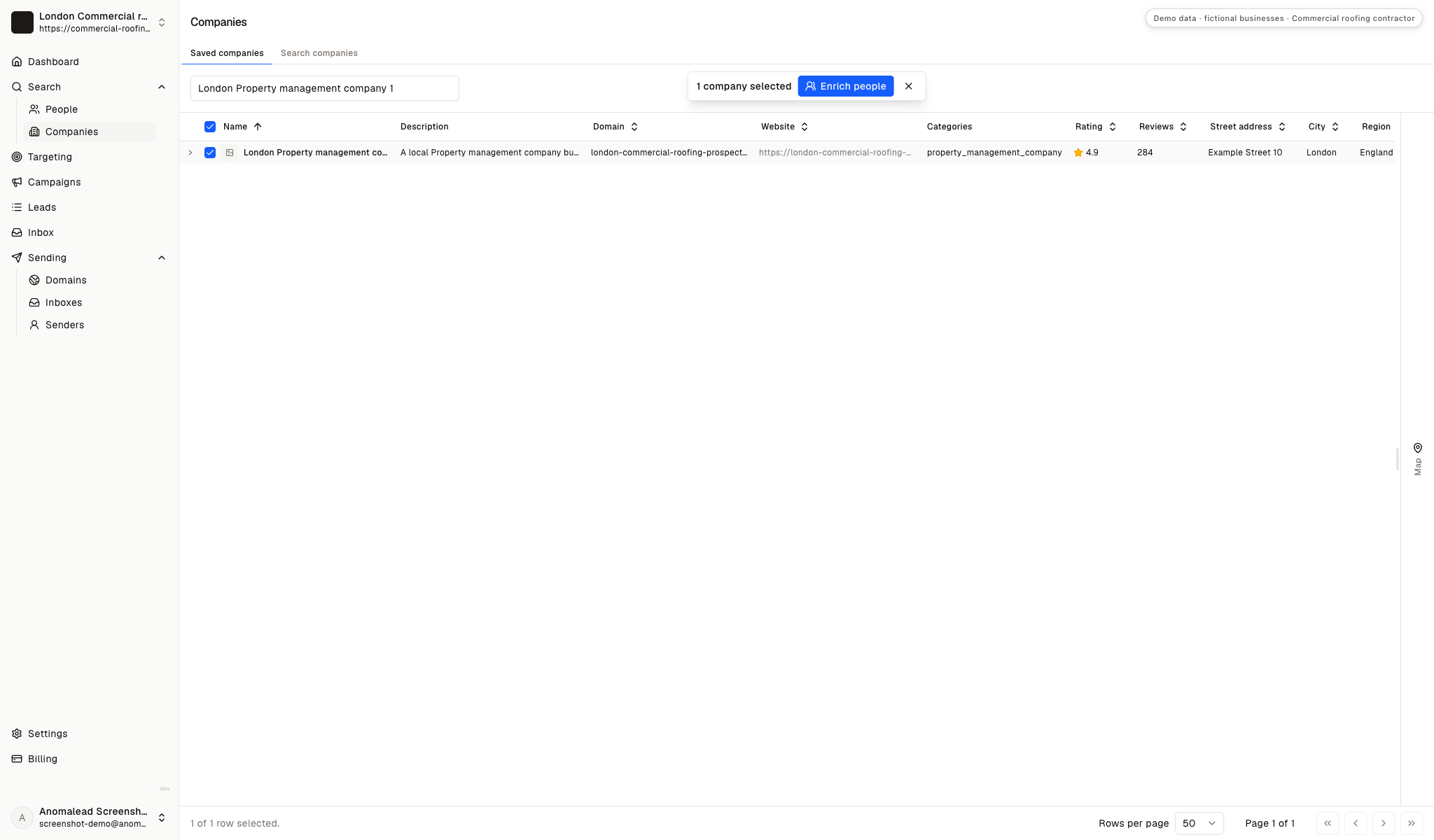
Section titled: Check the saved firm before contact enrichmentThe saved view shows one fictional company selected with an Enrich people action. Revisit its public portfolio and service-area fit before adding individual contacts.
Verify who handles the asset and the contract
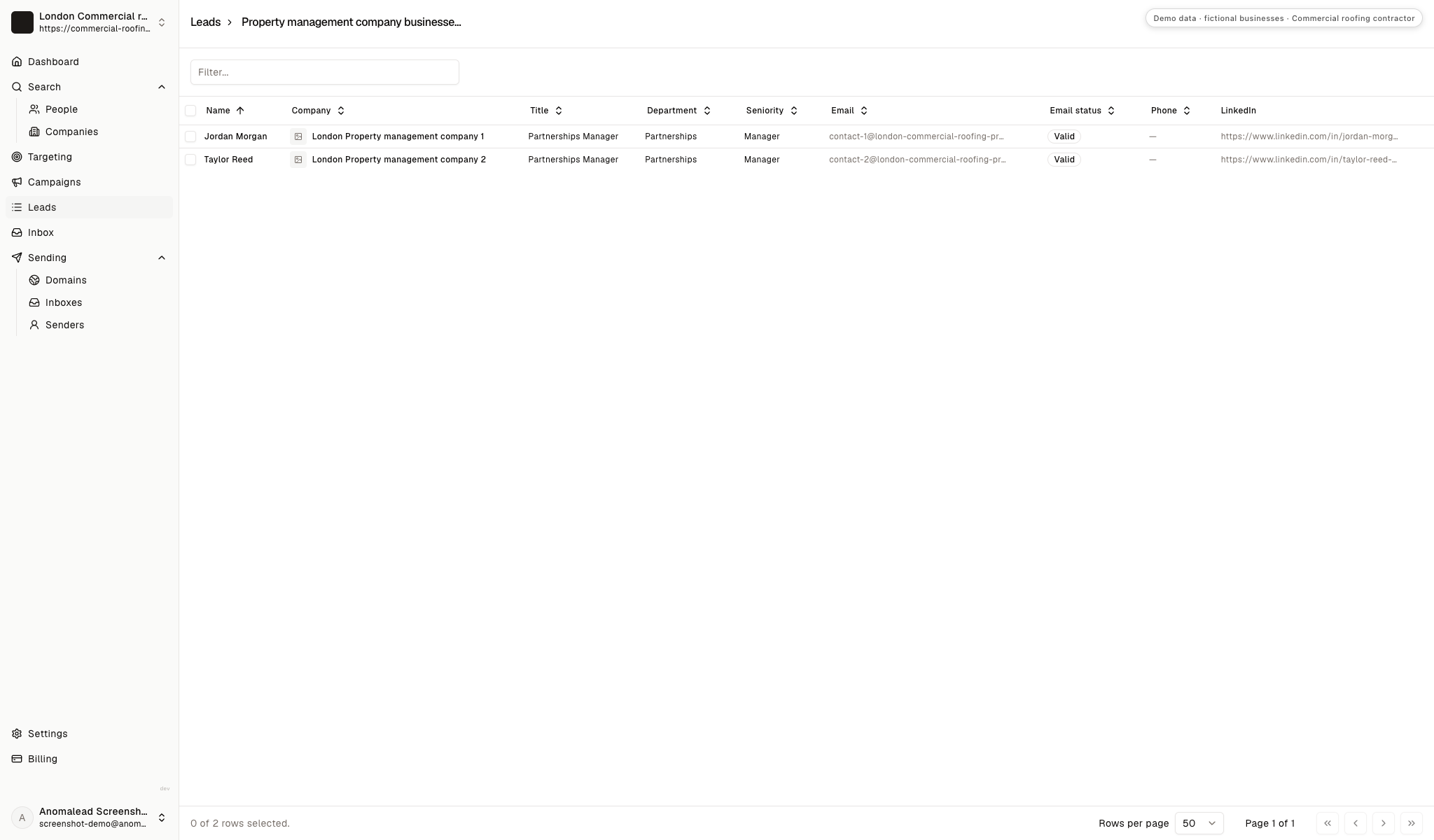
Section titled: Verify who handles the asset and the contractThe fixture shows Jordan Morgan and Taylor Reed as fictional Partnerships Managers. A real management firm may route roof inspections through property operations, asset management, procurement, or the building owner.
Keep roof research tied to the right contact
Section titled: Keep roof research tied to the right contactThe demo list holds two fictional contacts with valid email status. Note the public portfolio link and the role you still need to confirm before outreach.
Offer a review process, not a diagnosis from a listing
Section titled: Offer a review process, not a diagnosis from a listingA commercial property manager can assess your contractor more easily when you explain the inspection process, the records you produce, and the types of work your team can take on. Name the roof systems and service area you can verify, then invite the manager to share the vendor requirements for a planned review.
Do not infer damage from weather, building age, or tenant activity. Do not promise that preventative maintenance will prevent every leak or extend a roof’s service life. Confirm any warranty restriction and arrange an authorized inspection before describing roof condition or repair needs. For clear roof-service introduction emails, keep the first request focused on the vendor process and next step.
Check who will receive the contractor introduction
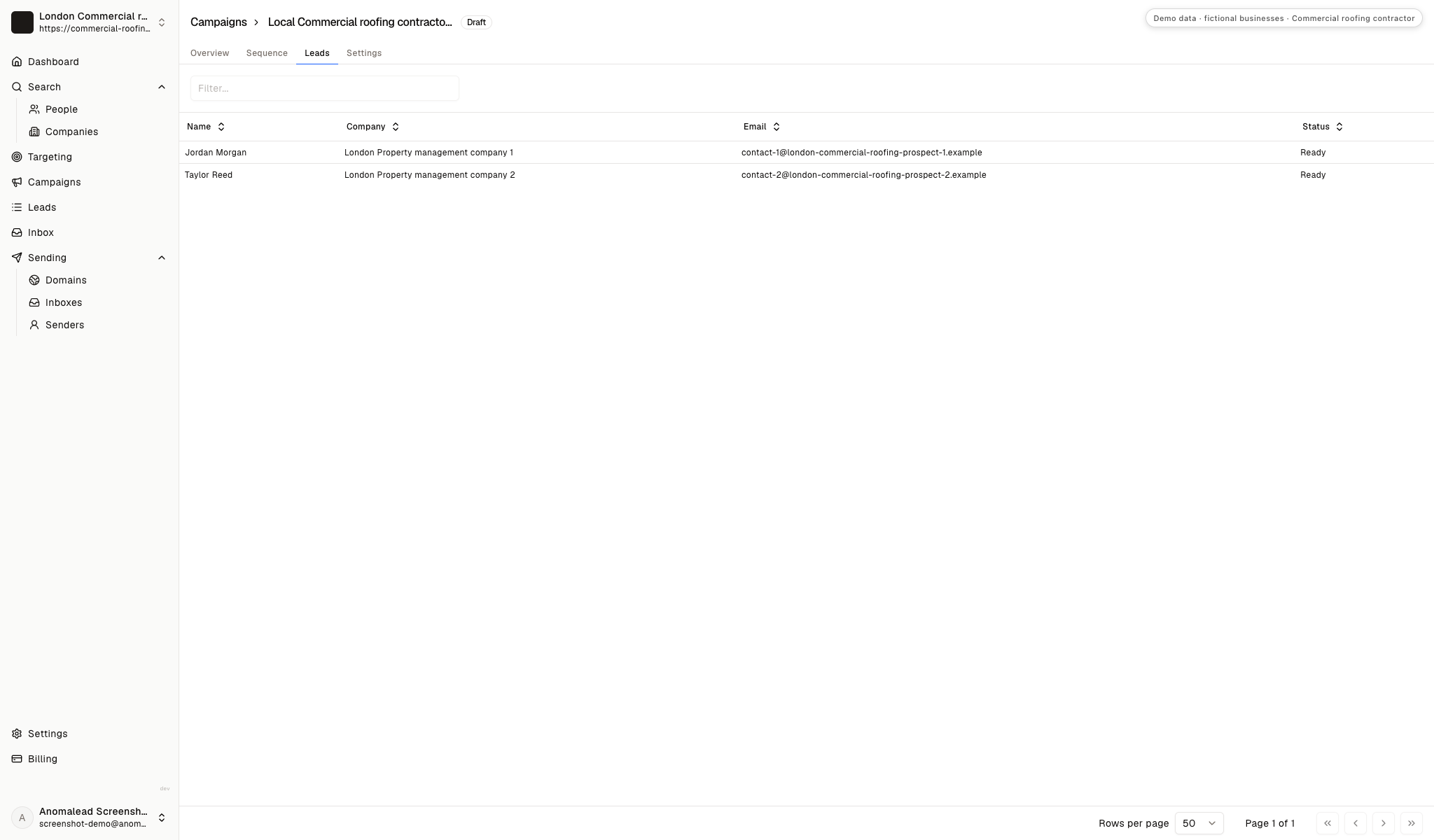
Section titled: Check who will receive the contractor introductionThe campaign draft shows two recipients and the fictional London partnership name. Confirm each recipient works with property accounts and that the note asks for a vendor contact rather than sensitive site access details.
Review follow-ups for scope and credibility
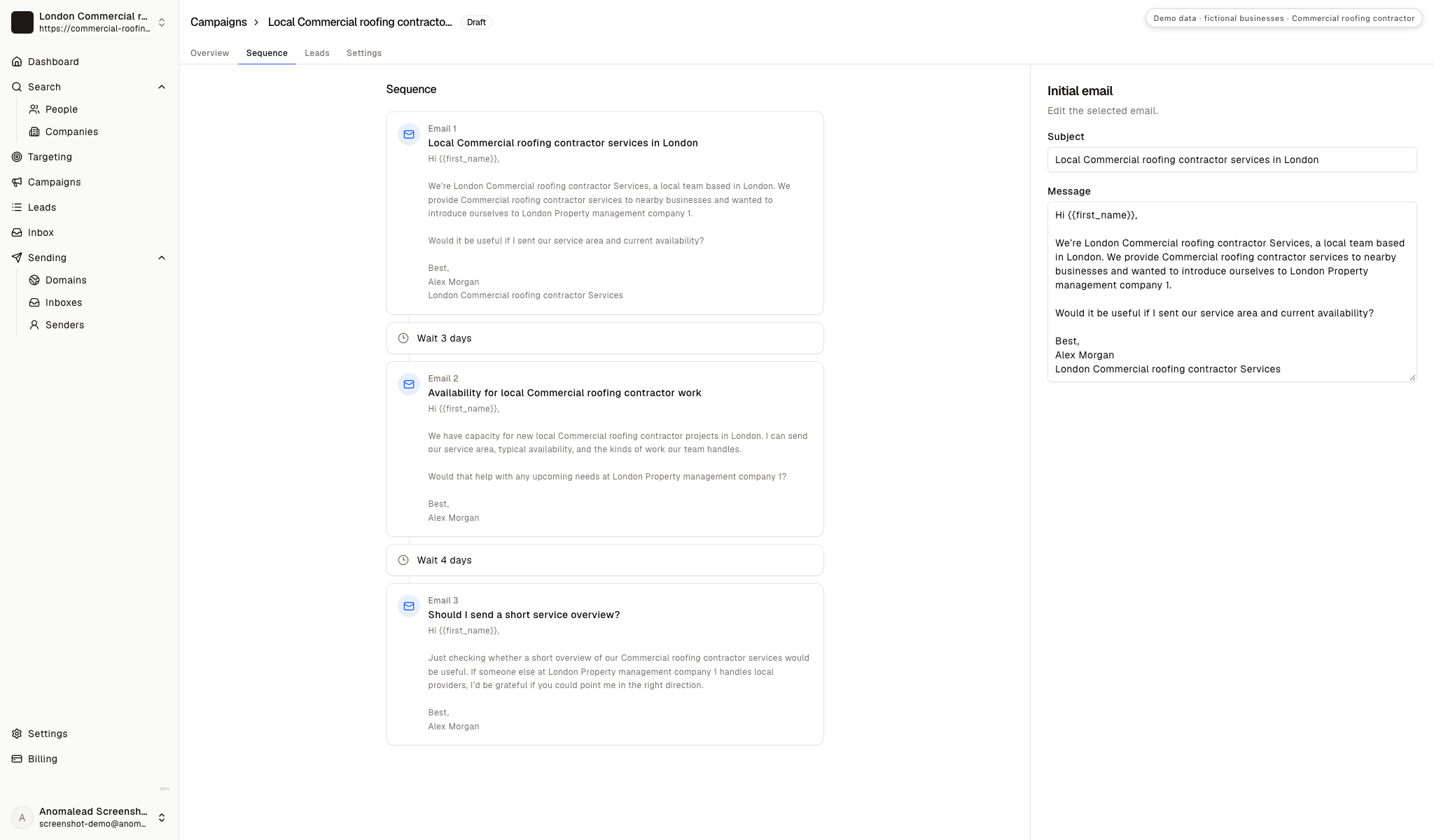
Section titled: Review follow-ups for scope and credibilityThe demo sequence has three generic messages with scheduled waits. Replace broad service claims with current roof-system scope, inspection method, evidence, and capacity; stop when a recipient declines or opts out.
Request the approved roof records and vendor process
Section titled: Request the approved roof records and vendor processA first note can ask whether the property team is reviewing planned inspection or maintenance coverage. These examples use the fictional demo contacts; replace all contractor details with verified information.
First note to a portfolio contact
Subject: Planned roof inspections across managed buildings
Hi Jordan,
I’m writing from London Commercial roofing contractor Services. Our team handles commercial roof inspections and planned maintenance for property managers, subject to roof type, access, and crew availability.
If you review contractors for managed buildings, I can share our service area, current insurance and safety documents, and the inspection records we provide. Could you point me to the person who manages roof access and vendor review for your portfolio? We would confirm each asset and scope before proposing a site visit.
Best, Alex Morgan, London Commercial roofing contractor Services
Follow-up after a request for qualifications
Subject: Re: Planned roof inspections across managed buildings
Hi Taylor,
I can send our current contractor documents and outline which roof systems our team is equipped to assess. For a useful plan, we would first confirm the buildings, access requirements, available inspection history, and any warranty or existing-vendor restrictions.
If you can share your approved vendor process and the right property contact, I’ll prepare the relevant information. We will confirm inspection timing before making a commitment.
Best, Alex Morgan
Verify roof-system scope, crew availability, insurance, safety documents, and report format before sending. These commercial outreach email examples can help keep a vendor introduction direct.
Use a response to define the asset and next step
Section titled: Use a response to define the asset and next stepA request for availability or credentials is an opening to clarify which building is under review, who may share its records, and how roof access is approved. Ask for the inspection brief before estimating, and send only current qualifications and insurance documents. Do not treat a manager’s reply as approval to inspect or repair a roof.
Read the inbox as a request for verified contractor details
Section titled: Read the inbox as a request for verified contractor detailsThe fictional inbox shows one contact asking about service coverage and price information and another asking about availability and credentials. It contains no asset address, roof record, tender, or inspection result.
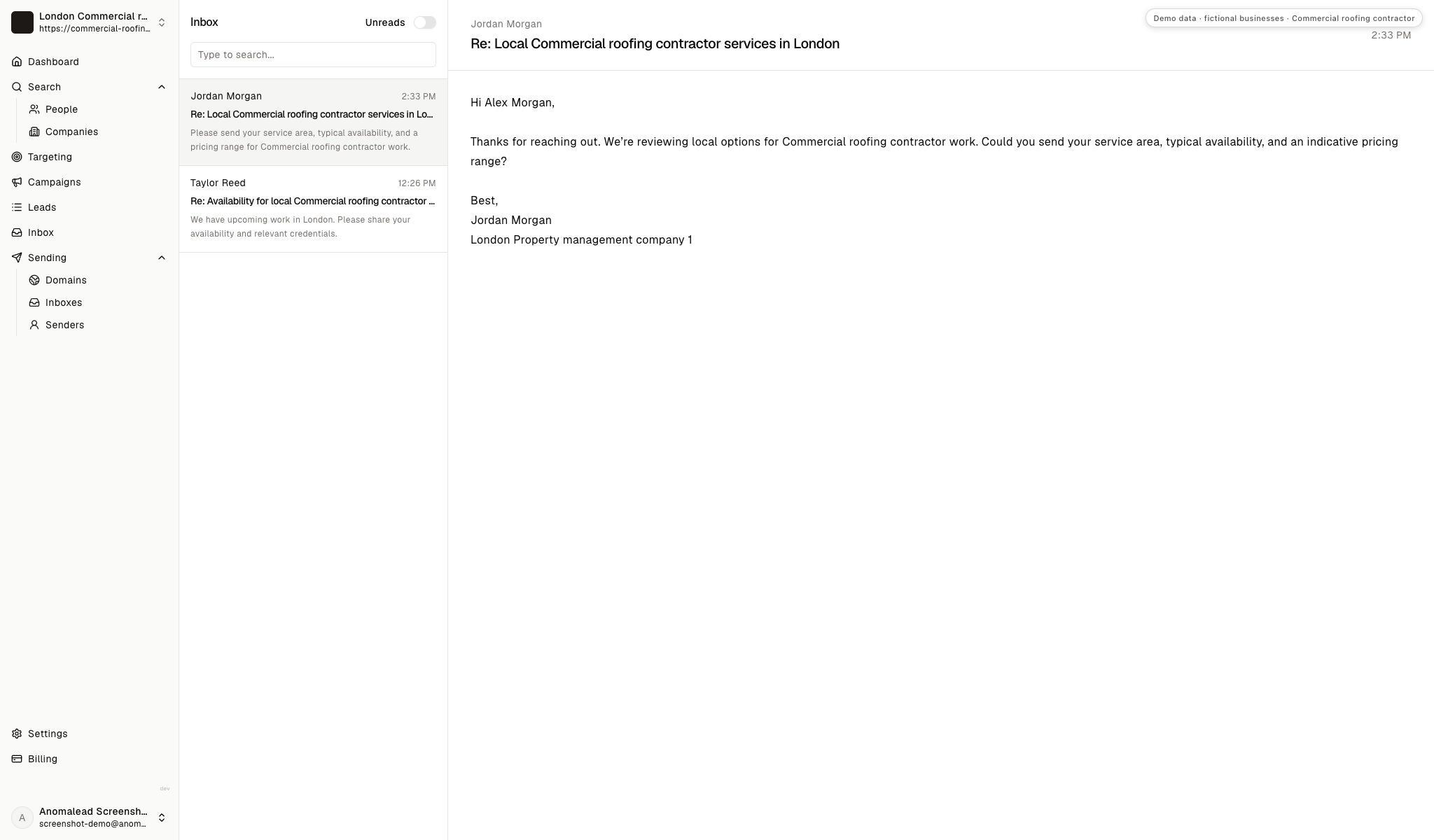
Answer the vendor question without guessing at roof condition
Section titled: Answer the vendor question without guessing at roof conditionGive the property team verifiable contractor information, then ask what is needed to define the asset and scope. A site record and an authorized inspection should support any statement about condition or follow-on repairs.
A manager asks how you would scope a portfolio inspection
Section titled: A manager asks how you would scope a portfolio inspectionWe are reviewing contractors for several managed buildings. What records and access arrangements would your team need before proposing an inspection plan?
Ask for the roof inventory, existing reports, warranty details, building access process, and the person who approves work. Explain that each roof needs a suitable inspection scope, and that findings depend on a qualified site assessment. Avoid pricing an entire portfolio from a company profile.
A clear response might say:
Hi Jordan, thanks for asking. We would start with the assets in scope, available roof records, access requirements, and any warranty or current-vendor restrictions. After confirming the roof systems and an authorized site-visit process, we can outline an inspection plan and written estimate for review. Who coordinates those details for the buildings you manage? Best, Alex Morgan
The manager asks about credentials and team availability
Section titled: The manager asks about credentials and team availabilityCould you share your current insurance and safety documents, the roof types you cover, and how you confirm a crew is available for the requested sites?
Send current documents and an accurate list of roof types your team assesses. Explain how you confirm staffing after learning the site count, access windows, and travel needs. Do not claim certifications, warranty approval, or capacity unless the company can substantiate it.
Keep each claim checkable:
Hi Taylor, I can send the insurance and safety documents we currently hold, along with our verified service scope. We would confirm team availability once we know the buildings, roof systems, access windows, and inspection requirements. Please share the vendor-review process and we can prepare the right material. Best, Alex Morgan
A property manager already uses a roofing contractor
Section titled: A property manager already uses a roofing contractorWe have an existing contractor for the roofs in our portfolio.
Respect the current agreement and ask whether the manager has a separate planned inspection or maintenance review. Do not imply the incumbent contractor is underperforming without evidence. If the portfolio is not reviewing options, acknowledge the answer and stop follow-up.
A low-pressure close is enough:
Thanks for letting me know. I would not want to interfere with a contractor arrangement that is working. If your team reviews planned inspection coverage for another building or at a later point, I can share our current service details. Otherwise I’ll leave it here.
Commercial roofing lead generation questions
Section titled: Commercial roofing lead generation questionsWho approves a commercial roof inspection?
Section titled: Who approves a commercial roof inspection?A property manager may coordinate access, while an owner representative or asset manager may approve the inspection and any follow-on spend. Ask who controls the vendor process, roof records, site access, and contract before estimating.
What should a roofing contractor ask before pricing portfolio work?
Section titled: What should a roofing contractor ask before pricing portfolio work?Confirm the buildings and roof systems in scope, existing reports and warranty terms, access and safety requirements, inspection deliverables, and who authorizes the work. Arrange an appropriate site review when roof condition or layout affects the estimate.
Can a company search identify roofs that need repair?
Section titled: Can a company search identify roofs that need repair?No. A property-management company profile cannot establish roof condition or a maintenance requirement. It can help find an account to research; an authorized inspection and relevant records are needed to assess a particular asset.
How should preventative maintenance be described?
Section titled: How should preventative maintenance be described?Describe the inspections, maintenance tasks, records, and exclusions your company actually provides. Do not guarantee that a plan will prevent every leak, remove all risk, or extend the roof’s life; explain that findings and recommendations depend on the roof and inspection.
What if a manager asks for urgent leak work?
Section titled: What if a manager asks for urgent leak work?Confirm whether your company offers that response and whether a qualified crew is available, then follow the manager’s site access and safety process. Do not promise an arrival time or repair outcome before checking the actual request and your capacity.
Choose a portfolio and ask for one roof record
Section titled: Choose a portfolio and ask for one roof recordPick a commercial manager whose building locations match your team’s coverage. Verify who handles roof records and site access, then ask for the approved vendor process and one asset’s inspection history before preparing a maintenance proposal. Keep the next step within the crew’s verified scope and capacity.
Use a concise property-team follow-up approach to answer the manager’s question, request the next useful document, and stop when the company is not reviewing providers.