


Construction company lead generation is most valuable when a builder reaches a property developer before a project team and scope are fully set. A local developer may be planning a new building, repositioning an existing asset, or coordinating a renovation. Those signals justify research, not a claim that funding, permits, or a construction award are in place. Start by identifying what kind of work your crews can deliver and which project stages you can support.
This guide shows how to find developer accounts, qualify a possible project, and make an introduction that explains your scope without pretending to know the plans. Use these construction project lead research steps to separate public facts from open questions, then ask the contact how the project team evaluates local construction partners.
Key takeaways
- Focus on developers with local projects that fit your trade mix, delivery area, crew capacity, and contract size range.
- Qualify project stage, site control, design status, procurement route, schedule, and the person who can invite or approve a bid.
- Describe construction scope, exclusions, credentials, safety process, and relevant project evidence only when your company can verify them.
- Ask for the bid package or a short scoping conversation; a company profile does not prove that a project is funded or ready to award.
Developer project signals that merit a closer look
Section titled: Developer project signals that merit a closer lookThe useful account is a developer with a local project your company can pursue through a clear procurement path. Public announcements, planning references, and portfolio pages can point to a conversation, but each needs confirmation with the project team.
- Developers assembling a project team: A development group may be evaluating general contractors, trade partners, or preconstruction support while the brief is taking shape. Ask which package is open and who is coordinating it. Do not assume a public project announcement means the developer is inviting unsolicited bids.
- Owners planning a substantial renovation: An owner may be comparing a renovation with other asset plans or deciding which scopes to price first. Confirm whether the building is under the developer's control, what drawings or surveys are available, and whether the work can fit your occupied-site experience.
- Regional developers with repeat local work: A group working across several sites may value consistent documentation and a reliable local subcontractor network. Verify each project's location and timing separately; one relationship does not guarantee access to every package or site.
- Project managers coordinating procurement: A project manager may collect qualifications, clarify tender dates, and route questions to design or commercial leads. Ask whether the person can add a contractor to the bid list or can direct you to the procurement contact.
Prioritize accounts by the project evidence and decision path you can verify, rather than by the size of a developer's portfolio.
Qualify the project before offering a price
Section titled: Qualify the project before offering a priceA construction lead becomes actionable when the developer can describe a package, timing, and route to a written scope. Before estimating, establish what information is available and which assumptions would otherwise distort your price.
- Project stage and drawings: Ask whether the project is in feasibility, design development, tender, or active construction, and which plans or specifications are ready for review. Note revisions and missing schedules instead of pricing from a planning notice or rendering.
- Package boundaries and interfaces: Clarify what work sits inside your package, what is excluded, and which trades or consultants control interfaces. Structural openings, temporary protection, utilities, and finish responsibilities can affect the sequence and should be assigned in the bid documents.
- Site conditions and logistics: Find out whether work occurs in an occupied building, how deliveries and storage are managed, and what access or working-hour limits apply. Confirm who arranges surveys, site induction, permits, and the circulation of current plans.
- Procurement and commercial terms: Ask who issues the invitation to tender, when questions close, what form of contract is expected, and which insurance, bonding, or qualification records are required. Review payment terms, retention, and change-order rules before making a commercial commitment.
- Schedule and capacity: Check the requested start window against other booked work, lead times for materials, subcontractor availability, and any required sequencing. Offer only dates your operations lead has confirmed; a developer's target date is not a promise your team can meet.
- Credentials and proof: Send current licenses where required, insurance certificates, safety documentation, and project examples that match your scope. Obtain permission before sharing client references, and do not imply that a photo or public project listing proves your company performed the work.
What appears in the demo
The walkthrough uses fictional London Construction company Services, generic London Real estate developer records, and the fictional contacts Jordan Morgan and Taylor Reed. The businesses, inbox replies, and project wording are demo fixtures, not customers, active developments, bid invitations, or campaign results. They show no plans, permits, funding status, or awarded construction package.
Build a developer list around work your crews can deliver
Section titled: Build a developer list around work your crews can deliverBuild a developer list from current project announcements, planning references, and portfolio pages, then use the local search to organize accounts for review. The walkthrough shows three generic company records, two saved results, contact enrichment, a lead list, a campaign draft, a three-message sequence, and inbox replies. Those screens help organize research; they contain no project plans, tender details, or proof that a developer needs a contractor.
Review each developer's public project portfolio and look for a current, attributable signal such as a planning submission, site acquisition announcement, or renovation programme. Verify the project entity, locality, project stage, and your possible package with a current source before adding a contact. Use this developer account mapping approach to record which details are confirmed and which need a direct answer.
Set the search to your practical project area
Section titled: Set the search to your practical project areaChoose the area where your team can mobilize and the real-estate-developer category shown in the fixture. A radius returns account records; it does not tell you whether a project is active, funded, or open to bids.
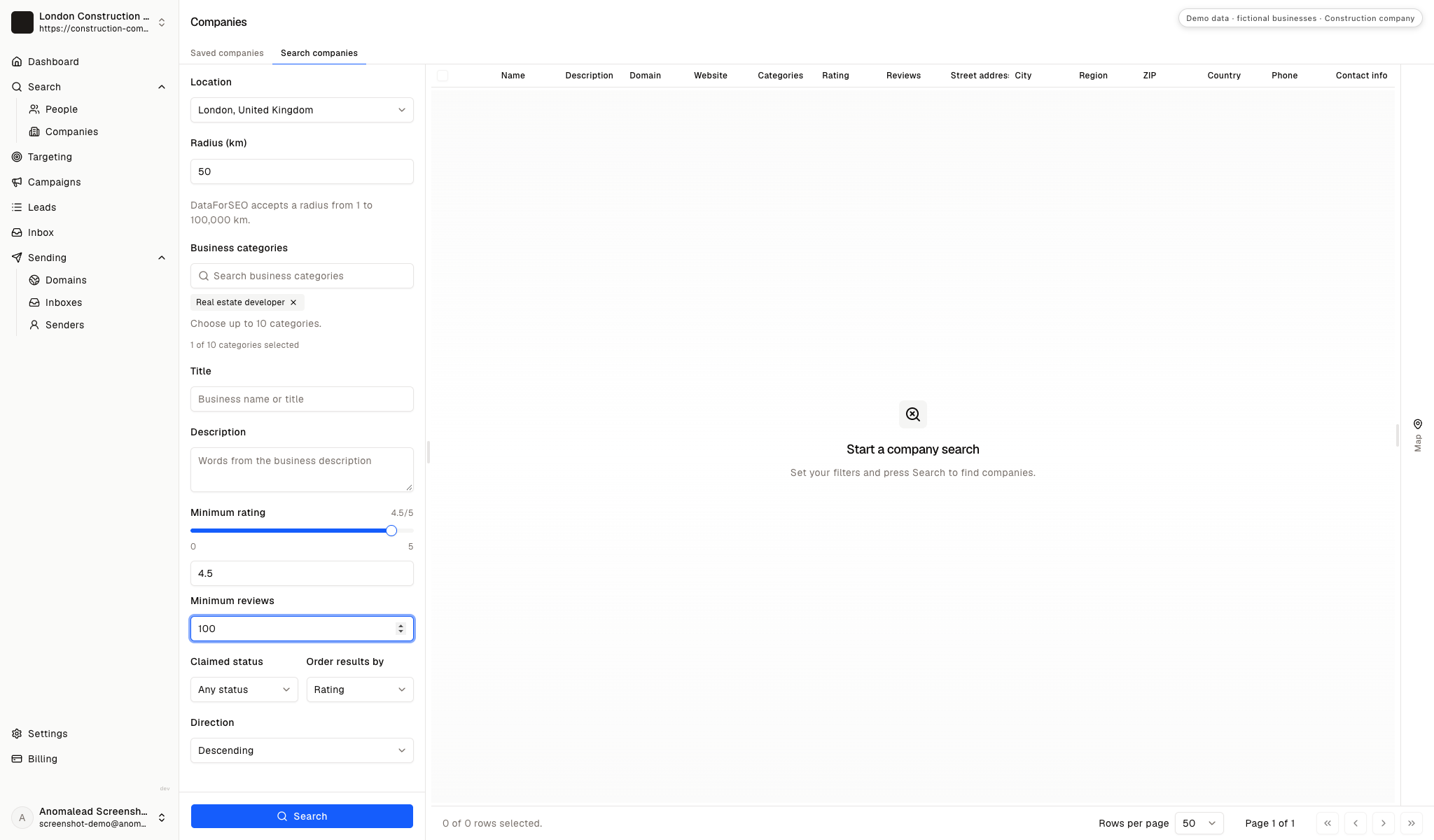
Review developer records before saving prospects
Section titled: Review developer records before saving prospectsThree fictional developer records appear with generic descriptions, domains, ratings, and review counts. The fixture has no project name, design team, tender date, or construction brief.
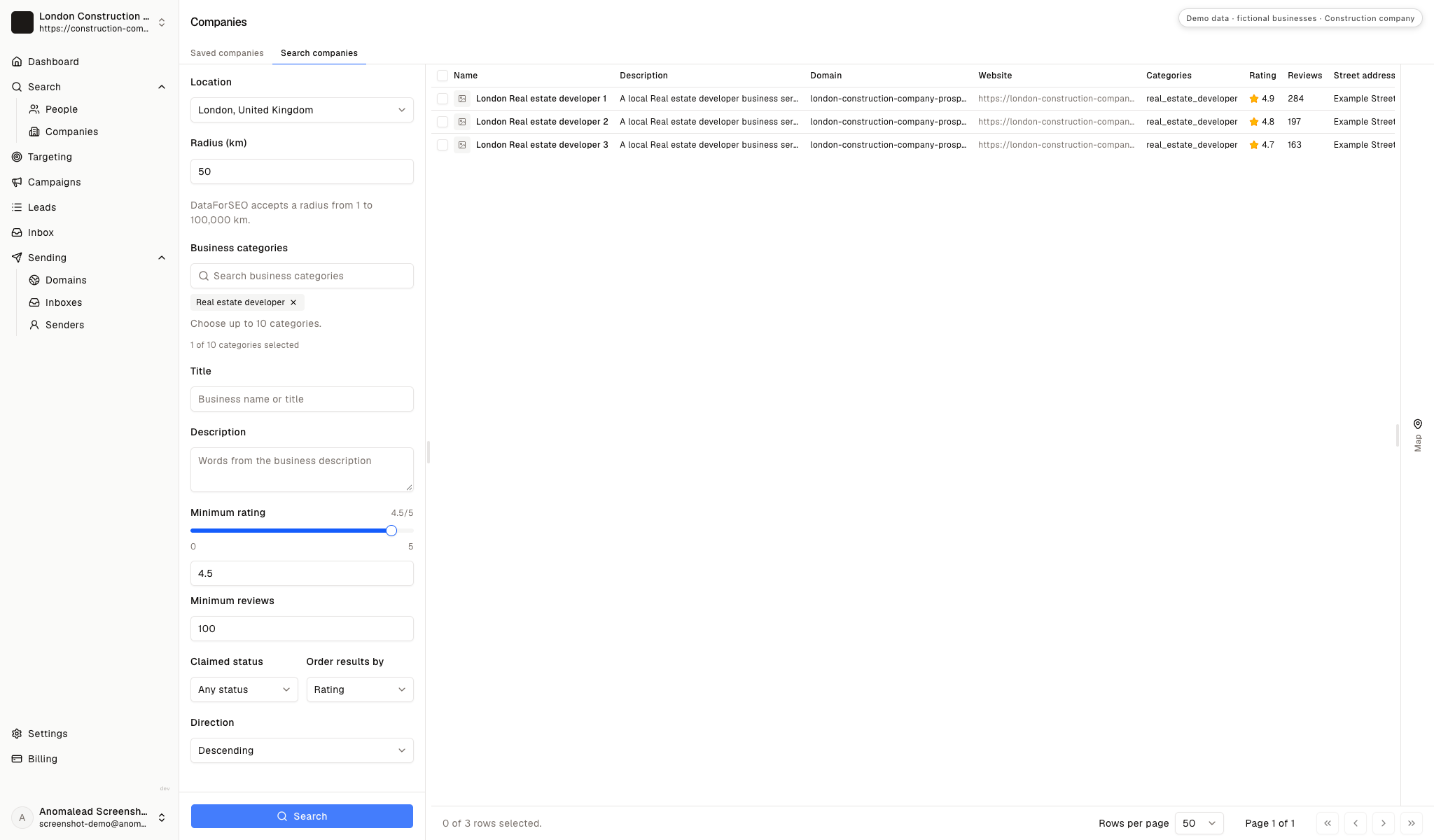
Save accounts with a relevant project signal
Section titled: Save accounts with a relevant project signalThe demo marks two of three records for saving. Keep a developer only when a public source points to a local project that fits your scope, then verify that the named group controls or coordinates the work.
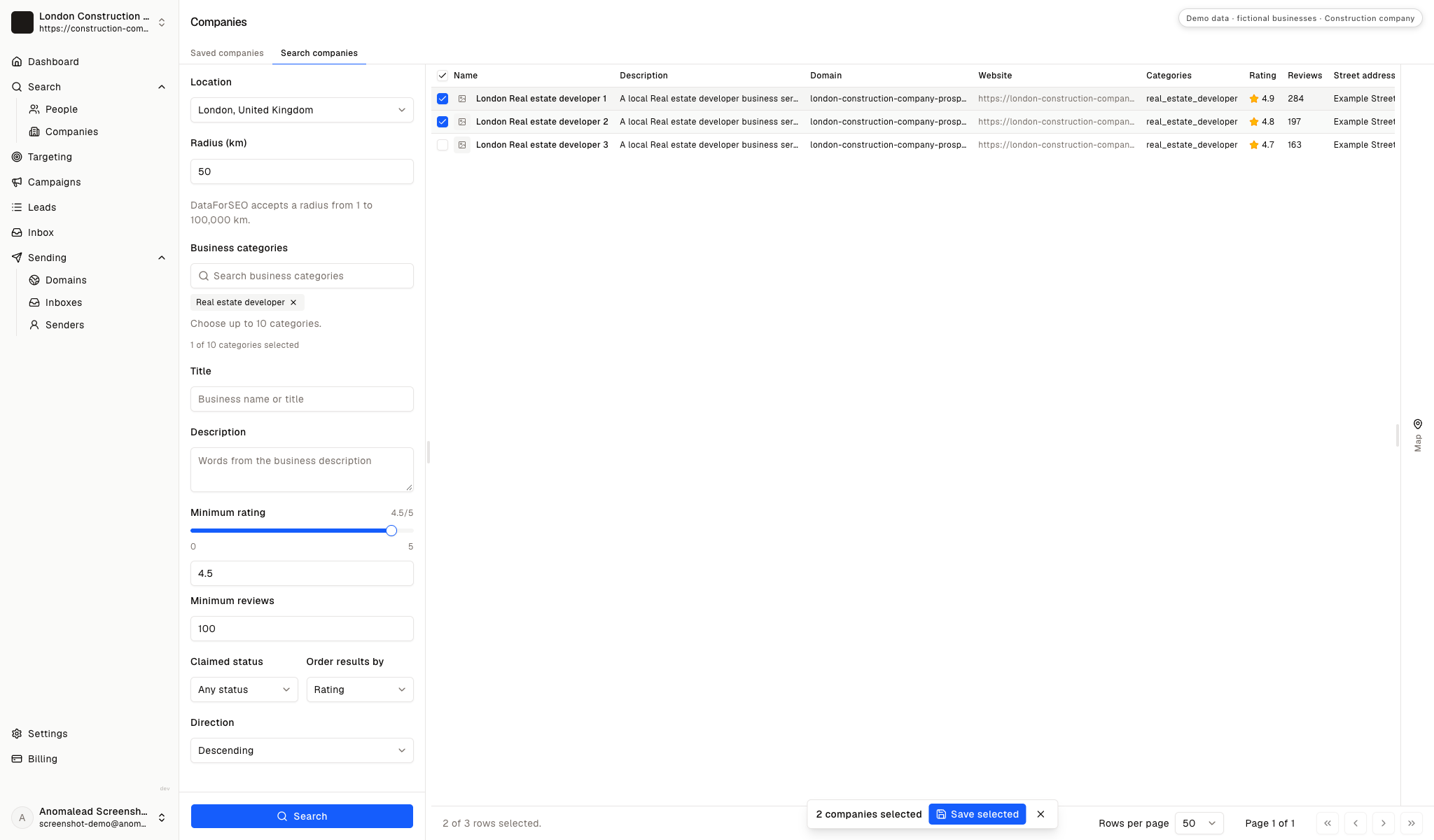
Reach the person who can clarify the bid path
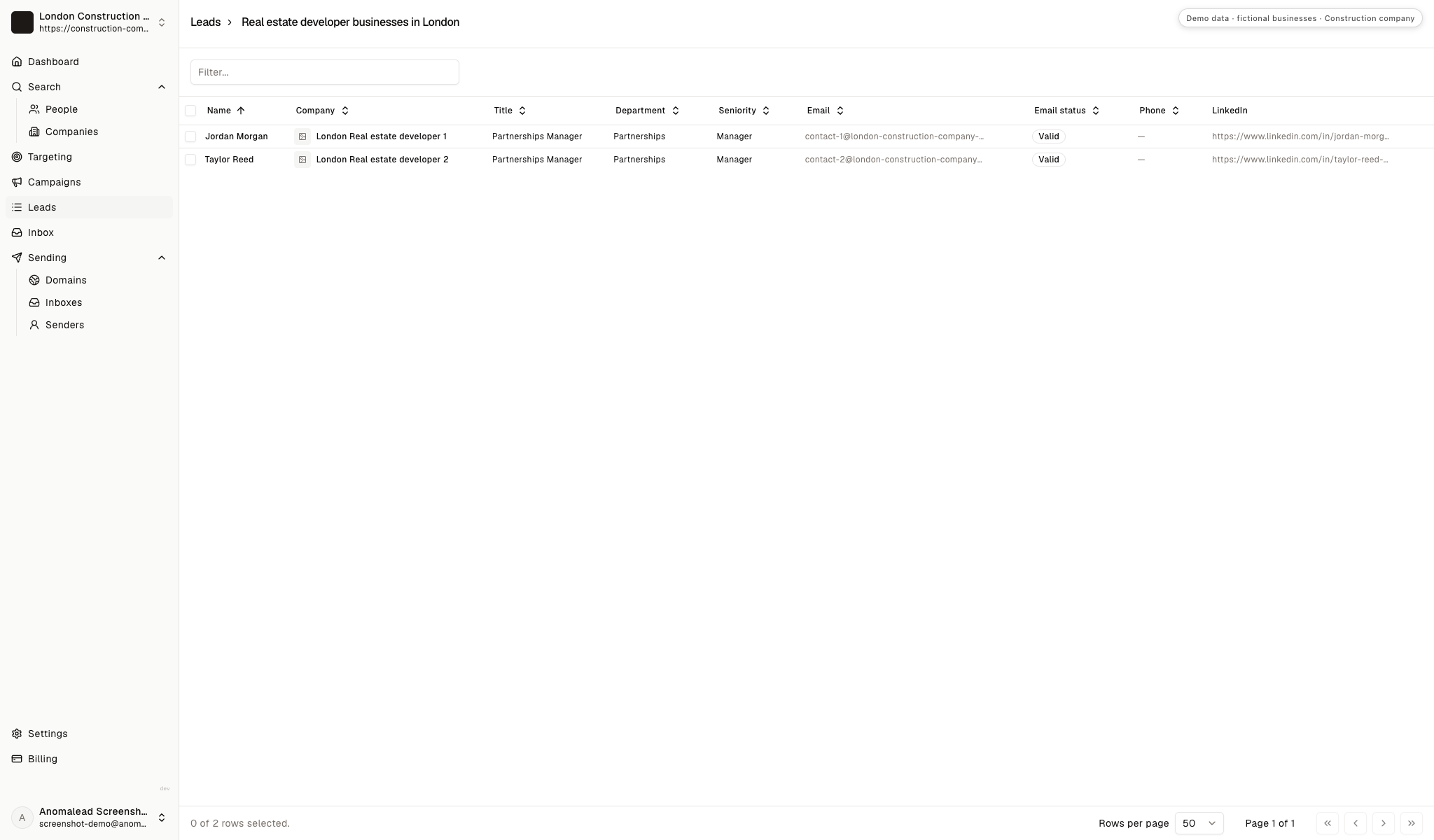
Section titled: Reach the person who can clarify the bid pathTo reach someone who can clarify the bid path, first locate the person who owns preconstruction procurement for the named site. Developers may divide project authority among a development director, project manager, estimator, procurement lead, and owner representative. The fixture lists Jordan Morgan and Taylor Reed as fictional Partnerships Managers; that title does not show who issues bid invitations or approves a contractor. Check the contact’s remit before sending qualifications or asking about a package.
Look for a current professional profile or project-team page, then ask who owns preconstruction procurement for the relevant site. A short question about the bid list, package boundaries, and document requirements is more useful than asking a general partnerships contact to forward an unsolicited estimate.
Recheck account fit before enriching contacts
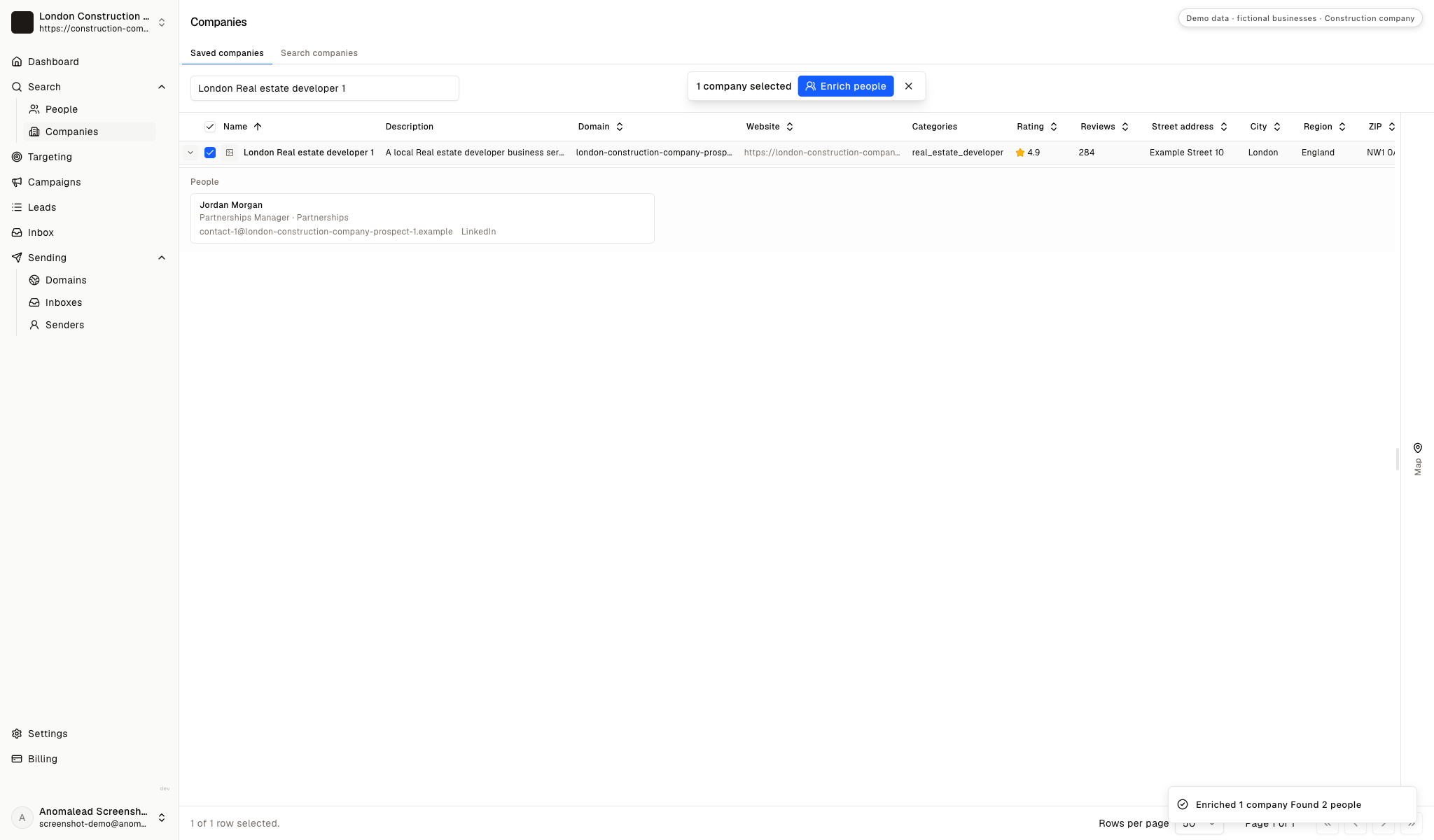
Section titled: Recheck account fit before enriching contactsThe saved view shows one fictional developer selected with an Enrich people action. Confirm the project signal and local fit before adding names to a contractor prospect list.
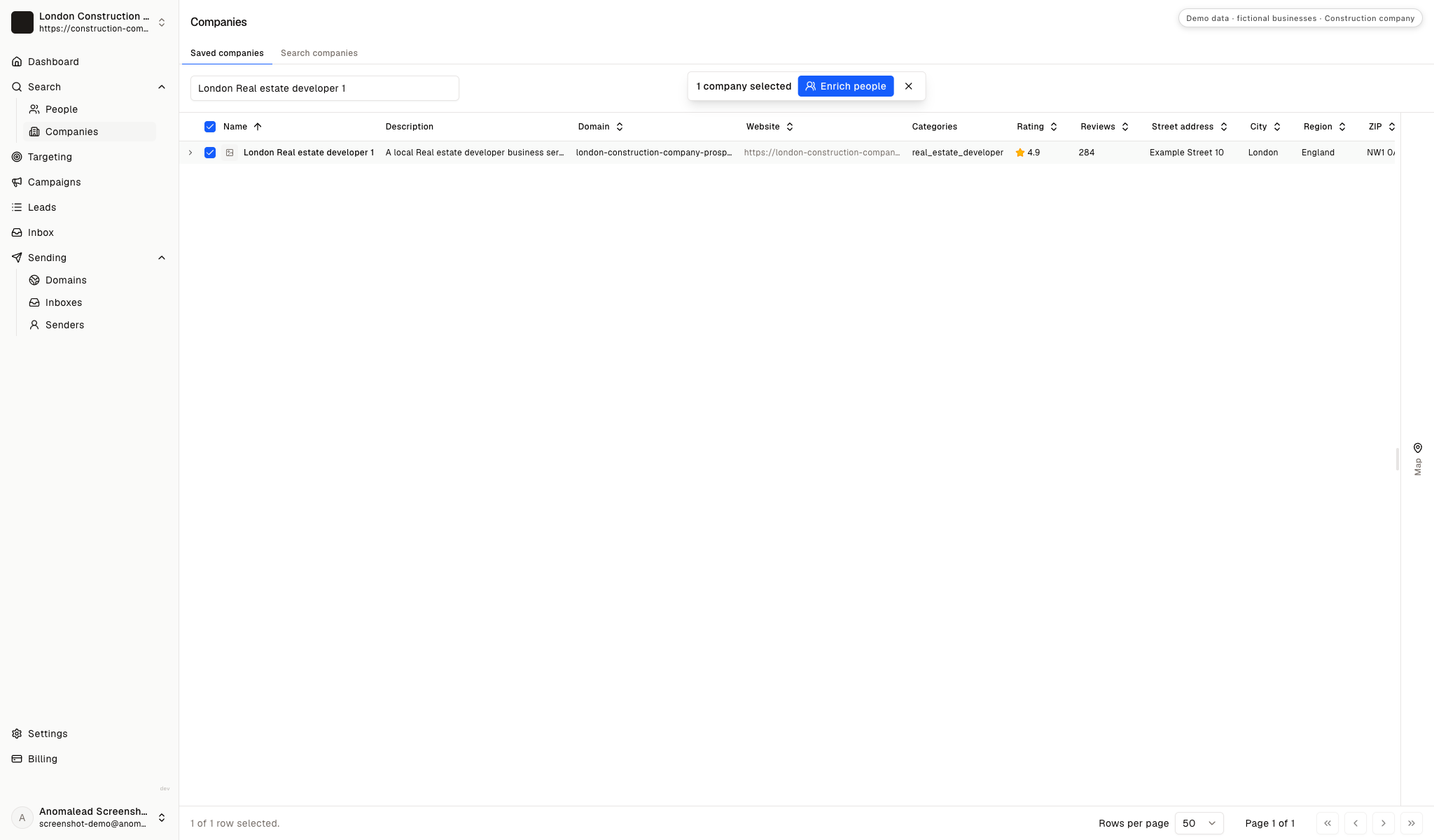
Verify who manages project procurement
Section titled: Verify who manages project procurementJordan Morgan and Taylor Reed carry fictional Partnerships Manager titles in the fixture. A live project may route bids through a project manager, procurement team, estimator, or appointed construction manager.
Keep project context beside each contact
Section titled: Keep project context beside each contactThe demo list contains two fictional contacts with email status. Add the public project source and the question that remains open so a later message is tied to a verifiable reason for contact.
Check the estimating effort before pursuing a package
Section titled: Check the estimating effort before pursuing a packageA tender can require drawing review, a site visit, trade coordination, supplier checks, and commercial review before a bid is ready. Compare that effort with the package's fit and your team's current commitments.
Use your own assumptions for estimator hours, site travel, takeoffs, supplier quotations, subcontractor input, insurance or bond requirements, and the expected bid scope. The calculator does not predict award probability, project margin, or future revenue.
Do the math on one good deal
If one new customer is worth thousands, you don’t need magic. You need a few more meetings a month.
Projected monthly results
- Deals closed
- 2.0
- Projected revenue
- £10,000
- Growth plan (1 business)
- £79/mo
- ROI
- 12,558%
Conservative math on meetings you already believe you can book. One closed deal often pays for a year of Anomalead.
Spend bid time where the project information and decision path are credible. If drawings or scope boundaries are missing, ask for clarification before treating the package as priceable.
Make the introduction about one package or decision
Section titled: Make the introduction about one package or decisionA credible construction introduction tells a project contact which work your company performs, where it can mobilize, and what qualifications or bid information it can provide. Tie the note to a project stage or public announcement only after verifying the source. Ask whether the developer is collecting contractor qualifications or whether a named package is open for discussion.
Do not infer a start date from a planning notice or promise to meet a schedule before operations review. Avoid sending a price from an incomplete drawing set; state what plans, specifications, surveys, or site information you need to scope the package. This guide to project-stage outreach emails can help keep the first request focused on a useful next step.
Check the recipients against the project team
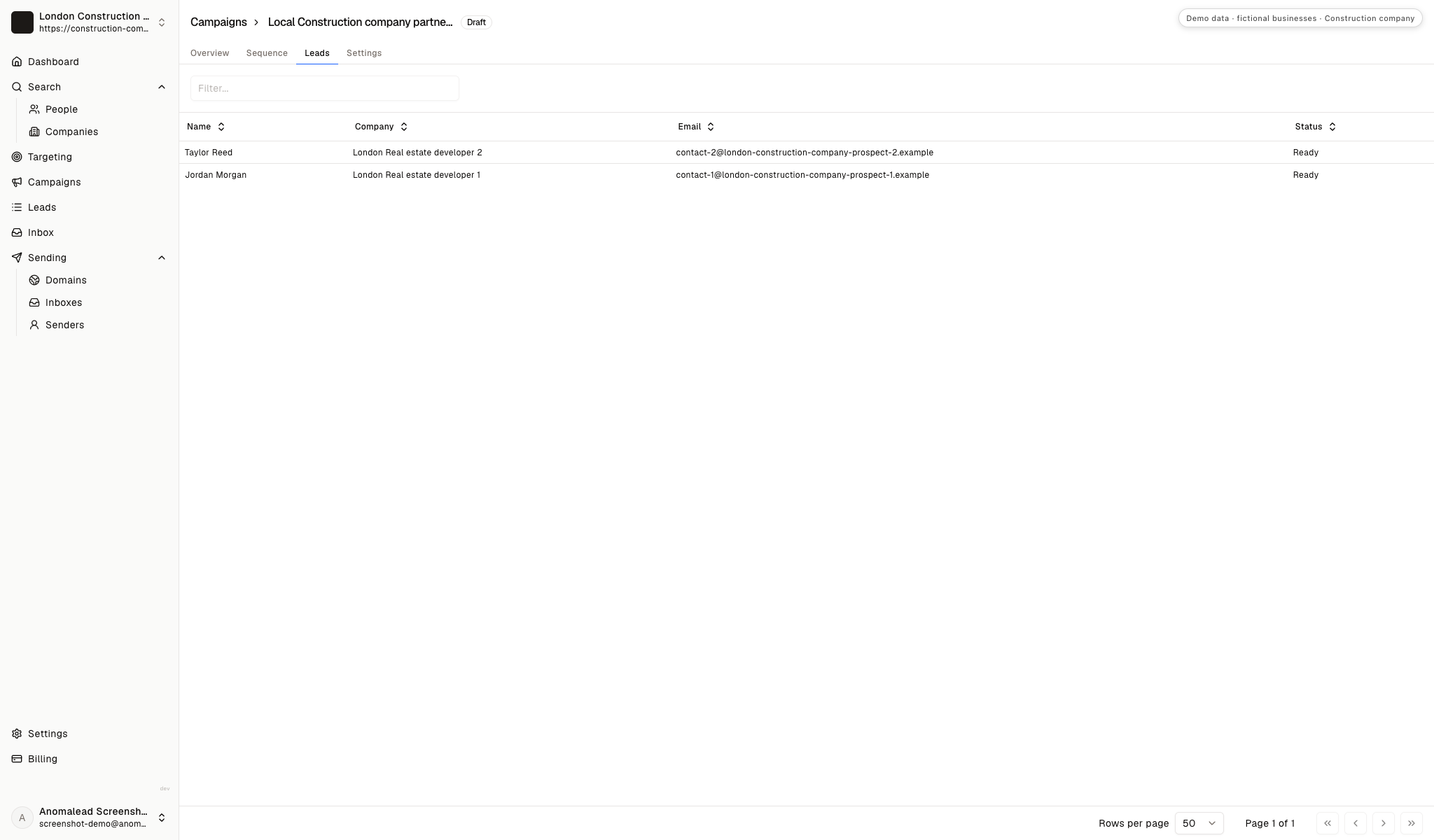
Section titled: Check the recipients against the project teamThe campaign draft has two recipients and a fictional London construction company name. Confirm that each person works with project procurement and that your message makes no unsupported claim about an upcoming development.
Review follow-ups for project relevance
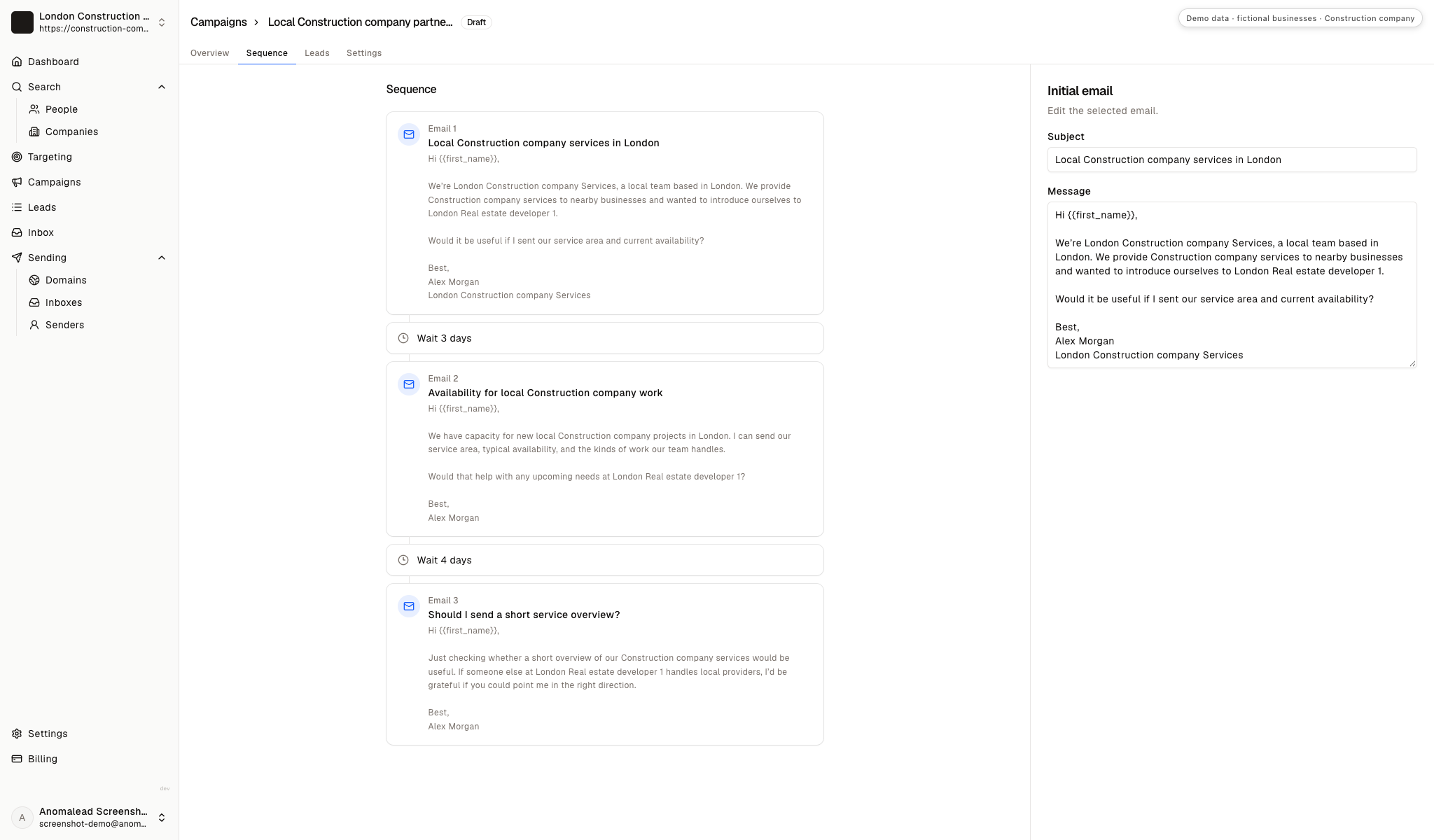
Section titled: Review follow-ups for project relevanceThe demo sequence contains three generic messages with scheduled waits. Replace broad claims with the verified project signal, your relevant package, available credentials, and one clear question; stop after a decline or opt-out.
Ask how the developer qualifies local builders
Section titled: Ask how the developer qualifies local buildersUse an accurate, project-aware note to learn whether the developer is reviewing contractors or assembling a bid list. The names below belong to the fictional fixture; replace the contractor profile with verified details.
First note to a developer contact
Subject: Local construction capacity for upcoming projects
Hi Jordan,
I’m writing from London Construction company Services. Our team delivers local construction work when the package, schedule, and site conditions fit our verified scope and capacity.
If your team is assembling contractors for a London development, could you point me to the person who manages preconstruction procurement? I can share our current coverage, relevant credentials, safety documents, and examples of work we can substantiate. We would review the bid package and site requirements before confirming interest or price.
Best, Alex Morgan, London Construction company Services
Follow-up after a request for qualifications
Subject: Re: Local construction capacity for upcoming projects
Hi Taylor,
I can send our current contractor qualifications and outline the packages our team can evaluate. Before we comment on availability or cost, we would need the project location, bid scope, current drawings, target sequence, and the relevant site requirements.
Could you share the procurement process and the right project contact? I will prepare only the documents requested and confirm our capacity after an operations review.
Best, Alex Morgan
Confirm your scope, current capacity, licenses, insurance, safety records, and reference permissions before sending. See these project-team introduction examples for a concise way to present a relevant offer.
Read replies as a request for bid-ready information
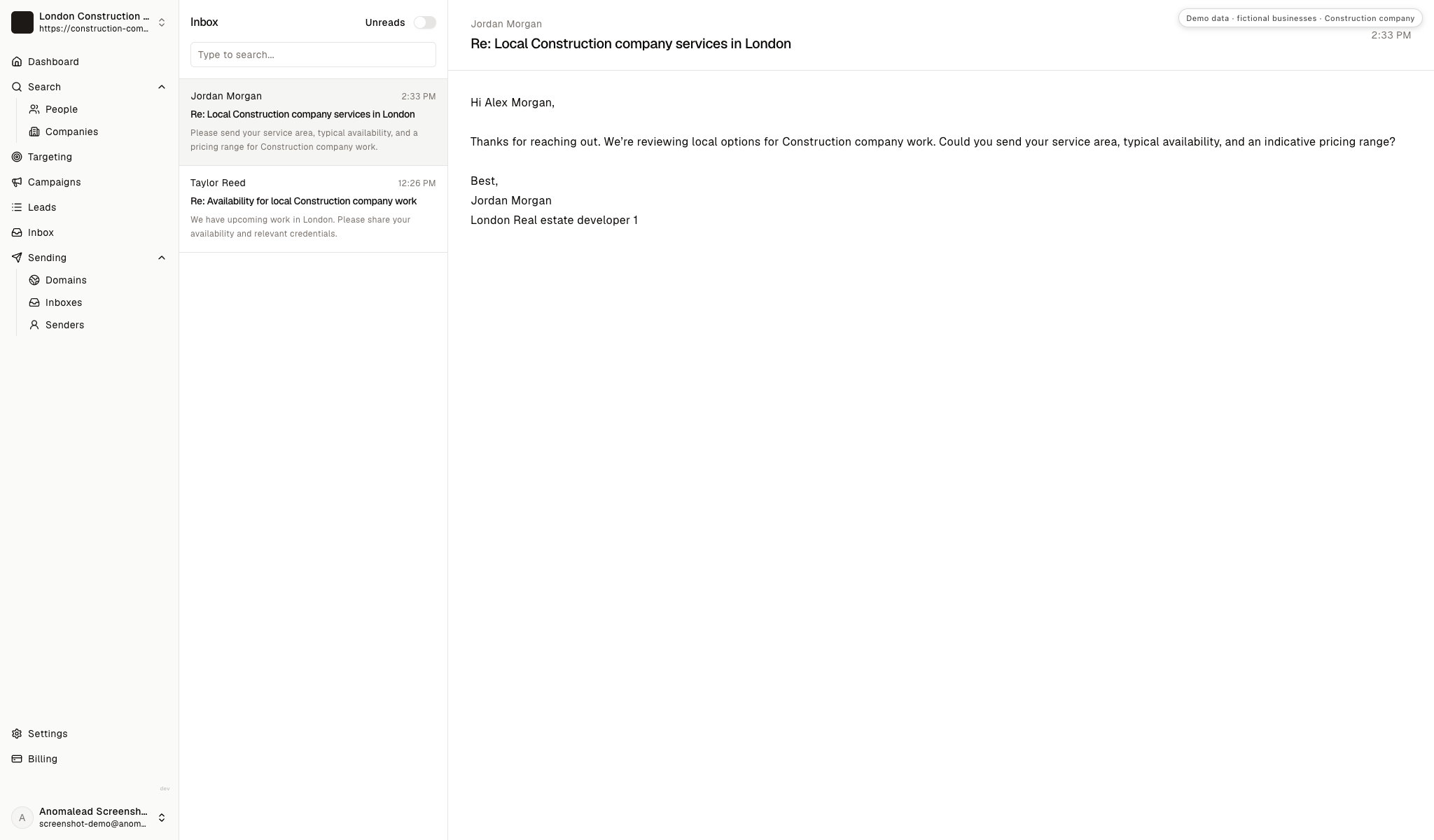
Section titled: Read replies as a request for bid-ready informationThe fictional inbox shows one contact asking for service area, availability, and an indicative price range; another asks for upcoming-work availability and credentials. No project plans, tender documents, or award notice are present.
Answer developer questions without pricing a blank scope
Section titled: Answer developer questions without pricing a blank scopeTreat a request for availability or credentials as a chance to confirm the site, package, and bid route. Share current evidence, ask for the plans and commercial documents that govern the tender, and identify what your team still needs to estimate. Interest in a contractor is not an award or a confirmed start date.
A developer asks about area, availability, and indicative pricing
Section titled: A developer asks about area, availability, and indicative pricingCould you send your service area, usual availability, and an indicative price range for construction work?
State the locations you can serve and describe current capacity only after checking the schedule. Explain which project facts affect price, including package boundaries, drawings, site logistics, and contract terms. Offer to review one defined scope rather than guessing from a company name.
A useful answer would be:
Hi Jordan, thanks for checking. We can confirm the areas and work types that fit our current team after an operations review. A meaningful price range depends on the package, current drawings, site access, sequence, and commercial terms. Could you send the bid scope and document list, or introduce me to the person coordinating preconstruction? Best, Alex Morgan
A project contact asks for availability and construction credentials
Section titled: A project contact asks for availability and construction credentialsWe may have a London project coming up. Please send your availability, the work your team covers, and relevant licenses or credentials.
Send the current credentials the company actually holds and identify the packages your crews can execute. Check subcontractor commitments, supplier lead times, and the proposed sequence before confirming a start window. Ask whether the developer has a qualification form or tender calendar.
Keep the evidence current:
Hi Taylor, I can share our current licenses, insurance, safety materials, and the work scopes we can verify. We will confirm crew availability after reviewing the project location, package, sequence, and material lead times. Could you send the qualification requirements and expected bid dates? Best, Alex Morgan
The developer says its contractor list is already set
Section titled: The developer says its contractor list is already setWe have appointed contractors for the current project.
Acknowledge the closed process without criticizing the appointed team. Ask whether a separate future package uses a qualification process, but only continue if the contact welcomes that conversation. Record the boundary and stop otherwise.
A respectful close can say:
Thanks for clarifying. I understand the contractor team is in place for this project, so I will not ask you to reopen that process. If you invite local firms to qualify for a later package, I can provide our current scope and documents then. Best, Alex Morgan
Choose one project and request its bid requirements
Section titled: Choose one project and request its bid requirementsFor your next prospecting batch, select one developer with a verifiable local project that fits your trade capability and delivery schedule. Confirm who handles procurement, ask which package information is available, and send current qualifications only when requested. Record unresolved scope questions before deciding whether to estimate.
For a relevant next step, use a project-stage follow-up that asks about bid timing or missing documents, then pause if procurement is closed or the work falls outside your capacity.
Construction company lead generation questions
Section titled: Construction company lead generation questionsHow can a small construction company find property developers?
Section titled: How can a small construction company find property developers?Build an account list from public project announcements, planning references, development portfolios, and local industry directories. Verify the project entity, site, stage, procurement contact, and whether the package fits your capacity before approaching anyone.
What should a builder ask before bidding on a development?
Section titled: What should a builder ask before bidding on a development?Request the current bid scope, drawings and specifications, site information, schedule, access constraints, commercial terms, qualification requirements, and tender timetable. Identify exclusions and trade interfaces so the estimate reflects the work the developer expects.
Does a planning announcement mean a project is ready to build?
Section titled: Does a planning announcement mean a project is ready to build?No. A planning reference can show an application or decision, but it does not prove funding, final design, procurement timing, or a construction award. Treat it as a research signal and confirm status with the project team.
Are the developer businesses in the screenshots real?
Section titled: Are the developer businesses in the screenshots real?No. The interface uses fictional company and contact records with seeded reply text. They are not Anomalead customers, active developments, bid invitations, or campaign results.
What does the project calculator predict?
Section titled: What does the project calculator predict?It lets you enter your own assumptions about estimating effort and package costs to assess whether a bid is worth preparing. It does not predict award probability, project margin, or future revenue.