


Rehab center lead generation between organizations is mostly referral work: a local medical clinic sees patients who need rehabilitation, and its care coordinators need a service they can trust and explain to the patient. This guide shows how to find those clinics, reach the right coordinator and make the referral handoff simple, without clinical promises.
First, write down what you actually provide: your programs, who you admit, who you can't take and how quickly intake responds. A clinic can't refer confidently to a vague description. If outbound prospecting is new to you, what B2B lead generation involves covers the basics of a focused account list.
Key takeaways
- Rehab centers earn clinic referrals by being easy to refer to: clear admission criteria, honest availability and one named intake contact.
- Target clinics whose patients plausibly need your programs, and write to the care coordinator or practice manager who arranges onward services.
- Keep patient information out of outreach, and move any case discussion to your secure referral channel.
- Keep outreach informational, and have any referral-related benefit reviewed against the professional and marketing rules that apply to your center.
- Treat a clinic's reply as a request for information: send a one-page referral summary and ask how the clinic refers today.
Rehab center lead generation starts with referring clinics
Section titled: Rehab center lead generation starts with referring clinicsFocus on clinics that already arrange onward care for patients who match your programs, and that have a named person organizing referrals.
- Primary care and family medicine practices: They may hear questions about rehabilitation after illness or injury. Check whether a coordinator or practice manager shares local service information and whether your program fits the patients they serve.
- Specialist clinics: These clinics may see people considering post-operative, neurological or musculoskeletal rehabilitation. Approach them only when a listed program matches your center’s services.
- Community and walk-in health clinics: Community health clinics are relevant when their patients may use a program your center provides. Confirm who maintains the local resource list and how a patient can ask about admission.
- Occupational health clinics: Occupational health clinics can be relevant for work-focused rehabilitation. Find out whether they coordinate external services or advise employees, and keep the patient and clinician in control of care decisions.
Match the program to the clinic: physical rehabilitation and substance use treatment have different referral partners. The chiropractic practice lead generation guide covers a neighbouring referral audience.
Qualify a clinic before you look for contacts
Section titled: Qualify a clinic before you look for contactsA clinic is a good prospect only if its patients, location and referral process line up with what your center delivers.
- Patient needs that match your programs: A sports-injury clinic is relevant to a center with an outpatient physical rehabilitation program. For any other program, shortlist clinics whose specialties match the service you actually provide.
- Distance patients can travel: Rehabilitation often means repeat sessions or a stay away from home. Keep to clinics whose patients can reach you, and note any transport or remote options.
- A referral route you can plug into: Find out whether the clinic refers through a coordinator, a shared form, secure messaging or the doctor directly. Fit that process rather than asking them to learn yours.
- Funding and eligibility: Coordinators hesitate when they can't tell a patient how treatment is paid for. Be ready to explain the funding routes or self-pay options you accept, where relevant.
- Room for an ongoing relationship: A clinic that regularly sees patients suited to your programs can become a useful contact, provided someone owns the referral handoff and follows up with the patient’s consent.
About the demo workspace
The screenshots use the fictional operator London Rehabilitation center Services. London Medical clinic 1, London Medical clinic 2, London Medical clinic 3, Jordan Morgan, Taylor Reed and both inbox replies are demo data. None of them are Anomalead customers, real clinics, real patients or real campaign results.
Find referring clinics in Anomalead
Section titled: Find referring clinics in AnomaleadThe walkthrough runs from company search to inbox. On each screen, narrow the list to clinics you could genuinely serve and a contact who organizes referrals.
Set a catchment area patients can reach
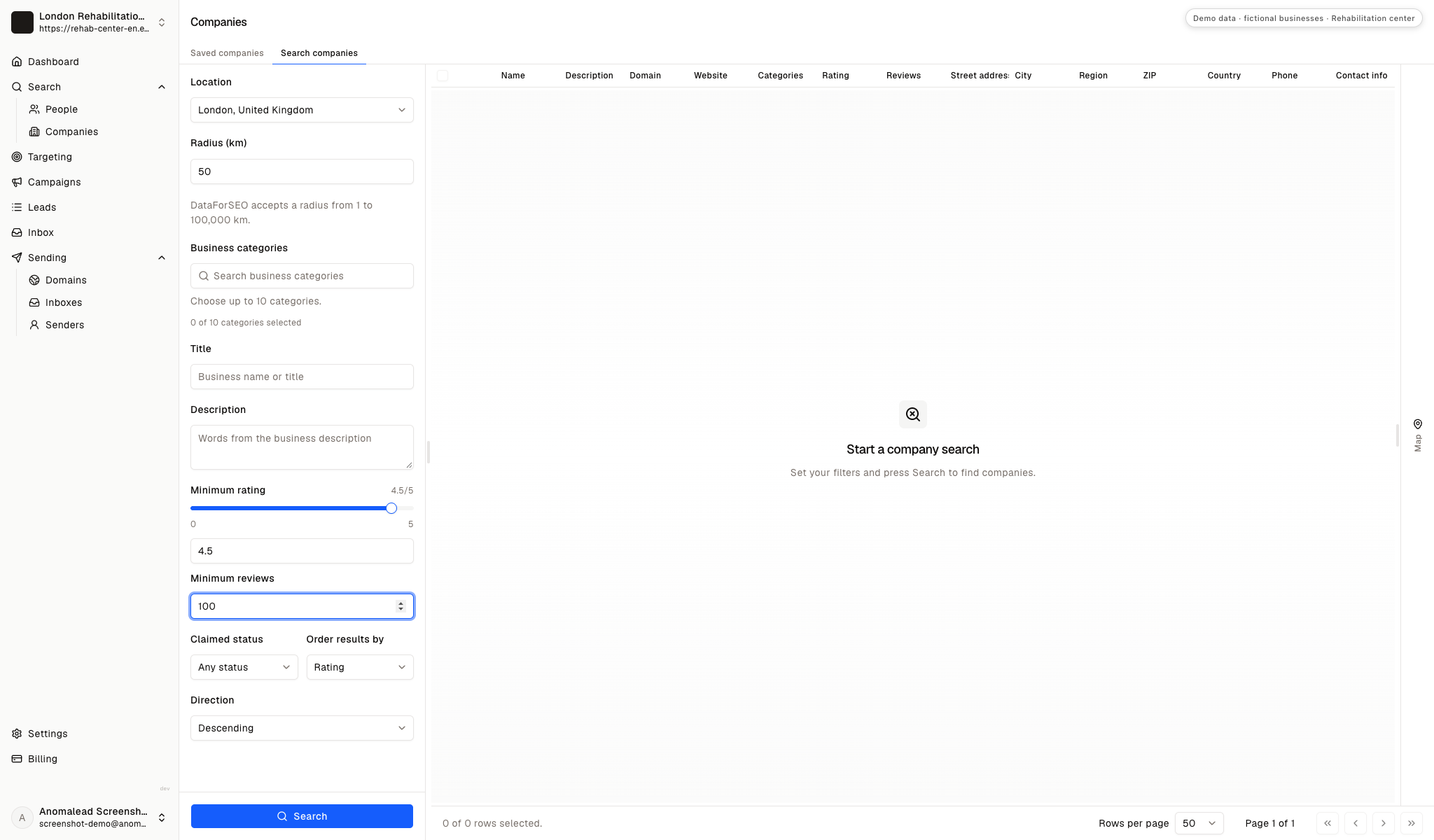
Section titled: Set a catchment area patients can reachPick the medical clinic category, then set the location and radius around your center. Base the radius on how far patients will travel for repeated sessions or an admission.
A high rating says nothing about whether a clinic's patients need rehabilitation.
Read the clinic results with your programs in mind
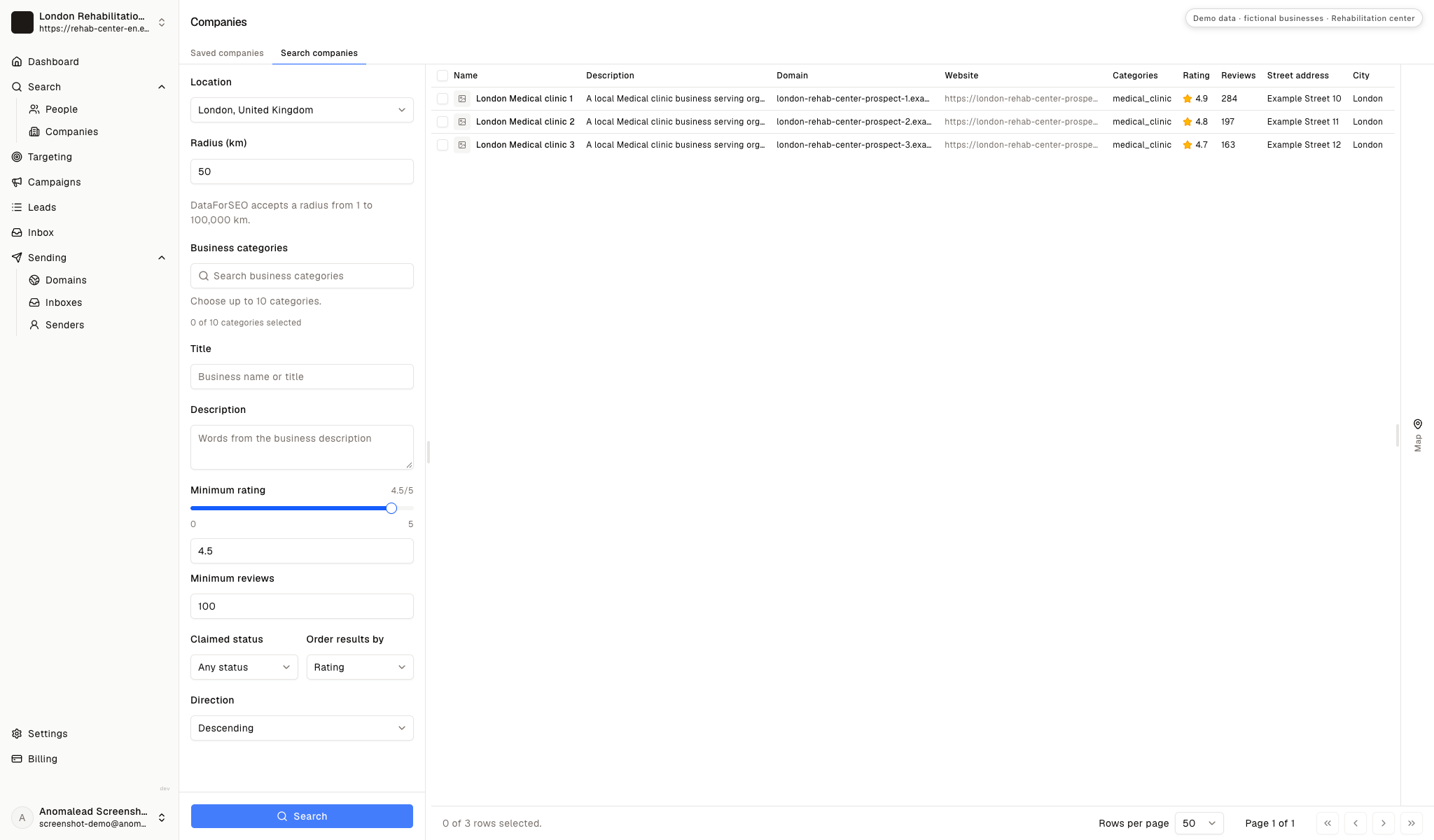
Section titled: Read the clinic results with your programs in mindThe results list three fictional medical clinics with a description, star rating and review count. The seeded descriptions are generic, so check each clinic's own website for its specialties and any mention of partner providers.
Save the clinics with a plausible referral need
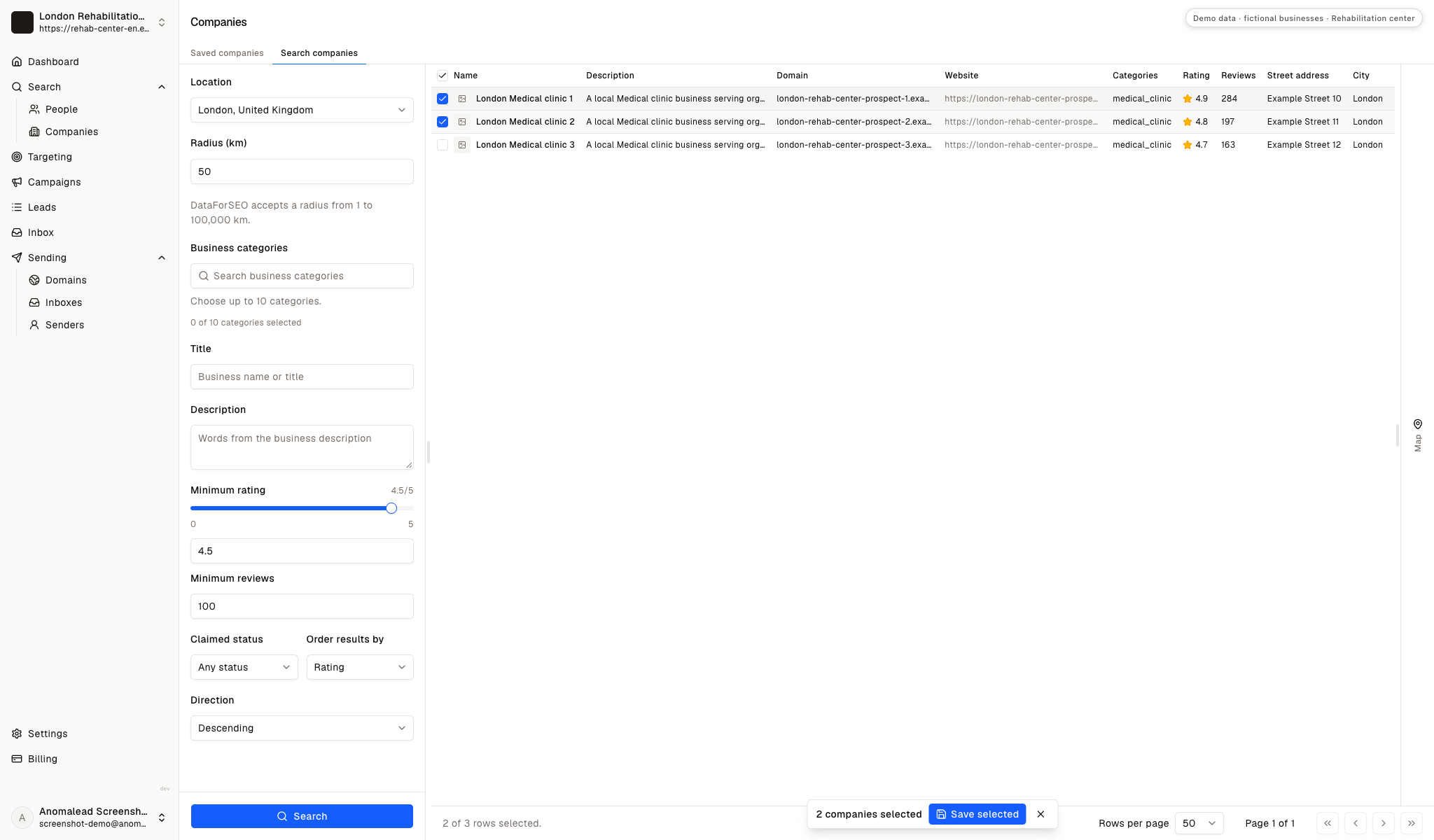
Section titled: Save the clinics with a plausible referral needTwo of the three clinics are ticked before saving. Saving only puts a clinic on your shortlist; leave out any practice whose specialty never touches your programs.
Reach the person who arranges onward care
Section titled: Reach the person who arranges onward careReferral administration may sit with a care coordinator, referral coordinator, practice manager or nurse lead who manages the route to onward services. Keep your note focused on that process and leave care decisions to the clinic's treating team.
Confirm each enriched person's role on the clinic's site and store work details only. If writing to strangers is new, how cold outreach differs from advertising explains the ground rules.
Check the saved clinic before enriching contacts
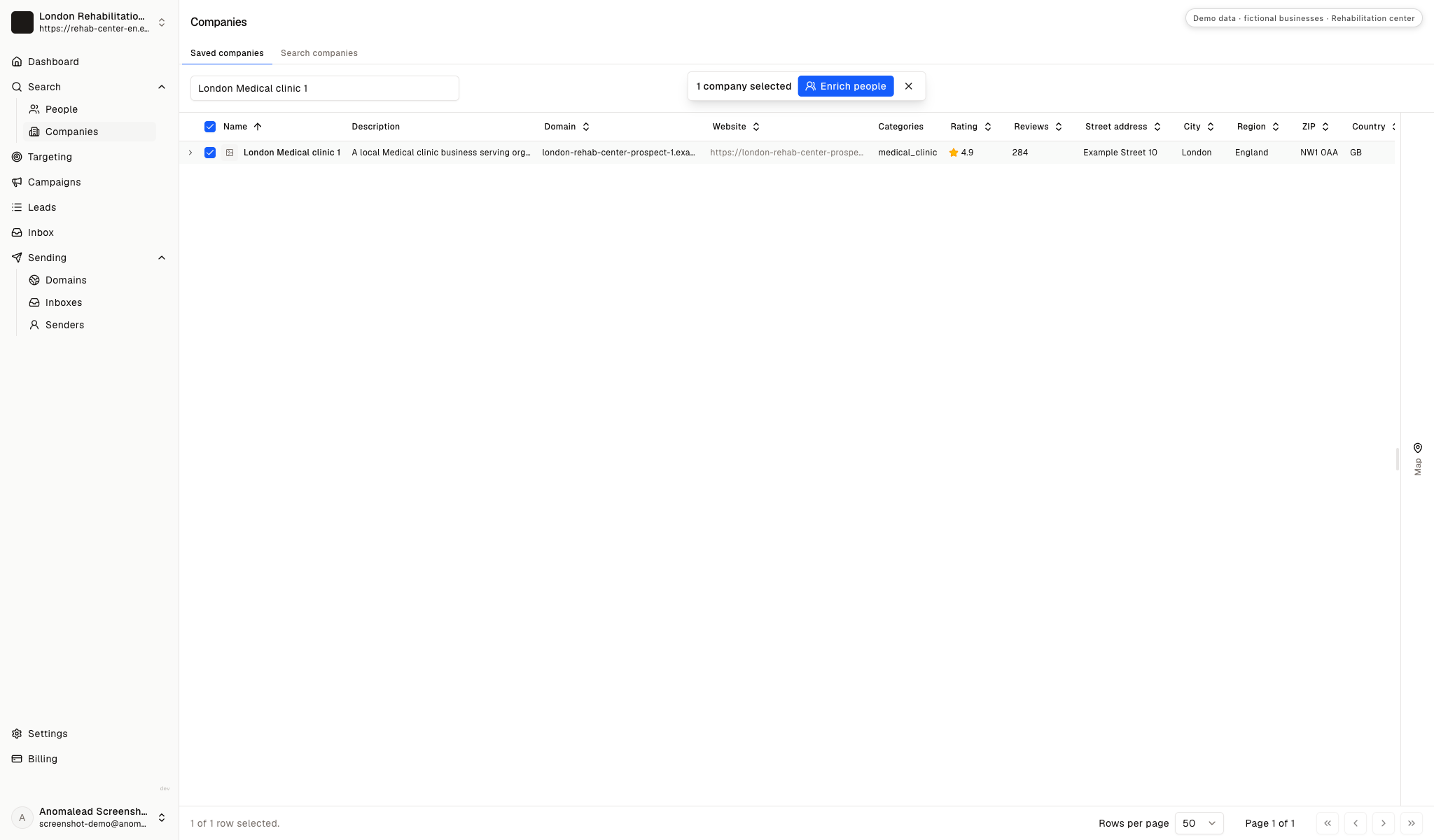
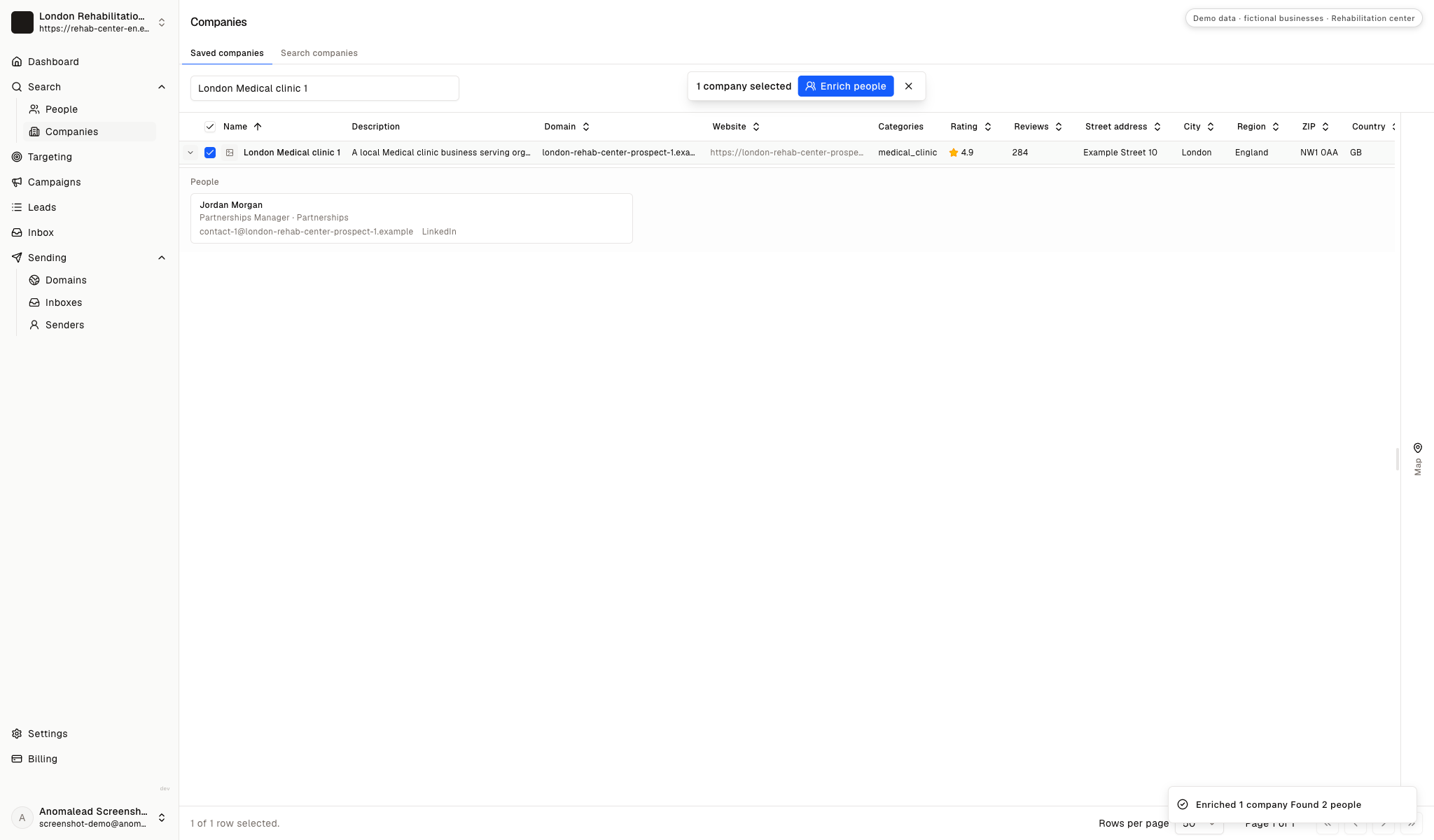
Section titled: Check the saved clinic before enriching contactsLondon Medical clinic 1 is selected in the saved companies view, with the Enrich people action available. Confirm it sits inside your catchment and sees patients your programs serve before you enrich.
Decide which contact handles referrals
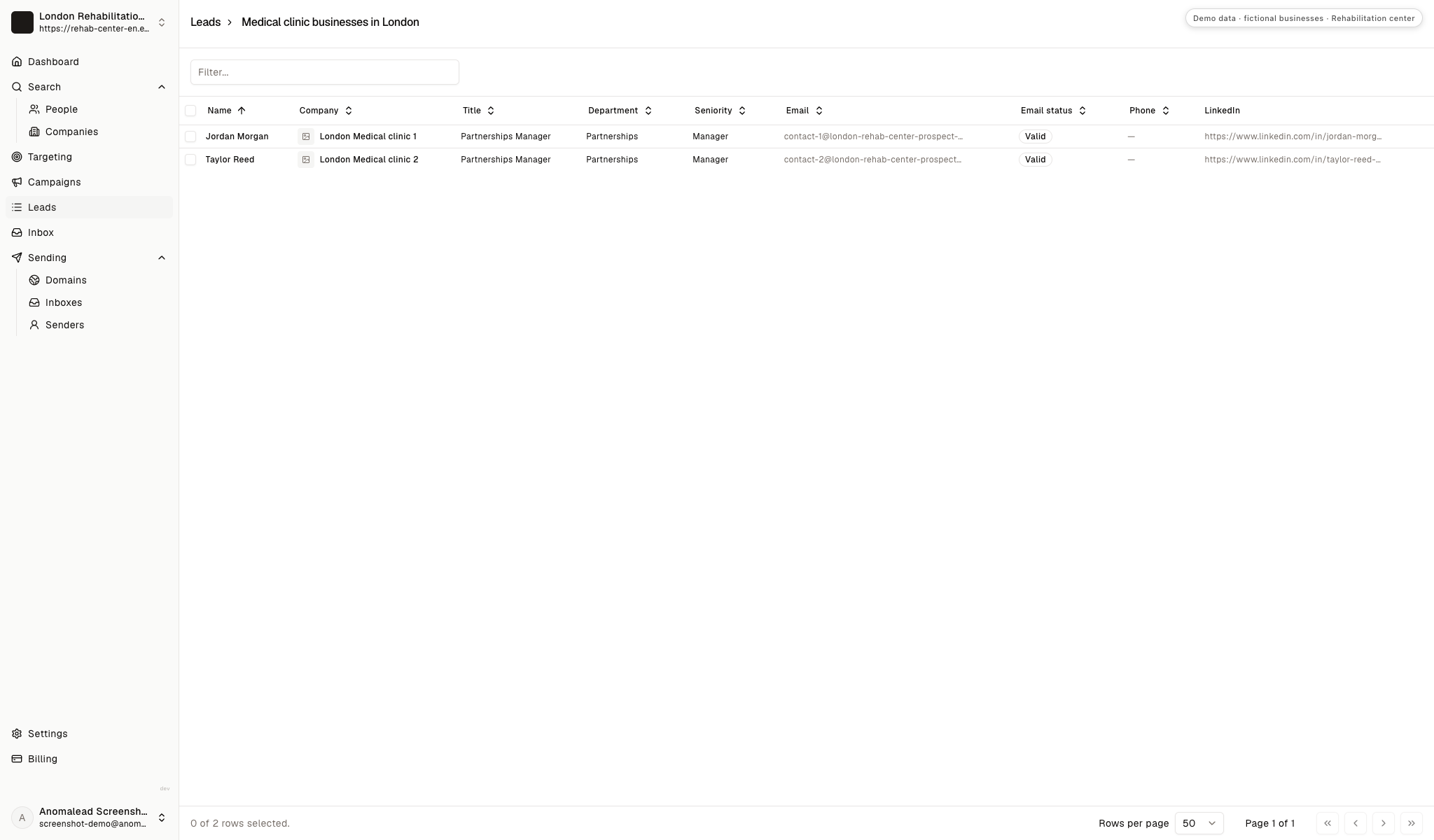
Section titled: Decide which contact handles referralsThe enrichment results show Jordan Morgan and Taylor Reed, both Partnerships Managers at the fictional clinics. That title may cover supplier deals rather than patient referrals, so verify it.
If the person isn't involved in onward care, ask for the coordinator's name instead of pitching.
Review the lead list before you draft emails
Section titled: Review the lead list before you draft emailsThe lead list holds Jordan Morgan and Taylor Reed. Decide what each needs to hear: a coordinator wants referral steps, a manager wants to know how the relationship would work. Keep the list small enough to phone each clinic if needed.
What a referring clinic may be worth to your center
Section titled: What a referring clinic may be worth to your centerA clinic partnership isn't a sale to the clinic. Its value comes from referred patients who choose your program and meet your admission criteria, and it depends on your programs and funding arrangements.
Use your own intake records. The calculator can't account for waiting lists, funding decisions or a patient's choice of provider.
Every input is your own assumption about deal value, meetings and close rate. The result is a planning aid, not a forecast of admissions or revenue.
Do the math on one good deal
If one new customer is worth thousands, you don’t need magic. You need a few more meetings a month.
Projected monthly results
- Deals closed
- 2.0
- Projected revenue
- £10,000
- Growth plan (1 business)
- £79/mo
- ROI
- 12,558%
Conservative math on meetings you already believe you can book. One closed deal often pays for a year of Anomalead.
If the estimate only works with optimistic inputs, focus on fewer clinics with a closer program match.
Write to clinic coordinators about the referral handoff
Section titled: Write to clinic coordinators about the referral handoffYour first email should answer the coordinator's real question: if I refer someone, what happens next? Describe the program in one line, name who picks up referrals and ask one question. Leave patient details out, and use how to write a cold email for structure.
Use cold email templates to shape the note, then ask your compliance contact or a qualified adviser to review the copy and handoff against the advertising, referral and confidentiality rules for your service and market.
Confirm both recipients belong in one campaign
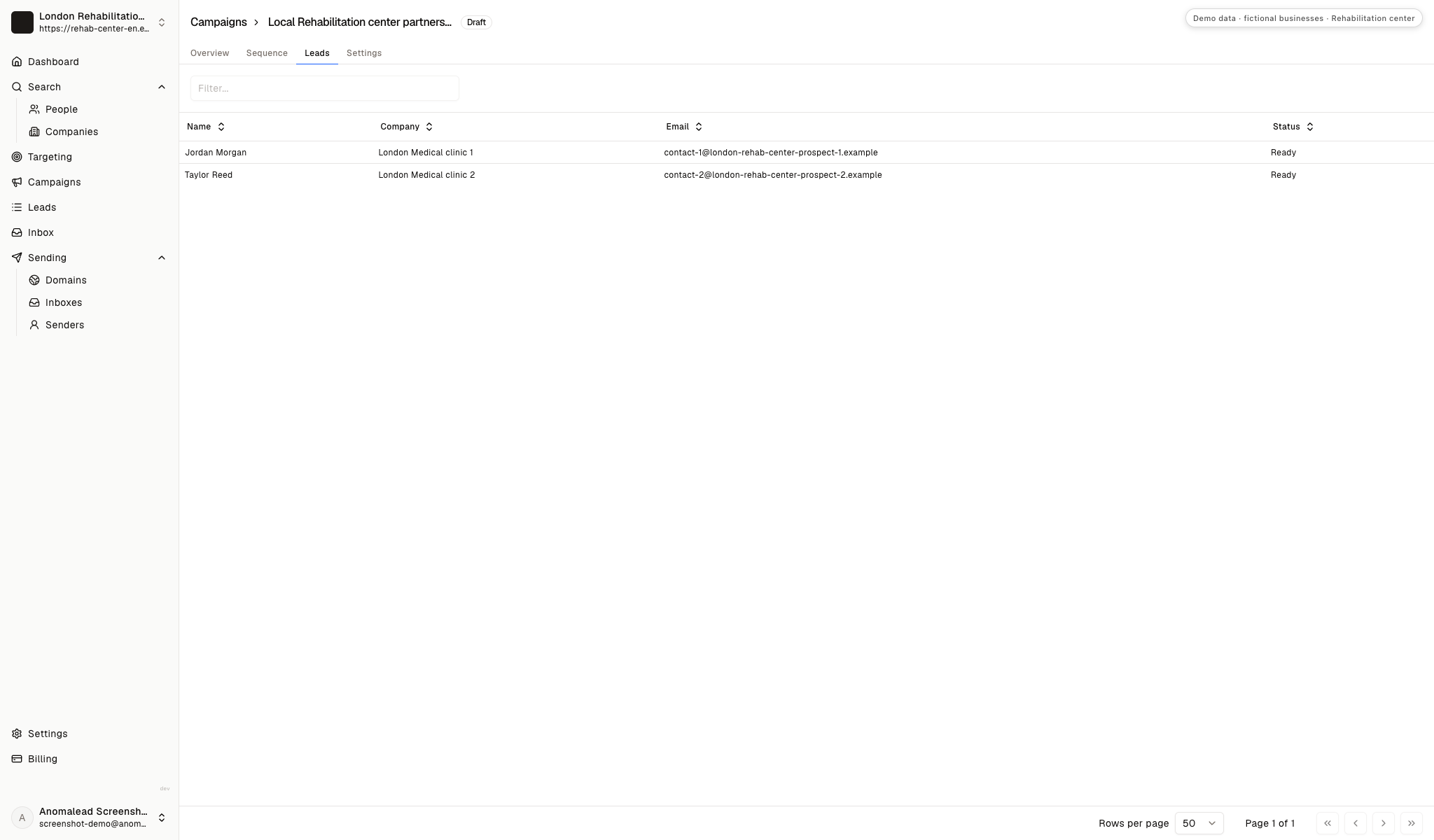
Section titled: Confirm both recipients belong in one campaignThe draft campaign has two fictional recipients. If one is a coordinator and the other a business manager, split them so each receives a relevant message.
Rewrite the demo sequence around referrals
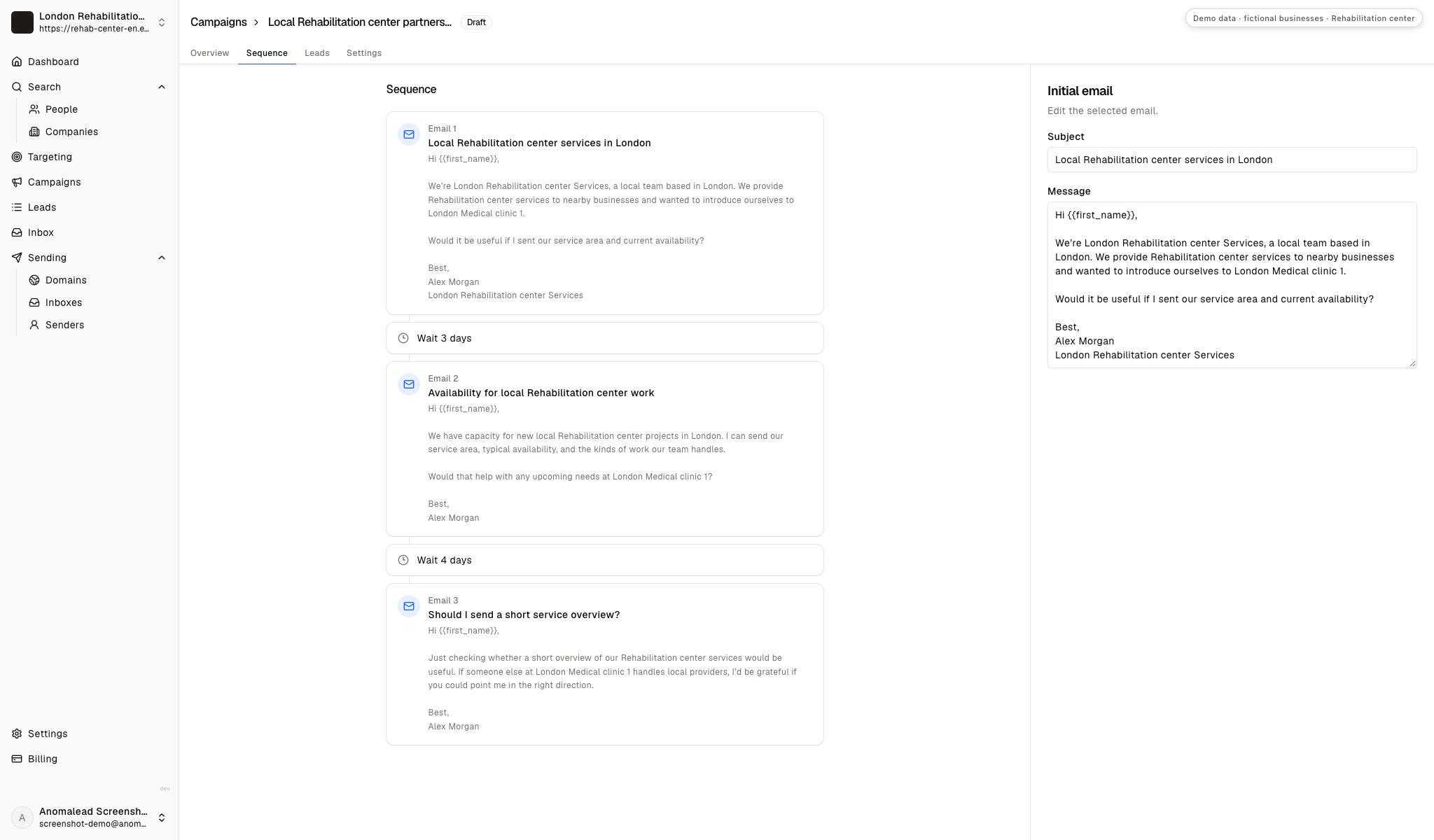
Section titled: Rewrite the demo sequence around referralsThe editor places two follow-ups after the opening note, one after three days and the next four days later. Its seeded pitch is about contractor projects and service areas, so replace it with clinic-facing information about program fit and the intake handoff.
Rewrite it so the opening explains the referral route, the second offers your summary, and the third asks who handles onward care.
Example emails to a clinic care coordinator
Section titled: Example emails to a clinic care coordinatorThese drafts describe a process, not results. They make no claims about recovery or outcomes and ask for no patient information.
Opening note about the referral route
Subject: Referring patients to a local rehab program
Hi Jordan,
I'm Alex Morgan at London Rehabilitation center Services. I'd like the clinicians at London Medical clinic 1 to know who we can admit and how a referral reaches us.
I can share a one-page summary with our programs, admission criteria, a dated availability update and the intake contact for questions. Who at your clinic usually arranges onward care?
Best regards,
Alex Morgan
Follow-up for a clinic that may already have providers
Subject: A second option for your referral list
Hi Taylor,
Many clinics already have rehabilitation providers they trust, so I am not asking you to change anything. A second option can help when a patient needs a different program or a location that better fits their situation.
We work within the referral process your clinic already uses. Would our referral summary be useful for London Medical clinic 2?
Best regards,
Alex Morgan
Keep only claims that are true for your center today. Compare a few cold email subject lines that stay factual before settling on one.
Read the clinics' questions in the inbox
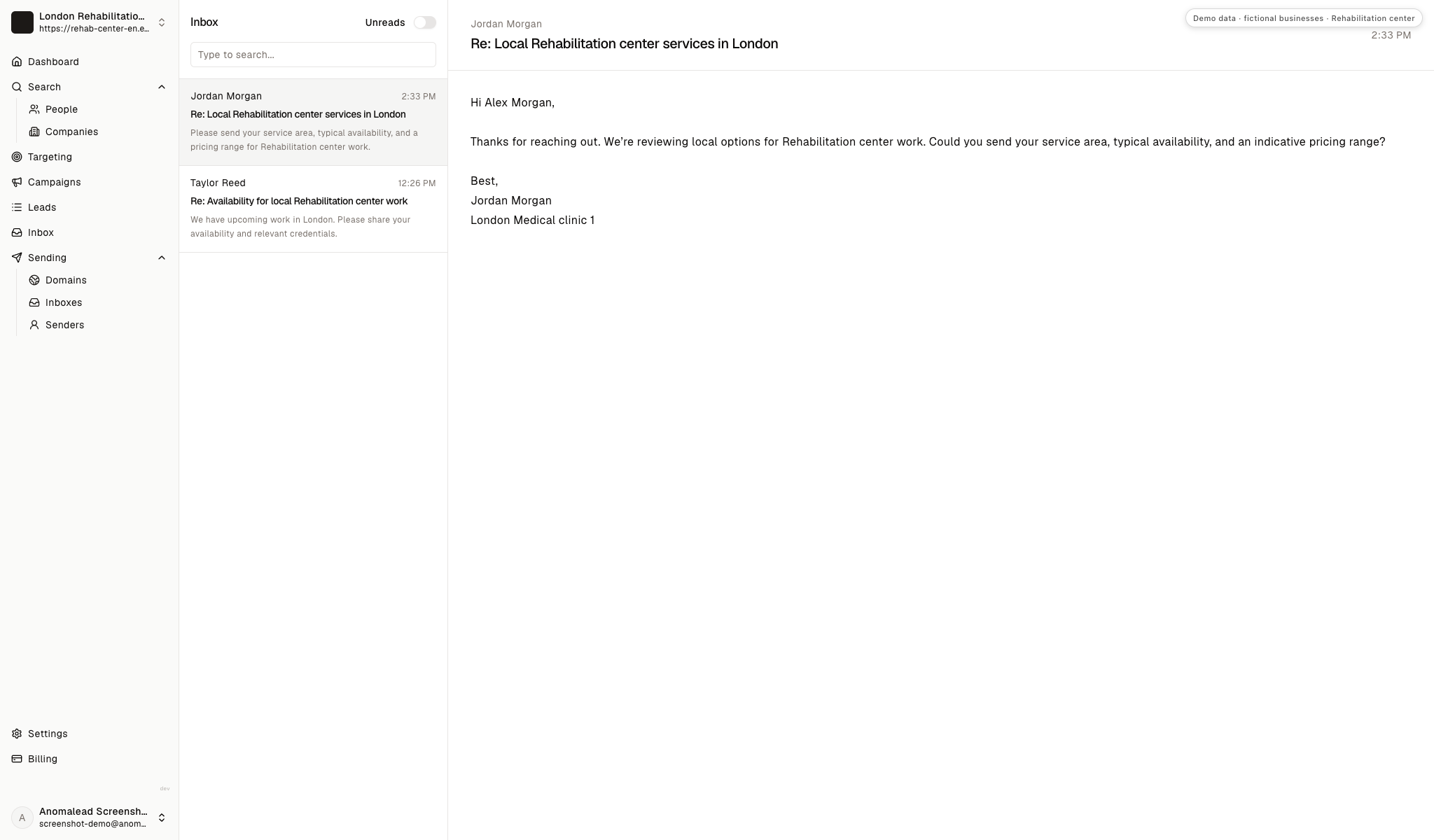
Section titled: Read the clinics' questions in the inboxThe demo inbox holds two fictional replies. Jordan Morgan wants your coverage, usual availability and a rough idea of cost; Taylor Reed mentions a possible need and asks about scope and credentials. Real clinic replies are more likely to ask about admission criteria and how to refer.
Answer clinic replies without clinical promises
Section titled: Answer clinic replies without clinical promisesA clinic's reply is a request for information, not a referral agreement. Answer what was asked, keep patient details out of email and suggest one next step, such as a call with your intake lead.
Jordan Morgan asks about coverage, availability and cost
Section titled: Jordan Morgan asks about coverage, availability and costJordan Morgan at London Medical clinic 1 wants to know where you operate, how soon you usually take people and roughly what treatment costs.
Give your real catchment and say honestly whether each program has a waiting list. Cost depends on the program and the patient's funding route, so explain how fees work instead of quoting a figure.
A reply from Alex Morgan might read:
Thanks, Jordan. Our attached summary lists the area our center serves, the date availability was checked and the admission criteria for each program. Fees depend on the program and funding route; our intake team can explain those options directly to a patient. Would a short call with our intake lead help?
Taylor Reed mentions a possible need and asks for credentials
Section titled: Taylor Reed mentions a possible need and asks for credentialsTaylor Reed at London Medical clinic 2 says something may come up soon and asks about availability, what your team covers and your credentials.
Share the registration or accreditation documents that apply to your center, alongside program admission and exclusion criteria. If the question concerns a particular patient, move the case discussion to your secure referral channel.
A short answer that keeps the case off email:
Thanks, Taylor. I can send the registration or accreditation documents that apply, along with our program criteria. For a particular patient, please use our secure referral route so intake can review the details safely.
The clinic already refers to another center
Section titled: The clinic already refers to another centerWe already send patients to a rehab provider we know well, so we aren't looking for another right now.
Accept the answer and never criticize the other provider. Ask whether the clinic keeps a second option for patients who face a wait or need a different program.
A respectful way to stay on file:
Thanks for letting me know. I'm happy to send our summary as a backup for patients facing a wait; otherwise I won't follow up again.
The contact asks what the clinic gets in return
Section titled: The contact asks what the clinic gets in returnWhat would our clinic receive if we start sending patients your way?
Keep the exchange informational. Before agreeing to any benefit tied to referrals, have a qualified adviser check the professional and marketing rules for your service and market. Explain the handoff and, where appropriate, offer a consent-based update to the referring clinician.
Refine the next batch of clinics from what you learned
Section titled: Refine the next batch of clinics from what you learnedNote which clinic types and roles replied and what they asked. If coordinators ask about admission criteria or waiting times, put verified, dated information in your next email. Offer a short program briefing only when the clinic wants one and its policies allow it.
For the next round, select a short list of clinics whose patient needs and location fit a program you provide. Check who handles referrals, update your summary and review the approved handoff with your intake team. The guide to home care referral partnerships shows a related care service working with clinics.
Questions rehab centers ask about clinic referral outreach
Section titled: Questions rehab centers ask about clinic referral outreachWho at a medical clinic should a rehab center contact first?
Section titled: Who at a medical clinic should a rehab center contact first?Start with the care coordinator, referral coordinator or practice manager. The treating team makes care decisions; coordinators can explain how referrals are sent and which providers appear on the clinic's resource list.
Can a rehab center offer incentives to clinics that refer patients?
Section titled: Can a rehab center offer incentives to clinics that refer patients?Keep initial outreach informational. Any payment, gift or other benefit tied to referrals needs review against the professional-conduct and marketing rules that apply to your center; get qualified advice before agreeing to it.
What should a rehab center send when a clinic asks for more information?
Section titled: What should a rehab center send when a clinic asks for more information?A short referral summary: programs, admission and exclusion criteria, current availability, funding options and a direct intake contact, plus relevant registrations. Leave out outcome claims and patient stories.
Are the clinics and replies in the screenshots real?
Section titled: Are the clinics and replies in the screenshots real?No. London Rehabilitation center Services, the three clinics, Jordan Morgan, Taylor Reed and both replies are fictional demo data, not Anomalead customers, real patients or campaign results.
Does the ROI calculator predict how many referrals we will receive?
Section titled: Does the ROI calculator predict how many referrals we will receive?No. It combines the deal value, meeting count and close rate you enter into a rough planning figure. It knows nothing about your waiting list or a patient's choice of provider.