

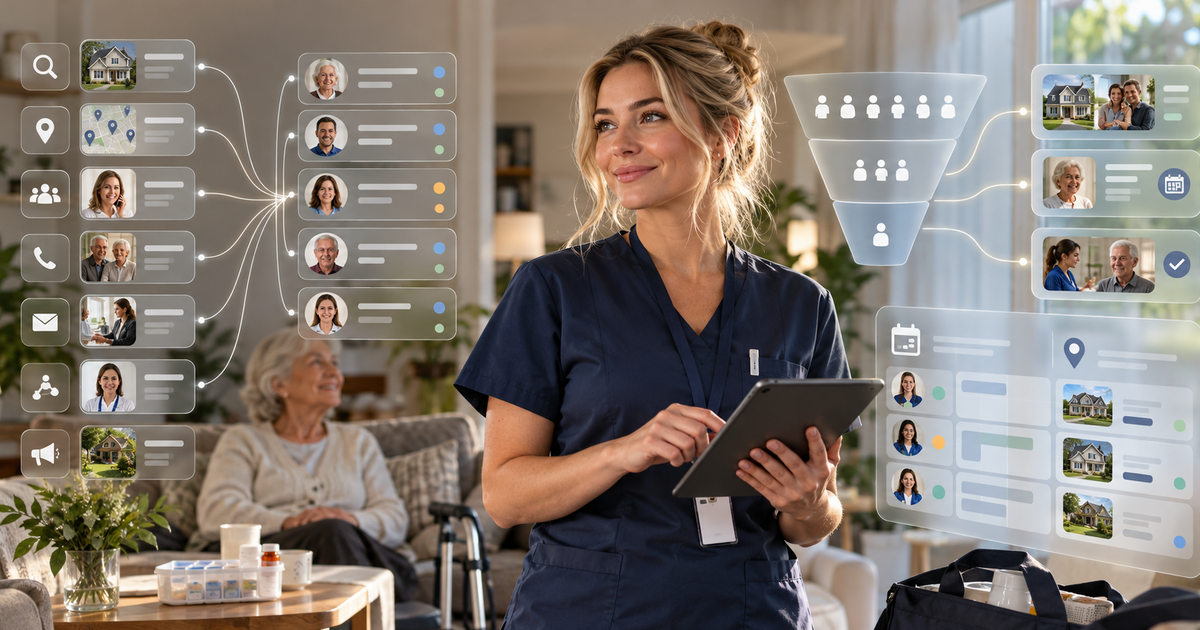
Home care lead generation works when a clinic care coordinator can quickly understand which in-home support you provide, where you can deliver it, and how a person may choose to speak with your team. A defined referral path is more useful than a broad promise to help every patient. Start with B2B lead-generation basics, then build a clinic introduction around a clear service boundary and a respectful handoff.
Clinics may need reliable non-clinical support options after a care conversation, but that does not make the clinic your customer’s decision-maker or authorize the clinic to share personal details. Explain what you do, what requires licensed home health, how current capacity is checked, and what consent is needed before anyone is contacted. This guide covers the buyer, qualification, first email and reply process without promising referrals or care outcomes.
Key takeaways
- Approach clinic care coordinators with a concise description of non-clinical in-home support and the people it may fit.
- Define service area, support types, staffing availability, intake boundaries and escalation limits before asking a clinic to share your information.
- Let the individual or authorized decision-maker choose whether to make contact, and use an approved secure channel for sensitive details.
- Check the marketing, privacy and referral rules that apply to your service before proposing a partnership or incentive.
Which clinic contacts can make a resource list useful?
Section titled: Which clinic contacts can make a resource list useful?Start with people who help patients understand non-clinical options and coordinate the next step, not anyone who can send a list of names. A clinic relationship should make it easier for an interested person to choose support without turning personal health information into a prospecting lead.
- Care coordinators: They may explain available support after a care discussion and can tell you how outside resources are reviewed. Ask what information a resource entry needs and how an individual may request contact.
- Discharge or transition coordinators: When a person is leaving a care setting, a coordinator may need practical information about non-clinical help at home. Clarify whether your service can accept the location, timing, household tasks and communication preferences involved.
- Community resource navigators: These staff may maintain options for people seeking help with daily routines, errands, meal preparation or companionship. Offer a factual overview and avoid presenting your team as a substitute for clinical care.
- Clinic operations leads: An operations contact can explain vendor review, referral-resource policies and the right person for a service overview. They may not assess an individual’s care needs, so keep the discussion at the partnership and service level.
Choose roles with clear cold-email introductions in mind, then verify the person’s remit before requesting a meeting or resource-list review.
Qualify the referral fit before you request an introduction
Section titled: Qualify the referral fit before you request an introductionA clinic relationship is appropriate only when the service, location, timing and consent process line up. Qualify the operating details before asking a coordinator to point someone your way.
- Non-clinical service boundary: Describe the support you actually provide, such as household routines, meal preparation, errands, companionship or help with daily activities where permitted and within staff training. State that clinical assessment, treatment and skilled home-health services belong to appropriately licensed providers.
- Geography and availability: List the communities and visit patterns you can support. Explain how you confirm current staffing and start timing for an inquiry; do not promise an immediate start, continuous coverage or a schedule before reviewing the request.
- Intake and consent: Ask how a person can choose to contact you or authorize a warm handoff. Do not ask the clinic to send names, diagnoses, discharge notes or contact details in an ordinary prospecting email.
- Fit and escalation: Explain which support needs your intake team can discuss and when it should direct someone back to a clinician or another qualified service. Staff should not diagnose, recommend treatment or claim that a home-support visit will improve a medical outcome.
- Privacy and referral terms: Use a secure, approved intake channel for sensitive information and collect only what is needed after permission is clear. Check the privacy, professional-marketing and referral rules that apply before proposing data sharing, a fee or an incentive.
About the demo clinics and messages
London Home health care service Services, London Medical clinic 1, London Medical clinic 2, the contacts and the replies are fictional demo data. They are not Anomalead customers, real organizations or evidence of referral or campaign results.
Home care lead generation begins with a referral fit you can describe
Section titled: Home care lead generation begins with a referral fit you can describeSet the search around clinics your team can support through a real local service area, rather than copying the demo location. Look for organizations with care coordination, discharge planning or community-resource work, then review each clinic’s public service description and the likely professional contact before saving it.
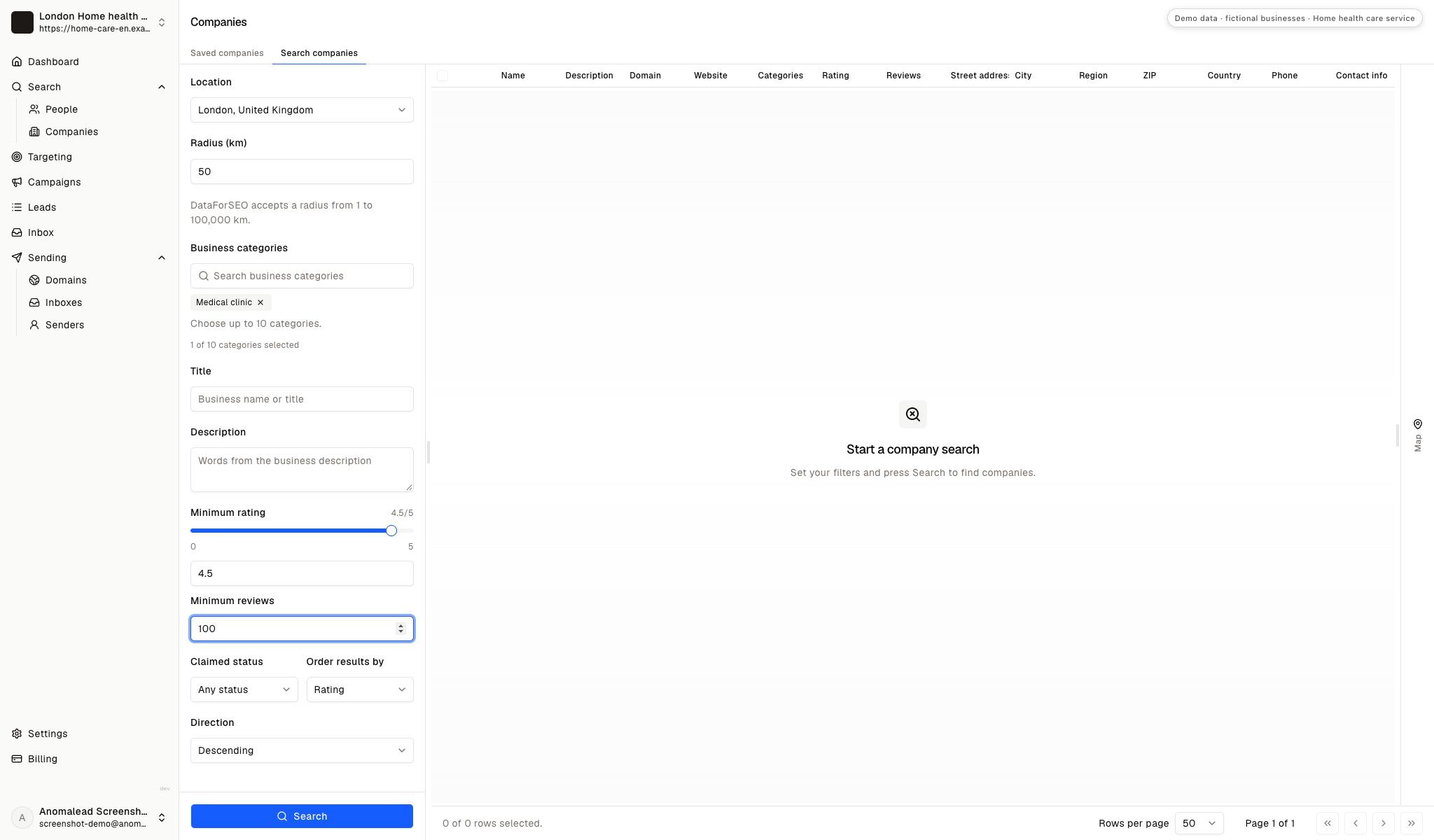
The search interface shows location, radius, category and rating filters. Its results are fictional clinic listings with review information; they do not show a referral relationship, clinical endorsement or demand for a particular home-care service.
Choose the service area and clinic category
Section titled: Choose the service area and clinic categoryChoose a location and radius that match where you can staff visits and coordinate intake. Select medical clinics as the prospect category, then use the filters to make a reviewable local list.
Review the fictional clinic listings
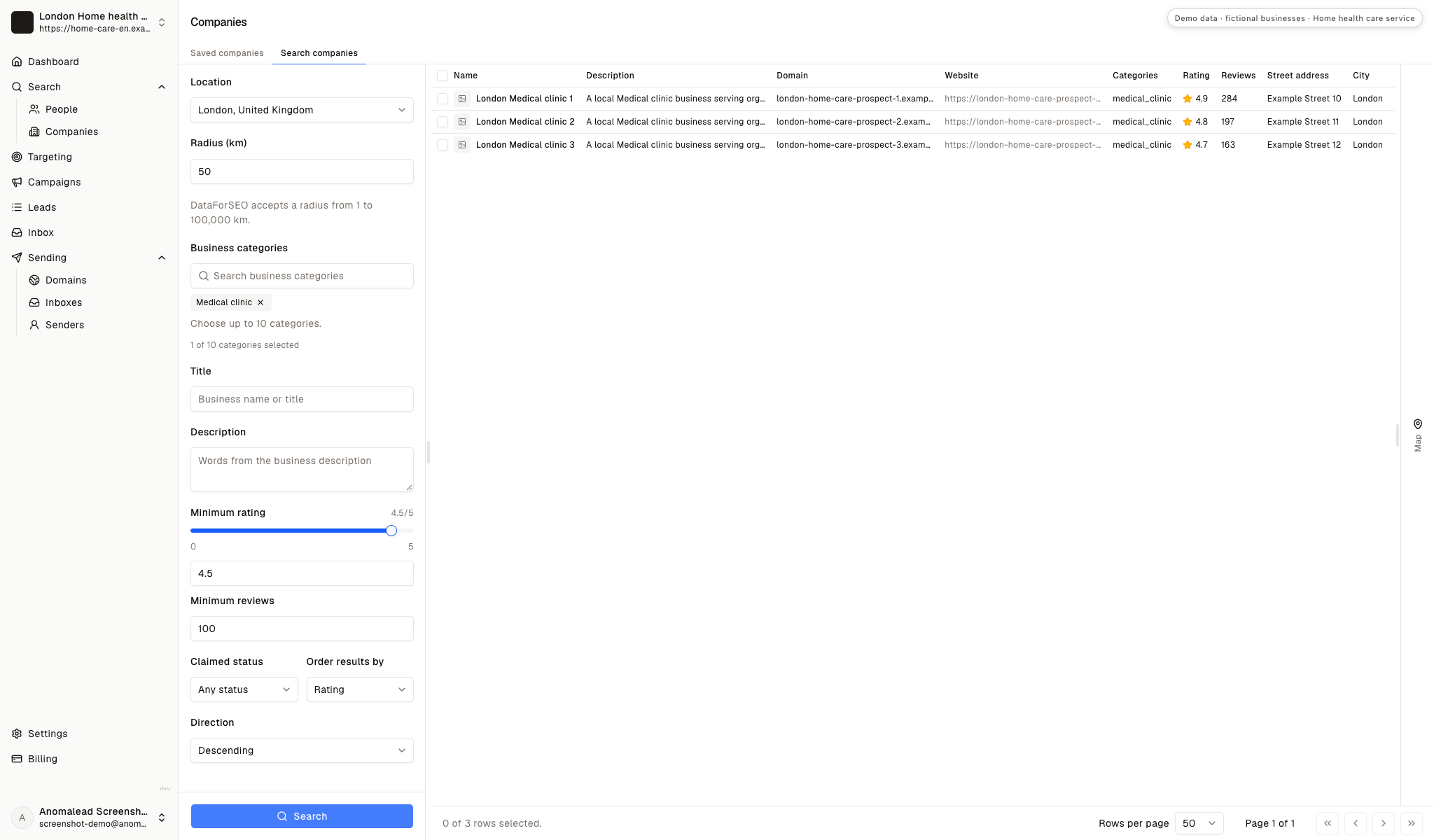
Section titled: Review the fictional clinic listingsThe results view lists three fictional clinics with ratings and review counts. Treat those details as interface data only; they do not establish a clinic’s interest, referral practice or patient need.
Save clinics for professional review
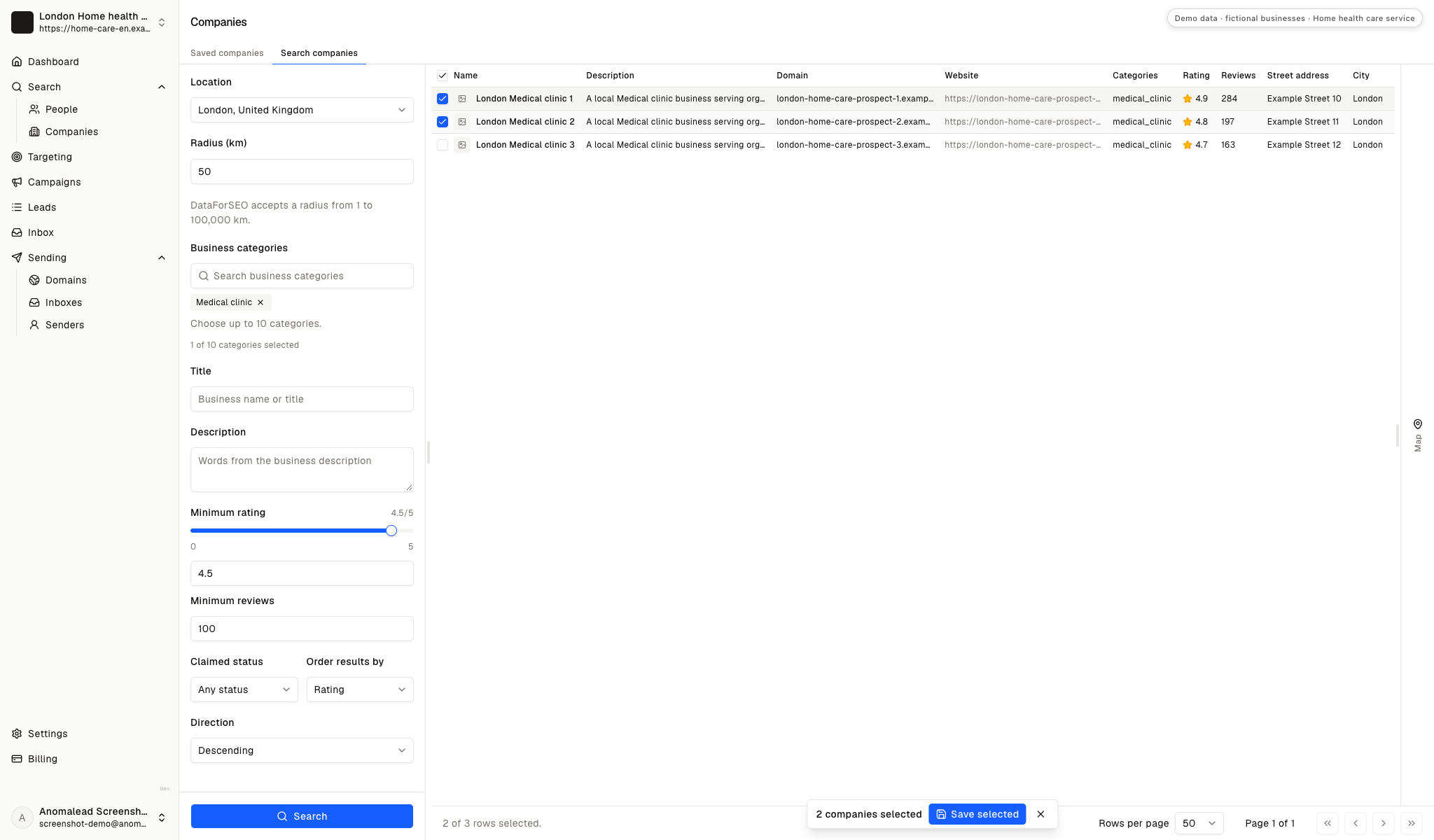
Section titled: Save clinics for professional reviewThe demo selects two of the three fictional clinic records and saves them. In your own list, retain clinics whose coordination work and geography plausibly overlap your defined support service.
Find the coordinator who reviews outside resources
Section titled: Find the coordinator who reviews outside resourcesA care coordinator, discharge planner or community-resource contact is more relevant than a general clinic mailbox when the question concerns support options. Confirm the person’s role from professional information and ask about the resource-review process, not about individual patient cases.
Keep business prospecting notes separate from care intake. Never place names, diagnoses, discharge dates or household details in a marketing list; sensitive information belongs in an authorized workflow after the person has chosen to engage.
Open a clinic record before enriching contacts
Section titled: Open a clinic record before enriching contactsThe saved clinic view presents an Enrich people action. Review the organization first and use contact enrichment only when the clinic and service area appear relevant to your professional outreach.
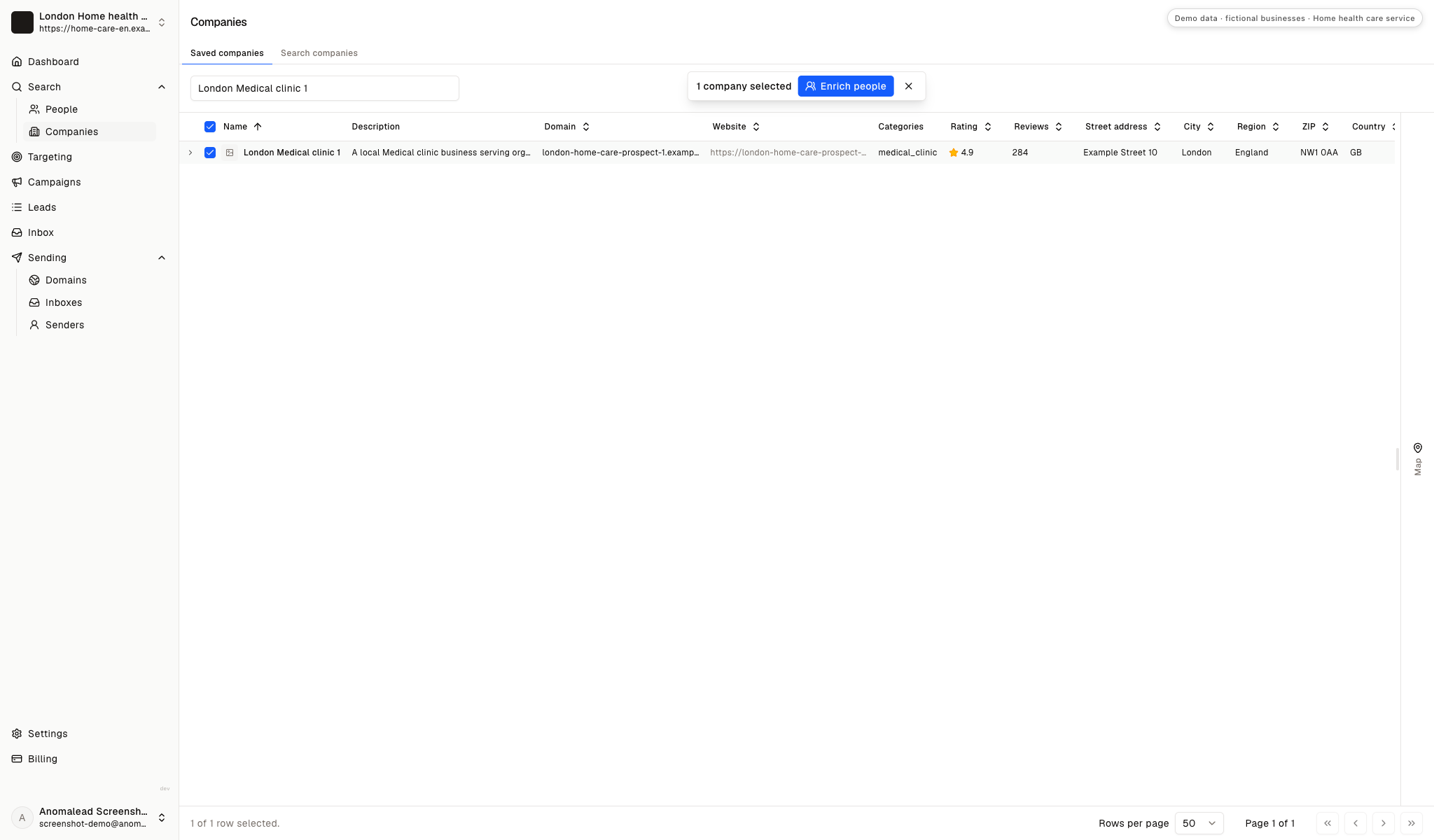
Check which contact owns resource coordination
Section titled: Check which contact owns resource coordinationThe demo shows two fictional partnerships managers, Jordan Morgan and Taylor Reed. Verify a real contact’s care-coordination or resource-review role before making an introduction.
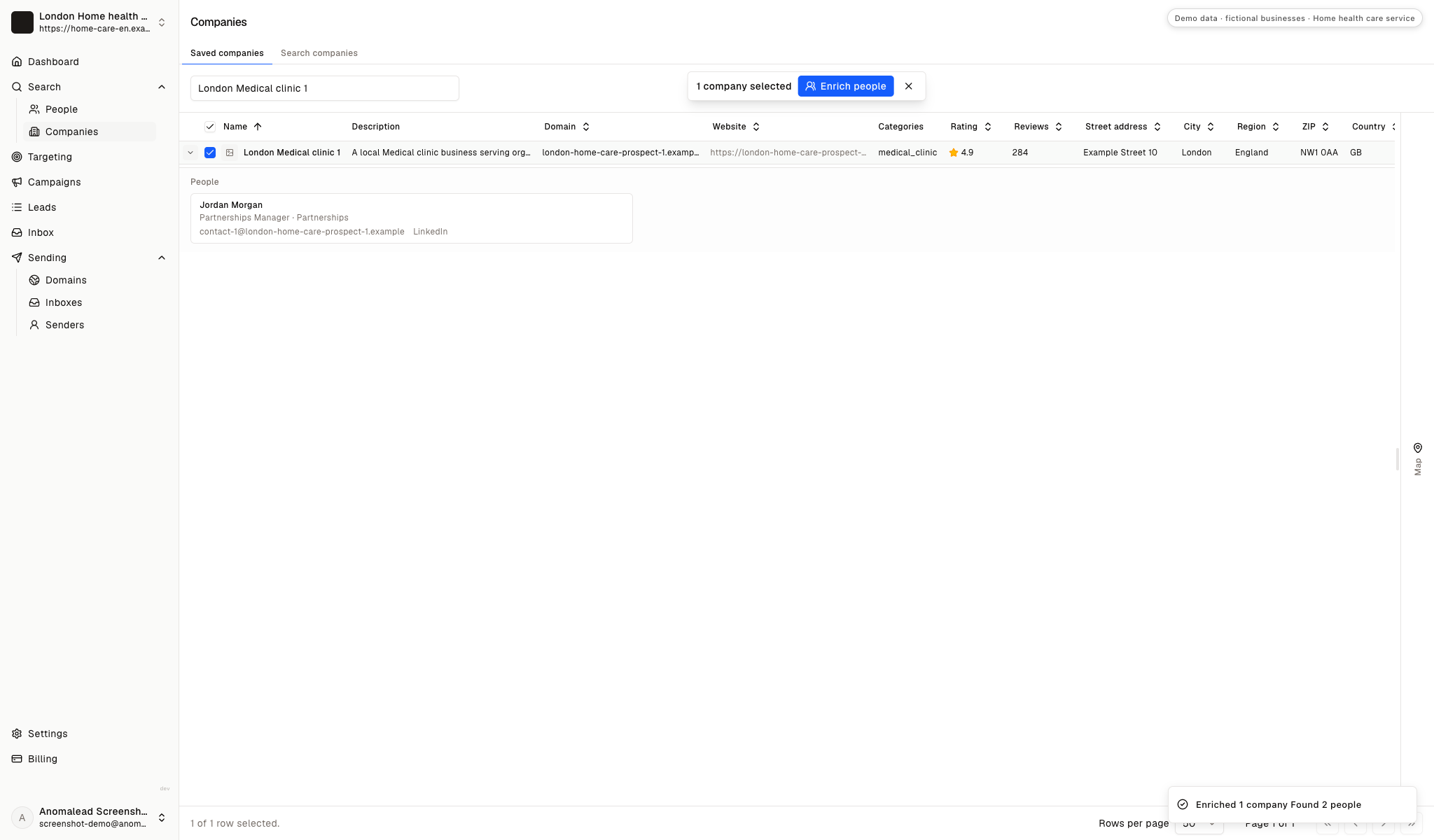
Keep clinic contacts apart from care information
Section titled: Keep clinic contacts apart from care informationThe list contains two professional contacts for campaign review. Store only work details relevant to the clinic relationship; keep patient identity and support inquiries out of prospecting records.
Estimate the work behind a clinic relationship
Section titled: Estimate the work behind a clinic relationshipA clinic relationship may require service reviews, staff orientation and a careful handoff process before it creates useful inquiries. Compare that effort with your own capacity and service model rather than assuming a clinic will send referrals.
Enter your own assumptions about outreach, follow-up and a possible account. The calculator illustrates how those inputs relate; it does not predict referrals, care needs, admissions, outcomes, revenue or conversion.
Do the math on one good deal
If one new customer is worth thousands, you don’t need magic. You need a few more meetings a month.
Projected monthly results
- Deals closed
- 2.0
- Projected revenue
- £10,000
- Growth plan (1 business)
- £79/mo
- ROI
- 12,558%
Conservative math on meetings you already believe you can book. One closed deal often pays for a year of Anomalead.
Include the time needed to keep service information current and answer coordinator questions. Do not count a person as a prospect until they have chosen to contact you through an appropriate intake route.
Prepare a clinic introduction around choice and scope
Section titled: Prepare a clinic introduction around choice and scopeA useful message explains the support you offer, the population or tasks that fit your service, and how a person can ask for information by choice. Keep it at the provider and partnership level; do not ask for patient names, care plans or contact lists.
Before sending, confirm the coordinator’s role, your current service area and what your team can accept. If the clinic wants a handoff process, agree how explicit permission is recorded and which secure channel is appropriate before any personal information changes hands.
Choose professional recipients for the overview
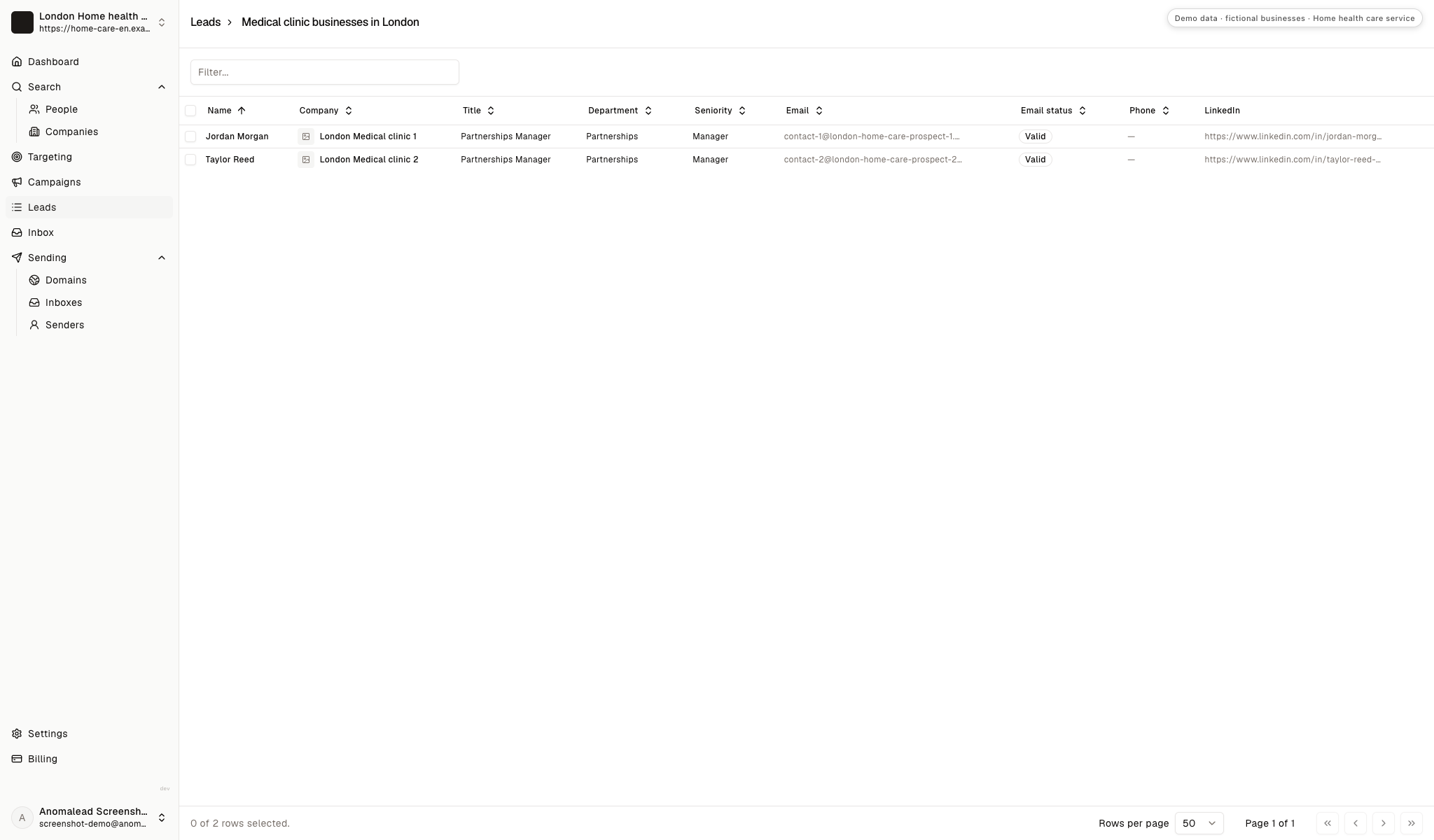
Section titled: Choose professional recipients for the overviewThe draft campaign shows two selected clinic contacts. Check that each person is an appropriate professional recipient and remove anyone without responsibility for care coordination or resource review.
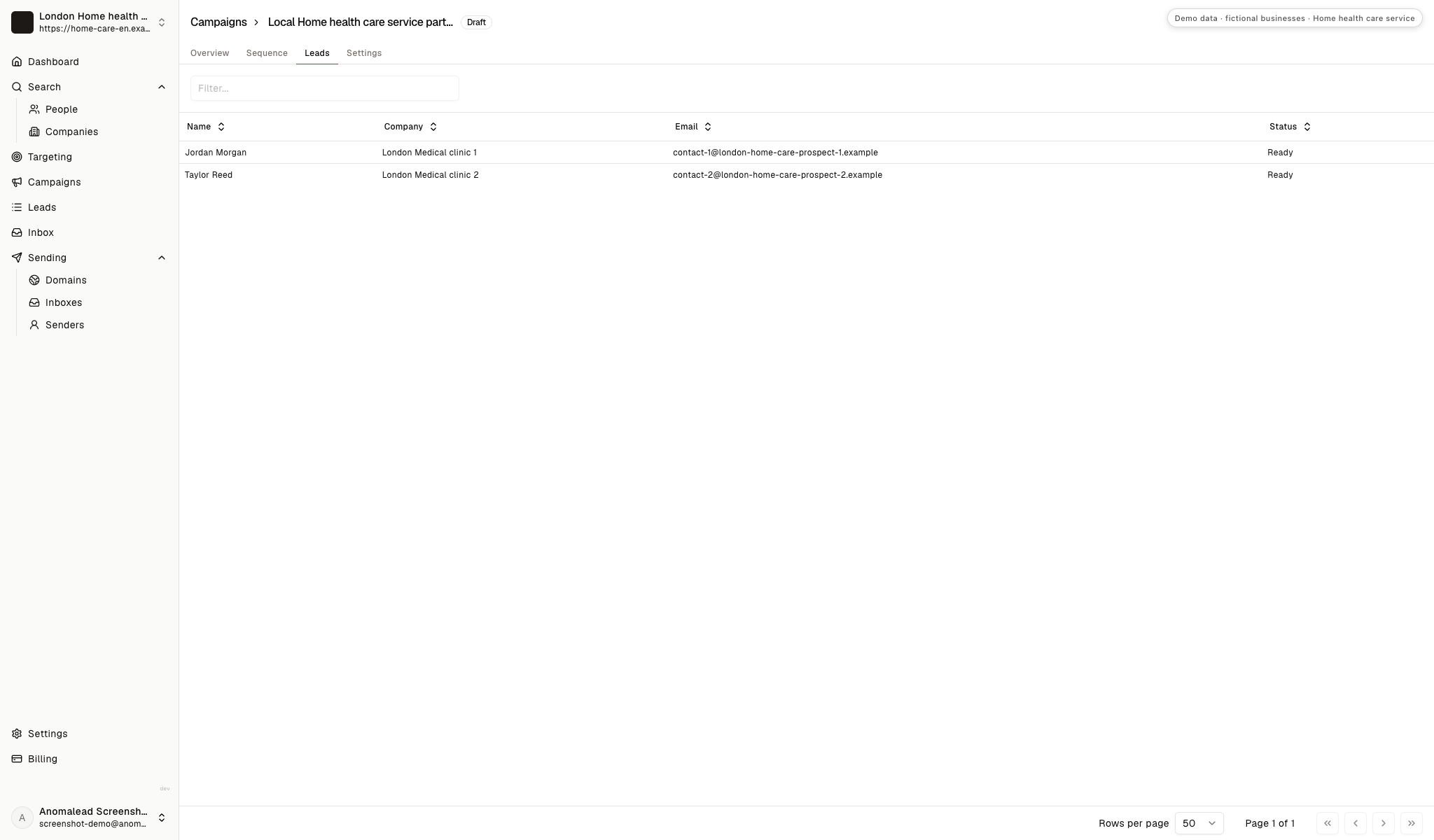
Review timing and wording before sending
Section titled: Review timing and wording before sendingThe sequence editor shows three emails with a three-day wait and a four-day wait. Confirm every message respects a reply or opt-out and makes no clinical promise, implied endorsement or claim of an existing relationship.
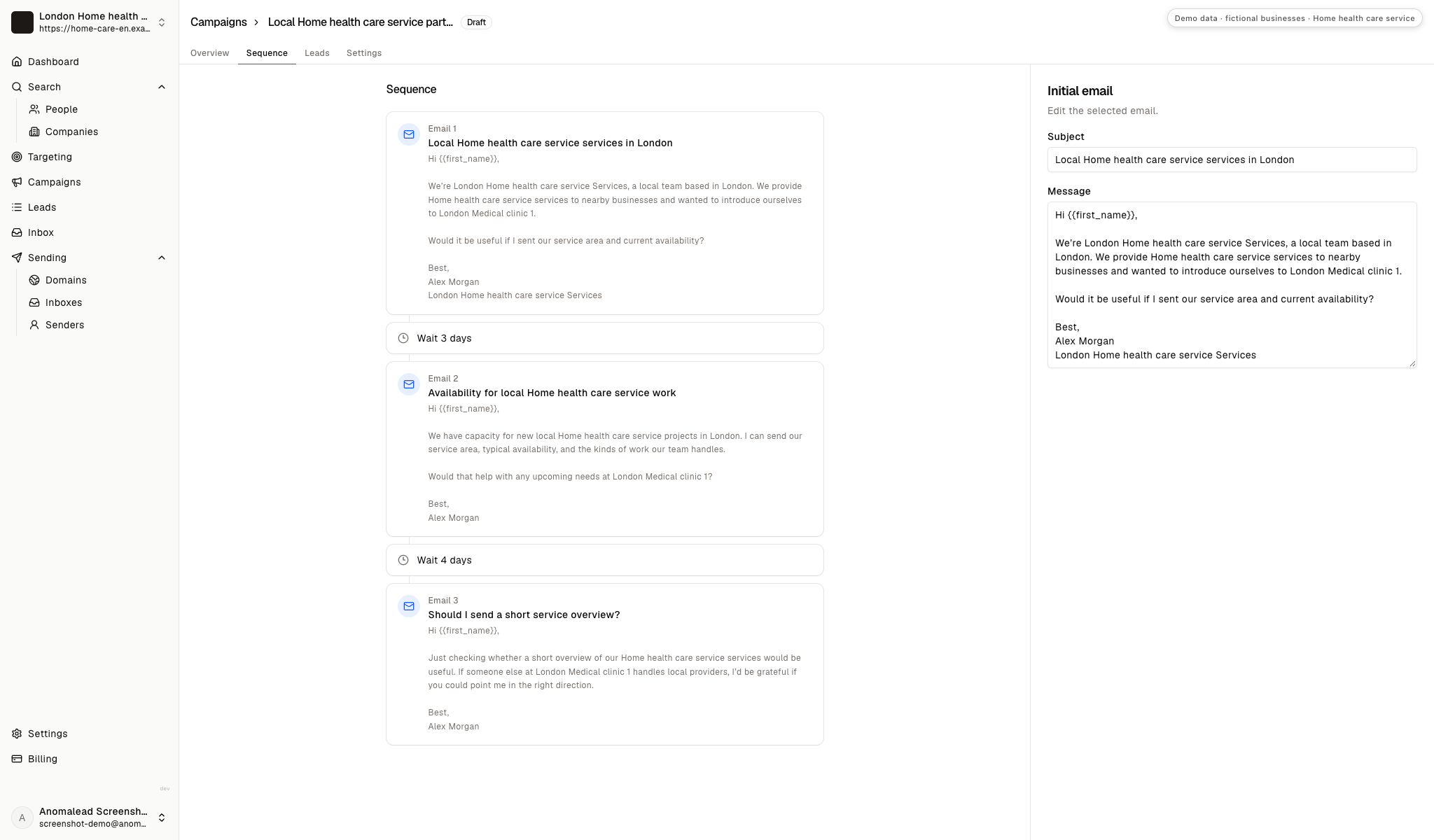
Ask one question in a clinic-facing introduction
Section titled: Ask one question in a clinic-facing introductionJordan Morgan and Taylor Reed are fictional demo contacts. Replace the service description with your verified scope and share no patient-specific details in outreach.
First note offering non-clinical support information
Subject: A local option for non-clinical support at home
Hi Jordan,
I’m Alex Morgan with London Home health care service Services. Our team provides non-clinical in-home support within a defined service area, such as help with household routines and practical daily tasks. We confirm the type of support and current staffing before discussing an intake, and we do not provide licensed clinical home-health services.
Would a short, factual service overview be useful for your resource-review process?
Best, Alex Morgan, London Home health care service Services
Follow-up about a consent-led handoff
Subject: Re: A local option for non-clinical support at home
Hi Taylor,
I’m following up with the boundaries of our service rather than assuming your clinic needs another referral option. An interested person can choose whether to contact us, and we can explain our intake steps before any personal details are shared through an approved secure channel.
Who is the right person to review a non-clinical support overview for your care-coordination team?
Best, Alex Morgan
Use a clear B2B email structure, identify the professional reason for writing and leave the reader one simple question.
Use a reply to clarify the professional fit
Section titled: Use a reply to clarify the professional fitThe inbox shows two fictional replies from Jordan Morgan and Taylor Reed. The seeded messages ask for service area, availability, pricing or credentials; they are sample text, not evidence of referrals.
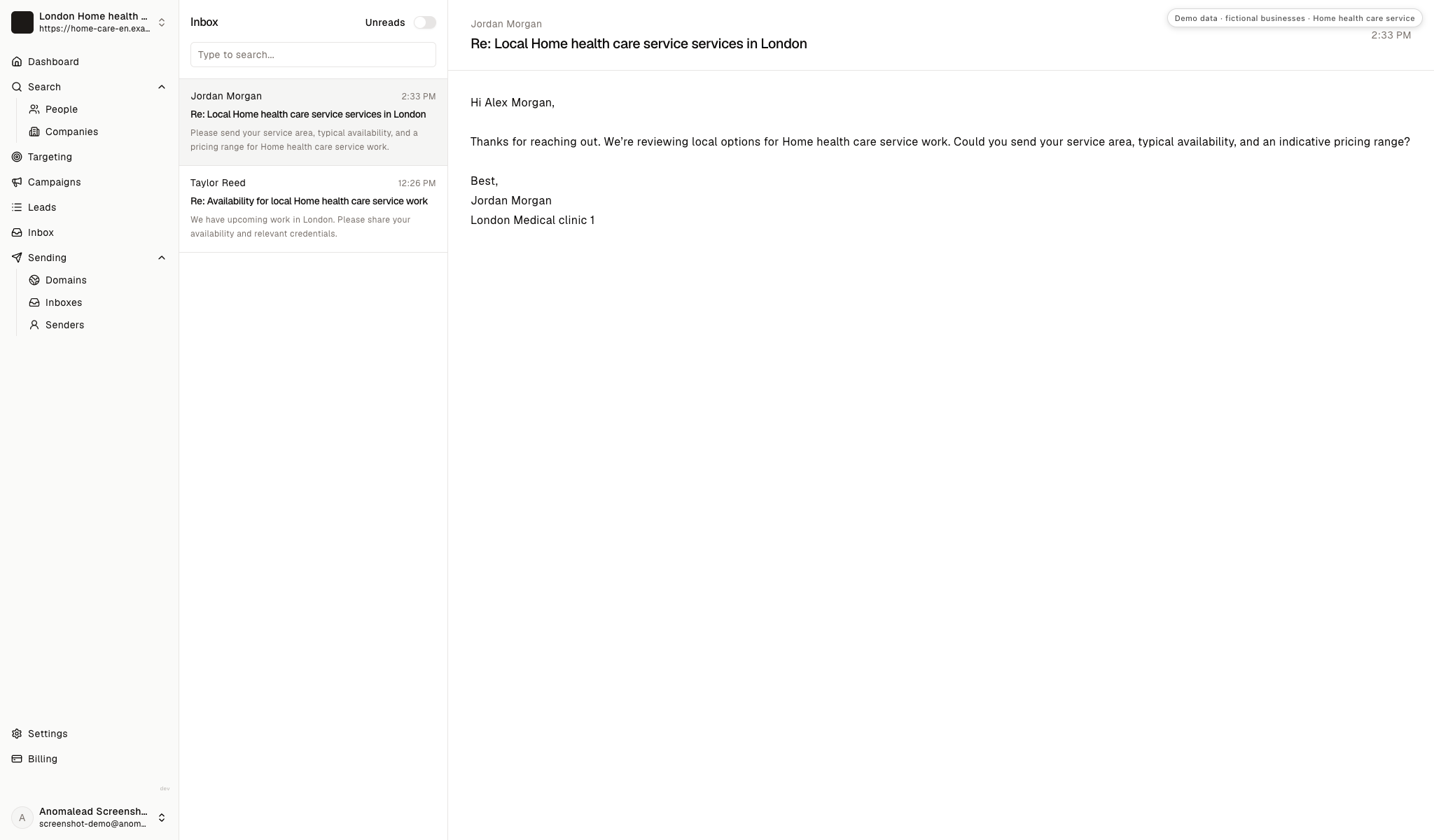
Answer the coordinator without exposing a patient
Section titled: Answer the coordinator without exposing a patientRespond to the service question first, then agree on a safe next step at the provider level. Do not request or accept identifiable care details through ordinary prospecting email.
Jordan Morgan asks for service area, availability and pricing
Section titled: Jordan Morgan asks for service area, availability and pricing“Please send your service area, typical availability, and a pricing range for home care work.”
Describe the communities you actually serve and explain how you confirm staffing for a specific inquiry. Share a current published fee schedule or explain that scope is reviewed before a quote; do not invent a standard price. Ask what general support categories the clinic wants included in a resource overview, without asking for an individual’s identity or diagnosis.
A useful answer can describe the process without promising a start date:
“Thanks, Jordan. I can send our current service area and the support types we assess at intake. Availability depends on location, schedule and the person’s chosen support needs, so we confirm it before discussing a start. We share fees using our current service information rather than guessing. Which non-clinical support categories should the overview cover?”
Taylor Reed mentions upcoming work and asks for credentials
Section titled: Taylor Reed mentions upcoming work and asks for credentials“We may have an upcoming need. Please share availability and relevant credentials.”
Send only credentials, training or screening information that is current and relevant to your actual service. Ask about the general support type, service area and desired coordination path first. If someone may be interested, let them choose whether to contact your intake team; do not ask the clinic to forward a name or clinical record.
Keep the follow-up focused on fit and permission:
“Thanks, Taylor. I can provide current information about our team and the non-clinical support we offer. Could you share the general service category and area under consideration, without personal or clinical details? If an individual wants to speak with us, we can explain intake and obtain permission through the appropriate channel.”
A coordinator asks whether your team provides clinical home health
Section titled: A coordinator asks whether your team provides clinical home health“Can your staff provide nursing or clinical care at home?”
Answer plainly. Do not present non-clinical support as nursing, therapy, skilled care or a substitute for a licensed provider. If the person needs clinical services, the clinic should direct that question through its established clinical process.
Make the boundary easy to repeat:
“Our service is non-clinical home support within the tasks and areas in our overview. We do not provide nursing or licensed clinical home-health services. Your clinical team remains the right contact for clinical questions.”
The clinic offers to email a patient list
Section titled: The clinic offers to email a patient list“Can I send you names and care details for people who may need support?”
Do not accept identifiable information in an ordinary outreach thread. Explain that a resource overview can be shared for the individual to review, and any handoff should follow the person’s choice, the clinic’s approved process and a secure channel. Collect only details needed for an agreed intake.
Decline the list and offer a safer route:
“Please do not send names, diagnoses or care notes by email. We can provide a general service overview for someone to review, and if they choose to contact us, we will follow the agreed secure intake process.”
Make one clinic resource entry easy to review
Section titled: Make one clinic resource entry easy to reviewChoose a clinic segment and prepare a one-page overview with service area, non-clinical tasks, current intake steps, availability checks and clear exclusions. Use local lead-generation planning to organize the professional outreach, then verify that the coordinator is the right person to review the material.
Ask one clinic contact whether the overview fits its resource process. If a person later opts in, coordinate a limited handoff through the clinic’s approved channel and keep prospecting records separate from care intake. A resource entry should describe this provider’s own tasks and credentials without implying a clinical role.
Questions about clinic relationships for home care providers
Section titled: Questions about clinic relationships for home care providersHow can a home care provider approach clinic care coordinators?
Section titled: How can a home care provider approach clinic care coordinators?Offer a short, factual overview of non-clinical support, service area, intake steps and exclusions. Ask how the clinic reviews community resources, and let the coordinator decide whether the information fits that process.
Can a clinic send patient names or care notes in the first email?
Section titled: Can a clinic send patient names or care notes in the first email?No. Keep prospecting at the professional and service level. Any later contact should follow the individual’s choice, the clinic’s approved process and a secure channel for information that is actually needed.
Are the clinics and contacts shown in the screenshots real?
Section titled: Are the clinics and contacts shown in the screenshots real?No. The clinic names, contacts and inbox replies in this walkthrough are fictional demo data, not Anomalead customers or real referral outcomes.
What does the ROI calculator predict for a clinic partnership?
Section titled: What does the ROI calculator predict for a clinic partnership?It does not predict referrals, patient needs, admissions, care outcomes, revenue or conversion. It shows how assumptions you enter relate, so use your own outreach and operating inputs.
How should a provider describe non-clinical home support?
Section titled: How should a provider describe non-clinical home support?Name the actual household or daily-living tasks your team is prepared to provide, and state what is outside scope. Do not claim to offer nursing, treatment or other clinical services unless the service and staff are appropriately licensed.