


Medical clinic lead generation works best when a practice offers local employers a clear route to suitable appointments, not an unqualified promise about staff health. Start with the services your clinicians already provide, the appointment capacity you can actually release and the people who can approve a workplace partnership.
A credible first conversation is about access: which services are available, how an employee can book privately and what the employer would need to coordinate. This guide sets out a way to find and qualify those local accounts, with a practical B2B lead generation framework and ways to find business prospects as useful companions.
Key takeaways
- Approach employers whose locations overlap your service area and whose people team can discuss staff access or workplace education.
- Offer only a service, appointment route or education session your clinic is staffed and authorized to provide.
- Qualify appointment capacity, booking ownership, communication approvals and privacy boundaries before sending a proposal.
- Measure the partnership with clinic-approved operational information, never with promises about individual health outcomes.
Which employers should a medical clinic approach?
Section titled: Which employers should a medical clinic approach?A medical clinic should contact the person who coordinates employee benefits or workplace wellbeing, then check whether the proposed service fits the clinic’s scope and capacity.
- People operations or HR managers: They can explain how staff learn about benefits and whether employees need a clearer route to local appointments. Ask who owns benefits communication and who approves an outside provider.
- Workplace or benefits coordinators: They may organize wellbeing information and staff resources. A clinic can discuss a concise service overview or an approved employee information session without asking the employer to manage clinical decisions.
- Owners or office managers at smaller employers: They may coordinate practical staff access directly, especially when there is no dedicated benefits team. Keep the proposed arrangement easy to administer and avoid suggesting that the employer should collect health details.
- Occupational health leads, where the clinic is equipped for that work: This is a fit only if the practice has the relevant service, clinicians and processes. Do not approach an employer with screening or occupational assessments that sit outside your actual scope.
For adjacent employee-health relationships, compare the distinct buyer paths in dental employer outreach. A referral or information partnership is not the same as a clinical endorsement.
Qualify the partnership before you save a contact
Section titled: Qualify the partnership before you save a contactA company name is not evidence of a health need. Check whether the practice can serve the employer’s staff and whether both sides can handle the arrangement responsibly.
- Service and scope: Name the clinic service that could help employees understand their options. Confirm it is offered by the practice and that the required clinician coverage, equipment and booking process are in place.
- Location and appointment access: Compare the employer’s work locations with your real catchment area, opening pattern and available appointment types. Do not imply same-day, after-hours or on-site access unless the clinic can confirm it.
- Decision and coordination: Find the benefits or people contact, the person who approves external communications and the clinic owner for the partnership. Ask who will answer employee questions and update the information when capacity changes.
- Privacy and professional boundaries: Agree how staff can contact the clinic directly and what the employer is allowed to coordinate. Keep individual clinical information within the clinic’s approved patient workflow, and have the appropriate adviser review the proposed communications.
The businesses in this walkthrough are fictional
The demo workspace is named London Medical clinic Services. The corporate-office companies, contacts Jordan Morgan and Taylor Reed, and their replies are fictional fixture data. They are not Anomalead customers, verified employers, real patient referrals or campaign results.
Medical clinic lead generation starts with a clear local offer
Section titled: Medical clinic lead generation starts with a clear local offerChoose one workplace offer before searching: for example, a staff-facing guide to the clinic’s existing appointment options or an information session that your team is approved and prepared to deliver. Define who can attend, how questions are routed to the clinic and which appointment types have room. A general claim that the practice can improve employee health is too broad to qualify a partnership.
Set the search area around where patients can realistically reach your practice, not around the city shown in the demo. Treat category, distance and review filters as ways to organize a list. They cannot tell you whether an employer wants a health partner, whether staff can attend or whether the clinic has capacity.
Set the search around your real service area
Section titled: Set the search around your real service areaChoose a location and distance that reflect the clinic’s actual patient catchment area. The screen lets you filter by category and rating, but those settings are search controls rather than evidence of employee demand or clinical fit.
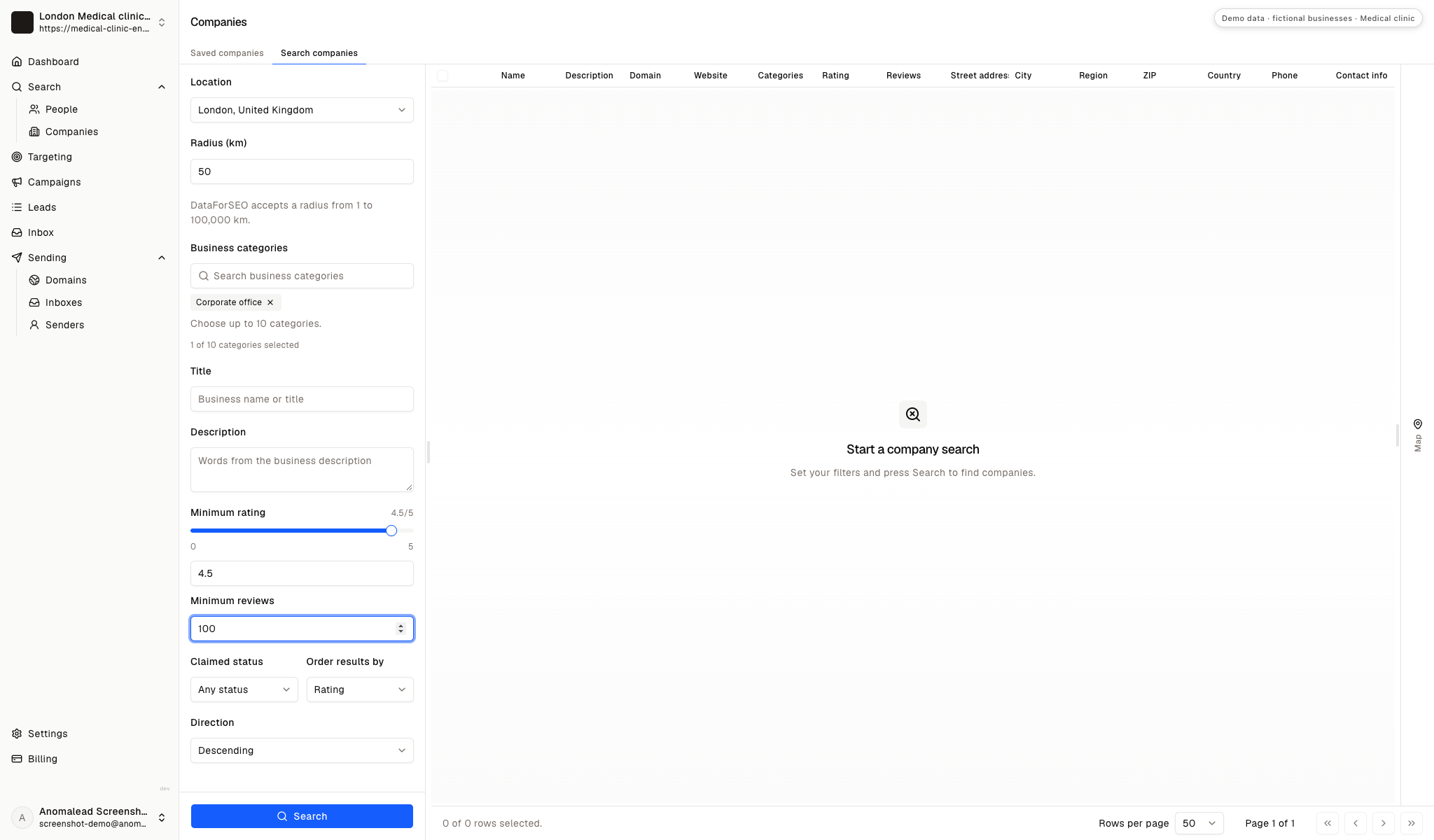
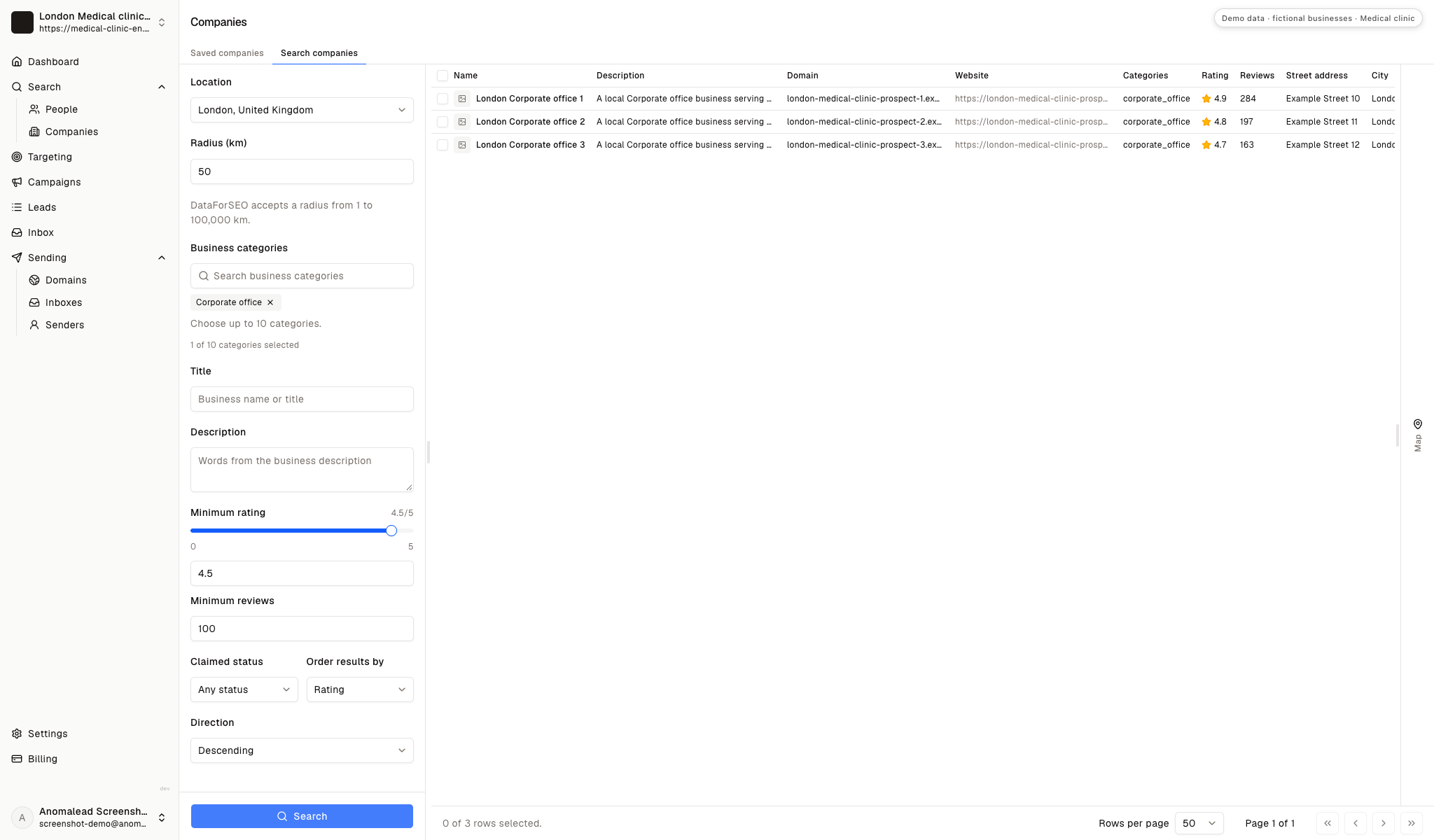
Read each result as a company record, not a health signal
Section titled: Read each result as a company record, not a health signalThe results view shows three fictional corporate-office businesses with ratings and review counts. None of those fields establishes a staff health need, a benefits budget or interest in a clinic partnership.
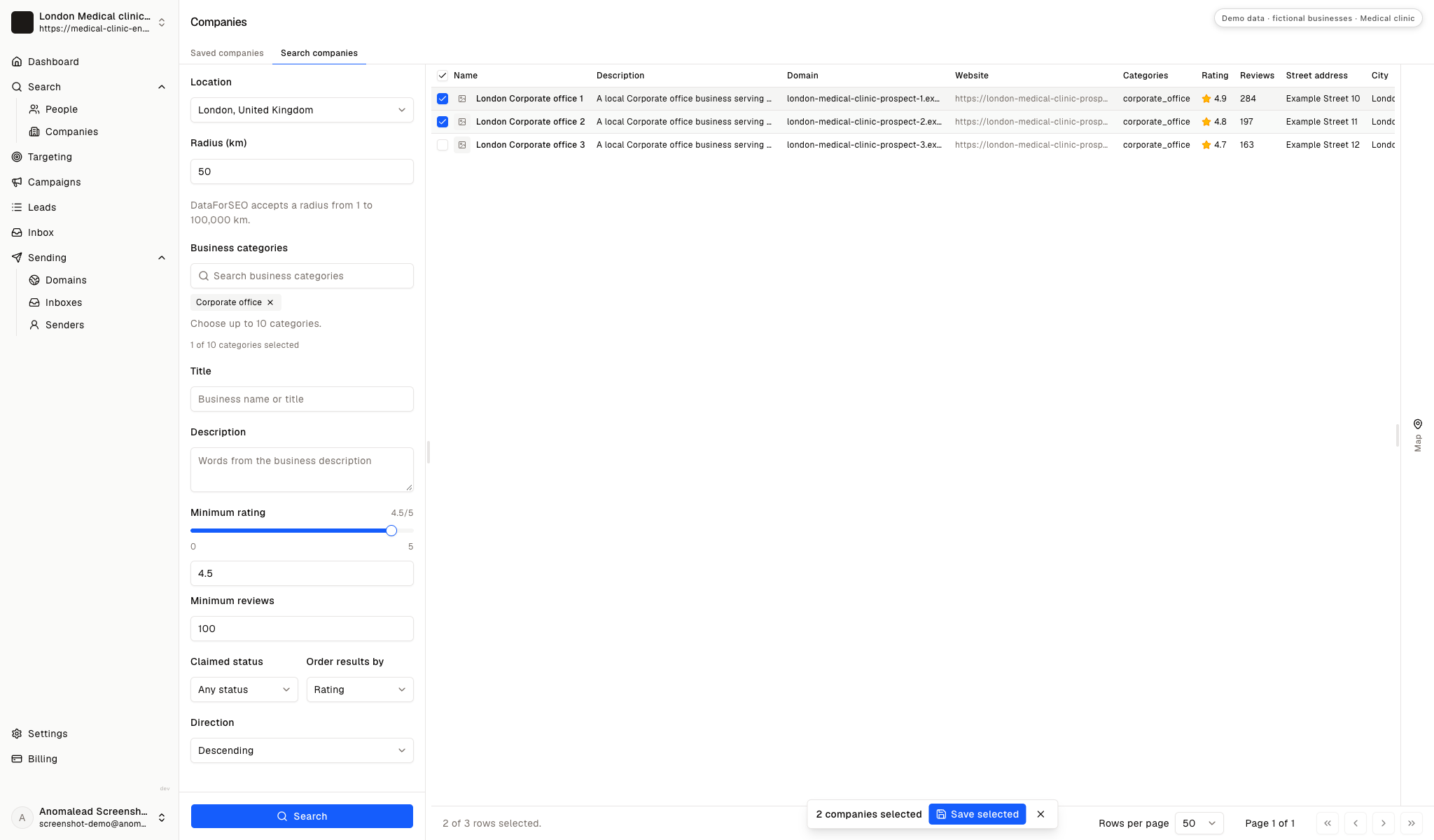
Save only employers with a plausible access fit
Section titled: Save only employers with a plausible access fitThe demo selects and saves two of the three results. In a real search, save a company only after checking its locations and identifying a sensible employee-access question to raise.
Choose a contact who can discuss staff access
Section titled: Choose a contact who can discuss staff accessEnrich a short list only after the employer looks plausible. A people-operations, benefits or workplace coordinator is usually closer to employee communications than a general purchasing contact. At a small company, the owner or office manager may handle both roles.
A job title does not confirm decision authority. Check whether the person owns benefits information, can approve an outside clinic resource or can introduce the right colleague. Keep the ask modest: you are checking who coordinates the conversation, not asking the contact to disclose employee health information.
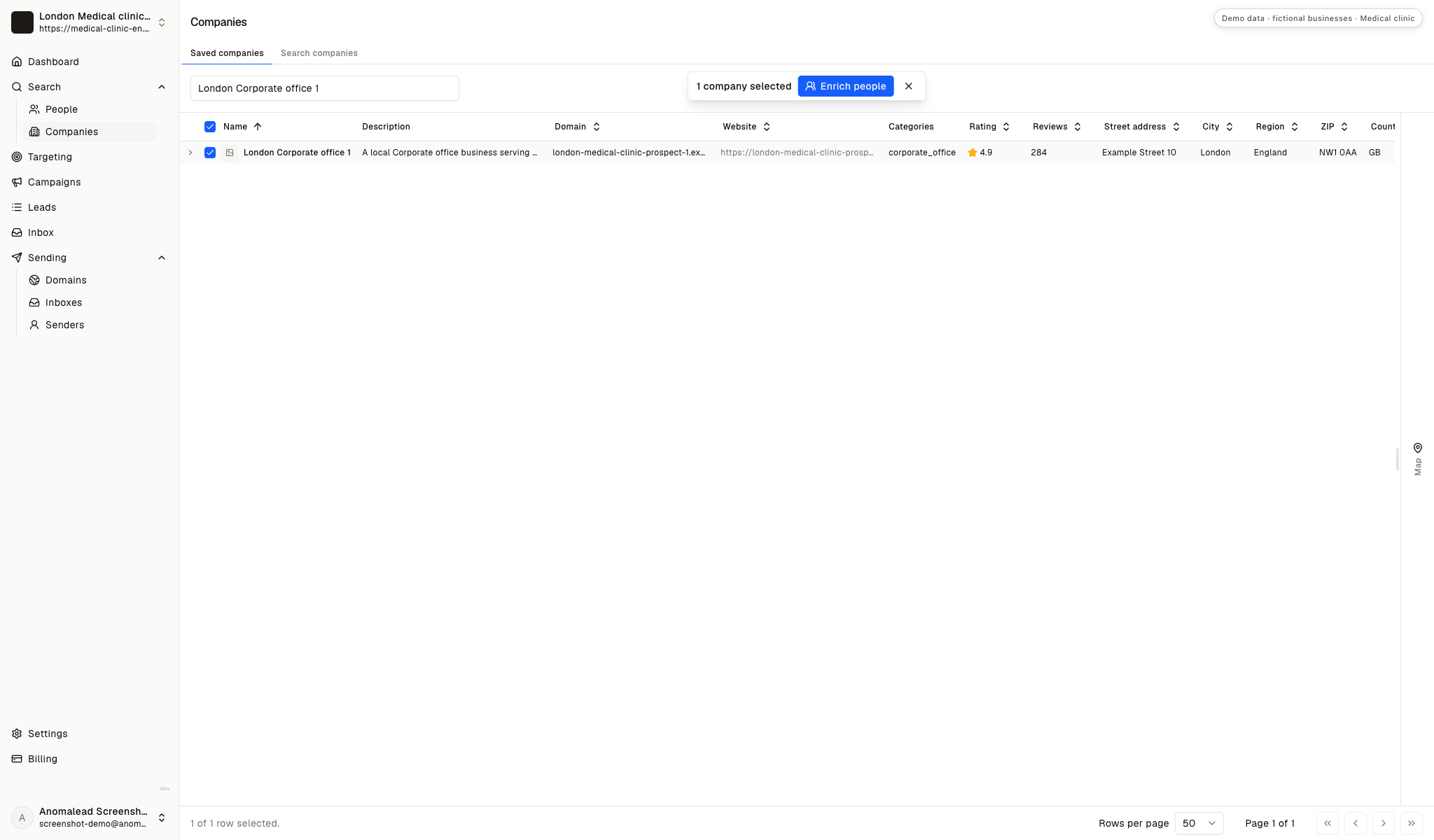
Review the saved company before enrichment
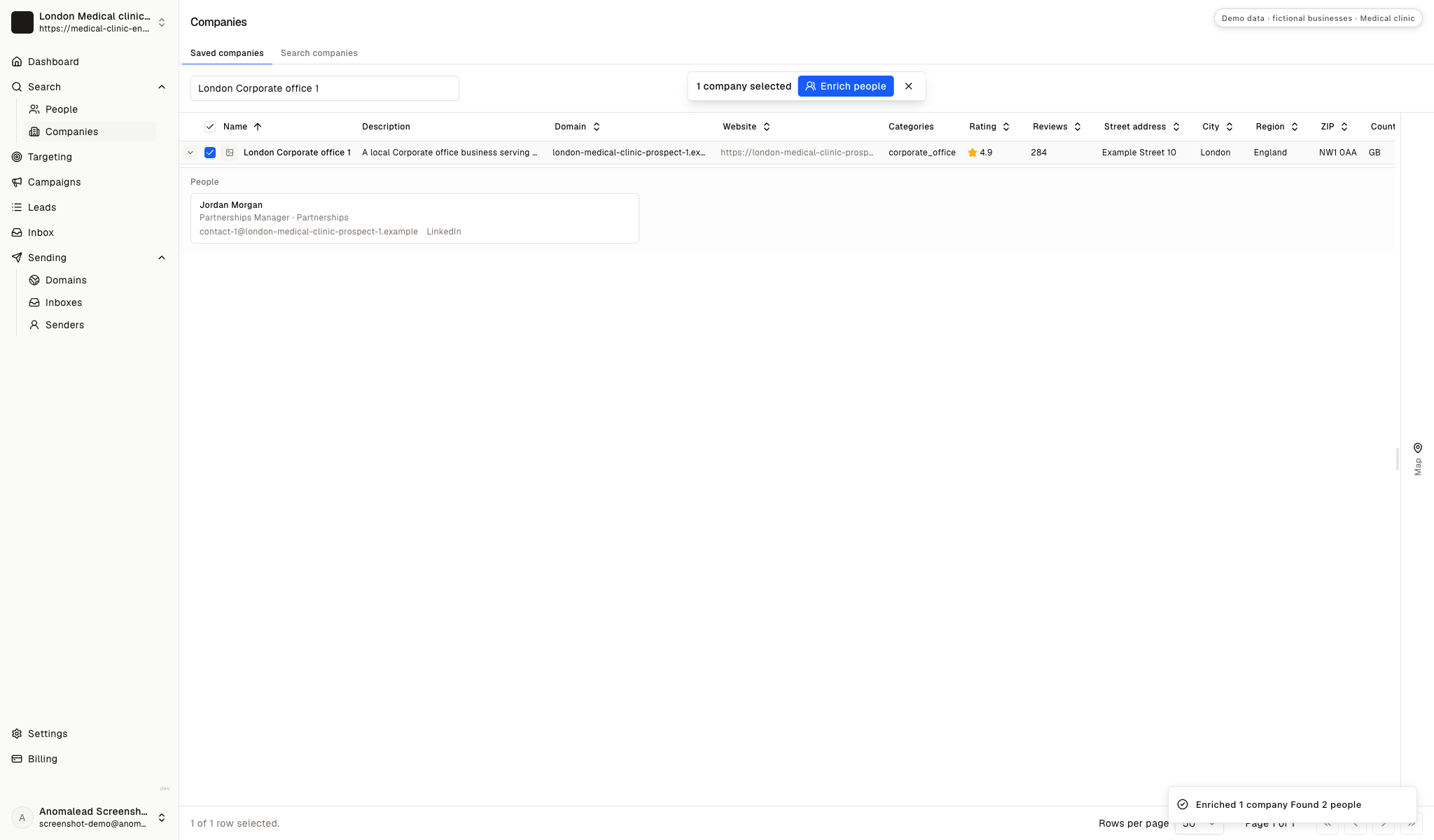
Section titled: Review the saved company before enrichmentThe shortlist screen shows one saved company selected with an Enrich people action. Check the record against your service area and target employer type before spending time finding contacts.
Check the roles returned for the employer
Section titled: Check the roles returned for the employerThe demo returns two fictional contacts, Jordan Morgan and Taylor Reed, with partnership-related titles. A real clinic should verify that the role is current and relevant before using the address.
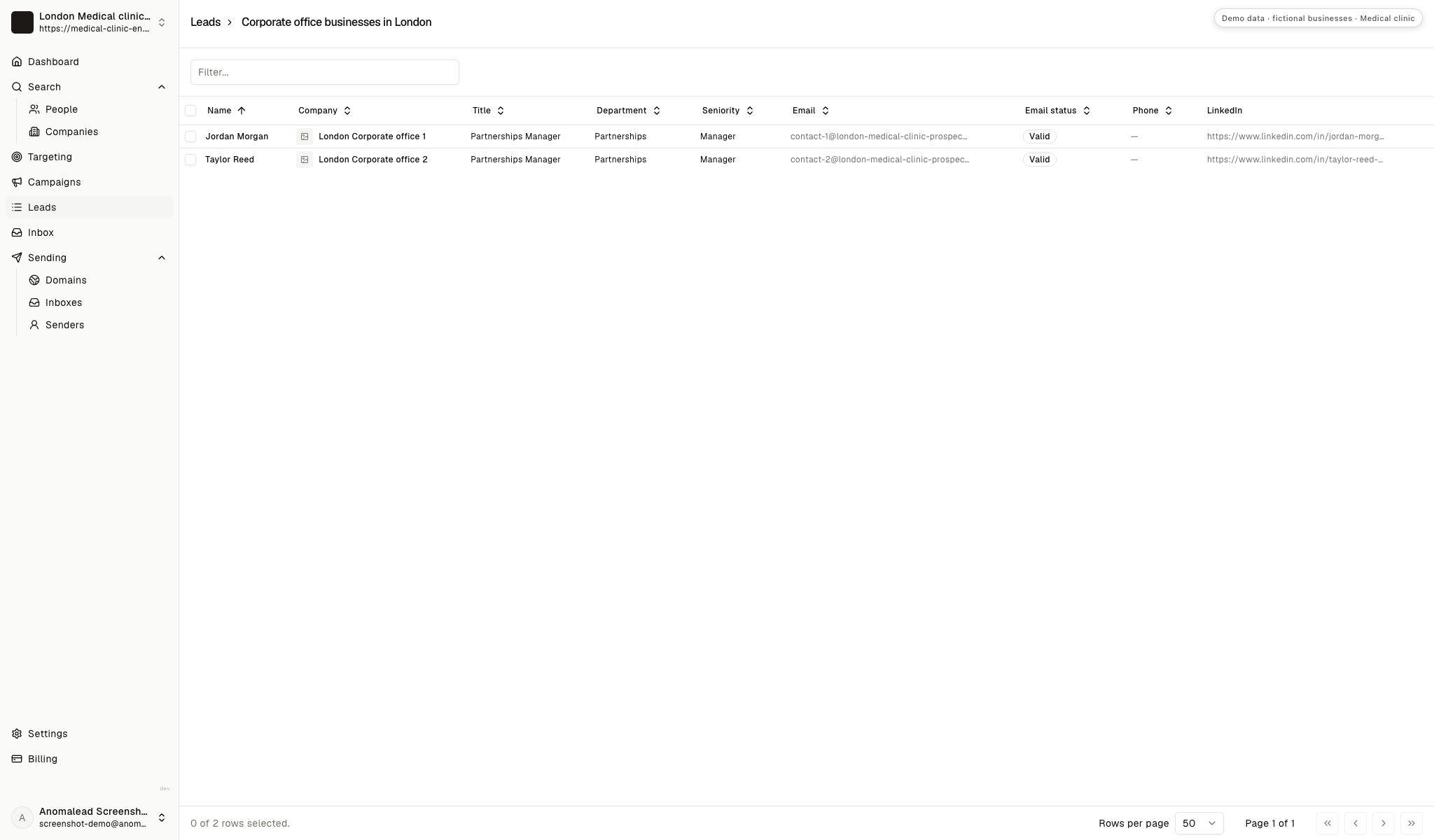
Keep the outreach list small and explainable
Section titled: Keep the outreach list small and explainableThe curated list contains two contacts and their email status. Remove people who do not own benefits or workplace communications, and record why each remaining contact is relevant to the clinic’s proposed offer.
Could an employer partnership justify clinic capacity?
Section titled: Could an employer partnership justify clinic capacity?A workplace partnership is worth considering when the clinic can deliver it without displacing patient care and the format supports a practice goal. Its potential value may come from appointment access, staff information or an approved workplace session, but each format uses different clinician and administrative time.
Use your own assumptions for staff interest, available appointments, clinician time, administrative work and the value of any resulting clinic relationship. These inputs are planning scenarios, not typical rates, forecasts or promised outcomes.
Do the math on one good deal
If one new customer is worth thousands, you don’t need magic. You need a few more meetings a month.
Projected monthly results
- Deals closed
- 2.0
- Projected revenue
- £10,000
- Growth plan (1 business)
- £79/mo
- ROI
- 12,558%
Conservative math on meetings you already believe you can book. One closed deal often pays for a year of Anomalead.
Compare the expected coordination work with the clinic time you could make available. If the arrangement depends on capacity the practice cannot release, narrow the offer before proposing it.
Write to the employer about access, not a promised outcome
Section titled: Write to the employer about access, not a promised outcomeA first email should name the practical offer and ask one small question. Do not imply that the employer has a health problem, that its staff requested your clinic or that a workplace arrangement will produce a clinical result. Keep service claims within the clinic’s approved advertising and professional-conduct rules.
Before scheduling a campaign, confirm who approves the copy, which appointment options are genuinely available and how an employee will contact the clinic directly. A staff guide or information session should describe the service accurately and make clear that individual care decisions remain between the patient and clinician.
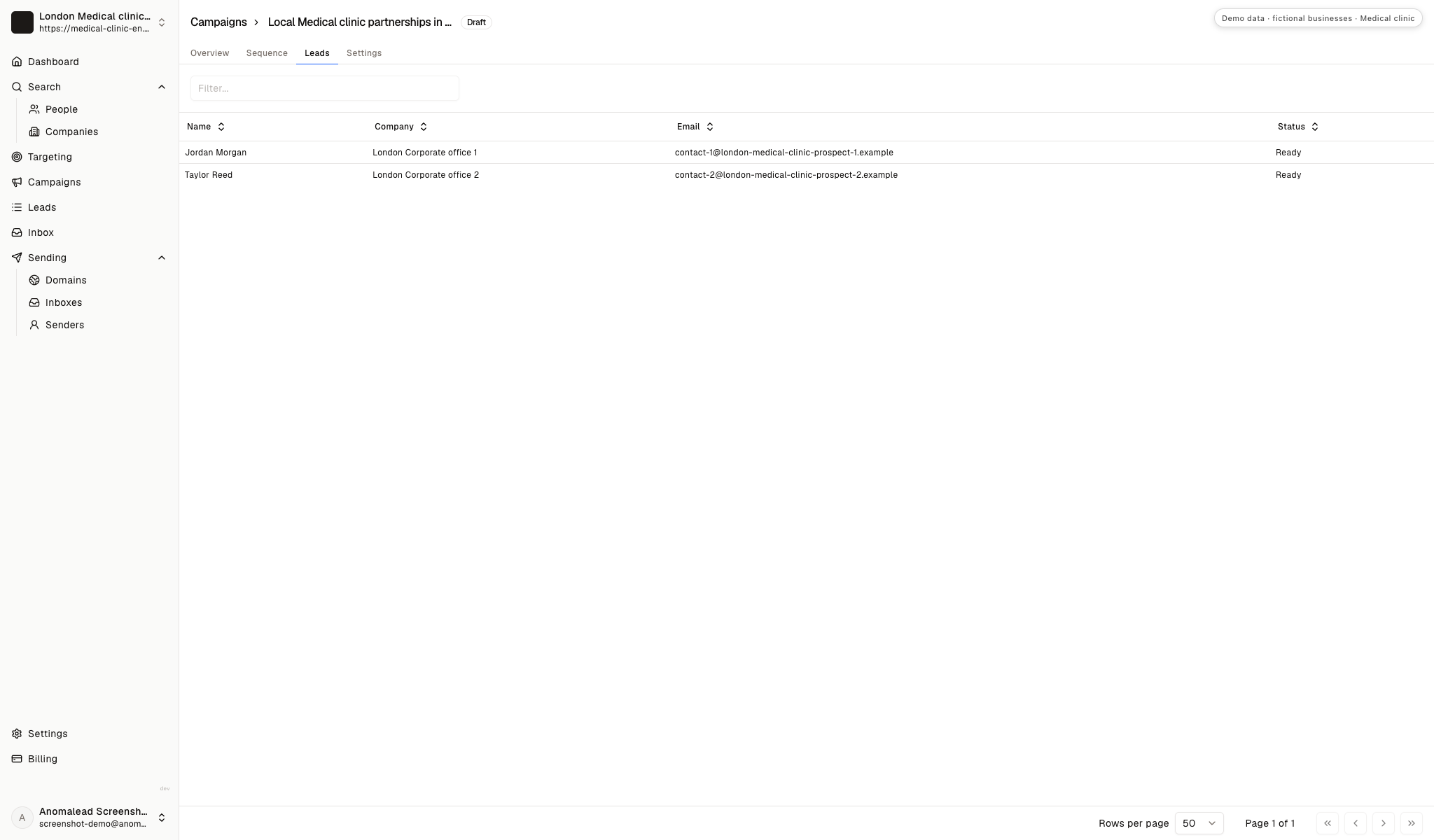
Review the recipients before a clinic campaign
Section titled: Review the recipients before a clinic campaignThe draft campaign contains two fictional employer contacts. Check each person’s role, relevance and communication basis, then make sure the message is approved for the clinic and the audience.
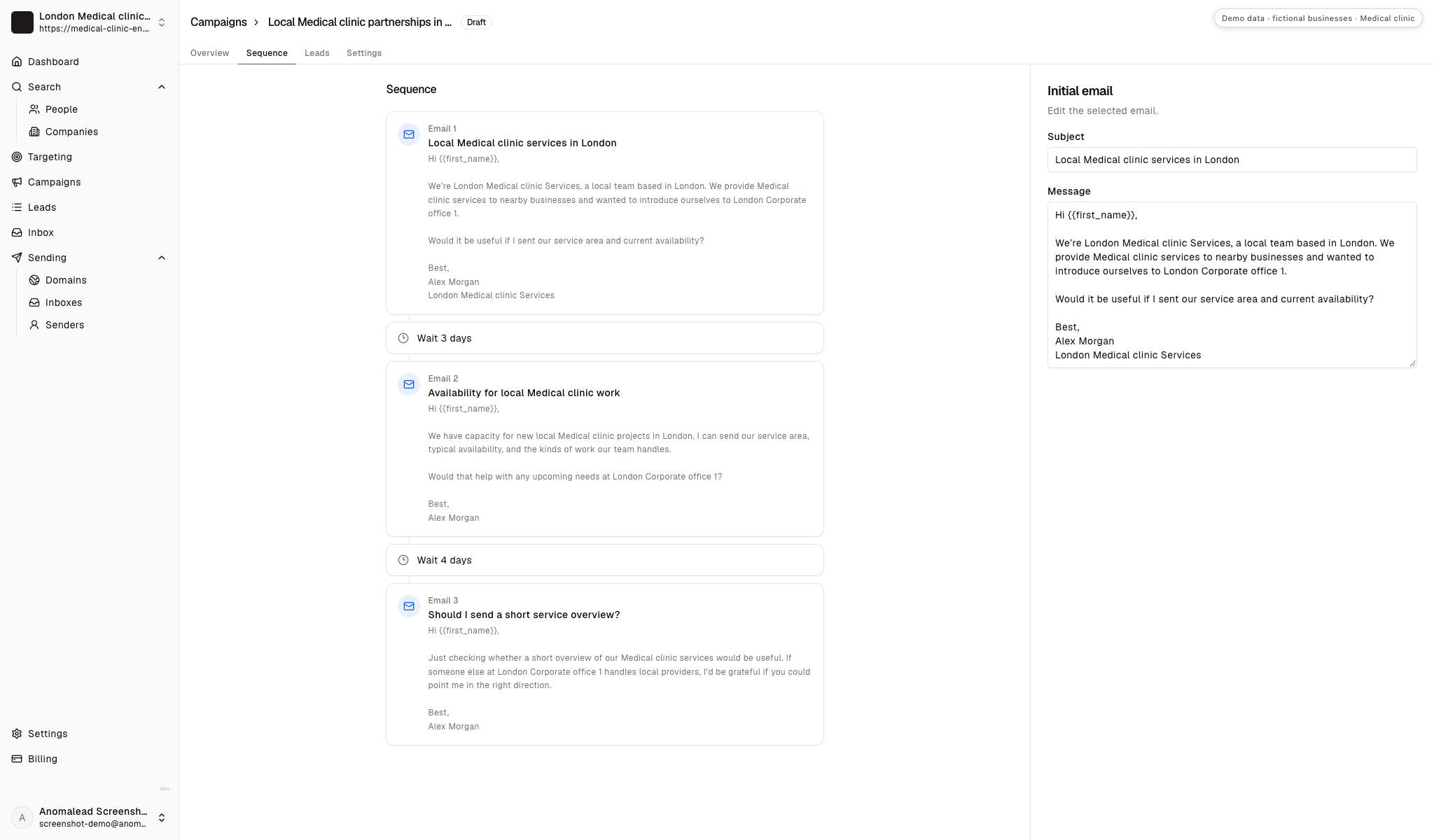
Replace generic follow-ups with useful context
Section titled: Replace generic follow-ups with useful contextThe sequence editor displays three emails with waiting periods of three and four days. Treat this as a scheduling interface, not a recommendation to contact an employer on a fixed cadence; follow your clinic’s communication policy and stop when asked.
Offer a clear route for staff to learn about appointments
Section titled: Offer a clear route for staff to learn about appointmentsThis example asks an HR contact whether a short discussion about appointment access would be useful. Adapt it to services the clinic actually provides, then have the appropriate person approve the wording.
Initial employer note
Subject: A clear appointment route for your team
Hi Jordan Morgan,
I’m Alex Morgan from London Medical clinic Services. Our practice can share the routine services we offer and explain how employees can contact us and book directly. We can also discuss a staff information session if it fits our clinical scope and current capacity.
Would a brief conversation about a clear appointment route for your team be useful?
Kind regards,
Alex Morgan, London Medical clinic Services
The fixture contact and clinic name are fictional. For more examples of concise outreach, see these B2B cold email templates. Do not send a message until clinic review and applicable professional rules are clear.
Use the inbox to sort genuine questions from assumptions
Section titled: Use the inbox to sort genuine questions from assumptionsThe inbox shows two fictional replies. Jordan Morgan asks for service area, availability and a price range; Taylor Reed asks about upcoming work, availability and credentials. Neither reply confirms a real employer need or patient demand.
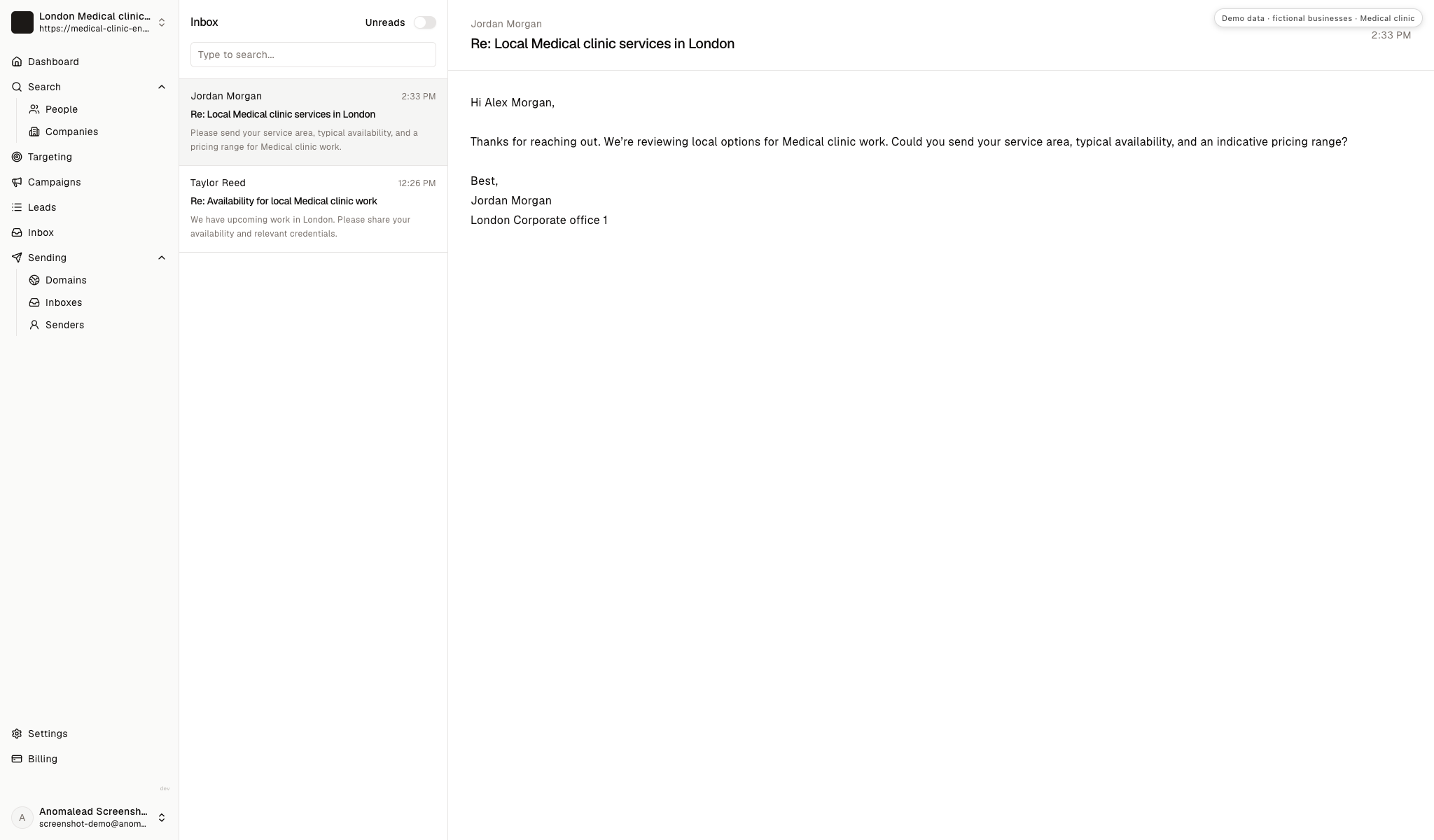
Answer employer questions within the clinic’s boundaries
Section titled: Answer employer questions within the clinic’s boundariesRespond to the question asked, then clarify what the employer wants to coordinate. Keep clinical decisions, patient information and service claims under the clinic’s approved processes.
Jordan asks for service area, availability and an indicative price
Section titled: Jordan asks for service area, availability and an indicative pricePlease send your service area, typical availability, and a pricing range for Medical clinic work.
Share the locations and appointment types the clinic can confirm, along with the person who can prepare an accurate scope. Explain that the format matters: an information resource, direct appointment route and clinician-led session require different preparation. Do not invent a price or promise appointment access that the schedule cannot support.
Acknowledge the request and ask what format the employer has in mind:
Thanks, Jordan Morgan. I can send the clinic’s current service area and ask our practice manager to confirm which appointment options we can discuss. Are you looking for a staff information resource or a conversation about a direct booking route?
Taylor asks about upcoming work and relevant credentials
Section titled: Taylor asks about upcoming work and relevant credentialsWe may have a clinic-related project coming up. Could you share the practice’s availability and the credentials relevant to that service?
Clarify whether Taylor means a staff information session, appointment access or a specific clinical service. Provide only credentials and service descriptions the clinic has approved for that work; do not imply that every practice offers occupational health or on-site screening.
Ask what service the employer expects before confirming capacity:
Thanks, Taylor Reed. I can check the team’s availability and share the credentials relevant to the service we agree on. What kind of staff support are you considering, and who will approve the scope?
An employer asks the clinic to identify employees who booked
Section titled: An employer asks the clinic to identify employees who bookedCould you tell us which employees used the service so we can follow up with them?
Do not agree to report individual appointments or clinical details to an employer. Explain that staff should contact the practice through its approved patient route and ask the clinic’s privacy or compliance adviser what, if any, aggregate operational reporting is appropriate.
A benefits contact expects a guaranteed health improvement
Section titled: A benefits contact expects a guaranteed health improvementCan you guarantee this partnership will reduce staff illness and absence?
Do not promise a clinical or workforce outcome. Restate the specific service the clinic can provide, the conditions required to deliver it and the limits of what the clinic can measure. Check the proposed wording against applicable healthcare advertising and professional-conduct rules.
Before you contact the next employer
Section titled: Before you contact the next employerChoose one employer segment and one clinic service that has a clear owner, available capacity and an approved employee route. Review the contact’s role, personalize the note around that service and track only information the clinic is permitted to use.
After the first conversation, record what the employer asked for, what the practice can deliver and who will confirm the next step. If the clinic cannot support the proposed access or privacy boundaries, close the conversation rather than stretching the offer. Use this clinic partnership checklist only as a comparison for a distinct provider model, not as a substitute for your clinic’s own scope review.
Medical clinic lead generation questions
Section titled: Medical clinic lead generation questionsWhich employer contact should a small clinic approach first?
Section titled: Which employer contact should a small clinic approach first?Start with the person who owns employee benefits, people operations or workplace communications. At a small company that may be an owner or office manager. Ask who approves clinic information and how staff would contact the practice directly.
Can a clinic offer on-site screening to local employers?
Section titled: Can a clinic offer on-site screening to local employers?Only consider it if the practice is equipped, staffed and authorized to provide the specific service. Confirm the clinical scope, consent process, follow-up route and applicable professional rules before describing it to an employer.
How can the clinic discuss partnership activity without sharing patient details?
Section titled: How can the clinic discuss partnership activity without sharing patient details?Keep individual appointment and clinical information within the clinic’s approved patient workflow. Ask the appropriate privacy or compliance adviser whether any aggregate operational information can be shared, and explain the limits to the employer before the arrangement begins.
Are the companies and contacts in the screenshots real?
Section titled: Are the companies and contacts in the screenshots real?No. The company records, Jordan Morgan, Taylor Reed and their replies are fictional demo data. They are not clinic customers, confirmed prospects, patient referrals or evidence of campaign results.
What does the ROI calculator predict for a clinic?
Section titled: What does the ROI calculator predict for a clinic?It does not predict patient volume, revenue or a partnership outcome. Enter your own assumptions about available capacity, staff time and the value of a possible relationship to compare planning scenarios.