


Interior design lead generation works best when you approach general contractors whose renovation or fit-out projects need a defined design partner. Your first goal is a conversation about project fit, scope and timing, not a request for a list of their clients or a promise that a partnership will produce work.
Look for contractors that bring designers into planning before layouts, finishes and trade responsibilities are fixed. A useful first discussion clarifies who owns the client relationship, what your studio can deliver and how a customer can choose whether to meet you. If you are refining your B2B lead generation process, keep the contractor as the prospect and the end client in control of design decisions.
Key takeaways
- Prioritize general contractors with renovation and fit-out work where interior planning or finish coordination adds a clear service.
- Contact preconstruction or project leaders before the design brief, bid scope and material selections are locked.
- Define who contracts with the client and who owns drawings, approvals, procurement and site questions.
- Describe your actual design scope and keep architectural, engineering, code and permit responsibilities with the qualified party.
Interior design lead generation starts with contractor fit
Section titled: Interior design lead generation starts with contractor fitTarget general contractors whose renovation or fit-out projects need a separate interior design scope. Firms with full in-house teams may fit only when they need extra capacity or a specialty.
- Commercial fit-out contractors: Workplace, retail and hospitality fit-outs may need test fits, finish schedules and FF&E coordination. Your package helps the builder price and sequence construction around client decisions.
- Renovation and refurbishment firms: These teams may need help when an owner wants a new layout or finish direction but has no designer. Ask whether they use studios for concepts, design development or selections before pricing is fixed.
- Design-build contractors: An integrated firm may need a specialist in workplace planning, hospitality interiors or material packages. Learn how it handles client approvals so your scope complements its in-house offer.
Architecture firms may be a related partner on coordinated projects; the architecture lead generation guide covers a different scope.
Qualify a project before you enrich contractor contacts
Section titled: Qualify a project before you enrich contractor contactsApproach contractors whose project mix, schedule and buying process fit your studio. Check the company first, then find the person who can discuss design support.
- Match the project type to your portfolio. Workplace, restaurant and retail interiors each bring different circulation, finish and furniture decisions.
- Check the project stage. A test fit or finish brief helps before bid scope, long-lead orders or shop drawings are fixed; an active build may need targeted coordination instead.
- Confirm who appoints your studio, presents selections and approves revisions: the client, contractor or another party.
- Name your scope, such as space planning, finish specifications, FF&E selection or procurement coordination. Keep architecture, engineering, code review and permit work with qualified professionals.
- Check capacity for drawing milestones, field measurements, sample approvals, substitutions and site coordination. The contractor also needs a package it can price and build.
Ask which next deliverable would help most: a test fit, finish schedule, sample board or FF&E allowance.
About the demo records
The demo operator is London Interior designer Services. The general contractors, contacts and inbox replies shown below are fictional records created for the walkthrough. They are not Anomalead customers and do not represent real prospects or campaign results.
Find contractors by project type and service area
Section titled: Find contractors by project type and service areaSearch for general contractors in places your studio can serve through meetings, site visits and sample reviews. Then check public project pages for fit-outs, tenant improvements or refurbishments that match your interior work, rather than relying on a broad construction label.
Treat a search result as a research lead. Ratings and short descriptions do not confirm that a contractor hires outside designers or has an active project. The basics of finding business leads still apply: keep the list tied to an identifiable project type and a reason to talk.
Set the search around the work your studio can deliver
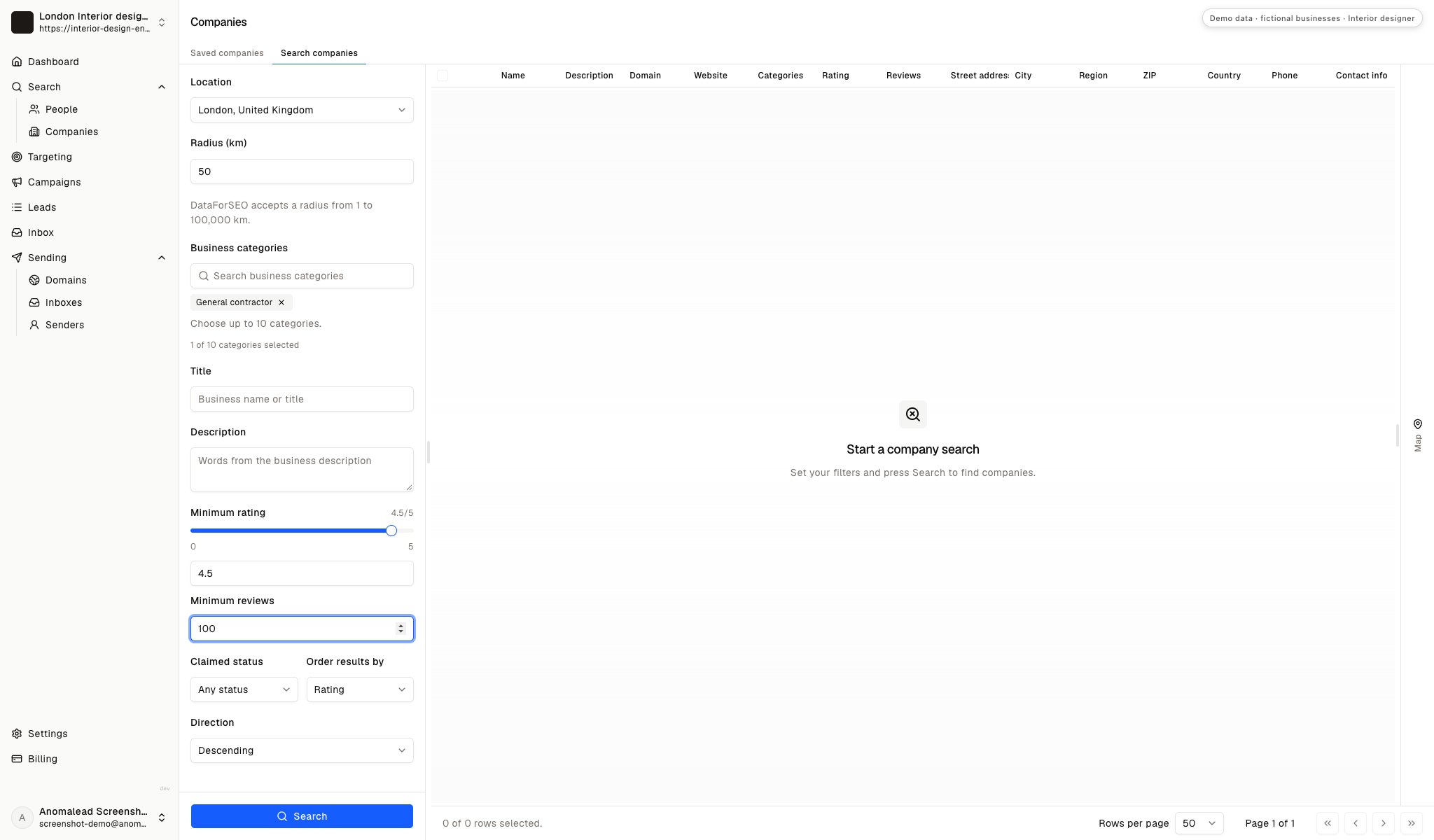
Section titled: Set the search around the work your studio can deliverChoose general contractors and set an area your team can cover for client meetings, surveys and design coordination. Location and review filters organize research; they do not show whether a firm needs an interior designer.
Investigate each contractor before saving it
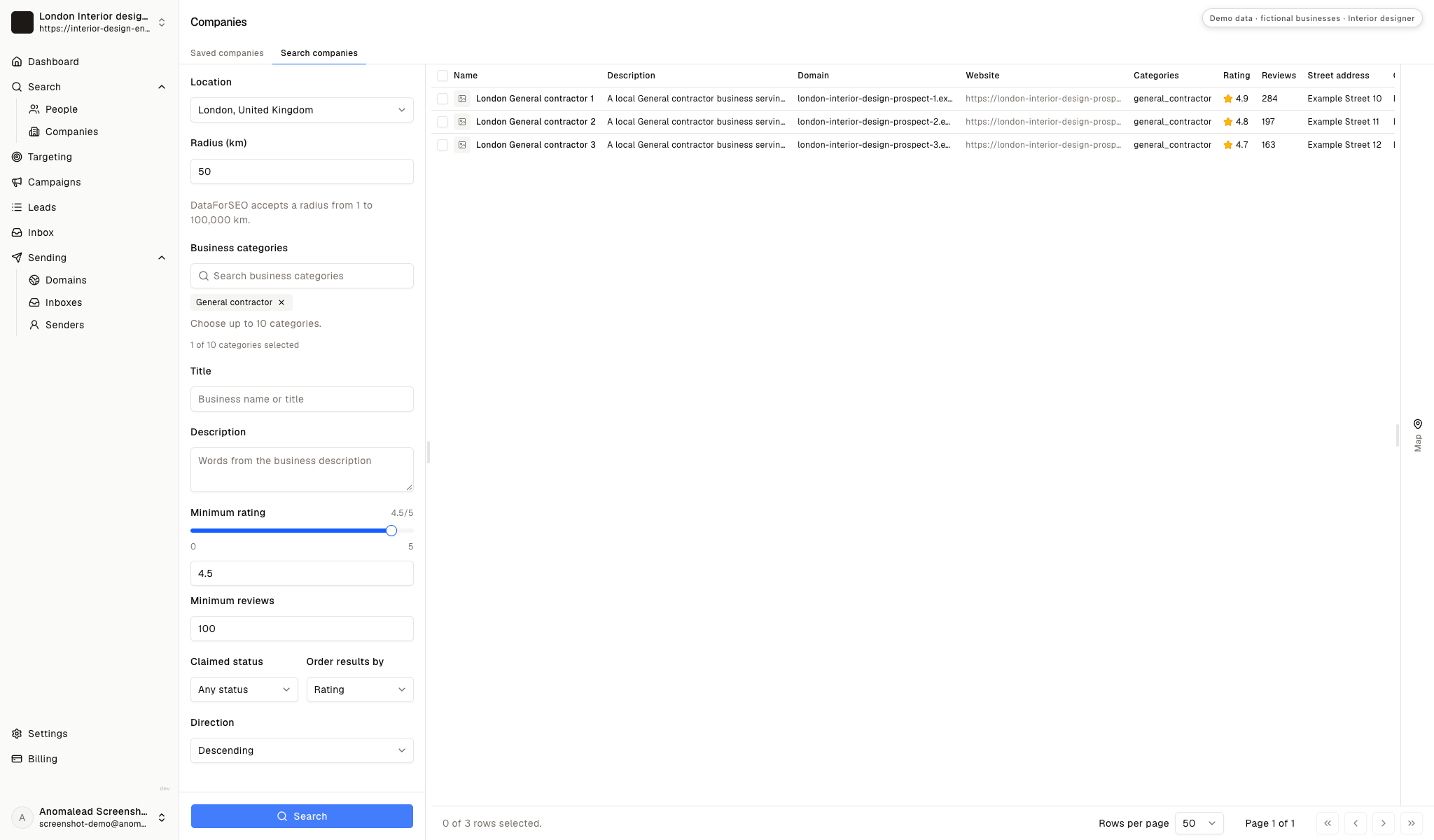
Section titled: Investigate each contractor before saving itThree fictional contractor records appear with generic descriptions, domains and review information. The seeded names are London General contractor 1, London General contractor 2 and London General contractor 3; they are not verified firms.
Save firms with a reason for a design conversation
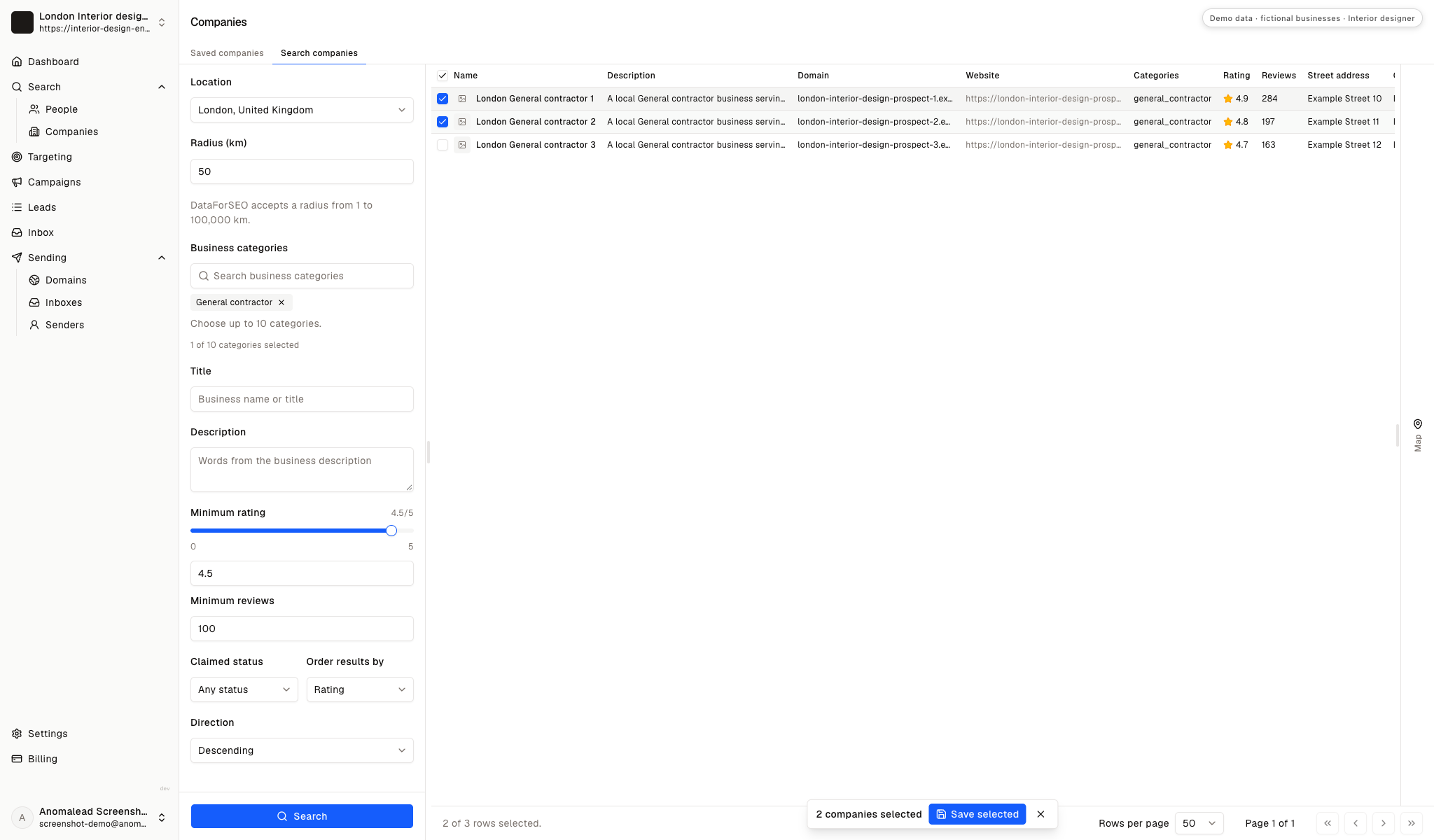
Section titled: Save firms with a reason for a design conversationThe walkthrough saves two of three records. In real prospecting, select a firm only when you can name a matching project type or service gap, such as workplace fit-outs without an interior team.
Enrich the shortlist around the project team
Section titled: Enrich the shortlist around the project teamThe best contact can explain how outside design support enters a project. Look for a preconstruction manager, estimator, project executive, operations lead or owner; a partnerships title is only a starting point.
Ask who issues the brief and coordinates client decisions, samples and scope changes. Contact preconstruction before pricing is fixed, and do not send the same pitch to several colleagues.
Review the shortlist before enriching people
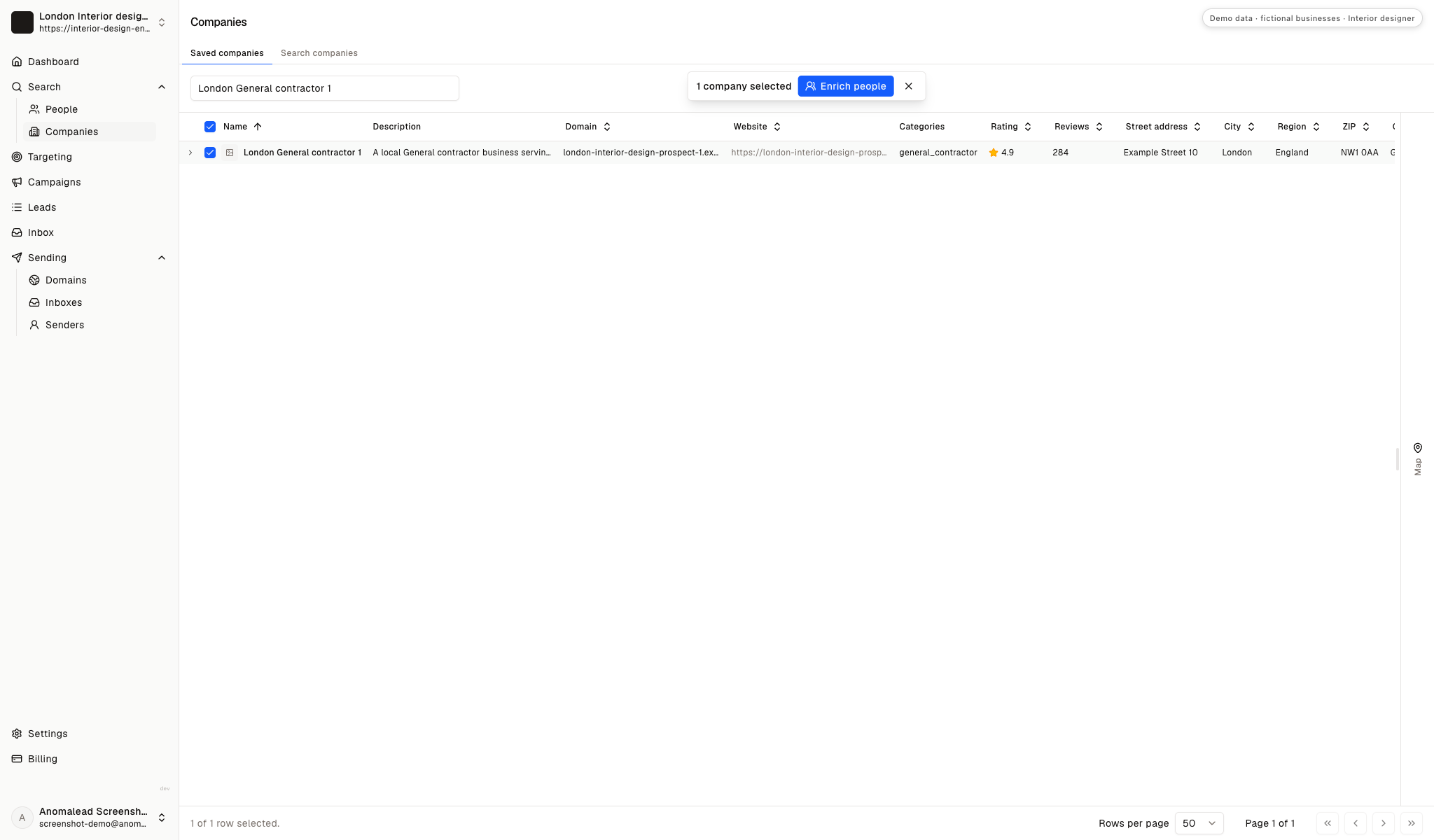
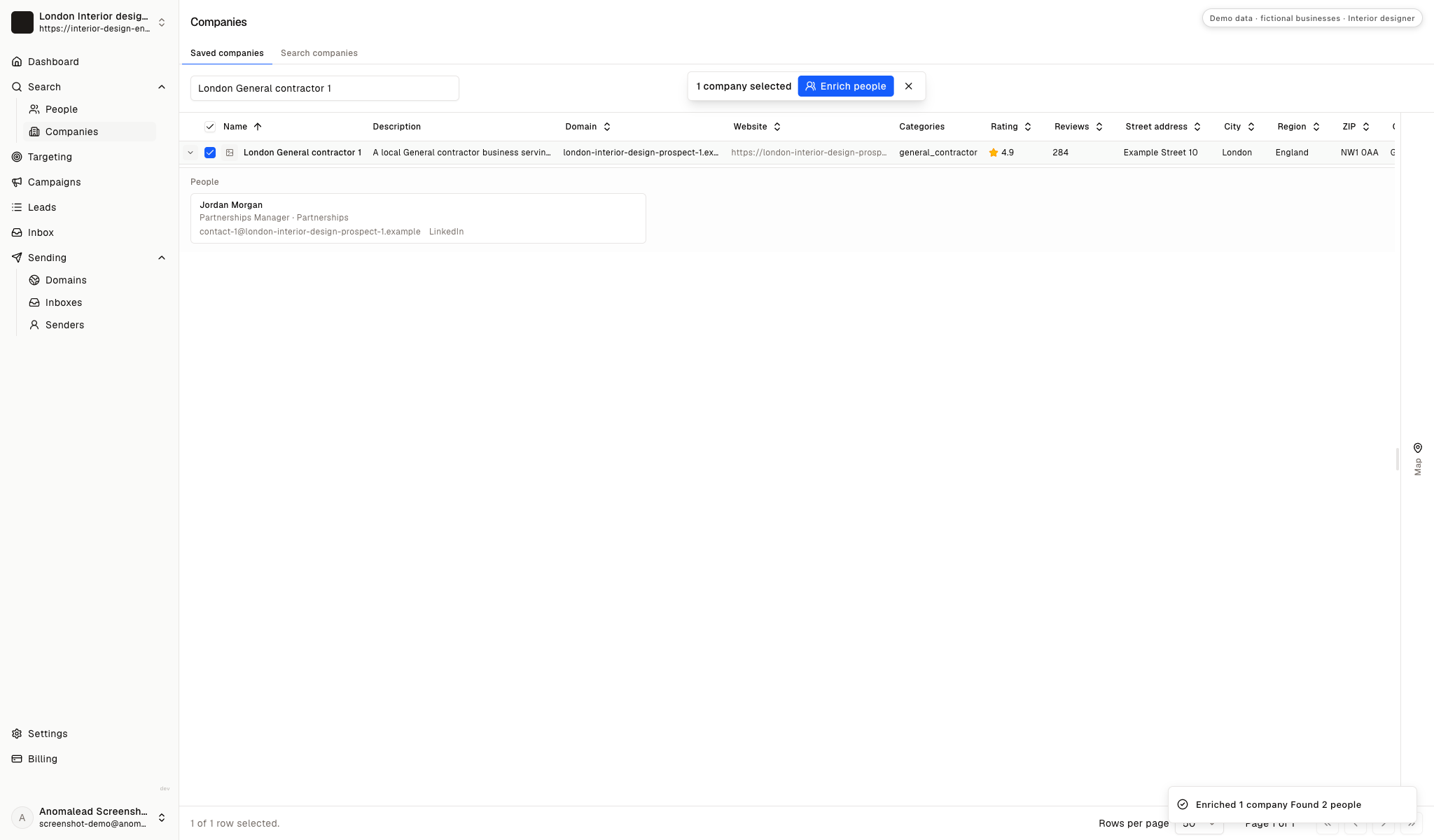
Section titled: Review the shortlist before enriching peopleOne saved contractor is selected before the people search. Confirm its project types suit your portfolio; Enrich people finds contact records but does not show who owns design procurement.
Check who could place an outside designer
Section titled: Check who could place an outside designerThe sample panel lists fictional Partnerships Managers Jordan Morgan and Taylor Reed. Real contractors may use preconstruction, estimating or project delivery titles, so verify each person's remit before writing.
Keep the working list narrow and role-specific
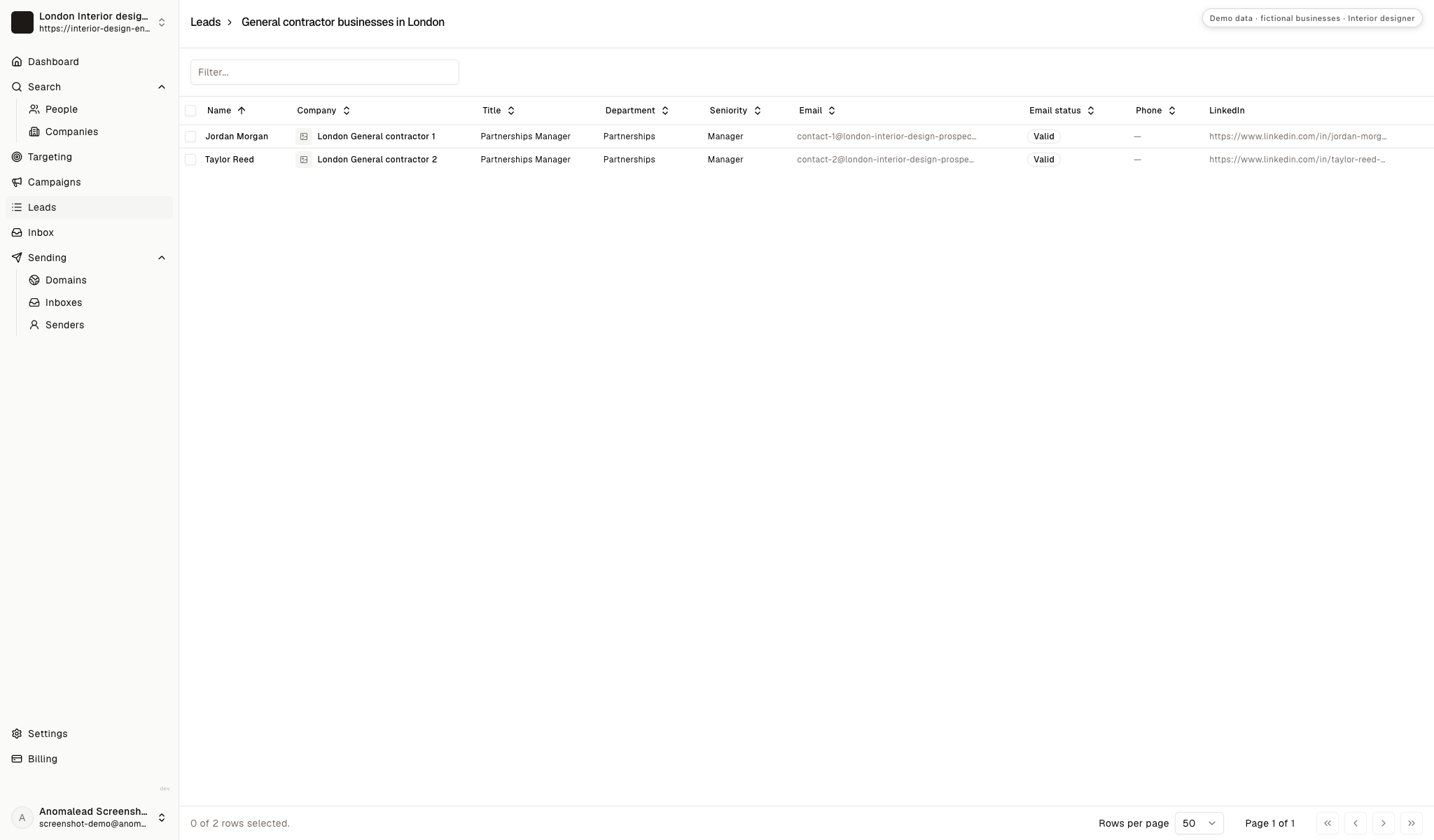
Section titled: Keep the working list narrow and role-specificTwo contacts from separate contractors appear in the demo list. Check each role, company and email status, and keep confidential client plans and budgets out of prospect records.
Could a contractor relationship support repeat design work?
Section titled: Could a contractor relationship support repeat design work?A contractor may bring repeat fit-out work, but value depends on scope, procurement duties and pipeline. Account for briefing, revisions, site coordination and sample handling, not only concept work.
The calculator uses the deal value, meeting assumptions and close rate you enter. Treat every input as your own planning assumption; the result does not predict a signed design contract, project volume or profit.
Do the math on one good deal
If one new customer is worth thousands, you don’t need magic. You need a few more meetings a month.
Projected monthly results
- Deals closed
- 2.0
- Projected revenue
- £10,000
- Growth plan (1 business)
- £79/mo
- ROI
- 12,558%
Conservative math on meetings you already believe you can book. One closed deal often pays for a year of Anomalead.
Include scope changes, procurement and site time before prioritizing the account.
Reach preconstruction before design choices are fixed
Section titled: Reach preconstruction before design choices are fixedConnect one project type to a design contribution, such as a test fit, finish schedule or FF&E coordination. Ask how the firm brings in outside designers; do not promise faster delivery or less rework. A cold email opening can invite a short scope conversation before the estimate is fixed.
Choose contacts who share a project context
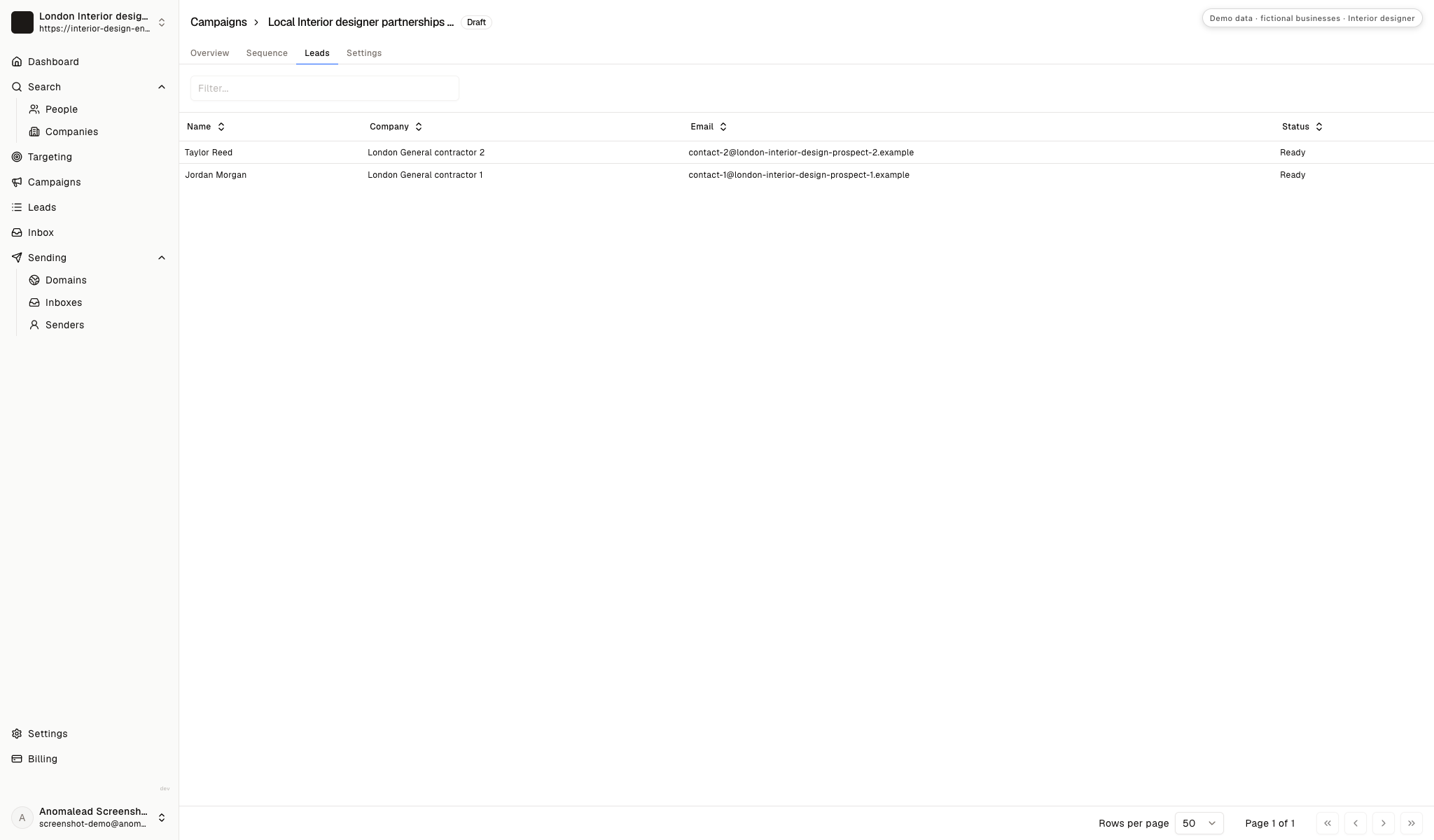
Section titled: Choose contacts who share a project contextThe draft contains two fictional contractor contacts. Group real recipients by project type or role, verify their remit and give each email a clear reason for reaching out.
Review the sequence for project-specific follow-up
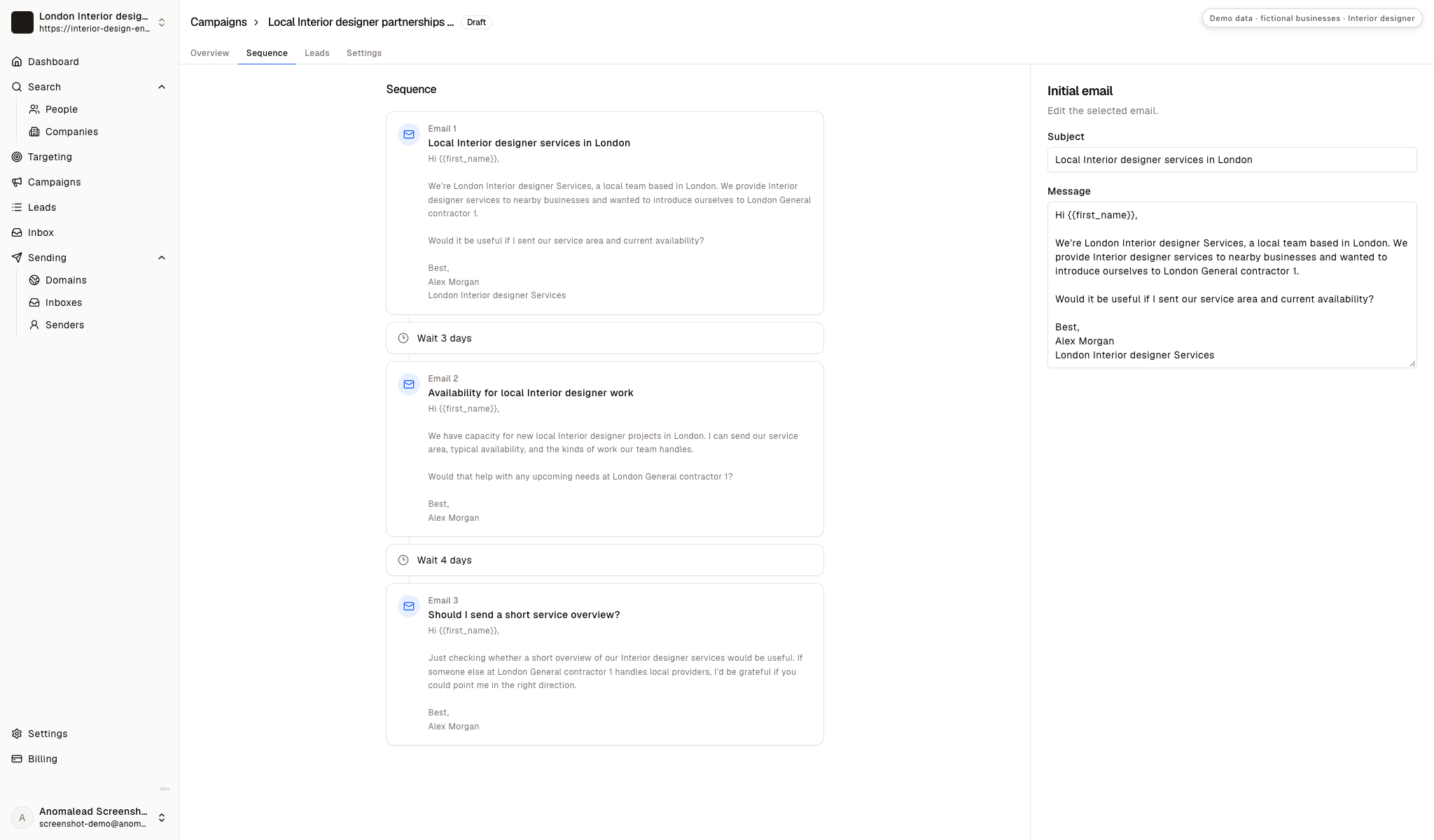
Section titled: Review the sequence for project-specific follow-upThe editor shows three prepared emails and two waits. Make the first note explain your design contribution and let a later touch add a useful detail. Keep availability and qualification claims current.
Offer a defined design contribution in the first email
Section titled: Offer a defined design contribution in the first emailThe seeded sequence is generic. Name work your studio actually takes on and invite the contractor to explain its process.
Interior design introduction to a general contractor
Subject: Interior support for upcoming fit-outs
Hi Jordan,
I run London Interior designer Services. Our studio supports renovation and fit-out teams with space planning, finish schedules and furniture coordination when a project needs design capacity outside the core build team.
We keep the design scope and construction responsibilities clear, including who presents selections to the client and who coordinates site questions. Does your preconstruction team ever bring in an outside interior designer for upcoming fit-outs?
Best,
Alex Morgan, London Interior designer Services
Name one service and ask one question. Adapt these B2B cold email examples without implying a project award or referral.
Use replies to clarify the real project need
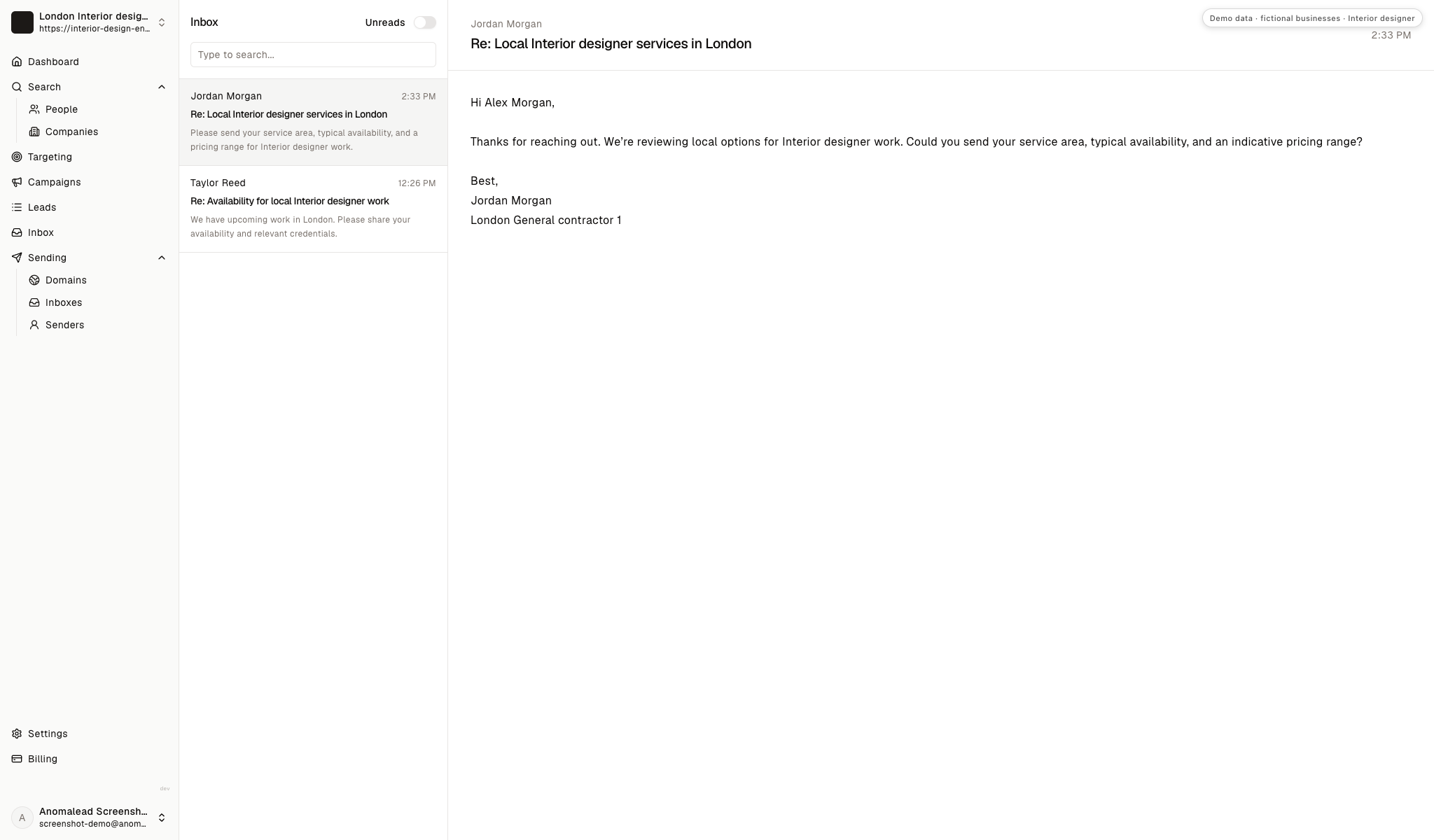
Section titled: Use replies to clarify the real project needThe fictional inbox replies ask about service area, availability, price and credentials. Answer what you can verify, then ask which project stage and deliverable the firm has in mind.
Handle contractor replies with a clear scope and handoff
Section titled: Handle contractor replies with a clear scope and handoffRespond to the project question first, then establish the design stage, decision owner and next useful artifact. A contractor may be evaluating a partner rather than discussing a confirmed client project.
Jordan asks for coverage, availability and a price range
Section titled: Jordan asks for coverage, availability and a price rangeJordan Morgan asks which areas the studio serves, when it could start and how it prices interior design work.
Explain your service area and how you scope work by phase or deliverable. Ask whether the need is a test fit, finish package or design coordination, and confirm drawing status and revisions before quoting.
A useful reply makes the scope question concrete:
Thanks, Jordan. We can discuss fit-out work in our service area, with fees based on phase and deliverables. Is the team planning an early test fit or selecting finishes for a project in preconstruction?
Taylor asks about a coming project and credentials
Section titled: Taylor asks about a coming project and credentialsTaylor Reed asks about an upcoming project, the studio's available scope and relevant credentials.
Share a relevant portfolio example and your actual scope. Confirm who owns architectural, engineering or permit deliverables, then ask for the project type, stage and expected handoff.
Keep the next step tied to the project stage:
Thanks, Taylor. I can send fit-out examples and our interior design scope. Is the team still setting the brief, or does it need help with selections and coordination?
The contractor already has an in-house designer
Section titled: The contractor already has an in-house designerWe have a designer on staff and usually handle the interiors ourselves.
Respect the existing team. Ask whether it ever needs extra capacity for a specific project type, documentation phase or procurement task; if the answer is no, thank the contact and close the sequence.
Choose one project profile for the next outreach batch
Section titled: Choose one project profile for the next outreach batchThis week, choose one segment, such as workplace fit-outs, and shortlist firms whose portfolios show that work. Note the likely design stage, a deliverable you could own and the person who can discuss outside support.
Ask whether the firm uses external studios and who approves the handoff. Keep interior work distinct from construction delivery; the remodeling lead generation guide approaches renovation from the property manager's side.
Interior design partnership questions
Section titled: Interior design partnership questionsWhich general contractors should an interior designer approach first?
Section titled: Which general contractors should an interior designer approach first?Start with firms handling fit-outs or renovations where your planning, finishes or FF&E work complements construction. Check their portfolio and use of outside designers before proposing a partnership.
When should an interior designer contact a contractor about a project?
Section titled: When should an interior designer contact a contractor about a project?Reach the team while it shapes the brief, tests layouts or prepares a bid scope. The contractor can coordinate responsibilities before selections and long-lead orders are fixed.
How can a small interior studio qualify contractor leads?
Section titled: How can a small interior studio qualify contractor leads?Check project type, service area, design stage and decision owner. Compare the coordination required with your portfolio, staff availability and site or procurement capacity.
Are the contractor businesses and replies in the screenshots real?
Section titled: Are the contractor businesses and replies in the screenshots real?No. The operator, company names, contacts and replies are fictional demo records. They are not Anomalead customers or real campaign results.
Does the ROI calculator predict a signed interior design project?
Section titled: Does the ROI calculator predict a signed interior design project?No. It organizes your deal value, meeting assumptions and close rate for planning. It cannot predict a referral, awarded project, profit or future workload.