


Senior care lead generation with clinics comes down to one practical job: making sure the care coordinator who talks to worried families has accurate, current information about your places. The clinic does not choose a care home, respite stay or day programme for anyone. The older person and their family do, and they may ask a coordinator which local services can explain their options.
This guide is for residential care homes, memory care communities, respite providers and adult day programmes that want to be on that short list for honest reasons. If this kind of prospecting is new to you, read how cold outreach to other organisations works first.
Key takeaways
- Senior care providers earn a place on a clinic's neutral resource list by sharing dated availability details and a direct enquiry route.
- The best clinic contacts are care coordinators, memory or older-adult clinic teams, community link workers and the practice manager who keeps the printed resource list.
- A useful first email to a clinic offers a one-page summary of care types, current places and the enquiry route for families, and asks how the clinic prefers to receive updates.
- Families and the older person make the placement decision, so outreach should never ask a clinic for patient names, health details or a promise to recommend one provider.
- Check the care-sector marketing, inducement and referral rules that apply to your service before offering a clinic anything beyond clear information.
Which clinic staff field questions about care places?
Section titled: Which clinic staff field questions about care places?Aim for the people who hear "we need to find somewhere for Mum" in a consultation room or on the phone.
- Care coordinators at practices with many older patients: They help older patients and relatives explore practical next steps after a change in support needs. They need to know which services may fit and how a family can ask about availability.
- Memory clinic and older-adult clinic teams: Relatives of people with dementia often ask these teams about day programmes, memory care and short breaks. A provider with a specialist unit or trained day staff is relevant here; a general residential home may not be.
- Community link workers and clinic social workers: Where clinics employ them, they connect patients with non-medical local support. They often keep their own notes on day centres and respite options.
- Practice managers: Someone decides what goes on the noticeboard, in the leaflet rack or on the clinic's resources page. Usually that is the practice manager, who also knows whether the clinic may name individual providers.
If most of your work is support delivered in people's own homes rather than in a care setting, the clinic outreach guide for home care agencies fits your service better.
Qualify a clinic before you look for names
Section titled: Qualify a clinic before you look for namesA clinic is worth approaching only if its patients' families could realistically use your places.
- Distance families will actually travel: Relatives visit a care home often, and day programme attendees need transport. A clinic whose patients live beyond that distance, or outside your pick-up area, is a poor fit.
- An older patient list or older-adult services: Look for mentions of frailty reviews, memory assessments, home visits or chronic-condition clinics. These suggest staff regularly hear questions about care settings.
- A match with your registered care types: Be exact about what you are registered and staffed to provide: residential care, nursing care, memory care, respite stays or day places.
- A way the clinic shares local options: A resources page, a patient information folder or a named coordinator all show there is somewhere to put your details.
- Your ability to keep information current: Before you add a clinic, decide who on your team updates availability and answers enquiries. An out-of-date vacancy note does more damage to trust than no note at all.
About the demo clinics and people
The screenshots come from a demo workspace for a fictional provider called London Senior citizens care service Services. London Medical clinic 1, 2 and 3, the contacts Jordan Morgan and Taylor Reed, and both inbox replies are invented. They are not Anomalead customers, real clinics or results from a real campaign.
Find clinics that serve your catchment
Section titled: Find clinics that serve your catchmentStart the search from your own building and set a radius that matches how far families come to visit or your transport runs. The walkthrough uses the medical clinic category, where care coordinators and older-adult teams sit.
Treat the results as a research list, not a list of referrers. A rating and review count describe the public listing; they do not show whether staff discuss local care options with families.
Set the clinic category and your catchment radius
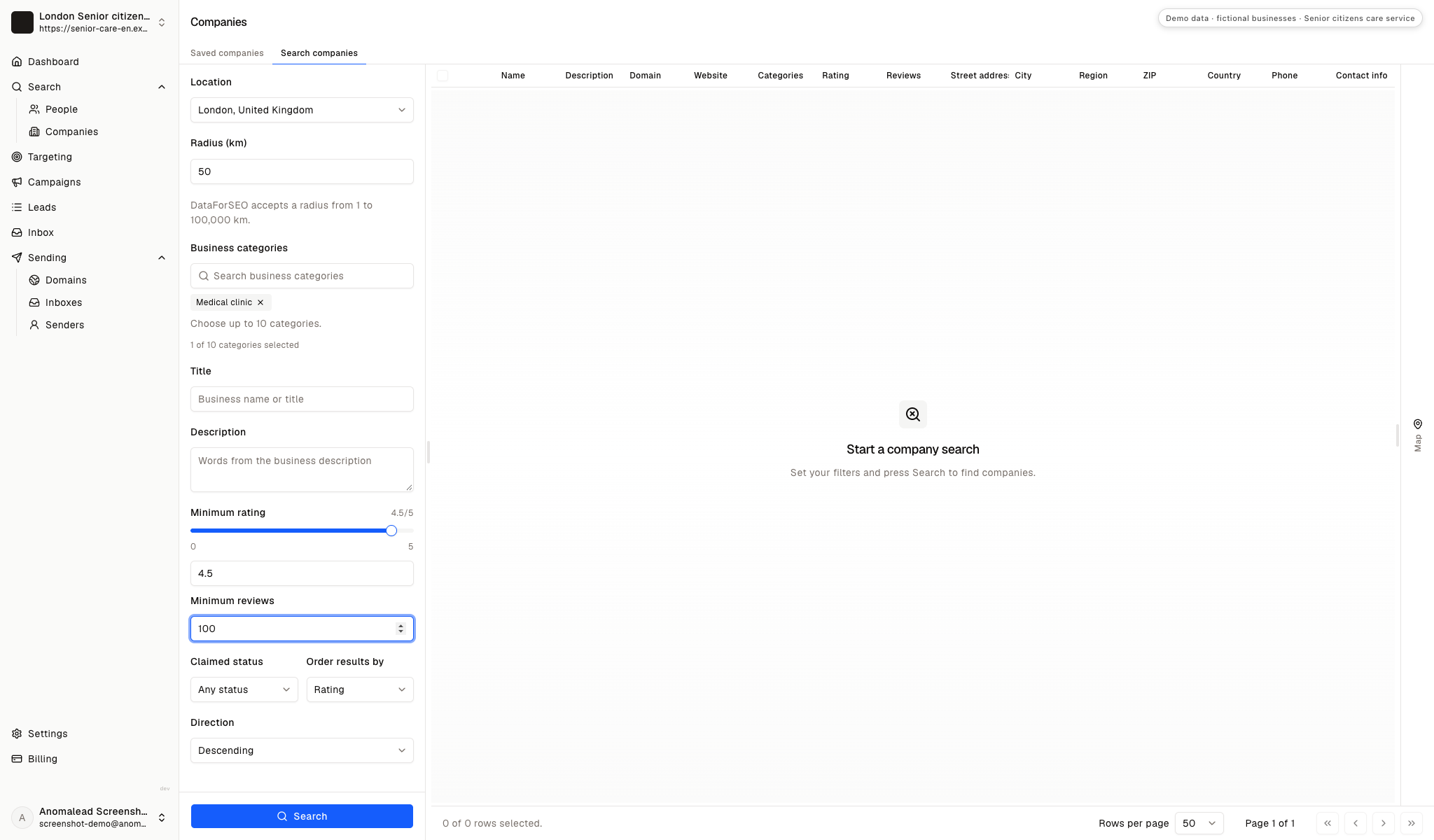
Section titled: Set the clinic category and your catchment radiusThe form takes a location, a radius, a business category and a minimum rating. Pick medical clinic, centre the search on your own address and keep the radius tight enough that a relative could visit after work.
Read the clinic results with care types in mind
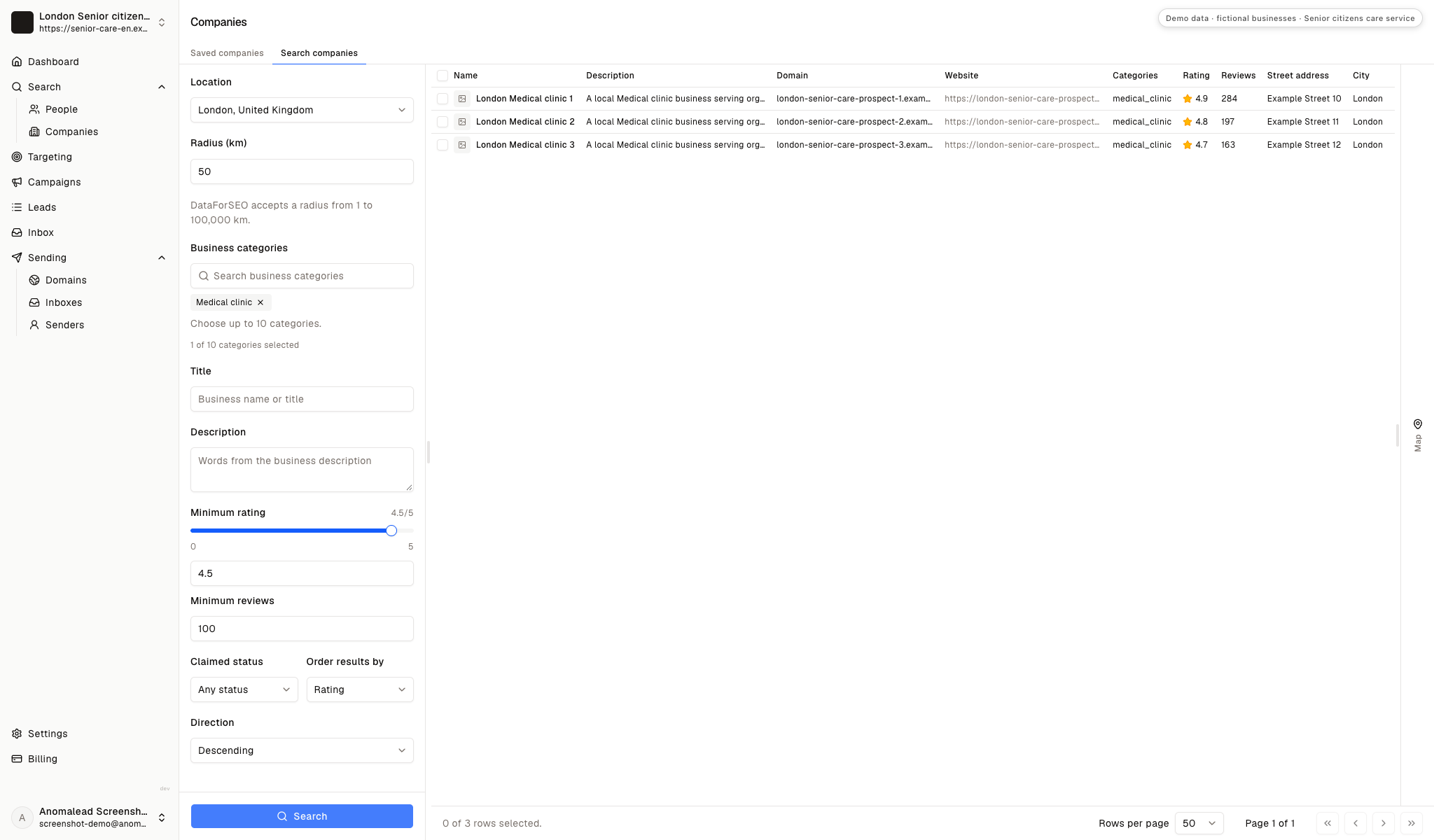
Section titled: Read the clinic results with care types in mindThree fictional clinics appear, each with a star rating and review count. For a real list, open each clinic's website and look for older-adult services, memory assessments or a named coordinator before deciding to keep it.
Keep the clinics whose families could use your places
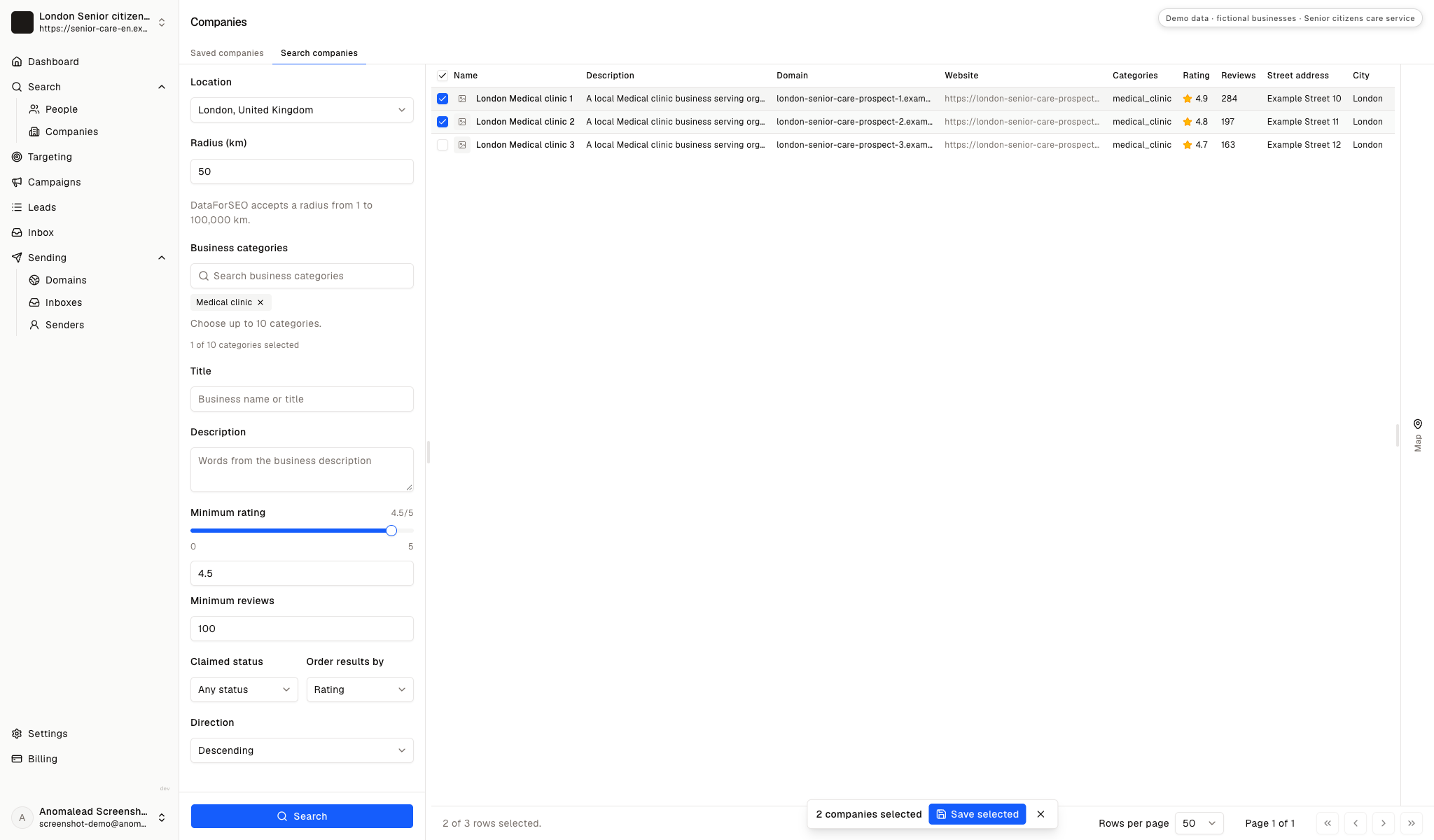
Section titled: Keep the clinics whose families could use your placesTwo of the three clinics are ticked and saved. Save a clinic when its patients live within your visiting distance and it shows some sign of older-adult work; leave the rest for a later check.
Reach the person who keeps the list of local care options
Section titled: Reach the person who keeps the list of local care optionsThe right contact is whoever updates the clinic's information about care homes, respite and day programmes. Job titles vary, so read the role description rather than trusting the title.
Keep your prospect records strictly about the clinic and the professional contact. Nothing about patients or families belongs in a sales list. For a wider view of where clinic outreach sits among other channels, see ways local businesses find new customers.
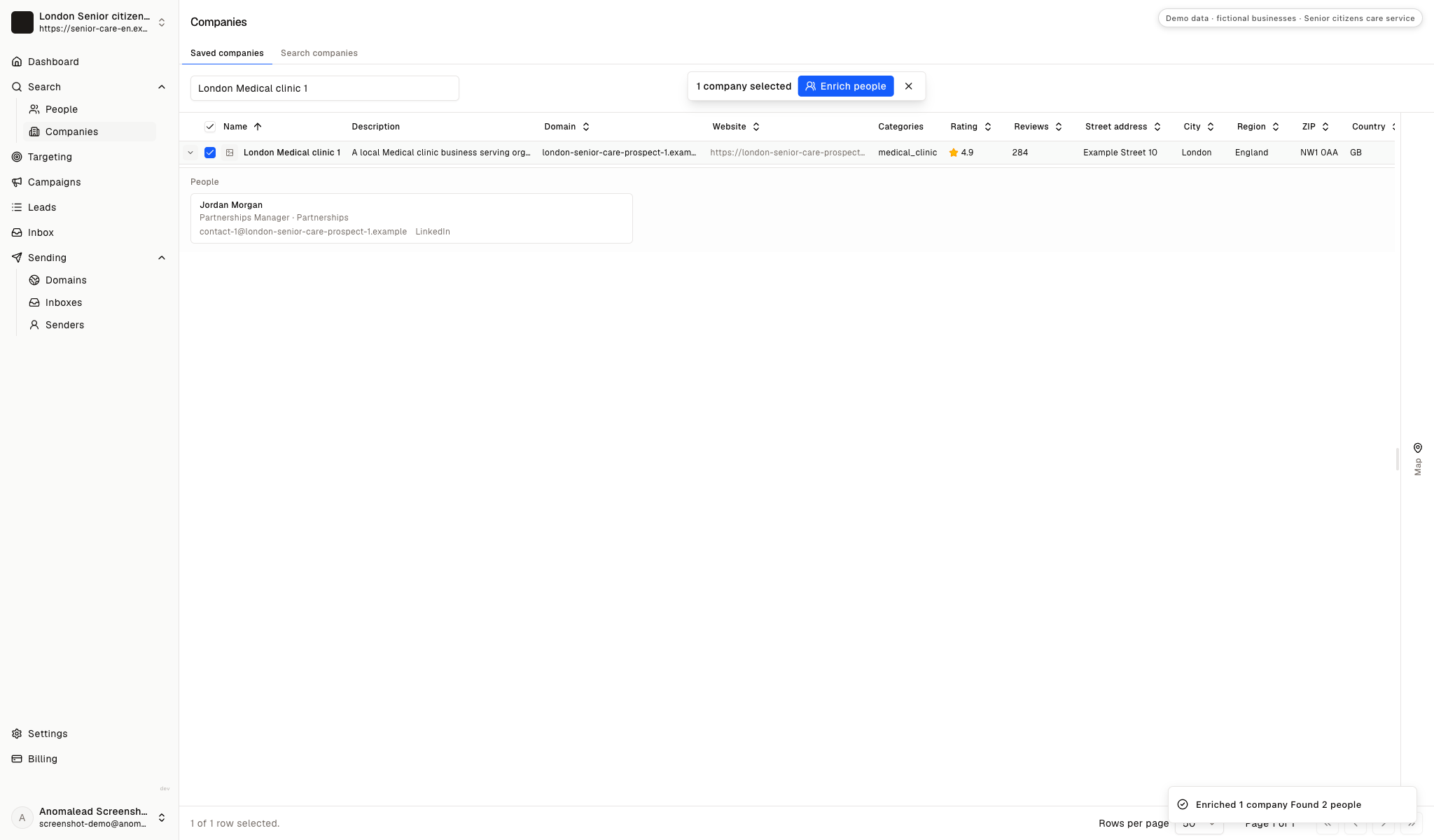
Open a saved clinic and use Enrich people
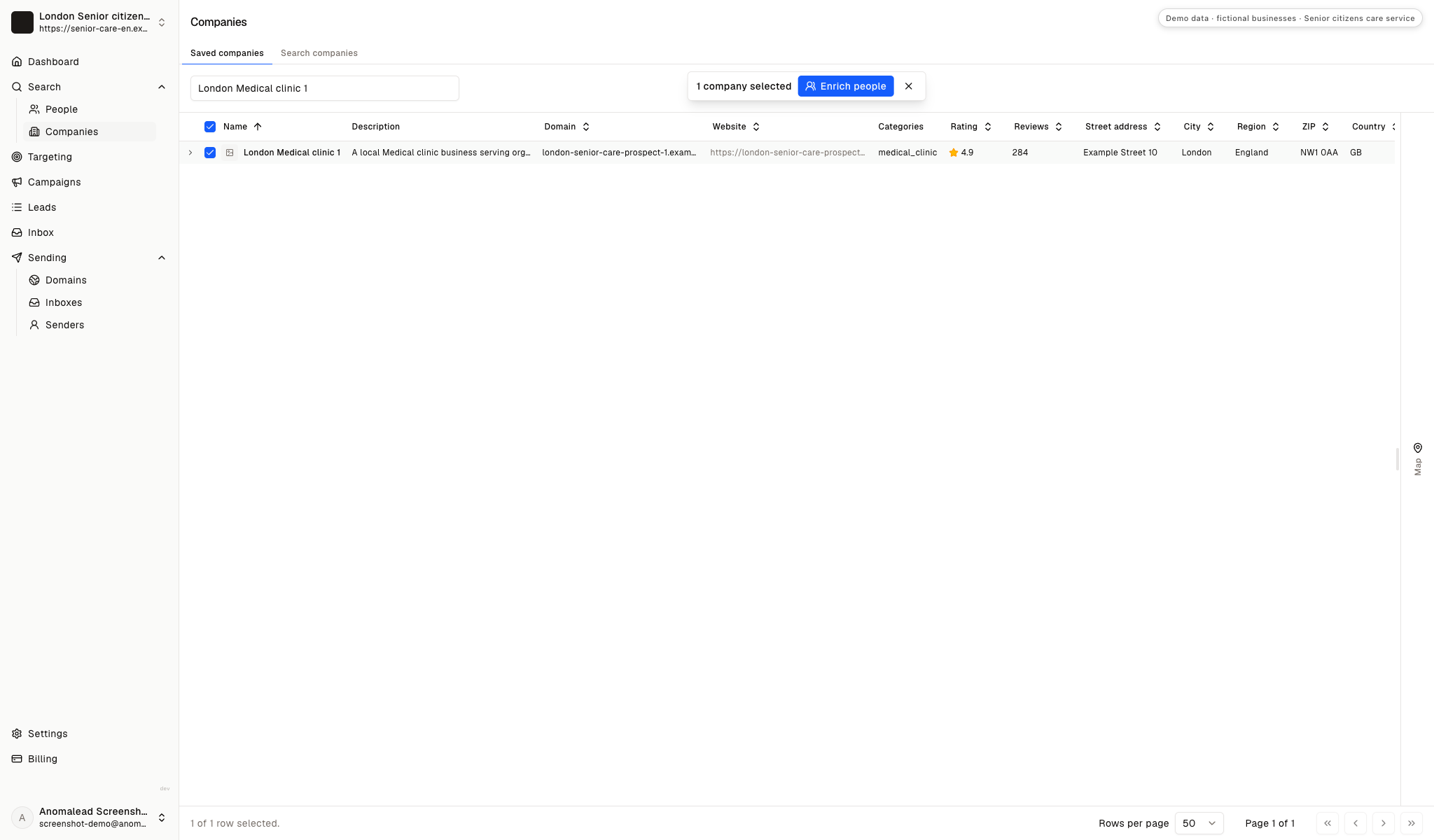
Section titled: Open a saved clinic and use Enrich peopleOne saved clinic is selected and the Enrich people action is available. Run it only for clinics you have already checked against your catchment and care types.
Check the enriched contacts against real coordination work
Section titled: Check the enriched contacts against real coordination workEnrichment returns two fictional contacts, Jordan Morgan and Taylor Reed, both listed as Partnerships Manager. At a real clinic, confirm whether that person handles patient resources or only supplier contracts before you write.
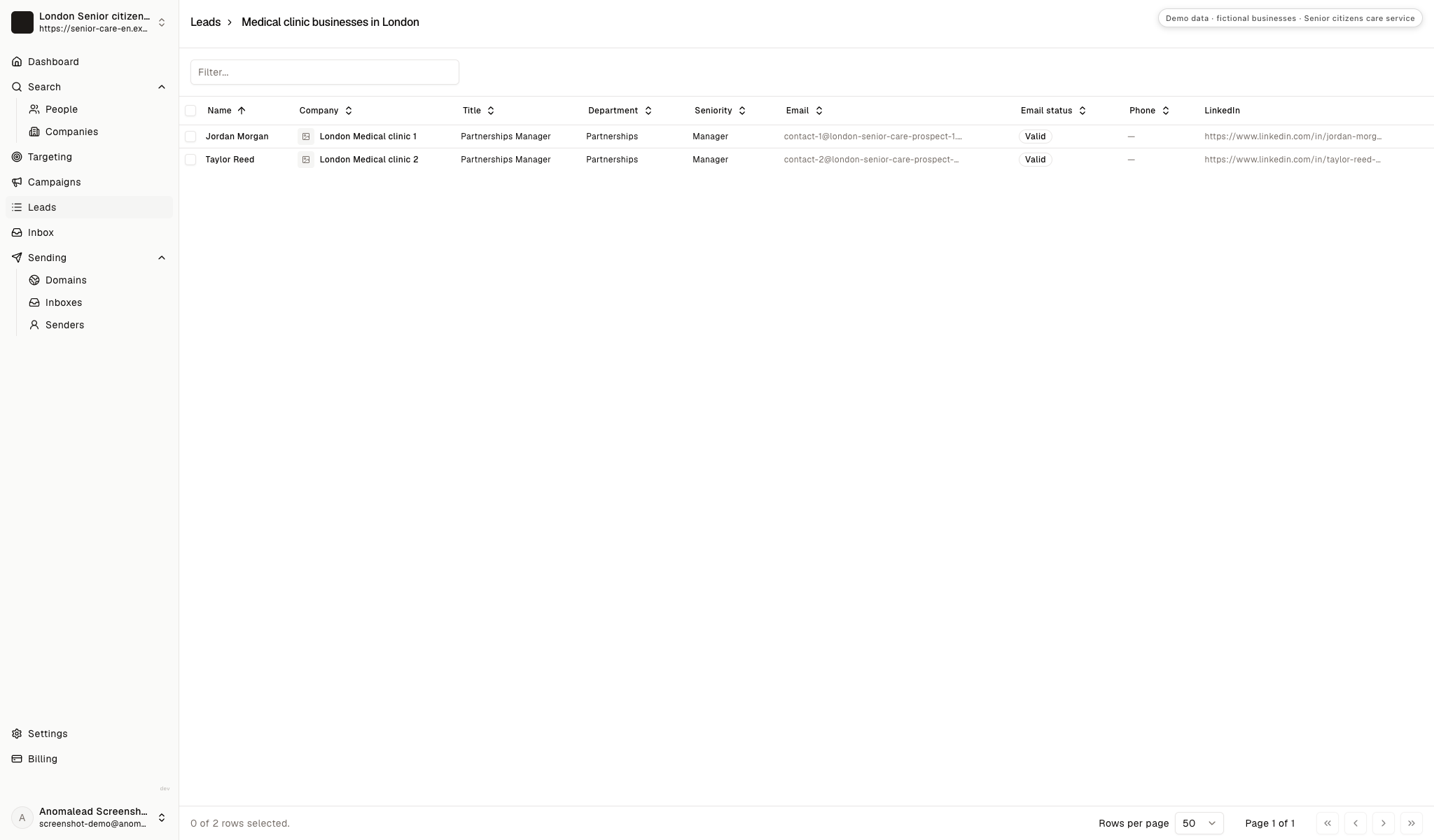
Build a short lead list of clinic contacts
Section titled: Build a short lead list of clinic contactsThe lead list, Medical clinic businesses in London, holds the two contacts. A small list suits care outreach, because every clinic that replies expects a prompt, personal answer.
What a clinic relationship may be worth to a care provider
Section titled: What a clinic relationship may be worth to a care providerA clinic relationship may lead families to contact you after hearing about your service. Families often compare several settings, so model the value of a relationship using your own enquiry and admission records.
The calculator combines only the account value, meetings and close rate you enter. They are your planning assumptions, not benchmarks, and the result is not a forecast of placements or income.
Do the math on one good deal
If one new customer is worth thousands, you don’t need magic. You need a few more meetings a month.
Projected monthly results
- Deals closed
- 2.0
- Projected revenue
- £10,000
- Growth plan (1 business)
- £79/mo
- ROI
- 12,558%
Conservative math on meetings you already believe you can book. One closed deal often pays for a year of Anomalead.
Use your own records to estimate how often a clinic may share your details, then compare that assumption with the staff time needed to keep the information current.
Launch senior care lead generation emails to clinics
Section titled: Launch senior care lead generation emails to clinicsYour first message should make a coordinator's job easier: which care types you offer, where you are, how a family can arrange a visit, and how you will keep availability up to date. Ask one question about how the clinic wants that information.
Leave out anything that reads like an inducement, and do not ask the clinic to recommend you over other providers. Rules on marketing, gifts and referral arrangements in care and health settings differ between places and services, so check the ones that apply to you before you send.
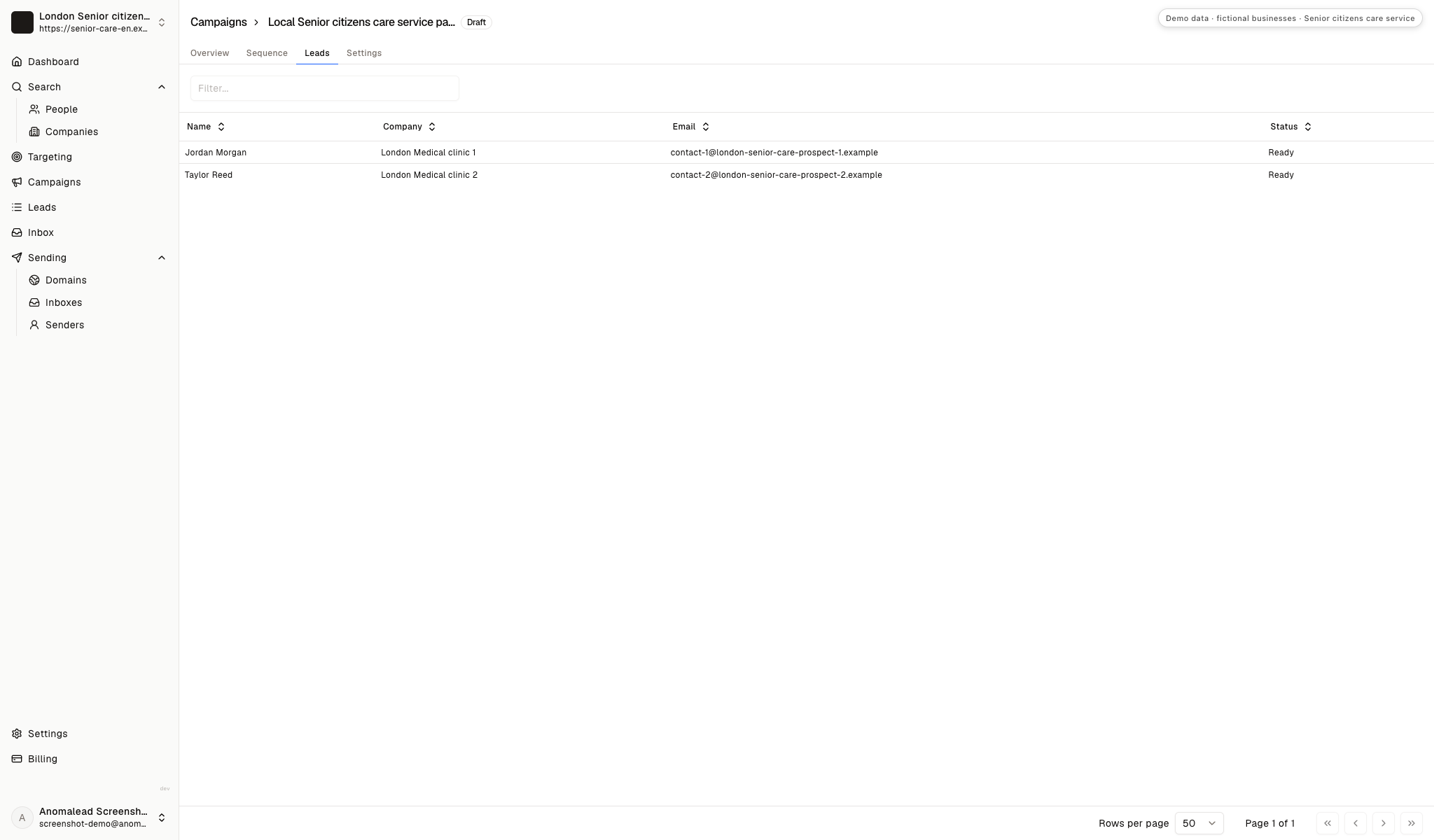
Confirm the two recipients in the draft campaign
Section titled: Confirm the two recipients in the draft campaignThe draft campaign, Local Senior citizens care service partnerships in London, has two recipients from the lead list. Remove anyone whose role turned out to be unrelated to patient resources before activating it.
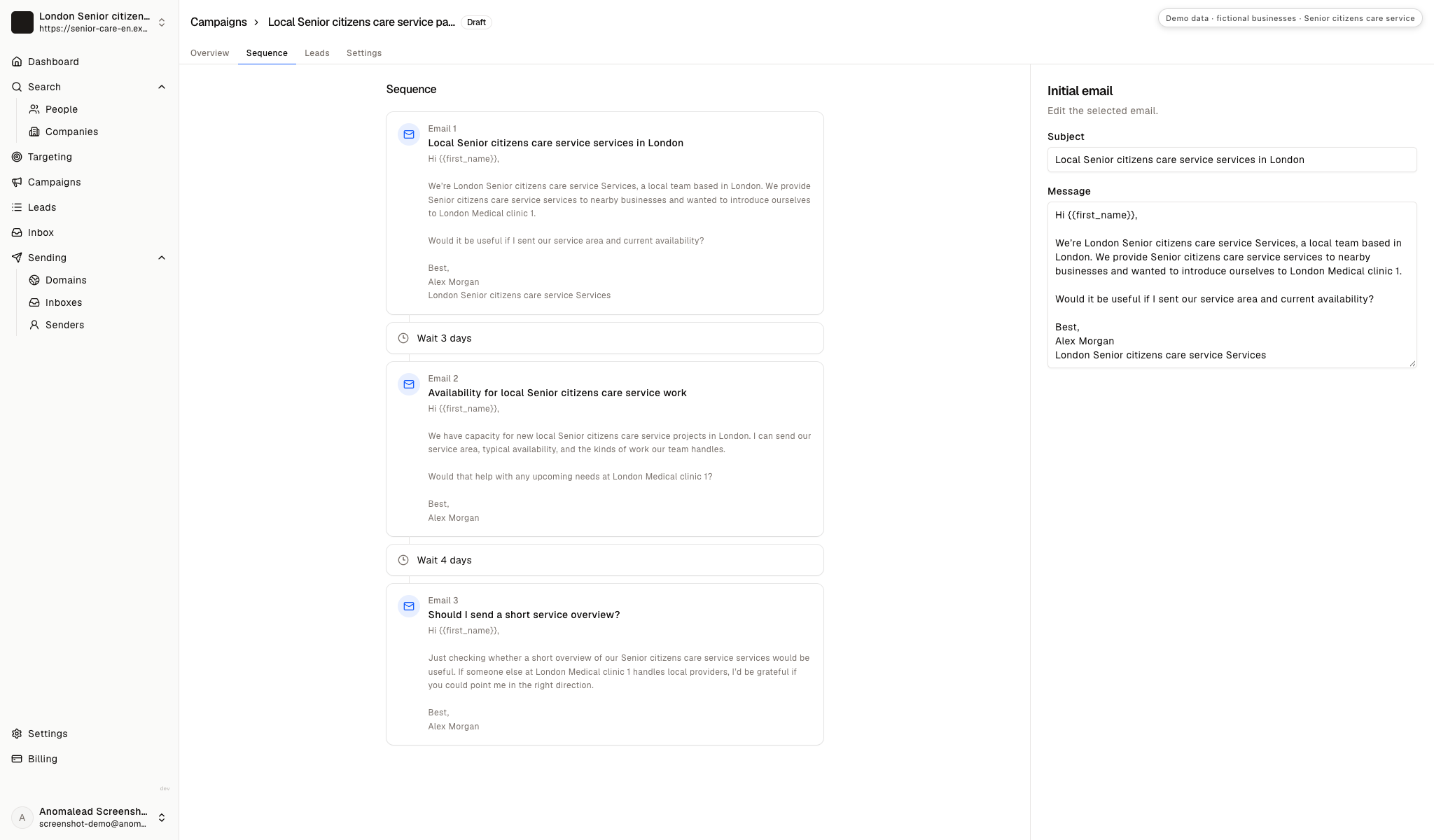
Rewrite the demo sequence before it goes out
Section titled: Rewrite the demo sequence before it goes outThe sequence has three emails, with a three-day wait after the first and a four-day wait after the second. The seeded copy about service areas and projects is too vague for a care coordinator.
Example emails to a clinic care coordinator
Section titled: Example emails to a clinic care coordinatorThese drafts replace the demo copy. The sender, Alex Morgan, and the contacts are fictional; add only care types, visiting arrangements and contact details you can verify.
First email offering a one-page care options summary
Subject: Local senior care information for your clinic's resource list
Hi Jordan,
I'm Alex Morgan from London Senior citizens care service Services. Our service summary sets out the care types we offer, where they are available and how families can contact us directly.
The summary explains how a family can ask about current availability, arrange a conversation or visit, and check which needs fall outside our scope.
Who should receive the current summary at your clinic?
Best wishes,
Alex Morgan
Follow-up focused on visits for families
Subject: A clear enquiry route for families comparing care options
Hi Taylor,
Alex Morgan again, from London Senior citizens care service Services. Families often want to understand a setting before deciding, so our information explains how to ask questions and arrange a visit.
If your team keeps a neutral list of local options, I can send the current summary for review.
Who maintains that resource list?
Kind regards,
Alex Morgan
A plain subject line that names the care type works better with busy clinical teams than a clever one; these subject line examples for cold emails show the difference.
Read the two coordinator replies in the inbox
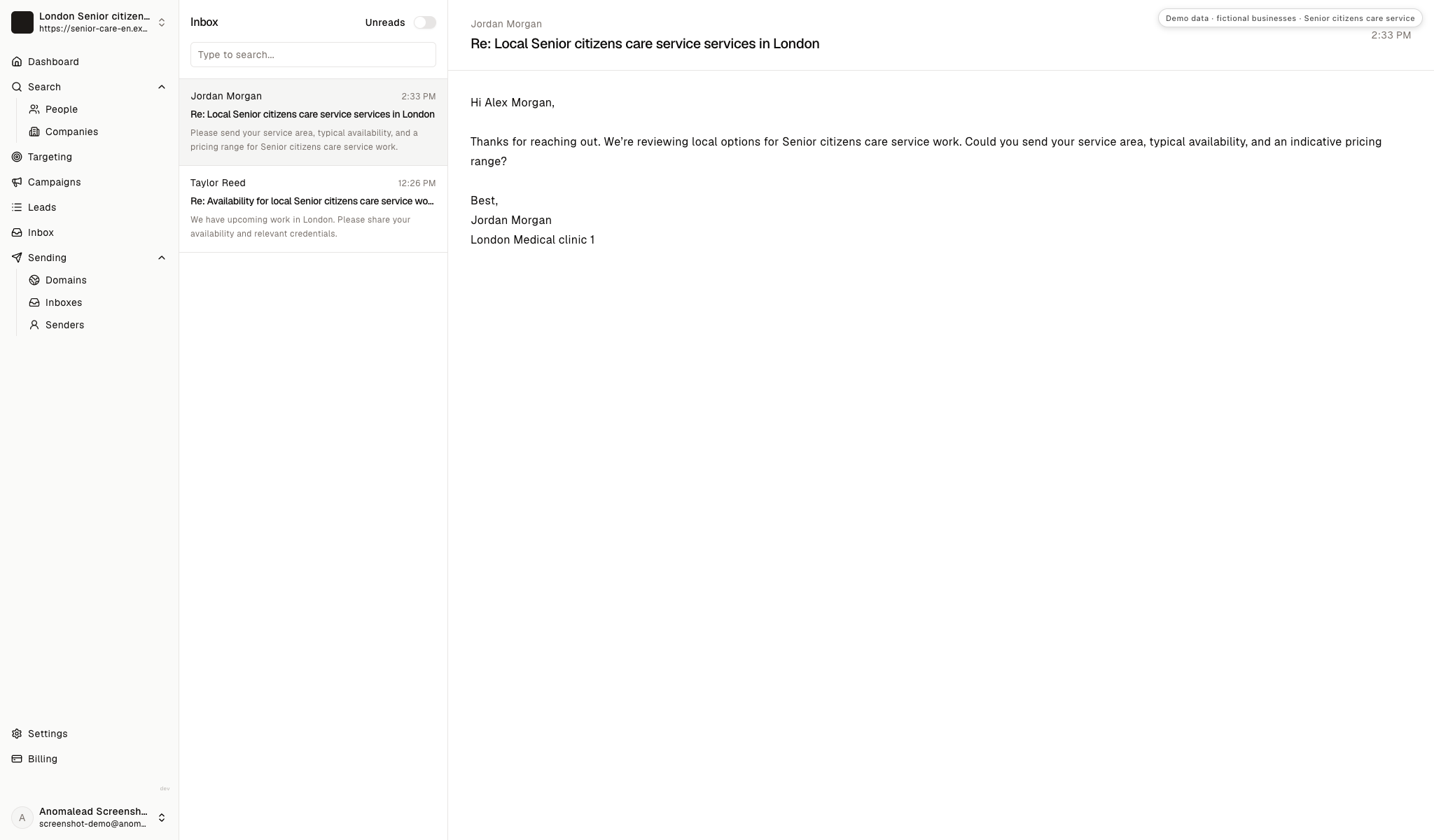
Section titled: Read the two coordinator replies in the inboxThe inbox shows one unread reply from Jordan Morgan and one read reply from Taylor Reed. Both ask about coverage, availability, price and credentials, so prepare those answers before a real campaign.
Handle coordinator questions about places, fees and registration
Section titled: Handle coordinator questions about places, fees and registrationA coordinator who replies usually has a family in mind. Answer the question they asked in plain terms, give them something they can pass on, and keep personal details out of the thread.
Jordan Morgan wants your area, how quickly you can take someone and a price range
Section titled: Jordan Morgan wants your area, how quickly you can take someone and a price rangeThanks for getting in touch. We're comparing local senior care options at the moment. Which area do you cover, how soon can you usually offer a place, and roughly what are your fees?
Send your published fees for each care type and what they include. Explain that a place is confirmed only after your own assessment, so availability is a dated snapshot, not a guarantee. Do not advise families on funding.
A reply the coordinator can forward as it stands:
Thanks, Jordan. Our dated service summary explains the area we cover and how families can ask about a place. I've attached our current fee information; our admissions team confirms availability after learning which service the family is considering. Would a periodic update be useful to your team?
Taylor Reed mentions a possible need and asks about availability and credentials
Section titled: Taylor Reed mentions a possible need and asks about availability and credentialsSomething may come up soon for one of our patients' families. Could you tell us your availability, what care you provide and what registration or qualifications you hold?
Send your registration details, a link to your latest public inspection report where one exists, and relevant staff training such as dementia care. Say clearly what you do not provide.
Do not ask for the person's name or condition. Offer the enquiry route so the family can call when ready.
A factual answer that keeps the family in charge:
Thanks, Taylor. I've attached our current service summary, which explains the care we offer and where our service does not fit. I can also send our current registration and inspection information. If the family wants to learn more, please share our direct enquiry number so they can speak with our admissions team.
The clinic says it can only give families a neutral list
Section titled: The clinic says it can only give families a neutral listWe don't recommend individual care homes. We give families a list of local options and let them decide.
Accept that without pushing. Being on a neutral list accurately is the whole goal. Ask who maintains it and offer to send corrections only when something changes.
A short reply that respects the clinic's policy:
That makes sense, and we wouldn't ask you to recommend us. Who keeps the list up to date? I'd like our entry to show the right care types and phone number.
A coordinator asks whether you can take someone with complex needs this week
Section titled: A coordinator asks whether you can take someone with complex needs this weekWe have a patient going home soon who can't manage alone. Could you take them within days, and can I send over their notes?
Do not accept clinical notes in an ordinary email and do not promise a place before your own assessment. Explain how and how quickly your admissions team assesses needs, and which secure route the family or clinic should use. If the needs exceed what you are registered for, say so at once.
Prove you keep your availability current
Section titled: Prove you keep your availability currentA clinic can only share useful information when your availability details stay current. Before contacting more clinics, send the promised update to everyone who asked for it.
This week, choose a care type you can currently discuss and make a short list of clinics within your visiting or transport area. Check each clinic, write to the person who maintains its resource list, and set a reminder to review the details you shared. If you still need a way to organise that work, compare prospecting tools for small care businesses before you choose one.
Questions care home and day programme owners ask about clinic outreach
Section titled: Questions care home and day programme owners ask about clinic outreachShould a care home contact clinics or families directly?
Section titled: Should a care home contact clinics or families directly?Contact clinics so the professionals families ask have accurate information about you. Marketing to families is separate, and it must never rely on patient lists or health information from a clinic.
How often should a provider send availability updates to a clinic?
Section titled: How often should a provider send availability updates to a clinic?Send them as often as your availability genuinely changes and as often as the clinic says it wants them. A short, dated update that is always correct beats frequent emails.
Can a senior care provider offer a clinic a referral fee or gift?
Section titled: Can a senior care provider offer a clinic a referral fee or gift?Treat any payment, gift or incentive tied to referrals as a compliance question. Rules differ by region and care type, so check the ones that apply to you and take advice if unsure.
Are the clinics and people in the screenshots real?
Section titled: Are the clinics and people in the screenshots real?No. London Senior citizens care service Services, the three London Medical clinic records, Jordan Morgan, Taylor Reed and both replies are fictional demo data. None of them is an Anomalead customer or a real campaign result.
Can the ROI calculator predict how many placements a clinic will send?
Section titled: Can the ROI calculator predict how many placements a clinic will send?No. It combines the assumptions you enter, such as an account value, meetings and a close rate. It does not predict enquiries, placements or income.