


Gym lead generation for employer partnerships works when the offer is simple to approve, deliver and bill, while each employee keeps control of participation and personal information. A local gym can sell employer-funded memberships, employee-paid access, or scheduled group fitness, but the package needs clear operating terms.
The strongest first conversation is about who qualifies, who pays, when classes run, and what the employer receives in return. Do not promise health outcomes or share individual attendance or health details. Start with B2B lead generation basics, then shape an offer your team can deliver.
Key takeaways
- Choose employers whose staff locations, work schedules and expected program format fit your gym’s service area and class capacity.
- Decide whether the employer pays, employees pay, or the program combines both before you discuss pricing or enrollment.
- Put eligibility, onboarding, class booking, cancellation, trainer qualifications and invoice handling in writing before launch.
- Keep individual attendance and health information private; give the employer only the operational and billing information the agreement allows.
Which local employers suit a gym partnership?
Section titled: Which local employers suit a gym partnership?Target employers with a named benefits or workplace-program owner and a practical way for staff to use the gym. Choose accounts your team can serve at the agreed times.
- People or benefits teams: An HR lead may manage employer-paid access or a voluntary membership. Confirm eligible sites and staff, who pays, and how new hires enroll.
- Office and workplace coordinators: They may arrange group classes, room access and employee notices. Check equipment, shifts, booking and privacy responsibilities before proposing an onsite session.
- Employers with nearby sites: Hours and travel needs may differ by location. Begin with one site or staff group; expand only after scheduling and capacity work.
- Small firms with an employee experience owner: An owner or office manager may approve a local benefit directly. Make enrollment and invoice terms clear. For one-to-one coaching, see personal trainer lead generation.
Employer partnerships work best when the gym sells a defined service and the employer can explain it without tracking who attends or why.
Qualify the program before enriching contacts
Section titled: Qualify the program before enriching contactsCheck the operating fit before researching individuals. Confirm that your gym can deliver the proposed access, classes and administration.
- Payer and eligibility: Decide who funds access and which sites or staff qualify. Set an enrollment route and a way to handle new hires or departures without unnecessary HR records.
- Class capacity and timetable: Agree format, location, booking window and instructor capacity. Check shifts, room access and what happens when a class fills or a trainer is unavailable.
- Trainer qualifications: Share current qualifications, relevant class experience and insurance details. Describe the session accurately; do not promise health or fitness outcomes.
- Onboarding and privacy: Give eligible staff a direct sign-up and booking route. Keep individual attendance and health information in the gym’s member process, outside employer reports.
- Cancellation and invoicing: Document the billing basis, invoice recipient, membership changes and class-cancellation notice. Bill for the agreed service, not personal attendance records.
About the demo information
The demo operator is the fictional London Gym Services. London Corporate office 1, London Corporate office 2, London Corporate office 3, Jordan Morgan, Taylor Reed and the inbox replies are fictional examples. They are not Anomalead customers, real employers or real partnership results.
Gym lead generation starts with a program an employer can run
Section titled: Gym lead generation starts with a program an employer can runLead with a workable program, not a claim about employee wellness. Choose the employer locations your gym can serve, then decide whether you are offering member access, scheduled group classes, or both.
The demo shows a company search, generic office listings, saved businesses, contact records, a campaign, an email sequence and an inbox. Those screens do not show employee demand, attendance, health information or program outcomes. Use local prospect research to separate public company facts from assumptions.
Set the search around employer locations
Section titled: Set the search around employer locationsChoose a service area your members can reach and a company category that fits the employer audience. Search filters organize business research; they do not identify which employees want a membership.
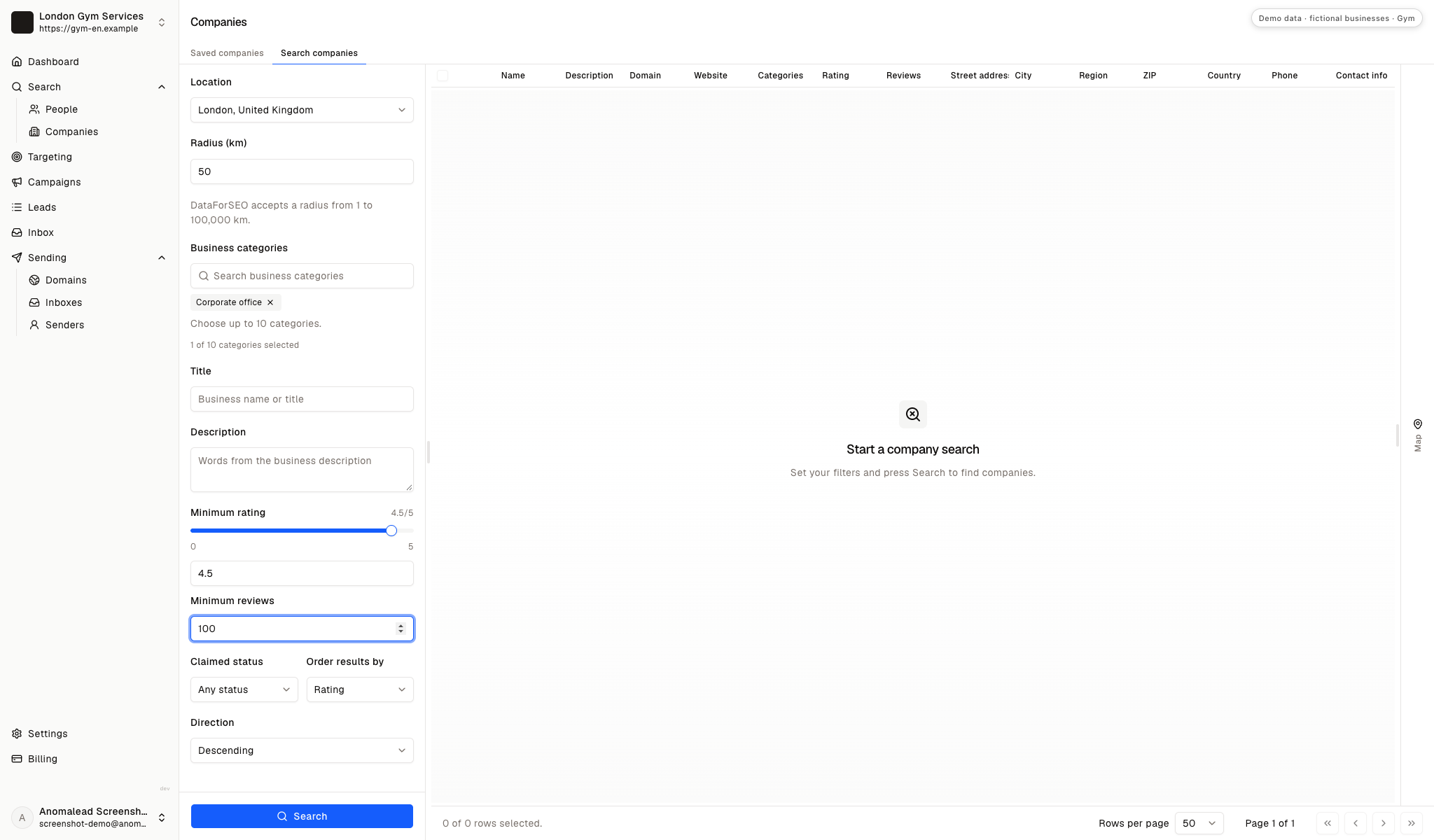
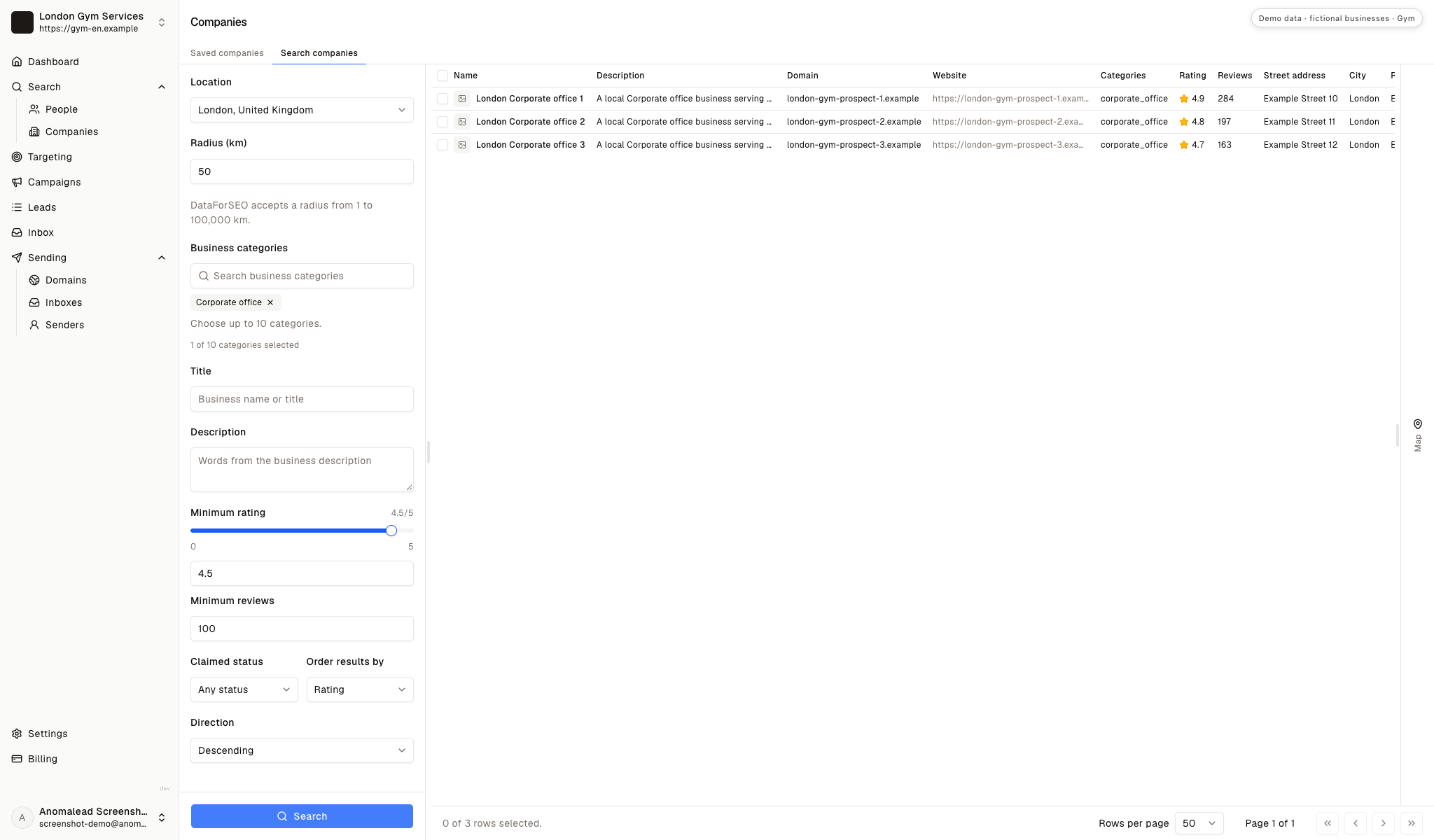
Review office listings as research leads
Section titled: Review office listings as research leadsThe results are generic corporate office listings with public business details, ratings and review counts. Use them to identify organizations to research, not to infer staff interest or an approved wellness budget.
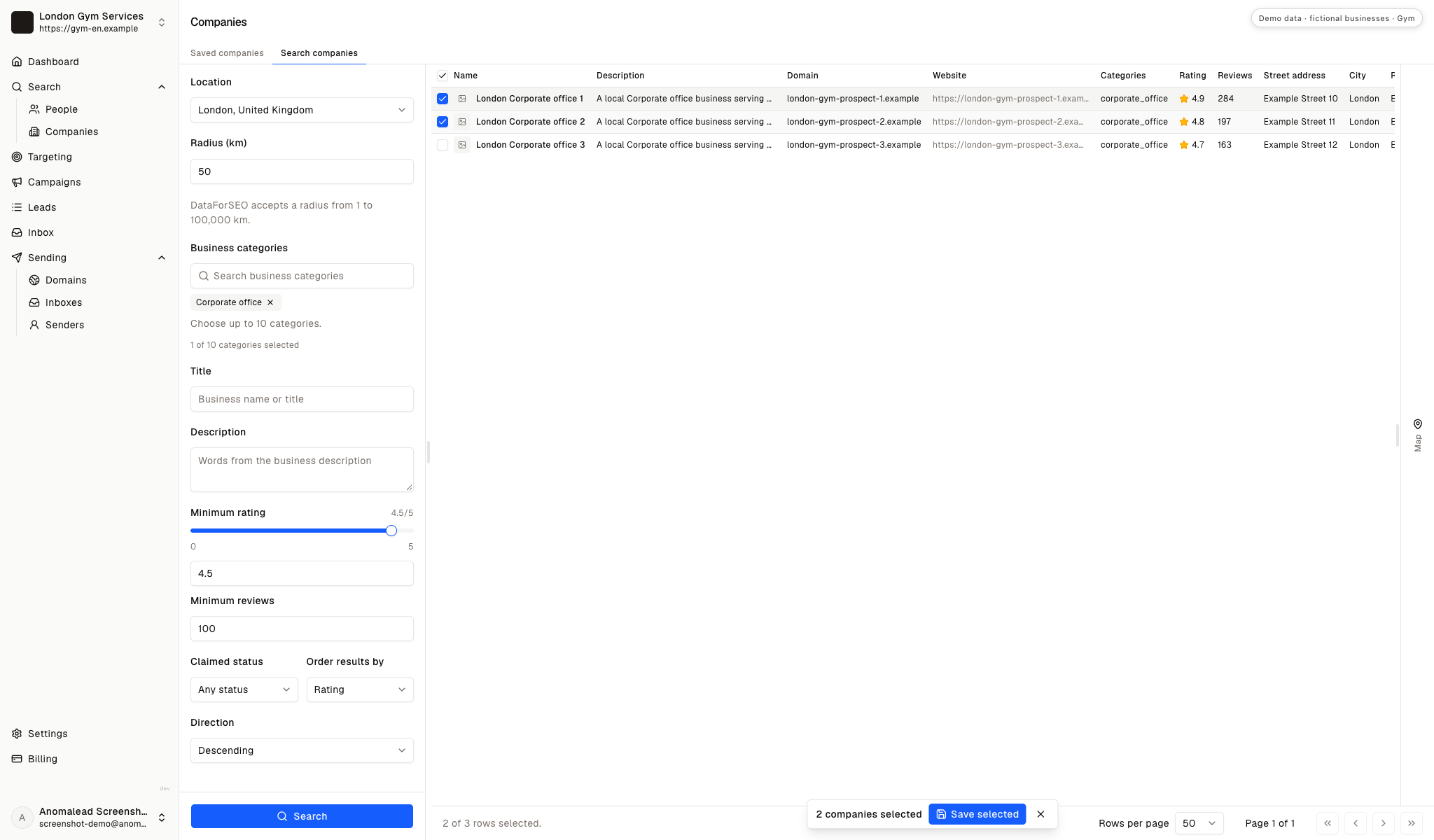
Save employers that fit your coverage
Section titled: Save employers that fit your coverageThe demo has two of three office listings selected for follow-up research. In your own search, save an employer only when location and public information make a program conversation plausible.
Find the person who can approve a staff offer
Section titled: Find the person who can approve a staff offerHR or benefits may own a subsidy; an office manager may control rooms and class times. A coordinator can direct you to the buyer, but should not share health details or names of employees who might join.
Confirm who approves spend, communicates eligibility, books space and receives invoices. Share trainer qualifications and the class format before discussing a start date.
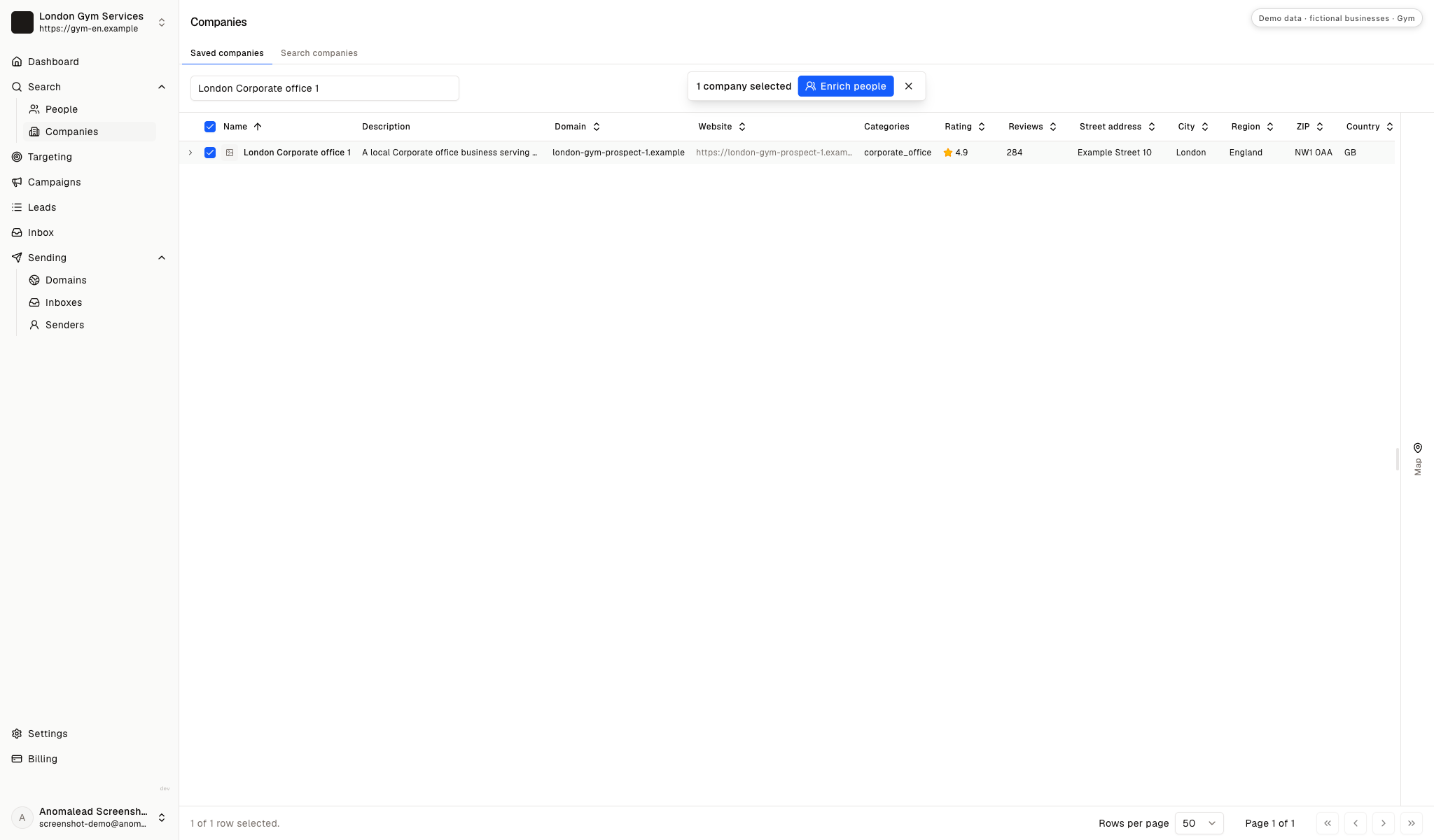
Check the shortlist before enrichment
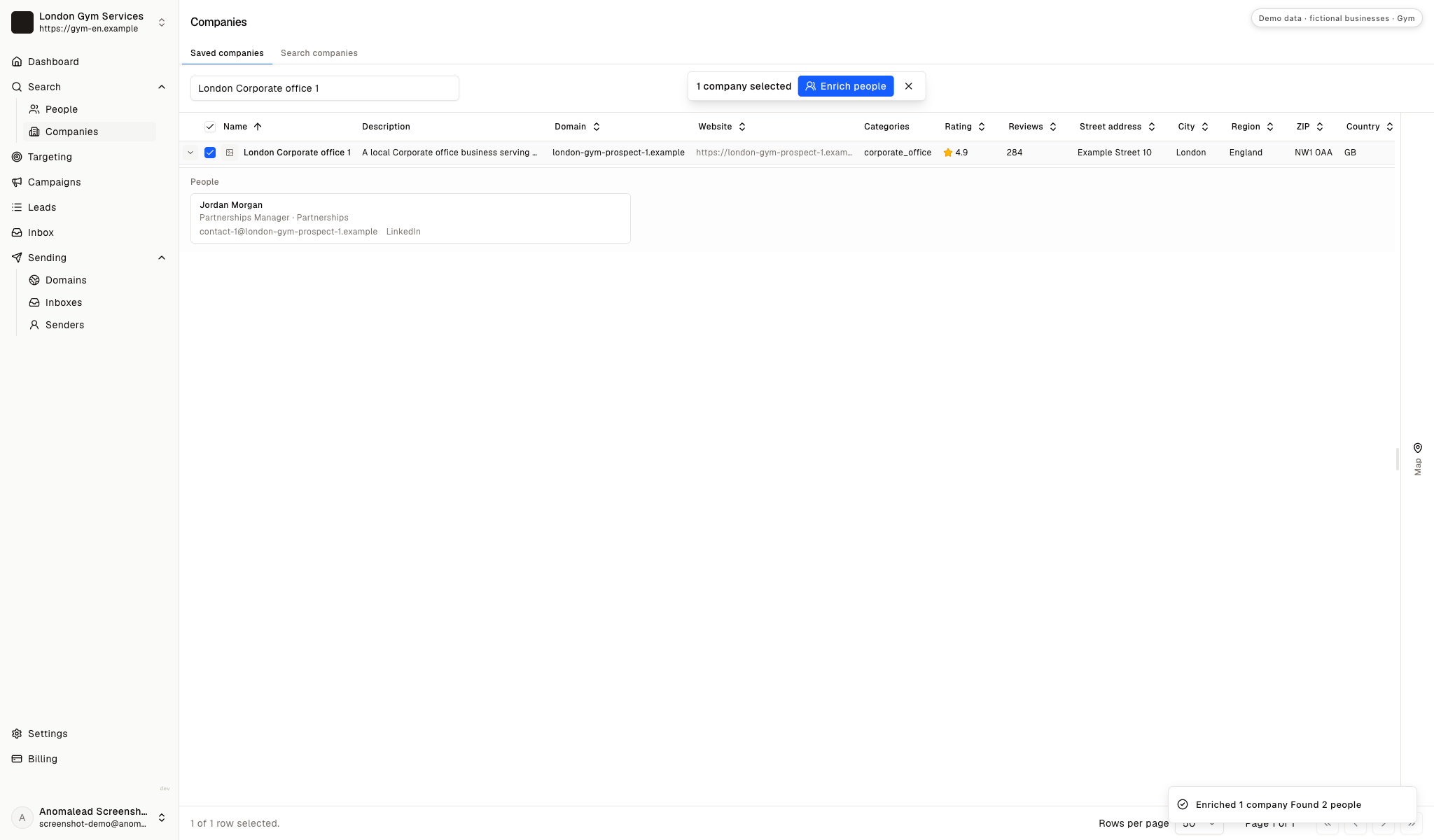
Section titled: Check the shortlist before enrichmentThe interface shows one saved company selected and an Enrich people action. Confirm the employer fits your service area and possible program before spending time on individual contacts.
Verify the contact who owns the conversation
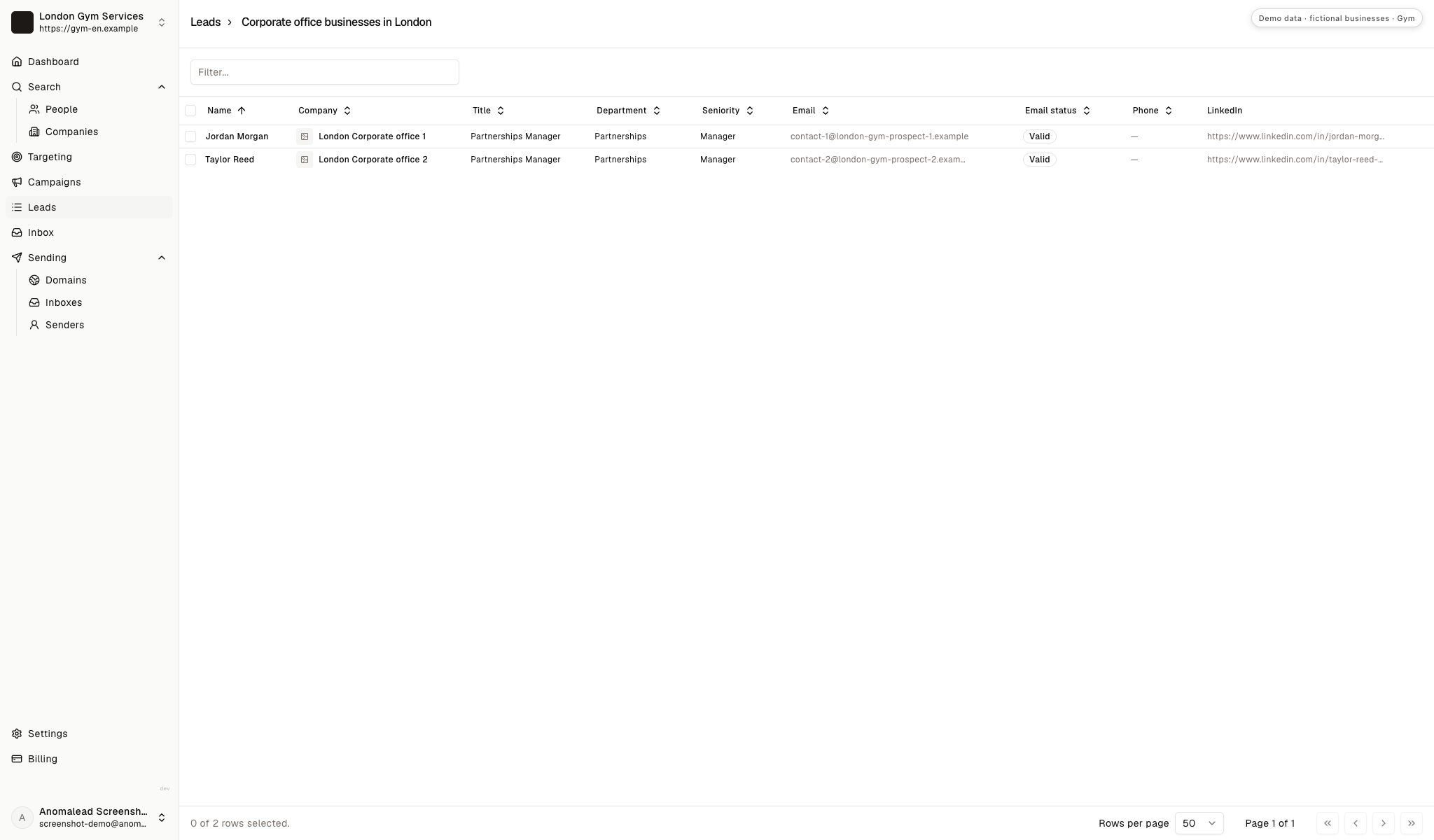
Section titled: Verify the contact who owns the conversationTwo contact records are available in the demo. Jordan Morgan and Taylor Reed have Partnerships Manager titles, which are clues to verify, not proof that either person controls benefits, facilities or privacy decisions.
Keep the employer list separate from member data
Section titled: Keep the employer list separate from member dataThe lead list contains two business contacts and their email status. Keep this prospecting record focused on company fit, program owner and next business step; employee enrollment and attendance belong in the gym’s service workflow.
Estimate the effort behind an employer program
Section titled: Estimate the effort behind an employer programEmployer programs take research, onboarding, schedule coordination and billing support. Value depends on the terms you can deliver and capacity your team must reserve.
Membership access and group classes create different workloads. Model your own assumptions, not imagined employee demand.
Enter your own assumptions about outreach, onboarding, instructor time, administration and account value. The calculator does not predict enrollment, attendance, health outcomes, retention, revenue or profit.
Do the math on one good deal
If one new customer is worth thousands, you don’t need magic. You need a few more meetings a month.
Projected monthly results
- Deals closed
- 2.0
- Projected revenue
- £10,000
- Growth plan (1 business)
- £79/mo
- ROI
- 12,558%
Conservative math on meetings you already believe you can book. One closed deal often pays for a year of Anomalead.
Use the estimate to decide what you need to confirm before reserving class capacity.
Offer terms an employer can approve and explain
Section titled: Offer terms an employer can approve and explainDescribe one program and ask who reviews it. State coverage, access or class format, eligibility, payer, booking and invoice basis clearly.
Participation stays voluntary and private. Give the employer only operational and billing details allowed by the agreement, never individual attendance or health data. Use business email examples to keep the first note concrete.
Choose the right employer contact
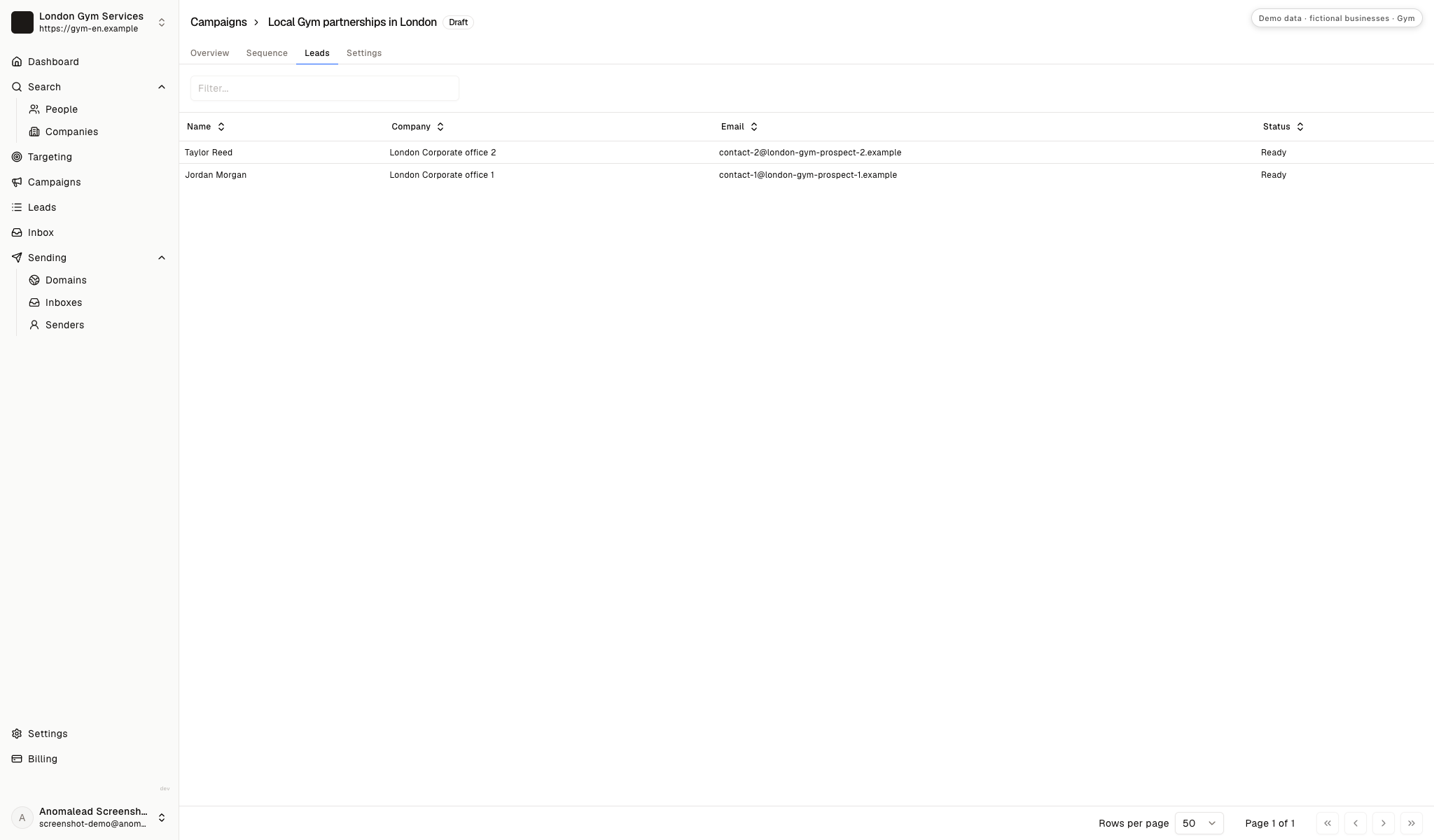
Section titled: Choose the right employer contactThe campaign draft shows two selected recipients and a gym sender account. Confirm that the recipient reviews benefits or workplace programs before you send a proposal.
Review every message before it goes out
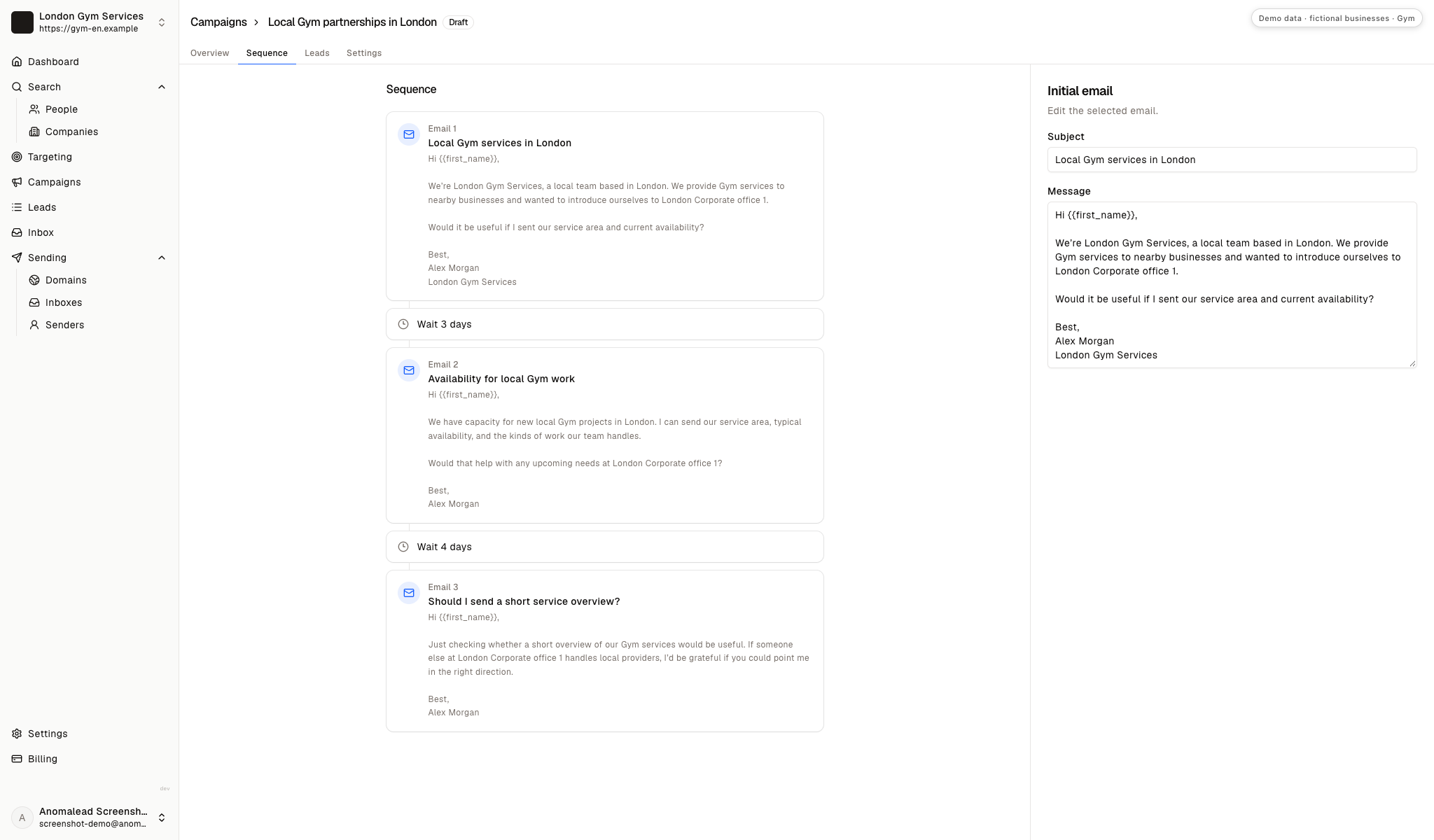
Section titled: Review every message before it goes outThe demo sequence contains three email drafts with a three-day and four-day wait between messages. Replace generic copy with your actual class, access and billing terms, then stop if the employer declines.
Write an employer email with one clear question
Section titled: Write an employer email with one clear questionJordan Morgan and Taylor Reed are fictional demo contacts. Confirm a real contact’s role, explain what you can deliver and ask one question.
First note about employer-paid or employee-chosen access
Subject: A local gym option for your team
Hi Jordan,
I’m Alex Morgan from London Gym Services. We work with employers on local gym access and scheduled group fitness. Before launch, we agree who is eligible, who pays and how employees enroll; individual attendance and health details stay private.
Does your team have a process for reviewing local membership or group-class offers?
Best, Alex Morgan, London Gym Services
Follow-up about a workplace class
Subject: Re: A local gym option for your team
Hi Taylor,
I’m following up about workplace fitness options, not asking for employee names or health information. We can share trainer qualifications, class formats, scheduling needs and the invoice process for your team to review.
Would a short outline of those operating details help you assess whether a local program fits?
Best, Alex Morgan
Use a concise cold email opening, then let the employer choose whether to review the offer.
Treat replies as a chance to qualify delivery
Section titled: Treat replies as a chance to qualify deliveryThe inbox shows two fictional employer replies asking about service area, availability, pricing and credentials. A reply signals interest in more information, not employee demand or a confirmed program.
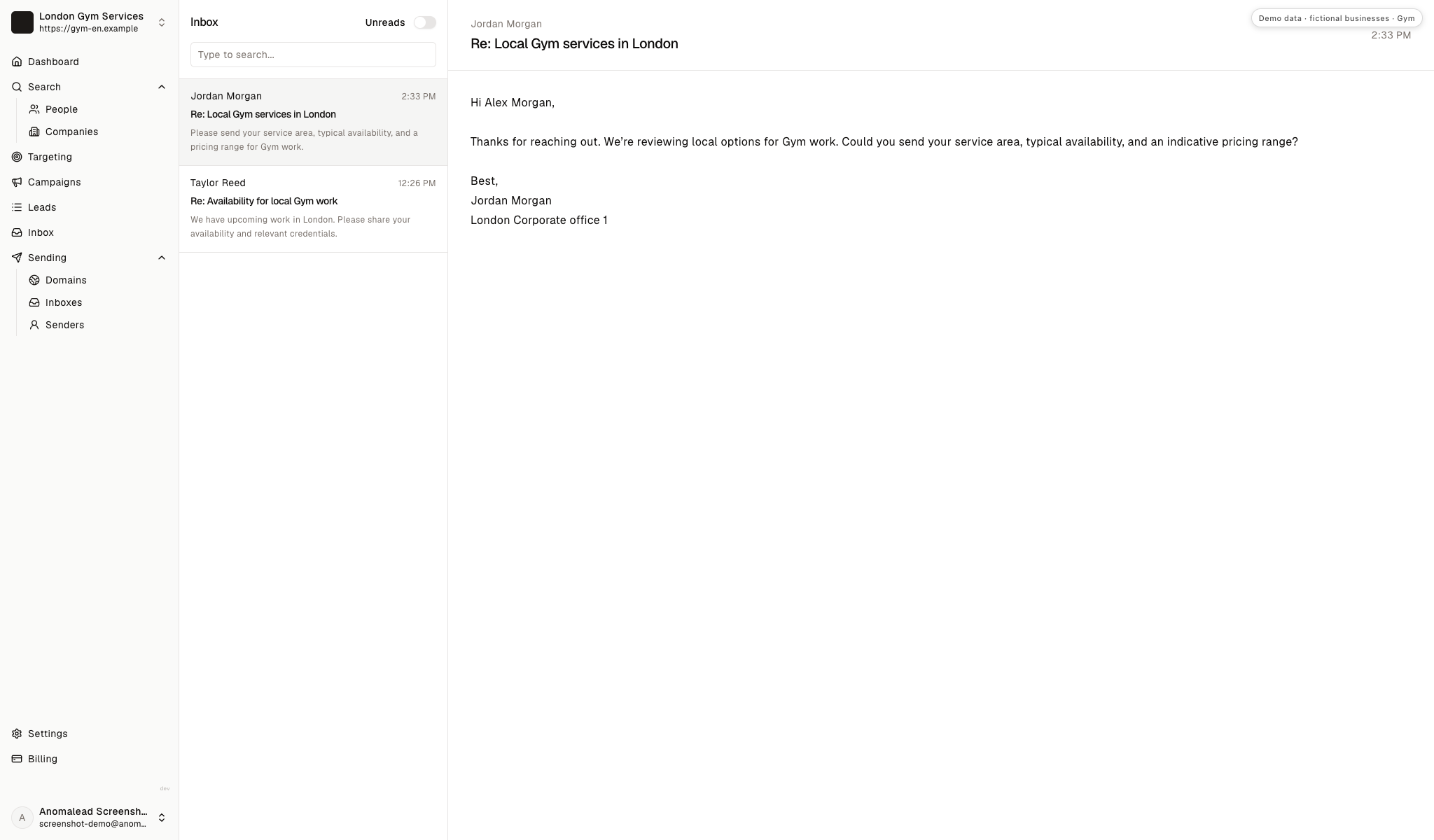
Turn employer replies into a deliverable gym program
Section titled: Turn employer replies into a deliverable gym programShare current coverage, program formats and verified trainer details. Clarify delivery needs without requesting private employee information.
Jordan asks about service area, availability and pricing
Section titled: Jordan asks about service area, availability and pricingPlease send your service area, typical availability and a pricing range for gym services.
Share supported locations and current approved prices; explain the employer-paid and employee-paid options without guessing a rate.
Confirm eligible staff, billing basis and class-booking needs before reserving capacity.
Answer the pricing request without guessing:
Thanks, Jordan. We can send our coverage, membership and group-class options, and approved pricing. We can outline employer-paid and employee-paid routes; the final invoice basis depends on the eligible group and program format.
Taylor asks about upcoming work, availability and credentials
Section titled: Taylor asks about upcoming work, availability and credentialsWe may have an upcoming program. Please share your availability, covered services and relevant credentials.
Confirm the schedule you can staff, available formats and trainer qualifications. Check room access and capacity before promising a time.
Ask who approves the program and how staff enroll. Do not share individual attendance or health data.
Offer a practical next step:
Thanks, Taylor. We can share our current coverage, class formats and trainer qualifications. Once we know the site and preferred schedule, we can confirm what our instructors can support. Employees would enroll directly.
The employer already has a wellness provider
Section titled: The employer already has a wellness providerWe already offer a wellness benefit. Why add another gym?
Ask whether there is a gap in location, access hours or class scheduling before suggesting anything. Avoid claims about health, productivity or attendance.
Offer a distinct option without criticizing the current one:
Thanks for explaining. We would not ask you to replace a program that works. If local access or class times are a gap, we can outline a separate option for review, without employee attendance or health details.
The employer asks for named attendance or health updates
Section titled: The employer asks for named attendance or health updatesCan you send a list of attending employees and any health notes from sessions?
Do not share individual attendance, health details or reasons for joining. Keep enrollment information in the gym’s member process.
For billing, agree on eligible memberships or contracted services. Share only non-identifying summaries if policy and agreement allow them.
Set the privacy boundary and offer a billing path:
We do not share individual attendance or health information with employers. We can agree an invoice basis around eligible memberships or scheduled services. Employees enroll directly with the gym.
Start with one employer offer your team can sustain
Section titled: Start with one employer offer your team can sustainChoose one employer type and one offer: funded memberships, employee-paid access or a scheduled class. Set eligibility, payer, schedule, booking, cancellation and invoicing before researching local businesses.
Find the benefits or workplace-program owner and ask how the offer is reviewed. Keep trainer details ready and member data out of your pitch. For subject ideas, see business email subject line ideas.
Questions gym owners ask about employer partnerships
Section titled: Questions gym owners ask about employer partnershipsShould the employer or employee pay for a gym partnership?
Section titled: Should the employer or employee pay for a gym partnership?Either can work when the payer and eligibility are clear before enrollment. State whether the company funds access, staff pay the gym, or the employer offers a subsidy, then agree how invoices and membership changes work.
Can an employer receive individual attendance or health information?
Section titled: Can an employer receive individual attendance or health information?No. Keep attendance, health details and reasons for joining in the gym’s member process. Any operational summary must be non-identifying and allowed by the agreement.
What should a gym confirm before offering workplace classes?
Section titled: What should a gym confirm before offering workplace classes?Confirm location, room access, schedule, class format, booking and trainer capacity. Share qualifications and explain how a full class or cancellation is handled before the employer announces the program.
Are the corporate offices and contacts in the demo real?
Section titled: Are the corporate offices and contacts in the demo real?No. Company listings, contact profiles and inbox replies are fictional. They are not Anomalead customers, real employers or proof of gym demand.
What does the ROI calculator predict?
Section titled: What does the ROI calculator predict?It models your assumptions about outreach, onboarding, instructor time and account value. It does not predict enrollment, attendance, health outcomes, retention, revenue or profit.