


Financial advisor lead generation through local accountants should create a client-controlled way to ask about financial planning, not turn an accountant into a source of names or private financial details. The client decides whether to contact the advisor, what to share, and whether to proceed.
A sound partnership starts with the firms’ roles, the advisor’s verified scope, and a consent process both sides understand. It makes no promise that an accountant will refer clients or that a planning relationship will produce a particular return. Begin with B2B prospecting fundamentals, then build a specific, privacy-first workflow.
Key takeaways
- Approach local accountants whose clients and service area overlap with the financial planning work your firm is qualified to provide.
- Let each client choose whether to contact an advisor; do not ask an accountant to share names, financial records, or unapproved client lists.
- Verify credentials, advisory scope, privacy procedures, conflicts, and any proposed compensation before describing a referral relationship.
- Use the calculator to organize your own outreach assumptions, not to forecast referrals, assets, returns, or revenue.
Which accountants are worth approaching?
Section titled: Which accountants are worth approaching?Approach local accounting firms with a defined process for client-requested outside resources. A good partner can explain how someone contacts an advisor directly without sharing names or financial details.
- Owner-focused accounting practices: Clients may ask these accountants about succession or business and household finances. Never ask the firm to identify anyone; ask how a person who requests another resource can contact you directly.
- Tax practices serving households: Keep tax work with the accountant and describe only planning services your firm is qualified to provide. Agree on a neutral contact route, not an exchange of returns or client histories.
- Bookkeeping and payroll firms: These firms handle business records, but those records are not prospecting data. Ask whether a client-led resource process exists, and keep payroll and employee details out of your system.
- Accounting groups with several offices: Find who approves outside resources and whether local staff can share an approved contact. A listing does not guarantee an introduction or endorsement.
Each practice stays responsible for its own work; clients decide independently whether to contact the other professional.
Qualify the referral process before adding contacts
Section titled: Qualify the referral process before adding contactsKeep the first discussion at firm level. Agree how the process protects consent, professional independence, and private information before either practice mentions a client.
- Separate service scopes: State which planning services you provide and which tax or accounting work remains with the accountant. Describe only services covered by your qualifications.
- Client-led permission: Ask what the accountant may share when a client requests a resource. Offer a neutral contact card or page; never request names, balances, returns, or prospect lists.
- Verified credentials: Prepare current evidence of qualifications, applicable registrations, and service providers. Do not imply a credential or authorization you cannot document.
- Private intake and conflicts: Let a prospective client contact you directly. Explain identity checks, conflict review, data collection, and record protection; do not ask for client files.
- Fees and professional rules: Do not assume compensation, reciprocity, or shared marketing is permitted. Ask compliance reviewers to check applicable conduct, privacy, fee, and marketing rules before terms are discussed.
About the demo information
The demo operator is the fictional London Financial advisor Services. London Accountant 1, London Accountant 2, London Accountant 3, Jordan Morgan, Taylor Reed, and the inbox messages are fictional examples. They are not Anomalead customers, real accounting firms, client referrals, planning engagements, or investment results.
Financial advisor lead generation starts with client consent
Section titled: Financial advisor lead generation starts with client consentFinancial advisor lead generation should start with a client-controlled contact route, then use public information to identify accounting firms worth approaching. Public company details cannot show which clients want advice or whether a referral is appropriate.
The walkthrough shows generic listings, selected and saved firms, contact profiles, a campaign, sequence, and inbox. It contains no client records, permission evidence, plans, or outcomes. Use a local prospecting workflow to separate public facts from assumptions.
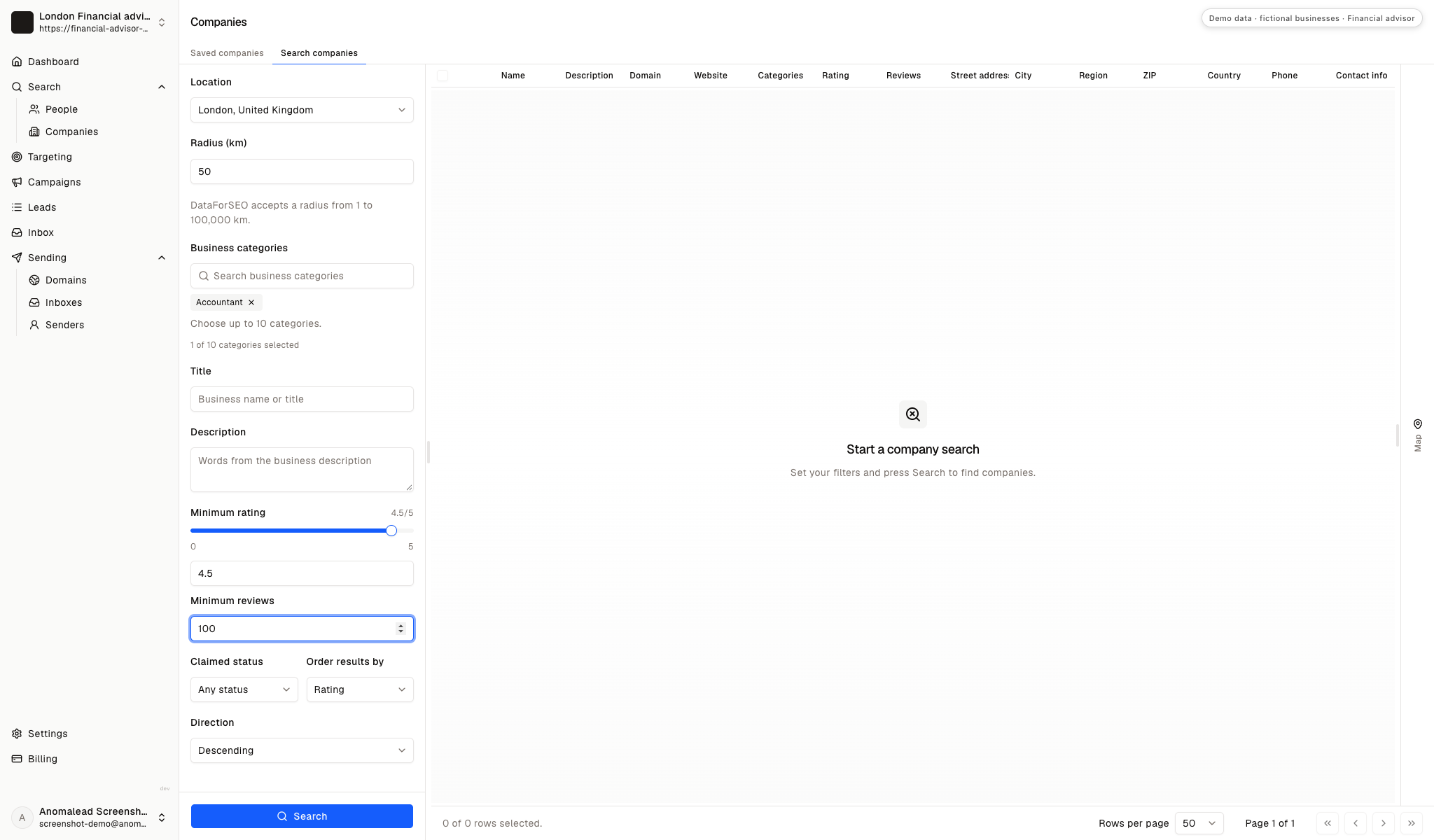
Set the search around your service area
Section titled: Set the search around your service areaChoose the area your firm serves and the business category you want to research. Search filters narrow company research; they do not identify people seeking advice.
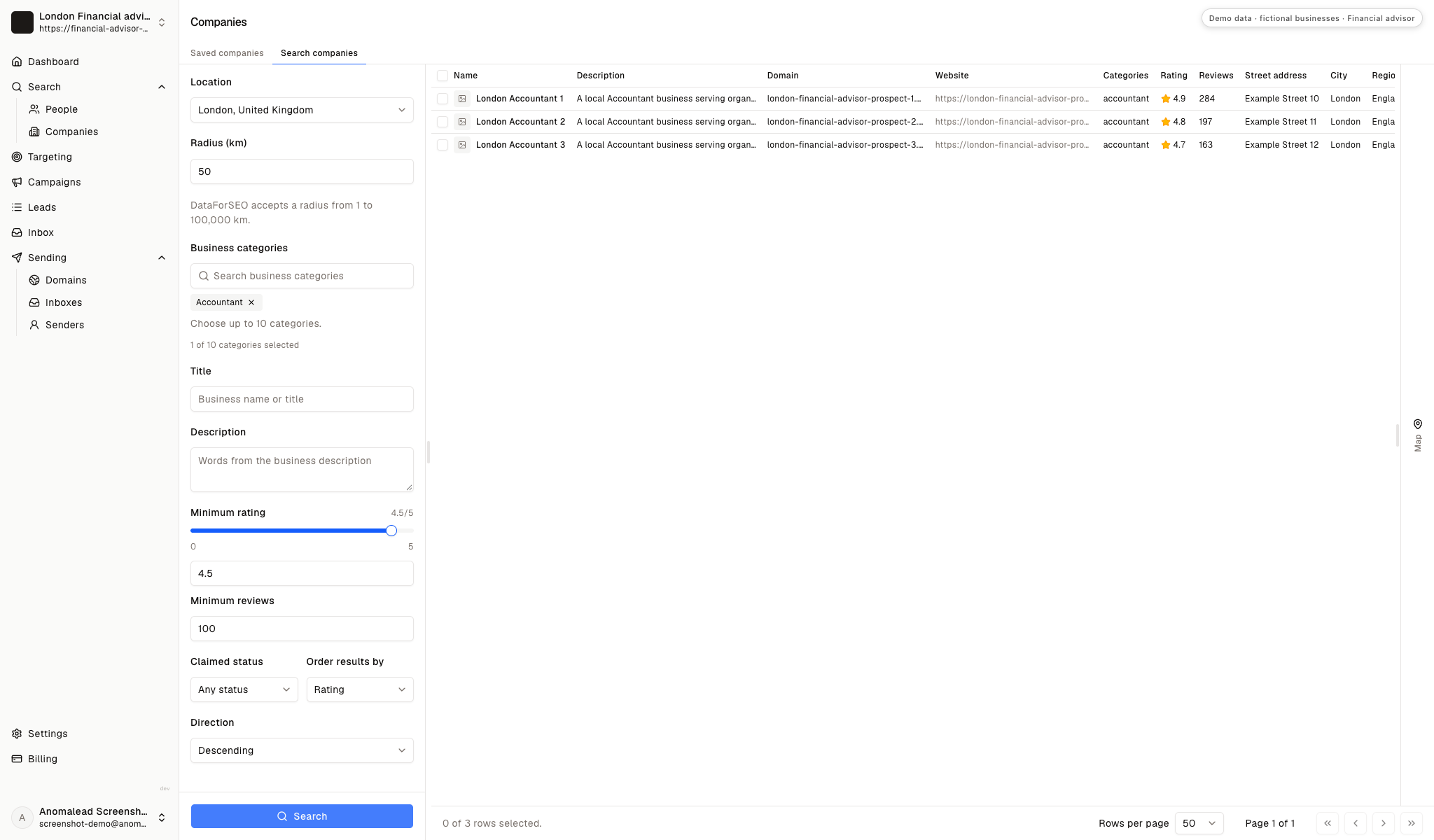
Review firm listings without inferring client needs
Section titled: Review firm listings without inferring client needsReview visible company information as a starting point for research. A listing cannot show client interest, consent, financial plans, or whether an introduction is appropriate.
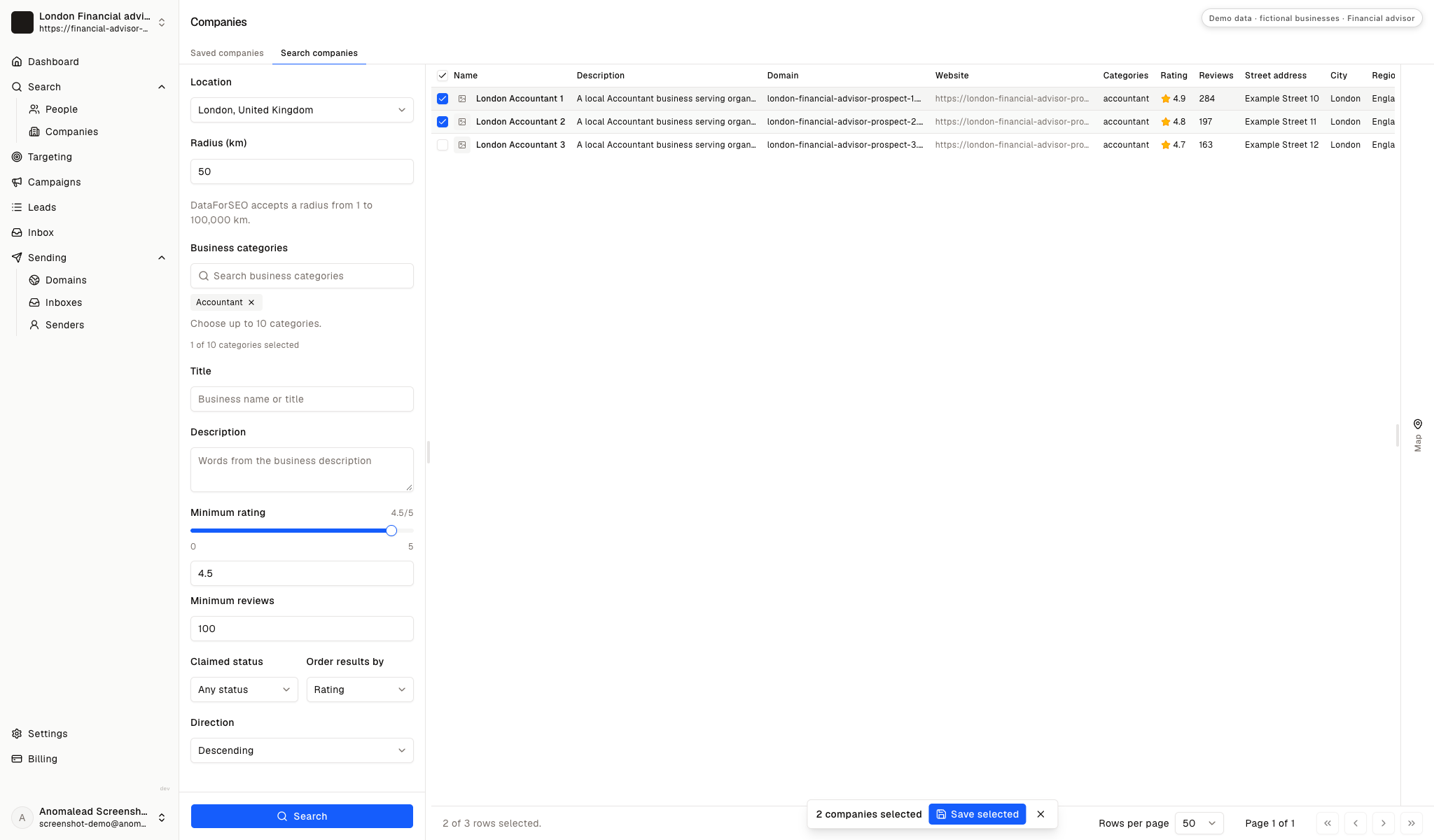
Save firms with a plausible resource process
Section titled: Save firms with a plausible resource processSave a firm only when public details make it worth asking about its client-requested resource process. The selection records a research choice, not a client lead.
Find the person who reviews outside professional resources
Section titled: Find the person who reviews outside professional resourcesAn owner or practice manager may approve a resource; an accountant or privacy lead can explain how requests are handled. Verify a real contact’s current role before discussing a relationship.
Record public firm details, the source for the contact’s role, and whether the firm has a client-controlled process. Keep tax status, assets, and requests for advice out of prospect notes. Review professional outreach basics before making first contact.
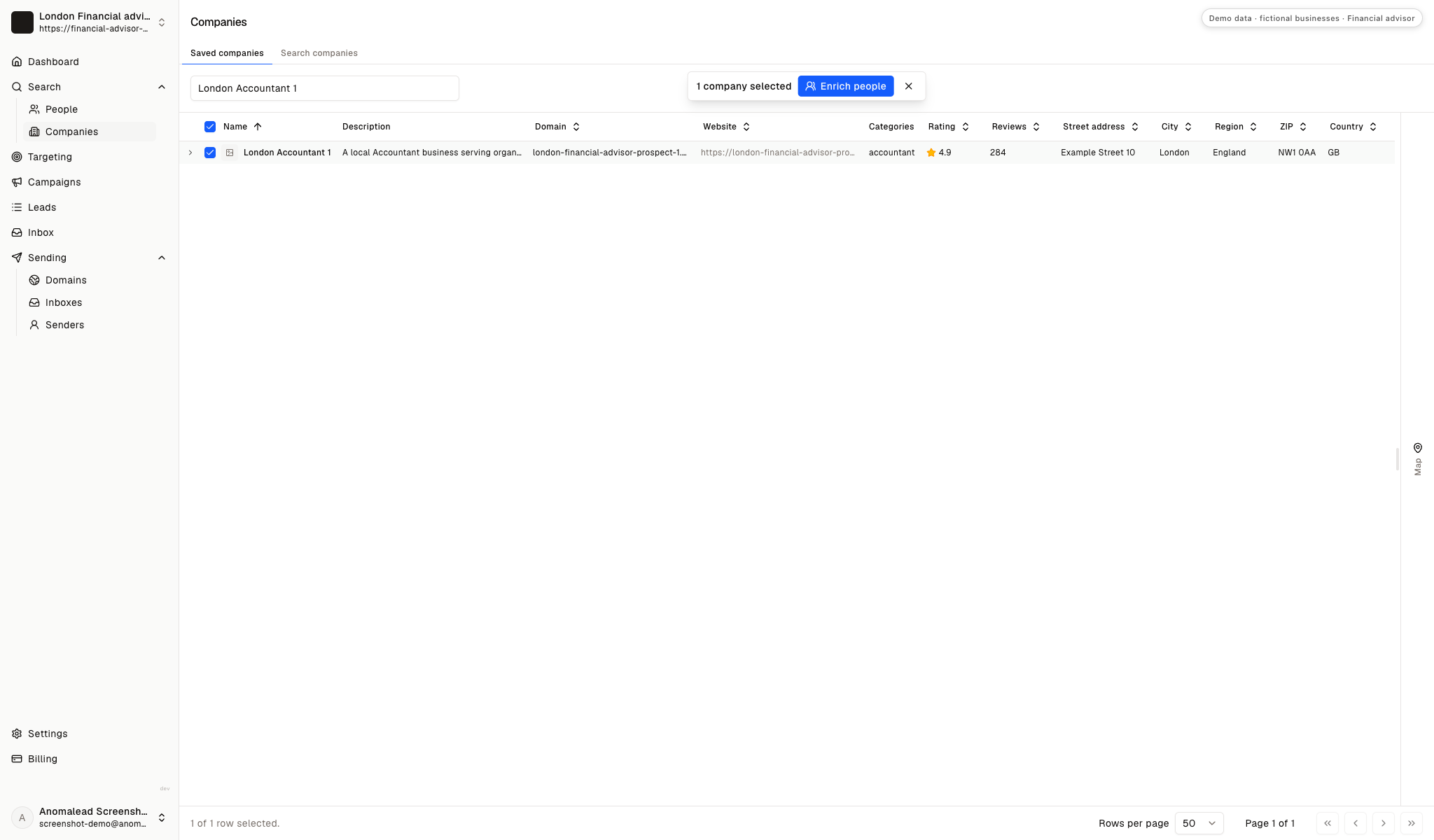
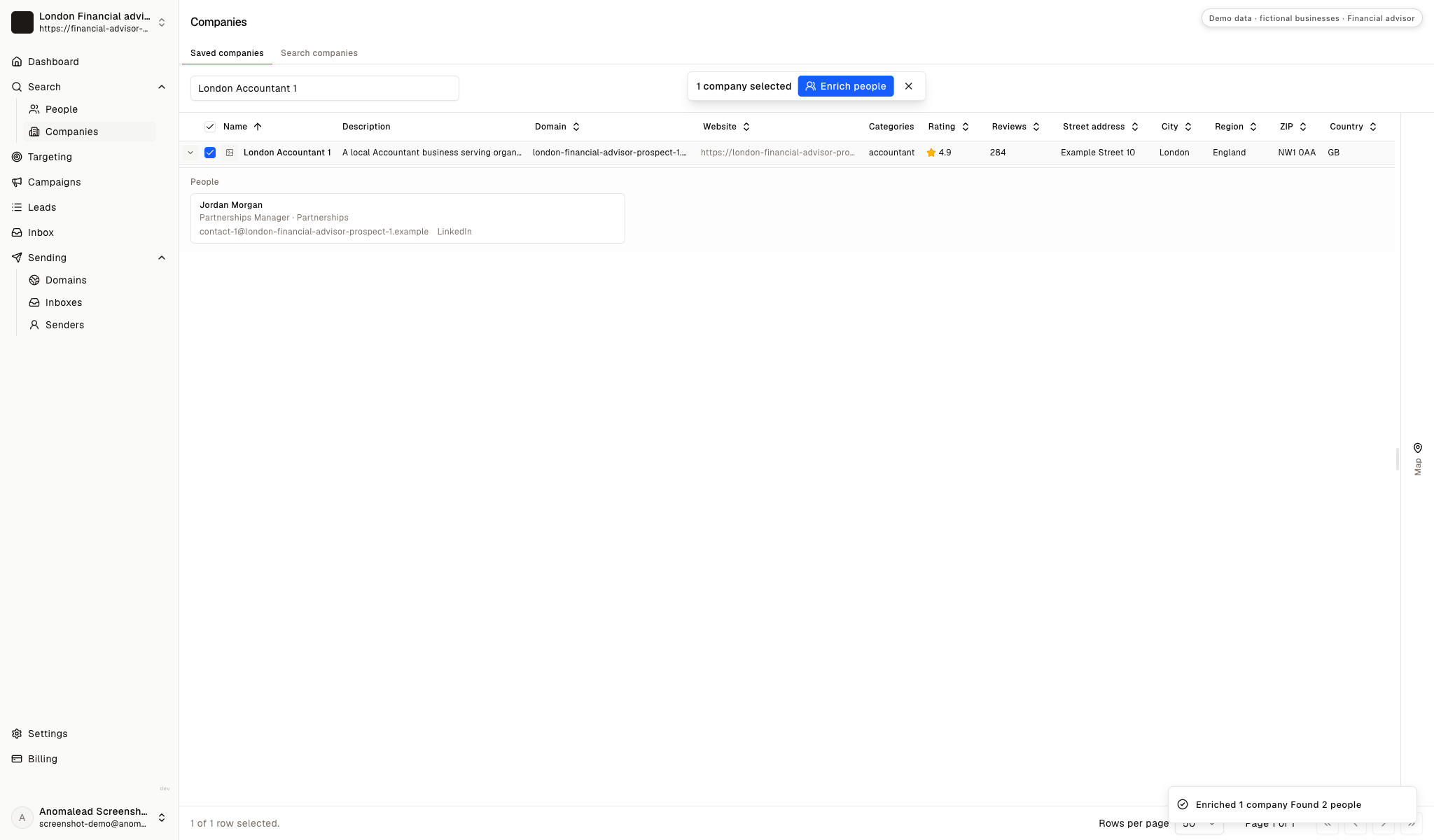
Review one firm before enriching its contacts
Section titled: Review one firm before enriching its contactsCheck that the firm serves your area and may have a process worth discussing before researching individual contacts.
Treat job titles as clues to verify
Section titled: Treat job titles as clues to verifyUse titles as clues, then verify who reviews outside resources. A profile does not establish responsibility for referrals, consent, or compliance.
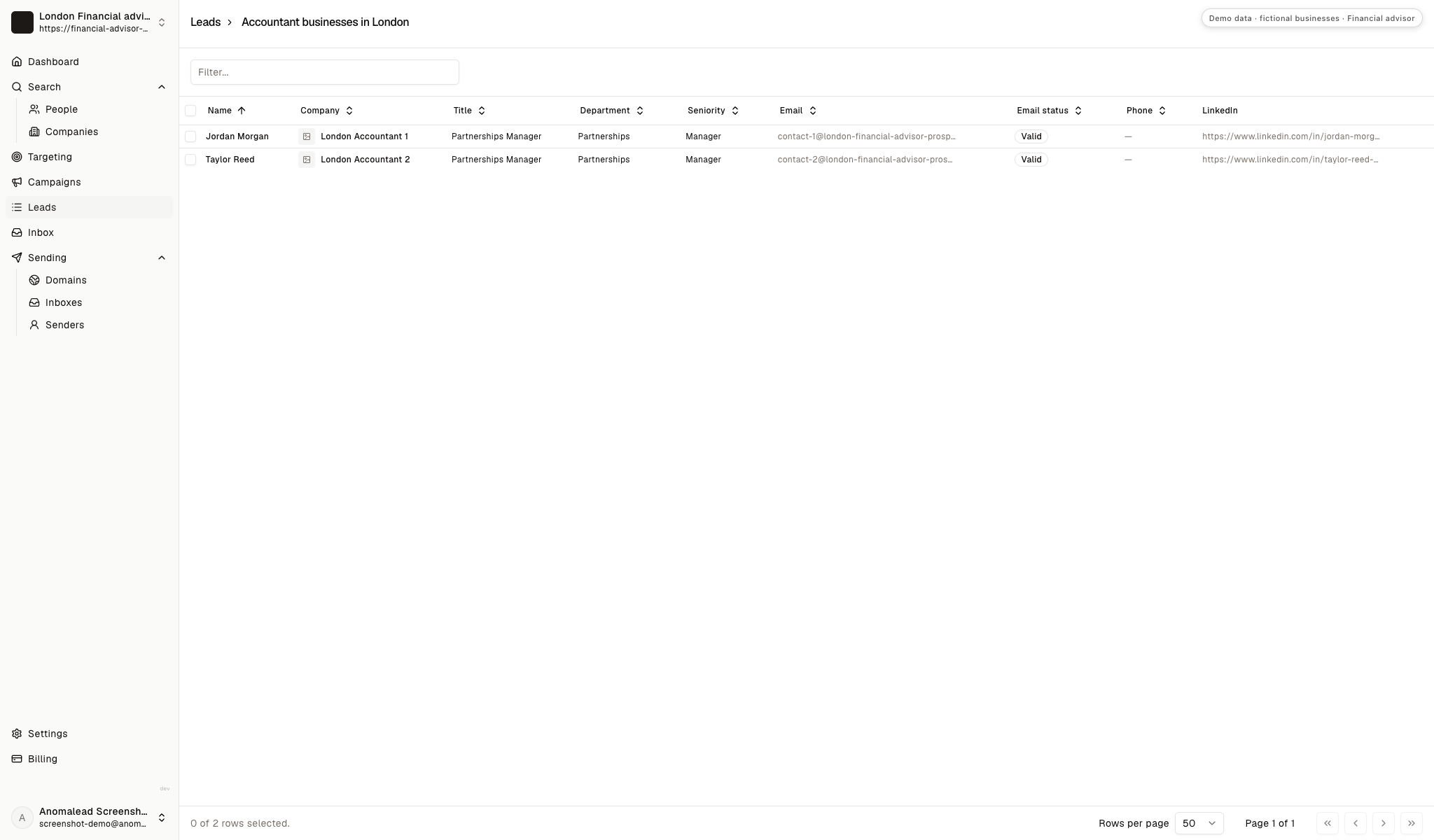
Keep prospect notes separate from client records
Section titled: Keep prospect notes separate from client recordsKeep prospect records to verified business details and the resource-review route. Do not add client names or private financial facts.
Estimate the effort behind an accountant relationship
Section titled: Estimate the effort behind an accountant relationshipA relationship takes time to research firms, verify credentials, review approved wording, and maintain a client-controlled contact route. Its value depends on your work, not presumed referrals.
Service overlap, independence, and permission practices matter more than an unsupported forecast.
Enter your own assumptions about outreach, compliance review, meetings, intake capacity, and maintaining approved materials. The calculator does not predict introductions, engagements, assets, returns, revenue, or profit.
Do the math on one good deal
If one new customer is worth thousands, you don’t need magic. You need a few more meetings a month.
Projected monthly results
- Deals closed
- 2.0
- Projected revenue
- £10,000
- Growth plan (1 business)
- £79/mo
- ROI
- 12,558%
Conservative math on meetings you already believe you can book. One closed deal often pays for a year of Anomalead.
Compare workload scenarios, then ask both firms’ compliance reviewers to assess any proposed process.
Offer a resource the client can choose independently
Section titled: Offer a resource the client can choose independentlyAsk how the accounting practice handles client requests for an outside planning contact. Explain your firm’s scope and how a client can reach you directly; do not ask for names.
Do not imply expected referrals or promised results. Check applicable conduct and marketing rules before describing compensation or joint resources. These business email examples can help keep the note brief.
Choose a recipient who can route a resource question
Section titled: Choose a recipient who can route a resource questionVerify that a real contact can review a professional resource or direct you to the right person before sending.
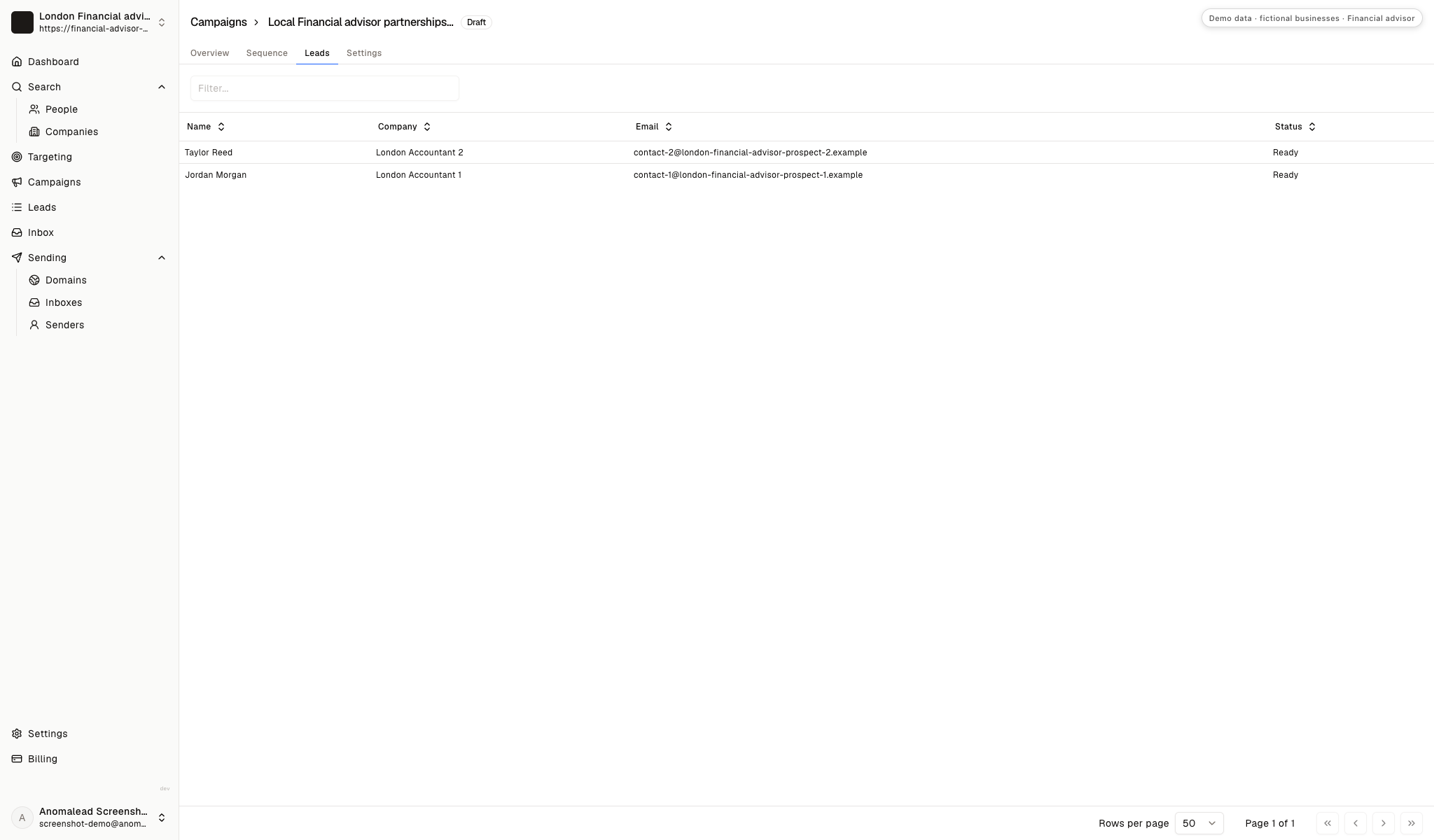
Review the sequence for consent and accuracy
Section titled: Review the sequence for consent and accuracyReplace generic copy with a question about the firm’s process. A scheduled follow-up is not evidence of interest; stop if the recipient declines.
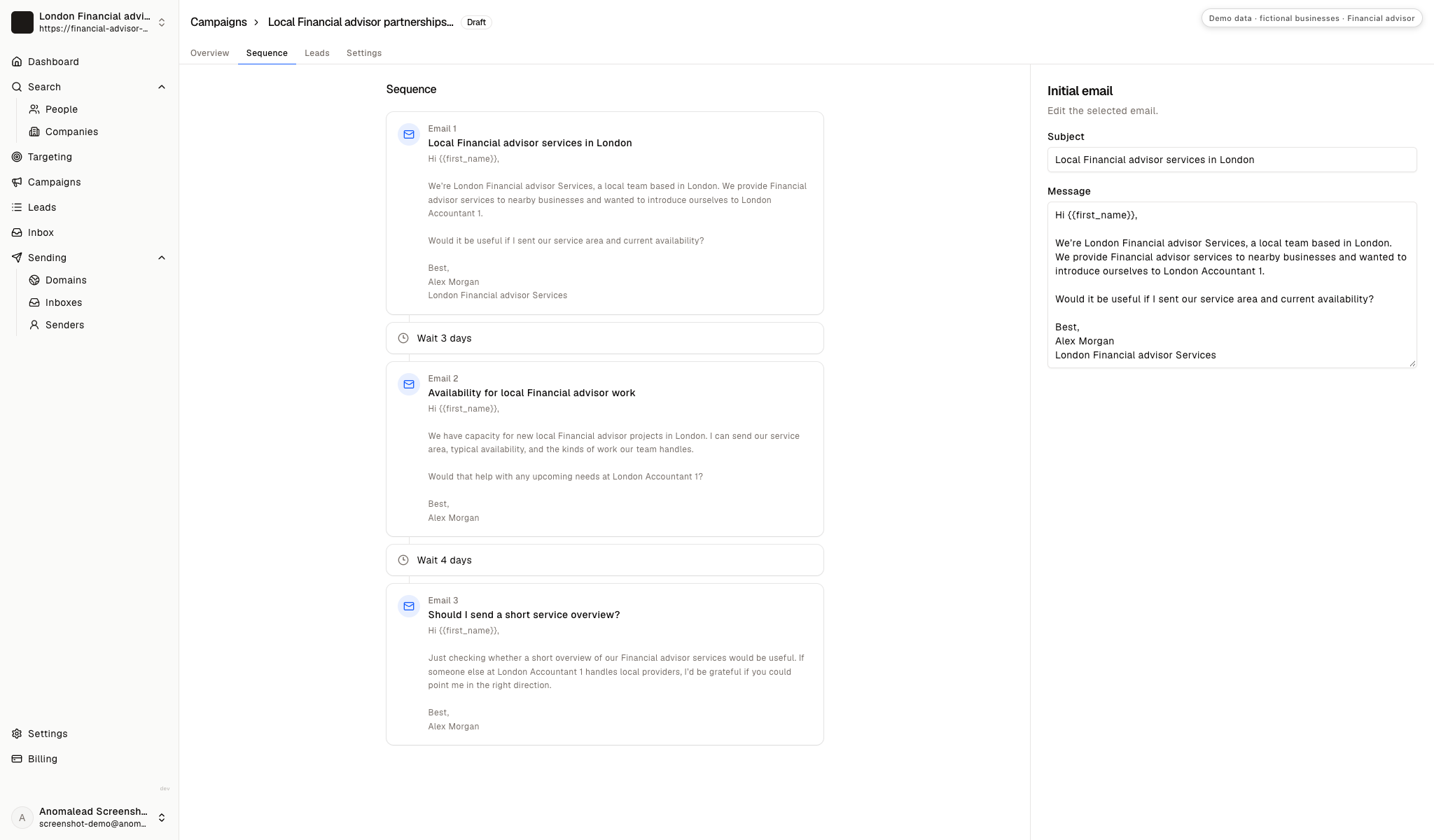
Write a one-question introduction to the accountant
Section titled: Write a one-question introduction to the accountantJordan Morgan and Taylor Reed are fictional contacts in the demo. Verify a real recipient’s role, keep client information out of the message, and ask one question.
First note about a client-requested resource
Subject: A client-controlled financial planning contact
Hi Jordan,
I’m Alex Morgan with London Financial advisor Services. Our firm speaks directly with people who choose to ask about financial planning services within our verified scope. We do not need an accounting firm to send client names or financial records.
Does your practice have a client-led process for sharing an outside advisor’s contact when a client asks for one?
Best, Alex Morgan, London Financial advisor Services
Follow-up about the firm’s review process
Subject: Re: A client-controlled financial planning contact
Hi Taylor,
I wanted to clarify that I’m asking about your process for reviewing outside resources, not requesting client referrals. Anyone who wants to explore our services contacts the firm directly, and your team does not receive details of that conversation.
Would a short summary of our verified credentials, service scope, and privacy process help your team review whether a neutral resource fits its policy?
Best, Alex Morgan
Use a professional cold email opening, and let the accountant and client choose whether to take another step.
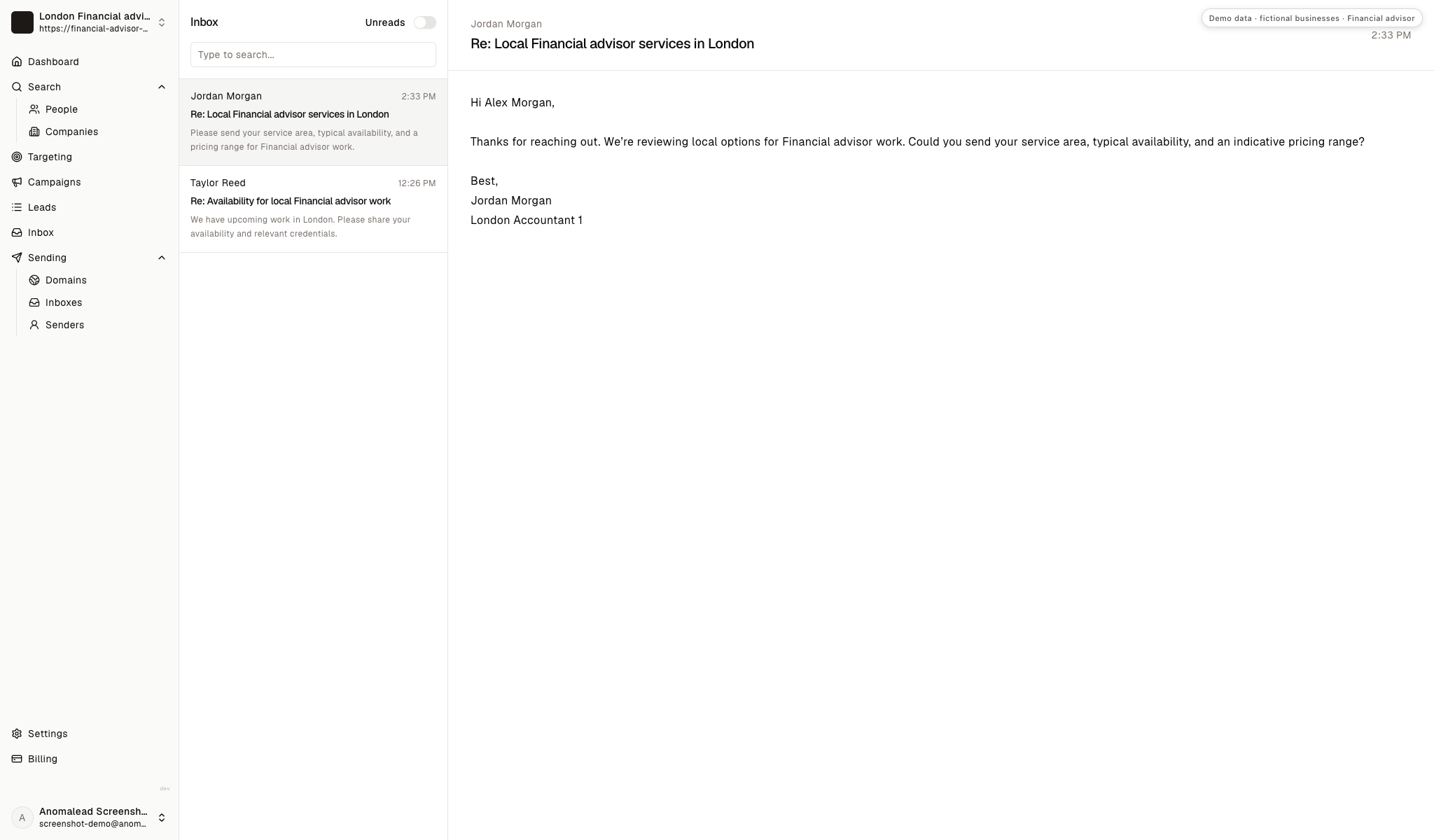
Treat inbox replies as process questions
Section titled: Treat inbox replies as process questionsThe demo inbox is a workflow example, not evidence of a client request, referral permission, or planning engagement.
Answer accountants without crossing client boundaries
Section titled: Answer accountants without crossing client boundariesThe demo replies ask about service fit, availability, fees, and credentials. Answer with verified business information and keep every possible introduction under the client’s control.
Jordan asks about service area, availability, and pricing
Section titled: Jordan asks about service area, availability, and pricingPlease send your service area, typical availability, and an indicative pricing range for your financial planning work.
Name only services and areas you can support. Use current approved fee information and discuss scope and cost directly with anyone who contacts you.
Do not ask for a client name, records, balance, or reason for seeking planning.
Answer the request without inventing a price:
Thanks, Jordan. We can share our service area, planning scope, and approved information about how fees are discussed. We confirm the right service and cost directly with anyone who contacts us. A neutral resource can be reviewed by your team without sharing client details.
Taylor asks about upcoming work, availability, and credentials
Section titled: Taylor asks about upcoming work, availability, and credentialsWe may have an upcoming need. Please share your availability, the work your team covers, and relevant credentials.
Send current credentials and services within your documented scope; verify availability first.
Clarify whether the firm is reviewing a general resource. A client should initiate contact and use your normal intake and conflict process.
Offer verified details and a clear next step:
Thanks, Taylor. We can send our verified credentials, service scope, and areas served. We confirm current availability directly with anyone who contacts us. Is your team reviewing a neutral resource, rather than asking us to receive private client information?
The accountant asks whether you pay for introductions
Section titled: The accountant asks whether you pay for introductionsDo you offer a fee or reciprocal arrangement for introductions?
Do not promise payment, reciprocal business, or a benefit. Refer compensation or joint promotion for review under the rules and disclosure duties that apply.
A neutral contact does not imply endorsement or financial interest.
Set the boundary before discussing terms:
We do not assume a fee or reciprocal arrangement is appropriate. Any proposed compensation or joint promotion would need review under the rules that apply to both firms. Our starting point is a neutral contact the client may choose to use.
The accountant offers to send a client’s financial records
Section titled: The accountant offers to send a client’s financial recordsA client is considering planning. Would you like me to send their tax return and account details?
Decline the records and ask the accountant not to send personal information. The client can contact you directly and use your approved intake after hearing about privacy and conflict checks.
Do not turn prospecting into an informal review or recommendation.
Decline the records and point to direct intake:
Please do not send the client’s return, account details, or name. If they want to explore our services, you can share our public contact information and they may contact us directly. We will explain our intake and privacy steps before requesting information.
Before you approach the next accounting firm
Section titled: Before you approach the next accounting firmChoose a segment whose service area and work fit your firm’s documented scope. Research a small set of firms using public business information, identify who reviews outside resources, and ask about process rather than requesting a client list.
Prepare a short partner sheet with credentials, service scope, privacy steps, intake contact, and approved wording. Have the responsible reviewer check applicable conduct, compensation, and marketing rules. For a partner-side perspective, see accountant business development.
Questions about accountant relationships for financial advisors
Section titled: Questions about accountant relationships for financial advisorsCan an accountant introduce a client to a financial advisor?
Section titled: Can an accountant introduce a client to a financial advisor?An accountant may share a neutral contact when the client asks and firm policy allows it. The client decides whether to reach out; private details should not be passed along without permission and an appropriate process.
Should an advisor pay an accountant for a referral?
Section titled: Should an advisor pay an accountant for a referral?Do not assume fees or reciprocal benefits are allowed. Both firms should review the conduct, disclosure, privacy, and marketing rules that apply before agreeing to compensation or joint promotion.
What should an advisor verify before proposing a relationship?
Section titled: What should an advisor verify before proposing a relationship?Confirm current credentials, service scope, privacy and intake steps, and conflict checks. Explain a client-controlled route that requires no names or records from the accountant.
Are the accounting firms in the demo real?
Section titled: Are the accounting firms in the demo real?No. The company listings, contact profiles, and inbox replies are fictional examples. They are not Anomalead customers, actual accountants, client referrals, plans, or results.
What does the ROI calculator predict?
Section titled: What does the ROI calculator predict?It models the firm’s own assumptions about outreach and relationship-maintenance effort. It does not predict introductions, assets, investment returns, engagements, revenue, or profit.