


Auto repair lead generation works when a shop targets fleet operators whose vehicles, routes, and maintenance needs match the work its bays can handle. Local fleet managers care about predictable service windows, clear approval steps, and getting vehicles back into rotation, so a useful first conversation is about operating fit rather than a blanket discount.
This guide follows a repair shop from prospect research to a practical fleet-service conversation. It shows how to screen organizations, find the maintenance decision-maker, and shape a useful opening. The basics of B2B lead generation explain the pipeline this workflow builds on.
Key takeaways
- Start with local fleets that use vehicle types your technicians service and whose routes fall within a realistic drop-off or collection area.
- Ask how maintenance is approved, where vehicles are based, and whether the fleet needs scheduled servicing, diagnostics, or repair overflow before quoting.
- A fleet manager is usually a better first contact than a general office manager because the fleet manager sees downtime, service records, and vendor coordination directly.
- Use a first email to offer a short capability discussion, then answer questions about capacity and qualifications before asking for a vehicle list or inspection slot.
Which buyers fit auto repair lead generation?
Section titled: Which buyers fit auto repair lead generation?Start with local fleets whose vehicles and routes match your shop. Keep separate outreach for buyers with different maintenance needs.
- Local delivery and service fleets: Trades, food distributors, and field-service companies depend on vans or light commercial vehicles leaving the yard each day. A repair shop can discuss planned inspections, wear-item work, and a route-aware booking window with whoever coordinates vehicle availability.
- Trades with several work vehicles: Electrical, plumbing, and building firms often have a mix of vans, pickups, and equipment trailers. Their owner or operations lead may approve smaller repairs, while a fleet coordinator tracks service intervals and keeps keys, drivers, and paperwork moving.
- Care and community transport operators: These fleets need a clear process for safety-critical checks and vehicles returning to service. Approach only if the shop is equipped for the vehicle class and can explain how it documents inspections and escalates defects; do not imply a safety certification you do not hold.
- Rental and local mobility businesses: A rental operator may need turnaround work between bookings and a way to prioritize vehicles that cannot be dispatched. Confirm the shop can handle the relevant makes and the operator’s booking cadence before proposing a service arrangement.
Fleet work can recur, but only when vehicle mix, service windows, tools, and workload fit.
Qualify the fleet before you look up a contact
Section titled: Qualify the fleet before you look up a contact- Vehicle class and repair scope: Check whether the account runs passenger cars, vans, light trucks, or a mixed fleet, then compare that mix with your tools, technician training, parts access, and any specialist work you can accept. A shop focused on everyday servicing should not pitch heavy-vehicle work it cannot complete.
- Where vehicles are parked: A depot with a predictable morning return is different from drivers scattered across a wide territory. Ask about vehicle bases, collection arrangements, and whether the fleet can spare a vehicle for a scheduled bay slot.
- Maintenance ownership: Find out whether one fleet manager books repairs, local branch managers approve them, or drivers use an existing garage network. A central contact may set standards while a depot lead handles bookings, so learn who owns each decision.
- Work mix and timing: Separate routine servicing and inspections from diagnostic faults, accident repairs, and urgent breakdown work. Do not promise emergency coverage if the shop has no on-call rota or towing process; state the work you can schedule reliably.
- Records and purchasing steps: Some operators need itemized estimates, service histories, purchase-order references, or written approval before repairs begin. Check that your front desk can follow those steps and return maintenance records in the format the fleet expects.
What the demo screenshots show
The demo uses fictional operator London Auto repair shop Services, generic offices including London Corporate office 1 and London Corporate office 2, and fictional contacts Jordan Morgan and Taylor Reed. None are Anomalead customers or real campaign results. The records do not establish that the offices operate fleets.
Find fleet prospects in Anomalead
Section titled: Find fleet prospects in AnomaleadUse company search to create a review queue, then decide which records belong on a fleet-maintenance shortlist. The seeded screen shows generic offices, so its ratings and descriptions are interface examples, not evidence of vehicle ownership. Verify real fleet fit through company research and conversation.
Set a useful search area for fleet accounts
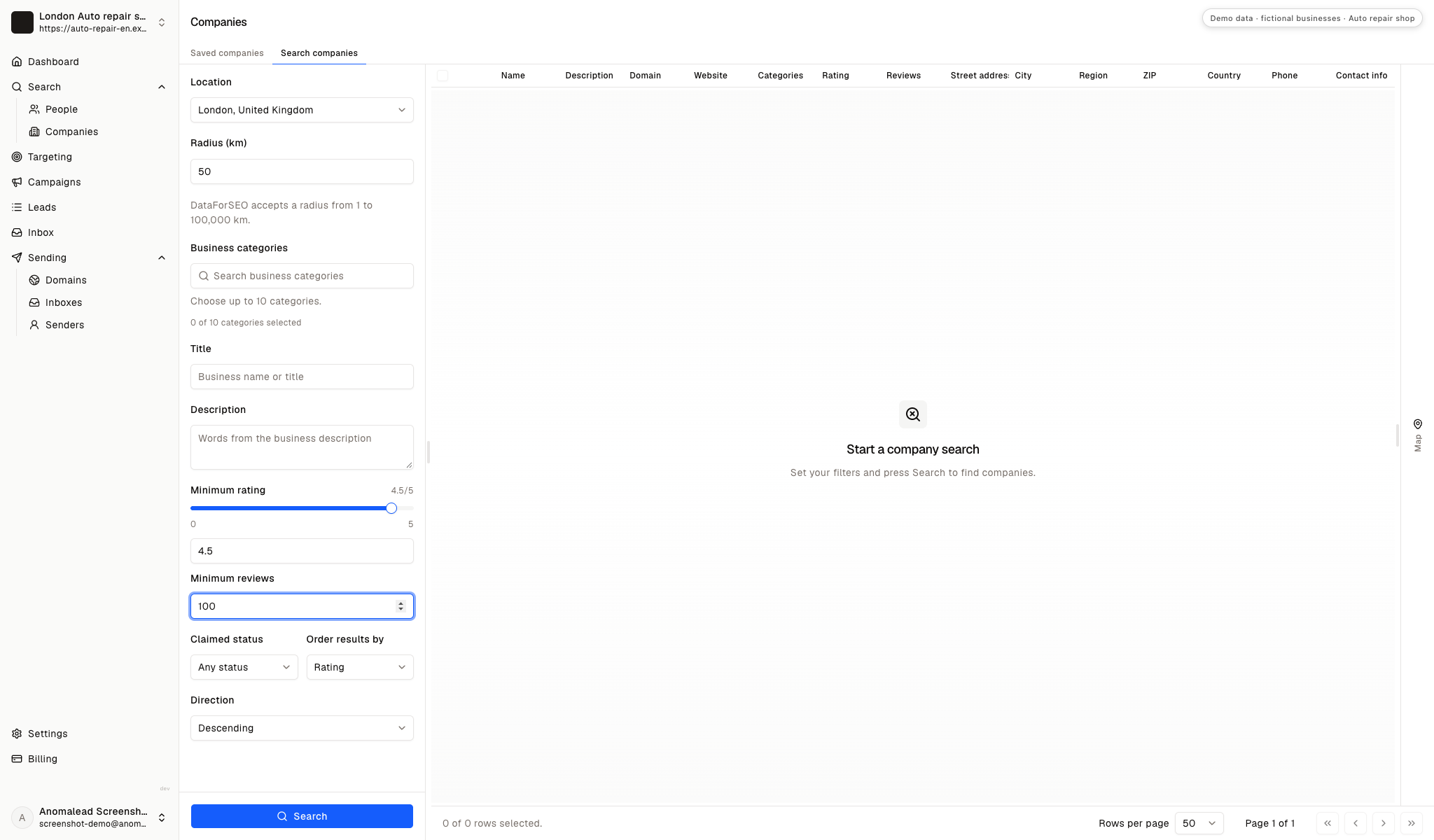
Section titled: Set a useful search area for fleet accountsChoose a location your technicians can serve and a company category likely to include fleet operators. The demo uses corporate offices because that is its configured prospect category.
Set the radius around real travel and handoff capacity. Start with depots where scheduled drop-offs or collection are practical.
Check what each company actually operates
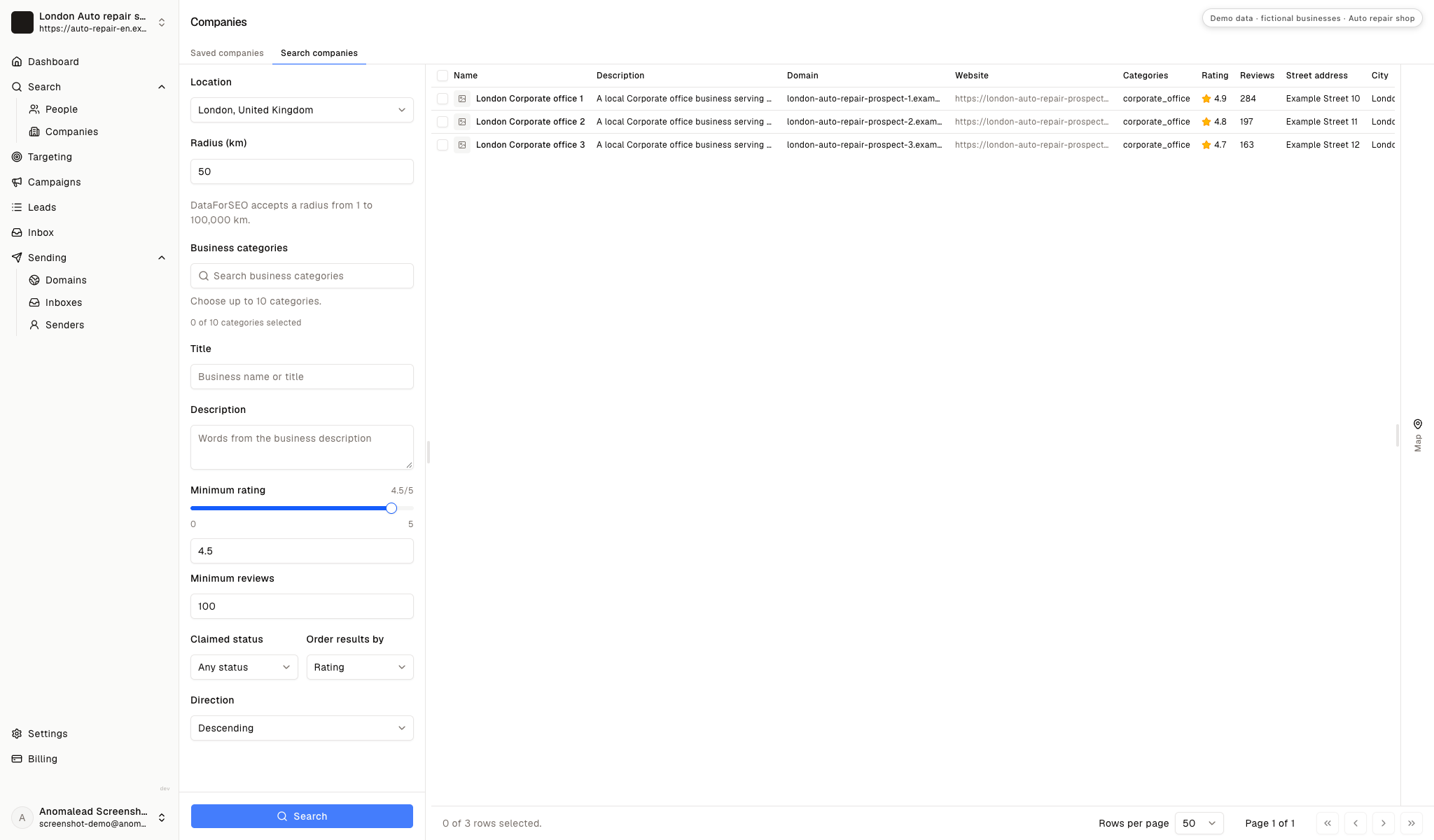
Section titled: Check what each company actually operatesThree fictional corporate offices appear with descriptions, domains, ratings, and review counts. These details help discovery but reveal nothing about vehicle count or maintenance.
Look for evidence of field crews, local delivery, passenger transport, or multiple sites. A high rating is not proof of fleet fit.
Save only fleet accounts worth researching
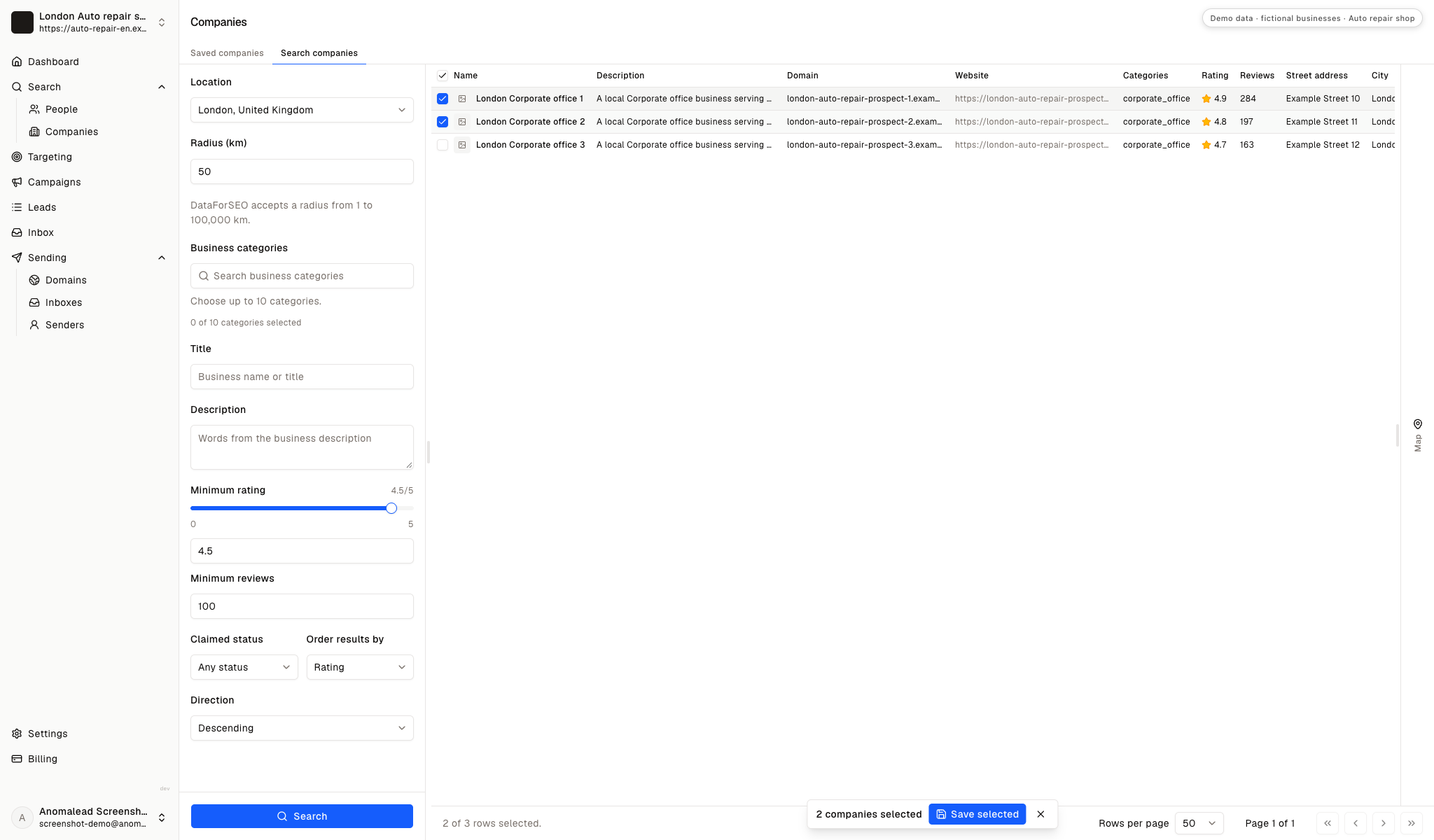
Section titled: Save only fleet accounts worth researchingThe demo selects two of three results. Save only organizations with a plausible fleet, a reachable maintenance owner, and a location your shop can serve.
Note the reason each company qualifies, such as service vans or a depot. That detail can ground the first email.
Find the person who coordinates vehicle maintenance
Section titled: Find the person who coordinates vehicle maintenanceEnrich a company only after it looks serviceable. A fleet manager, transport manager, workshop coordinator, or operations lead can explain vehicle availability and approvals; a generic partnerships contact may need to route you to the repair buyer.
The guide to finding business leads covers list research. Fleet outreach adds a practical test: can your contact coordinate vehicle access as well as route the work?
Review the saved fleet candidates
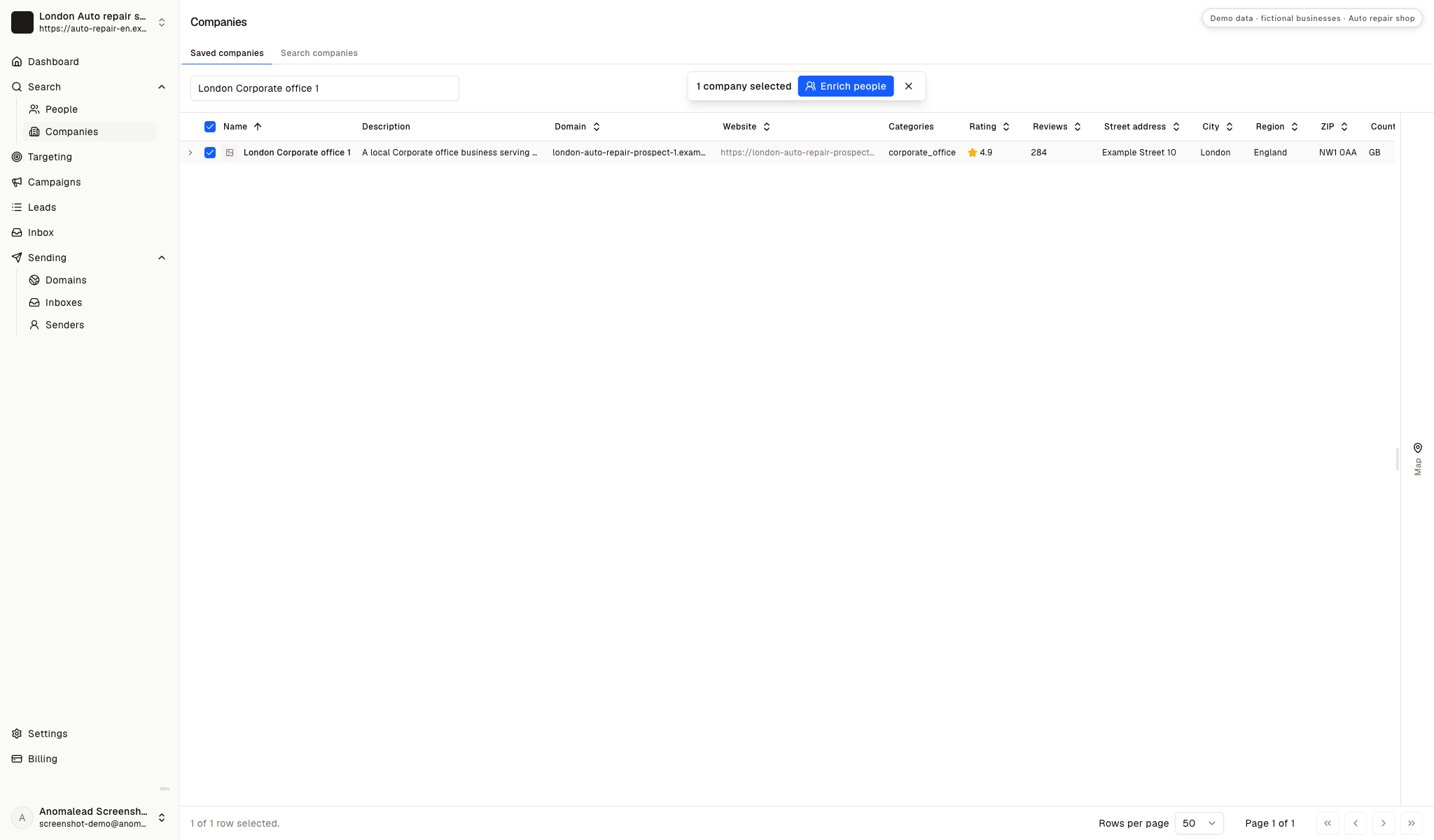
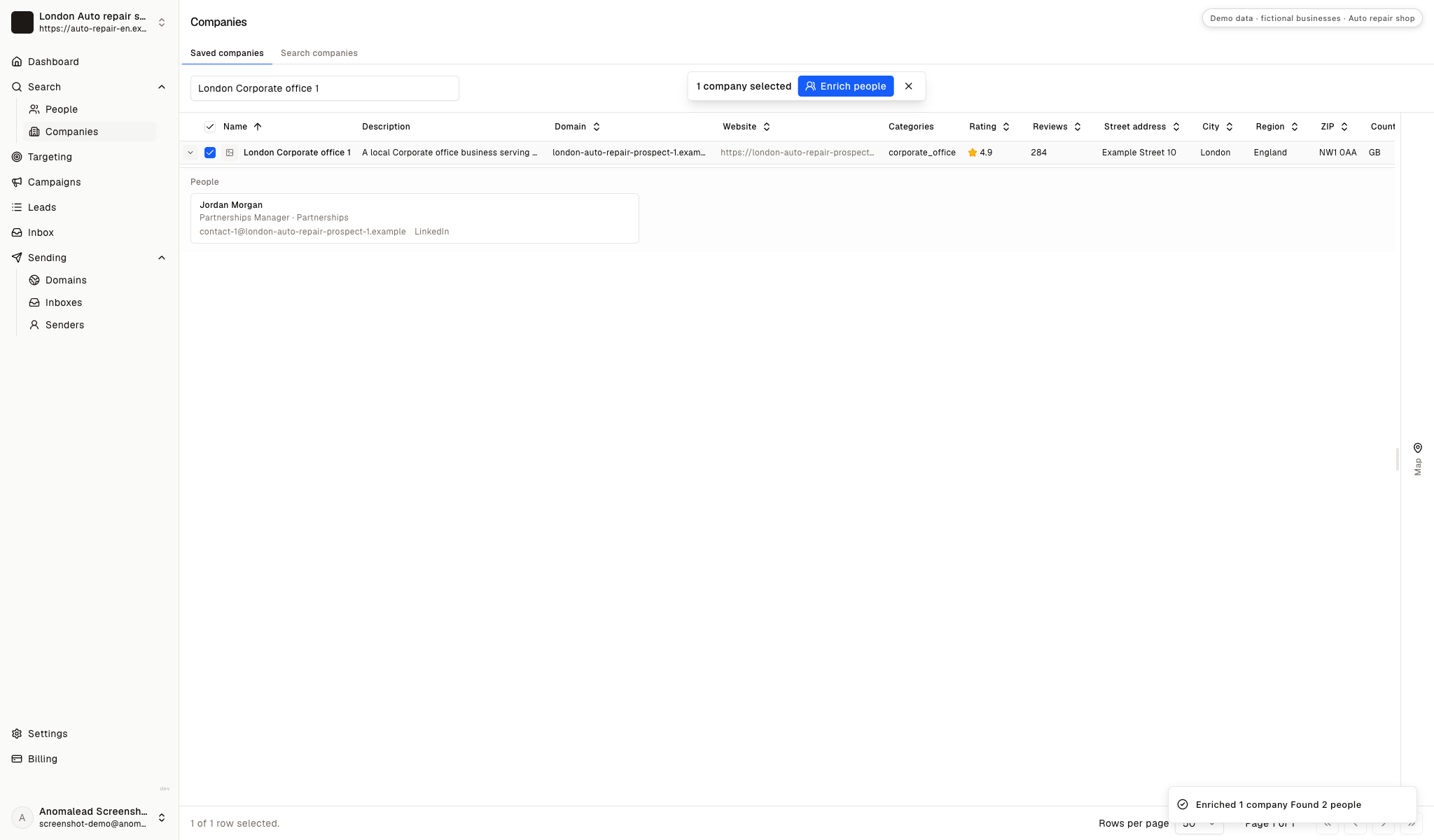
Section titled: Review the saved fleet candidatesThe saved view shows London Corporate office 1 selected and Enrich people available. It is a generic fictional record, so verify real vehicle operations and service locations before continuing.
Remove companies with no apparent fleet, an inaccessible national contract, or vehicles outside your capabilities.
Choose the maintenance decision-maker
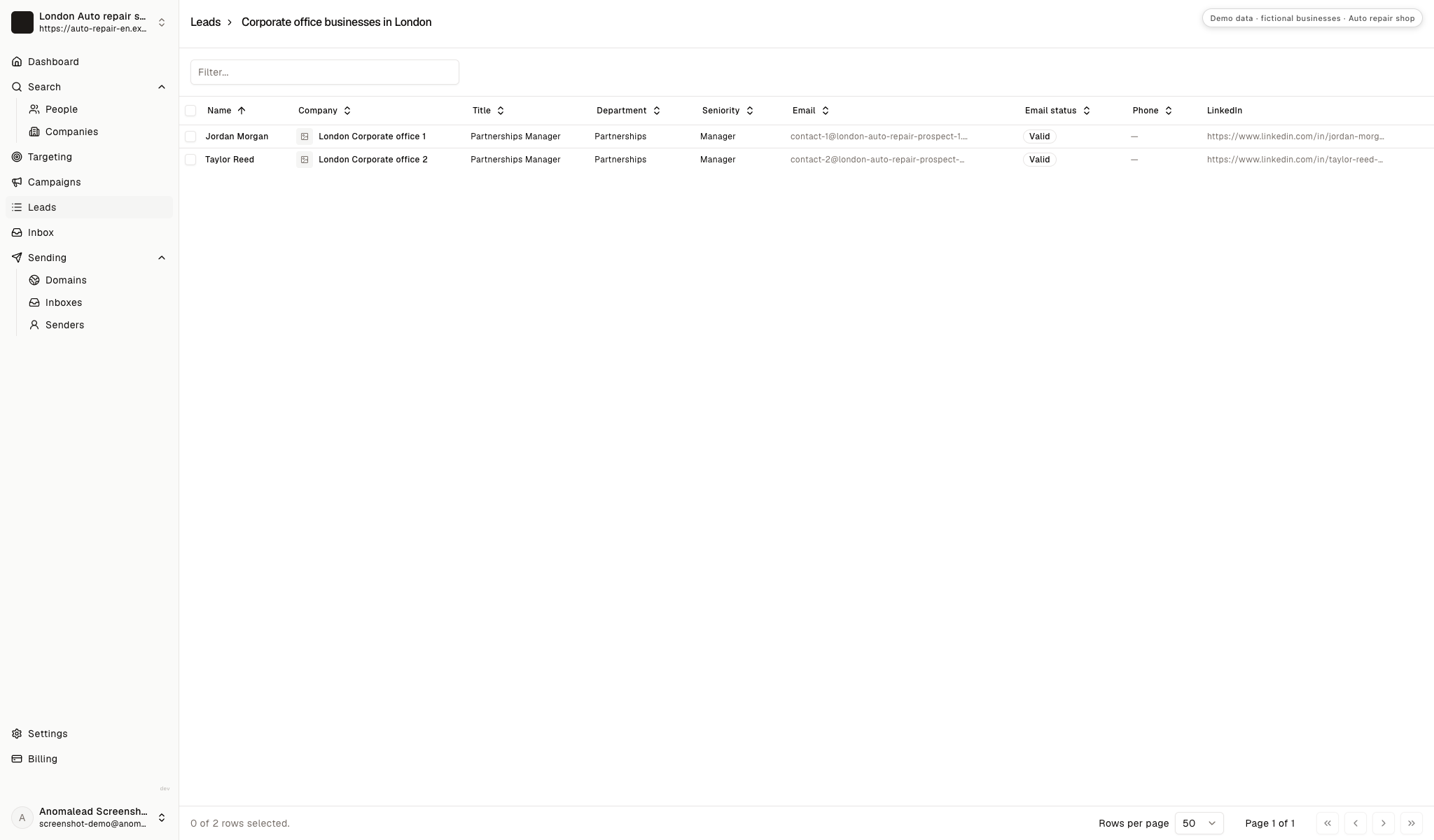
Section titled: Choose the maintenance decision-makerThe fixture returns Jordan Morgan and Taylor Reed as fictional Partnerships Managers. That is not the ideal maintenance role, so verify a live contact’s title before sending.
Look for fleet operations, vehicle maintenance, transport, or depot scheduling. If a contact owns partnerships, ask for the repair buyer rather than sending a technical pitch.
Keep the contact list tied to one fleet need
Section titled: Keep the contact list tied to one fleet needThe list shows two fictional contacts with valid email status. Confirm each person still works at the target company and note the vehicle or location detail you verified.
Do not combine a fleet manager and a general office contact just because both are nearby.
Would a fleet account fit the shop’s workload?
Section titled: Would a fleet account fit the shop’s workload?Fleet work may bring scheduled service or repair overflow, but it can also displace retail jobs. Compare account fit with technician skills and bay capacity.
Estimate contribution from your own records after parts, labor, collection, administration, and specialist referrals.
The calculator uses assumptions you enter for account value, meetings, and close rate. It does not predict fleet demand, repair volume, profit, or campaign results.
Do the math on one good deal
If one new customer is worth thousands, you don’t need magic. You need a few more meetings a month.
Projected monthly results
- Deals closed
- 2.0
- Projected revenue
- £10,000
- Growth plan (1 business)
- £79/mo
- ROI
- 12,558%
Conservative math on meetings you already believe you can book. One closed deal often pays for a year of Anomalead.
If the case depends on every vehicle arriving as planned, allow for missed bookings and start with a limited discussion.
Prepare a credible fleet-service approach
Section titled: Prepare a credible fleet-service approachA fleet manager can judge a shop by its vehicle scope and the way it protects availability. Mention one verified operating detail and ask for a short conversation about maintenance windows or approvals.
Adapt cold email guidance to fleet operations; do not copy a generic sales template.
Select recipients with the same maintenance problem
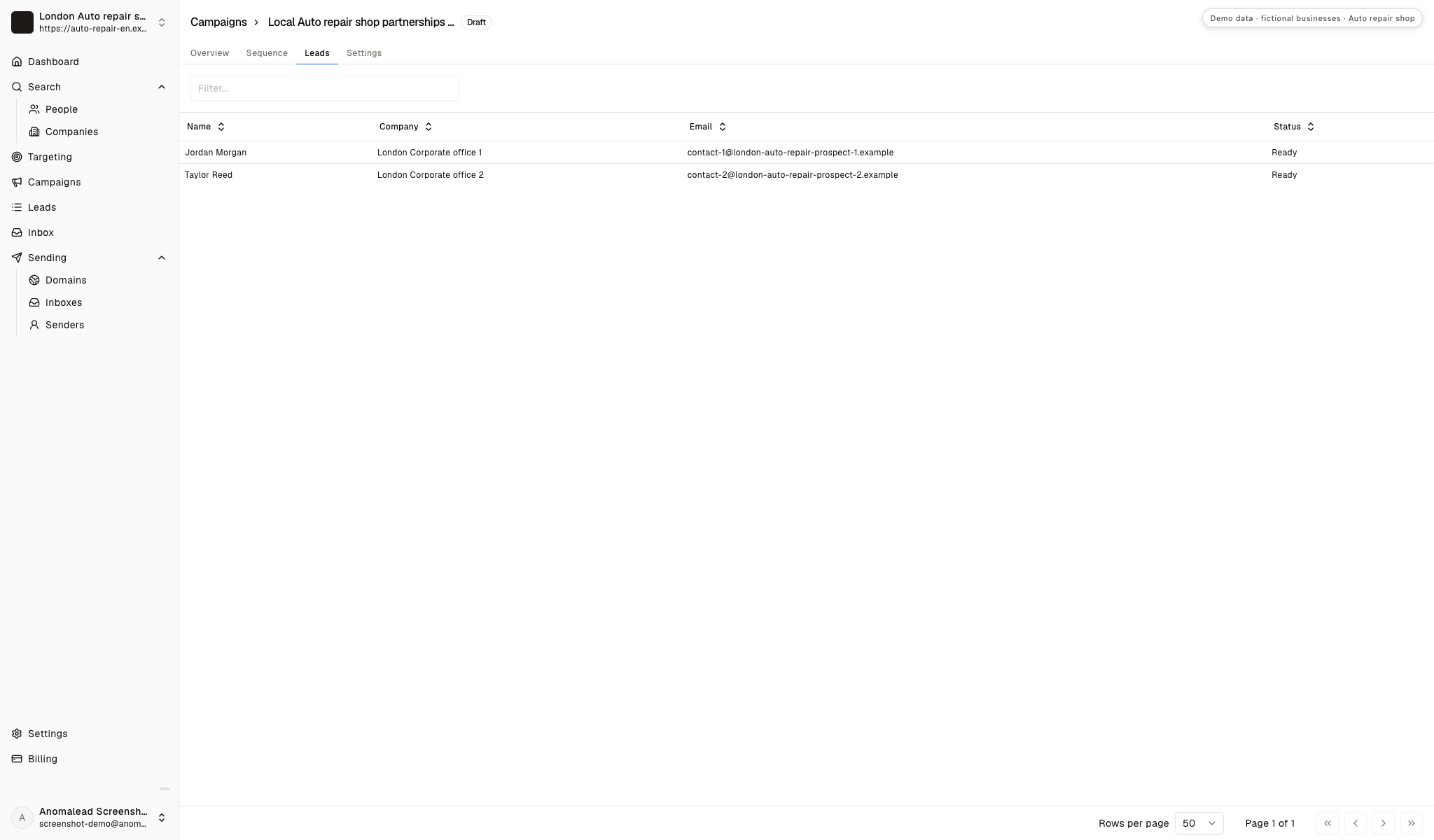
Section titled: Select recipients with the same maintenance problemThe draft shows two fictional recipients marked ready. For a live fleet campaign, group contacts with the same buyer context and remove anyone whose role or vehicle operation is unverified.
Keep the campaign in draft until you confirm every claim about service area, collection, booking, and repair scope.
Review every follow-up for a useful reason to reply
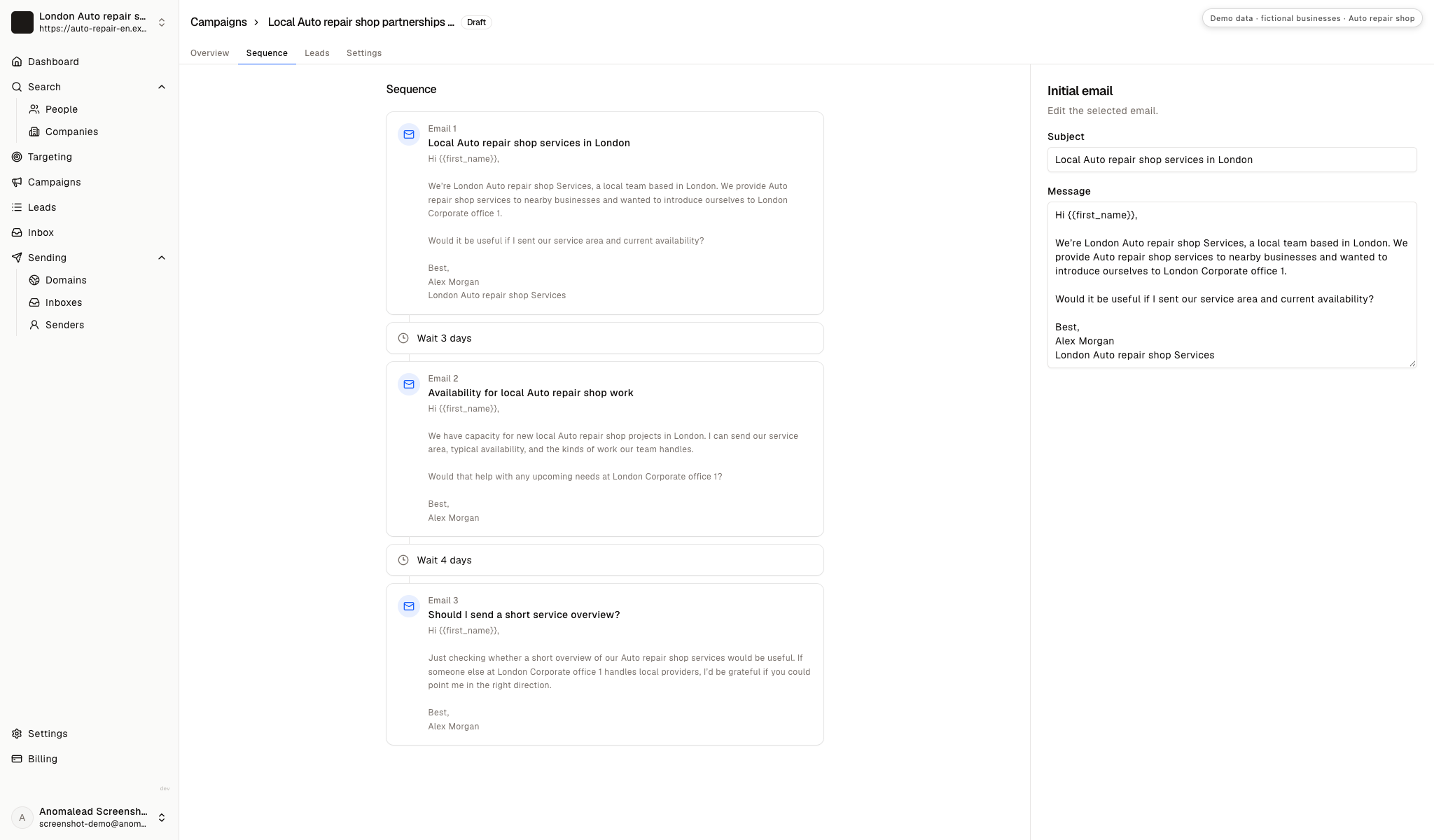
Section titled: Review every follow-up for a useful reason to replyThe editor shows three emails, with waits of three days and four days. These are demo settings, not proof that the timing works for repair shops.
Give each follow-up a new detail, such as vehicle classes serviced or the depot booking process. Stop when someone declines or redirects you.
Offer a specific maintenance conversation
Section titled: Offer a specific maintenance conversationThese examples offer a limited capability discussion and ask one useful question. Replace any service detail that does not fit your shop.
Opening note to a fleet manager
Subject: Maintenance cover for your local vehicles
Hi Jordan,
I run London Auto repair shop Services. We handle routine servicing and repair work for local fleets when the vehicle type and booking window fit our workshop.
Would a short overview of our service area and fleet booking process help you review your current maintenance options?
Best,
Alex Morgan, London Auto repair shop Services
Follow-up with a depot handoff question
Subject: A practical repair route for fleet vehicles
Hi Jordan,
I wanted to add one detail: our front desk can discuss scheduled bay visits and the information we need before a repair is approved. We confirm scope before work starts rather than treating every vehicle as the same job.
Does one person coordinate maintenance bookings for your vehicles, or does each depot arrange its own work?
Regards,
Alex Morgan
Use the cold email subject line guide for a clearer subject, then make sure the promise in the message matches your actual booking and repair process.
Read the fleet questions in the inbox
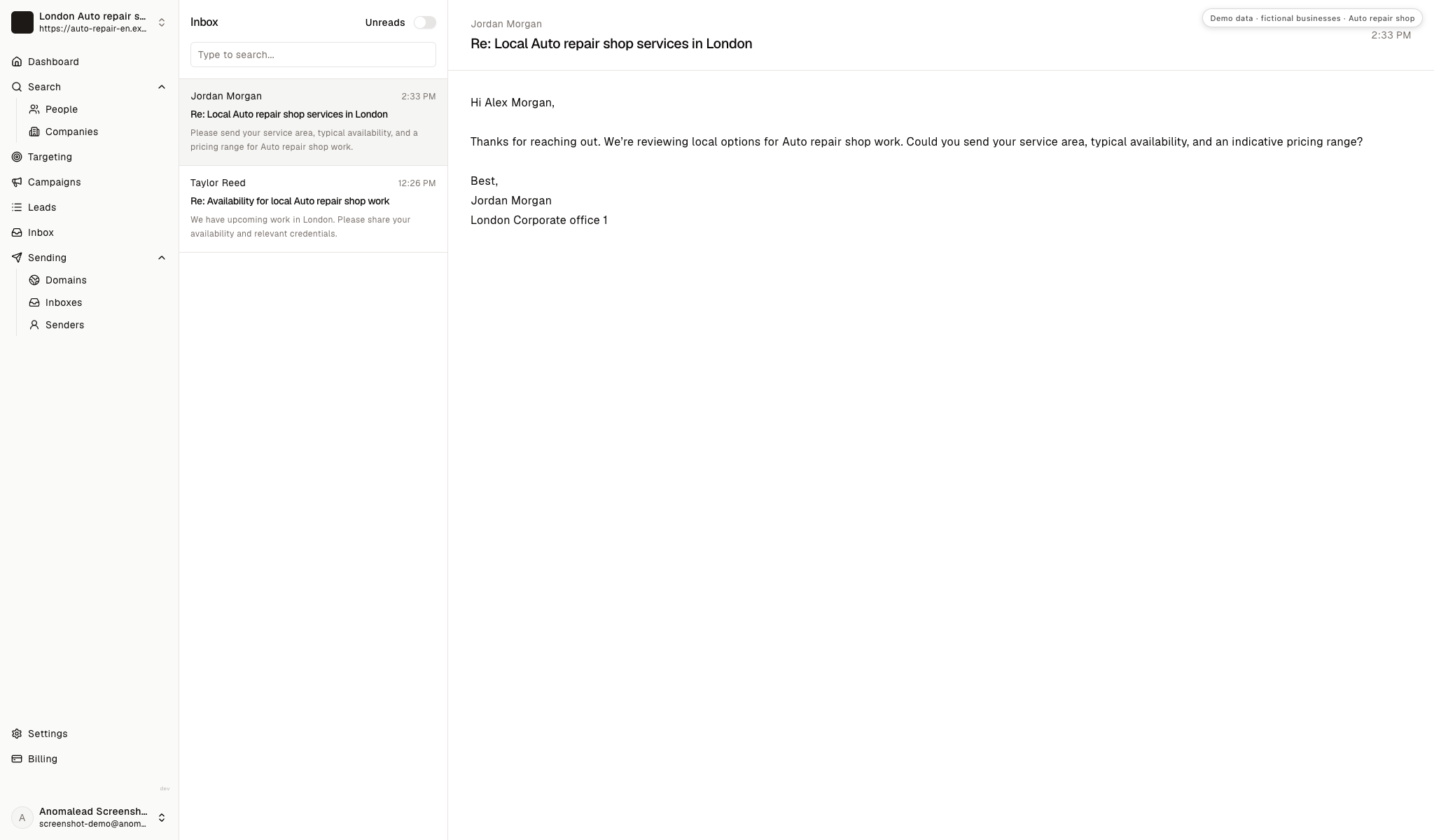
Section titled: Read the fleet questions in the inboxTwo fictional replies appear: Jordan Morgan asks about coverage, availability, and indicative pricing; Taylor Reed asks about upcoming work and credentials. They are demo data, not real fleet enquiries.
Answer what was asked, then confirm vehicle types, depot, and approvals before estimating the work.
Answer fleet enquiries with scope and next steps
Section titled: Answer fleet enquiries with scope and next stepsA fleet reply can reveal the vehicle mix, timing, or buying process. Answer what you can verify and keep any estimate conditional on the repair scope.
A contact asks for coverage, availability, and a price range
Section titled: A contact asks for coverage, availability, and a price rangeJordan Morgan asks for the shop’s service area, normal availability, and an indicative price range for auto repair work.
State where you work and whether vehicles come to the shop or use a confirmed collection option. Describe availability accurately, then ask for vehicle class and repair details before estimating.
Ask whether the fleet uses purchase orders or a standard approval process.
A practical first reply could say:
Hi Jordan,
We cover the areas listed in our service overview and can confirm a booking window once we know the vehicle and repair type. Could you share the vehicle classes and whether work is booked centrally or through each depot? We can then suggest the right next step and explain what we would need to prepare an estimate.
Best,
Alex Morgan, London Auto repair shop Services
A contact has upcoming work and wants credentials
Section titled: A contact has upcoming work and wants credentialsTaylor Reed says a project may be coming up and asks for availability, repair scope, and relevant qualifications.
Send current qualifications, insurance, and service details that apply to the requested vehicles. Separate routine maintenance from work you refer elsewhere.
Ask when vehicles are available and who approves estimates before reserving a slot.
You could keep the follow-up grounded:
Hi Taylor,
Thanks for outlining the request. I can send the shop information relevant to the vehicle classes we service. Before confirming a slot, could you let me know which depot the vehicles use and who approves repair estimates?
Regards,
Alex Morgan
They already use a national garage network
Section titled: They already use a national garage networkThe fleet contact says head office routes all repairs through an existing supplier network.
Ask whether local overflow or specialist work has a separate vendor process. If not, respect the agreement and record when a review may occur.
They need a repair the shop cannot take on
Section titled: They need a repair the shop cannot take onA fleet manager asks about heavy vehicles or specialist diagnostics outside the shop’s equipment and training.
State the limit clearly. Offer an introduction only if you have a suitable partner and permission to refer; otherwise close politely.
Make the next fleet list more specific
Section titled: Make the next fleet list more specificCompare which fleet type asked for work your shop can deliver and which requirements would strain the schedule. Narrow the next list to one operating pattern, such as van-based service teams.
Before sending, check the contact role, verify one company detail, and make sure the shop can answer likely follow-up questions. The auto insurance prospecting guide covers a related fleet-partner angle.
Questions auto repair shops ask about fleet clients
Section titled: Questions auto repair shops ask about fleet clientsWho should an auto repair shop contact about fleet maintenance?
Section titled: Who should an auto repair shop contact about fleet maintenance?Start with a fleet manager, transport manager, workshop coordinator, or operations lead who knows how vehicles are booked and repairs approved. At a small operator the owner may decide; multi-depot businesses can split central purchasing and local scheduling.
What should a shop verify before pitching a fleet?
Section titled: What should a shop verify before pitching a fleet?Check vehicle classes, service locations, repair scope, booking steps, and estimate approvals. Confirm that your staff, equipment, insurance, parts access, and available bay time fit the work.
Are the companies and contacts in these screenshots real?
Section titled: Are the companies and contacts in these screenshots real?No. The screenshots show fictional records such as London Corporate office 1 and fictional contacts Jordan Morgan and Taylor Reed. They are not customers, real fleet accounts, or campaign results.
What does the ROI calculator predict for fleet work?
Section titled: What does the ROI calculator predict for fleet work?It does not forecast demand, repair volume, profit, or campaign performance. Enter your own account-value and sales assumptions to consider whether fleet prospecting fits your shop.
Should a shop promise same-day repairs in its first email?
Section titled: Should a shop promise same-day repairs in its first email?Only promise same-day repair when the shop can provide it for that vehicle and job. First ask about the fleet’s process, then confirm realistic response and completion times.