


Solar lead generation works best when an installer approaches property managers who can bring a building owner into a credible rooftop assessment. Start with managed portfolios that fit your service territory, then qualify who controls the roof, what the building needs and how a project could be reviewed.
A company profile can suggest a prospect, but it cannot confirm roof condition, electrical readiness or permission to change a building. Use B2B prospecting fundamentals to build a researched shortlist, then ask the property questions that make a solar conversation useful.
Key takeaways
- Target property managers who can identify the building owner and explain how a rooftop project is approved.
- Qualify roof responsibility, replacement plans, electrical constraints and site access before suggesting an assessment.
- Address the manager's next decision, such as collecting building records or arranging owner approval, rather than promising savings.
- Treat company-search results as research leads; confirm technical fit with the people responsible for the property.
Property managers who can bring owners into a solar review
Section titled: Property managers who can bring owners into a solar reviewPrioritize property-management teams that know who controls each roof and can coordinate a first conversation with that owner. Their role is often to gather building information and route a proposal, while investment approval sits elsewhere.
- Commercial portfolio managers: They may oversee offices, warehouses or retail sites with different roof structures and lease arrangements. Ask whether they manage the property directly or report to an asset owner who approves capital work.
- Multifamily and mixed-use operators: These managers coordinate resident communication, common-area access and owner or board review. A solar assessment needs a clear route for roof access and a way to explain possible disruption before anyone schedules a visit.
- Facilities and building-operations teams: They can identify electrical rooms, roof access rules, equipment conflicts and maintenance records. They may be strong technical contacts even when a portfolio director or owner signs off on a proposal.
- Third-party managers with active capital plans: A management firm may coordinate vendors across several properties, but each building can have a different owner, lease structure and approval path. Find out whether the manager can introduce the owner before treating a portfolio as one opportunity.
Use a practical lead research workflow to find organizations, then separate the manager who coordinates the work from the owner who approves it.
Qualify the property before you enrich a contact
Section titled: Qualify the property before you enrich a contactA solar prospect is worth pursuing when its building authority, physical conditions and review process align with what your installation team can deliver. Check these points before asking a contact to spend time on a proposal.
- Roof control and ownership: Confirm who owns the building, who can authorize access and whether a tenant or another party holds relevant roof rights. A property manager may organize a discussion but cannot always approve a survey or installation.
- Roof condition and planned works: Ask whether the roof has a known maintenance or replacement plan. Solar equipment can affect future roof work, so the owner and installer should understand the sequence before a technical assessment is arranged.
- Electrical and utility context: A site review may need information about service capacity, meter arrangements, existing equipment and the process for connecting a generation system. Do not infer suitability from a building category or visible roof area.
- Access and occupied-site constraints: Clarify roof access, working hours, loading areas, resident or tenant notices and any security process. Crane access, fragile surfaces and equipment rooms can change what a survey requires.
- Decision route and project timing: Find the person who gathers technical records, the person who approves capital spending and the meeting or planning cycle where the project will be reviewed. Ask whether the owner is exploring options or has already committed to another provider.
For roof condition or replacement planning, a conversation with a commercial roofing team can clarify which building questions need an answer before solar equipment is considered.
About the demo workspace
The screenshots use the fictional operator London Solar energy company Services. London Property management company 1, London Property management company 2, London Property management company 3, Jordan Morgan, Taylor Reed and both replies are invented demo records. They are not Anomalead customers or real campaign results.
A solar lead generation shortlist starts with building fit
Section titled: A solar lead generation shortlist starts with building fitA useful solar lead generation shortlist begins with property managers whose portfolios sit inside your service area and include buildings you can assess. Search results are a way to discover organizations, not evidence that a particular roof can support a project.
Choose a coverage area your survey and installation teams can serve, then review each company for portfolio type, ownership structure and a plausible reason to discuss on-site generation. Keep a note of what you have verified and what still needs a direct question.
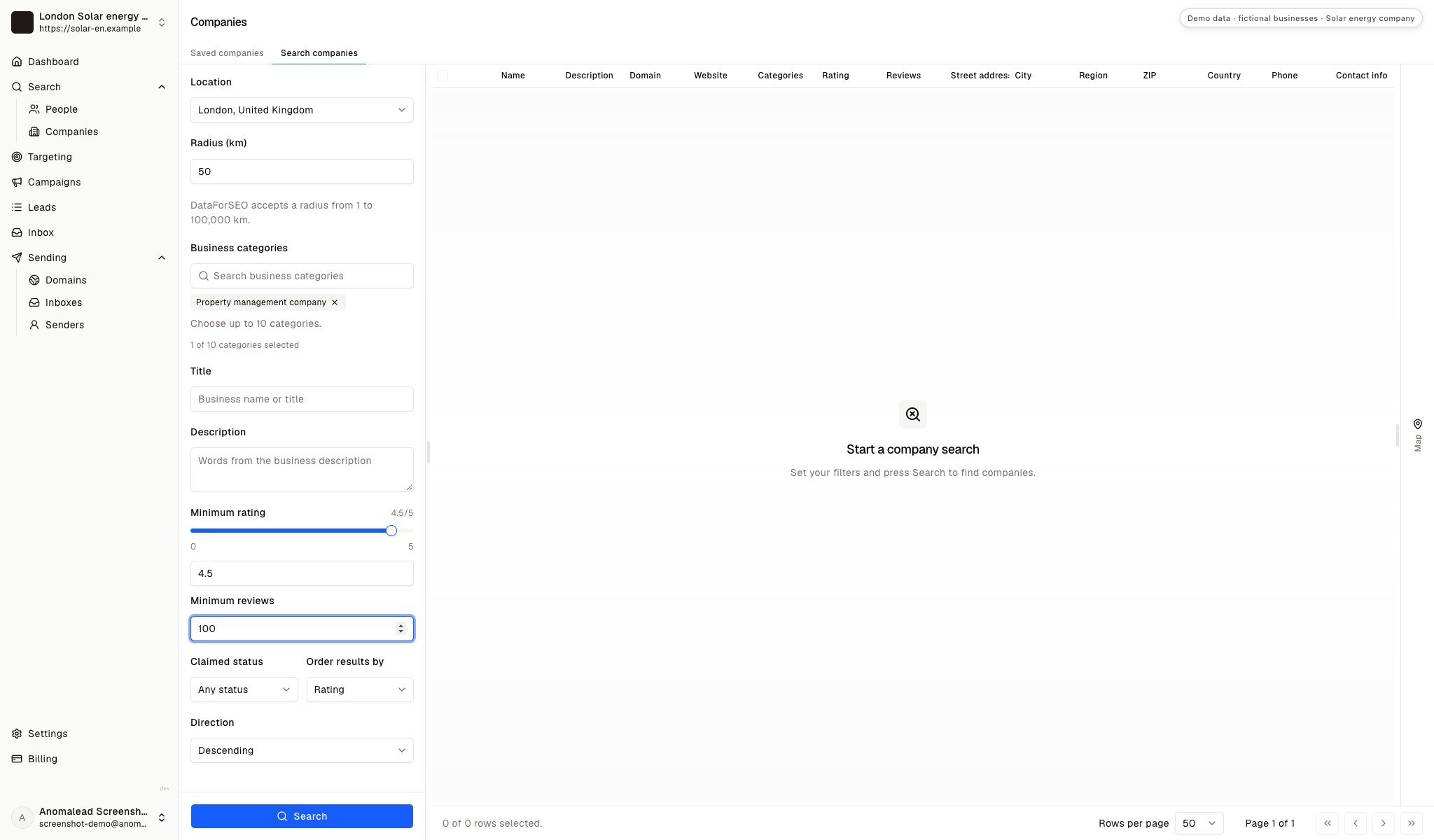
Set search filters around your territory
Section titled: Set search filters around your territoryChoose the property-management category and a service area your team can reach for an initial assessment. The filters help define the company search; they do not reveal roof ownership or technical suitability.
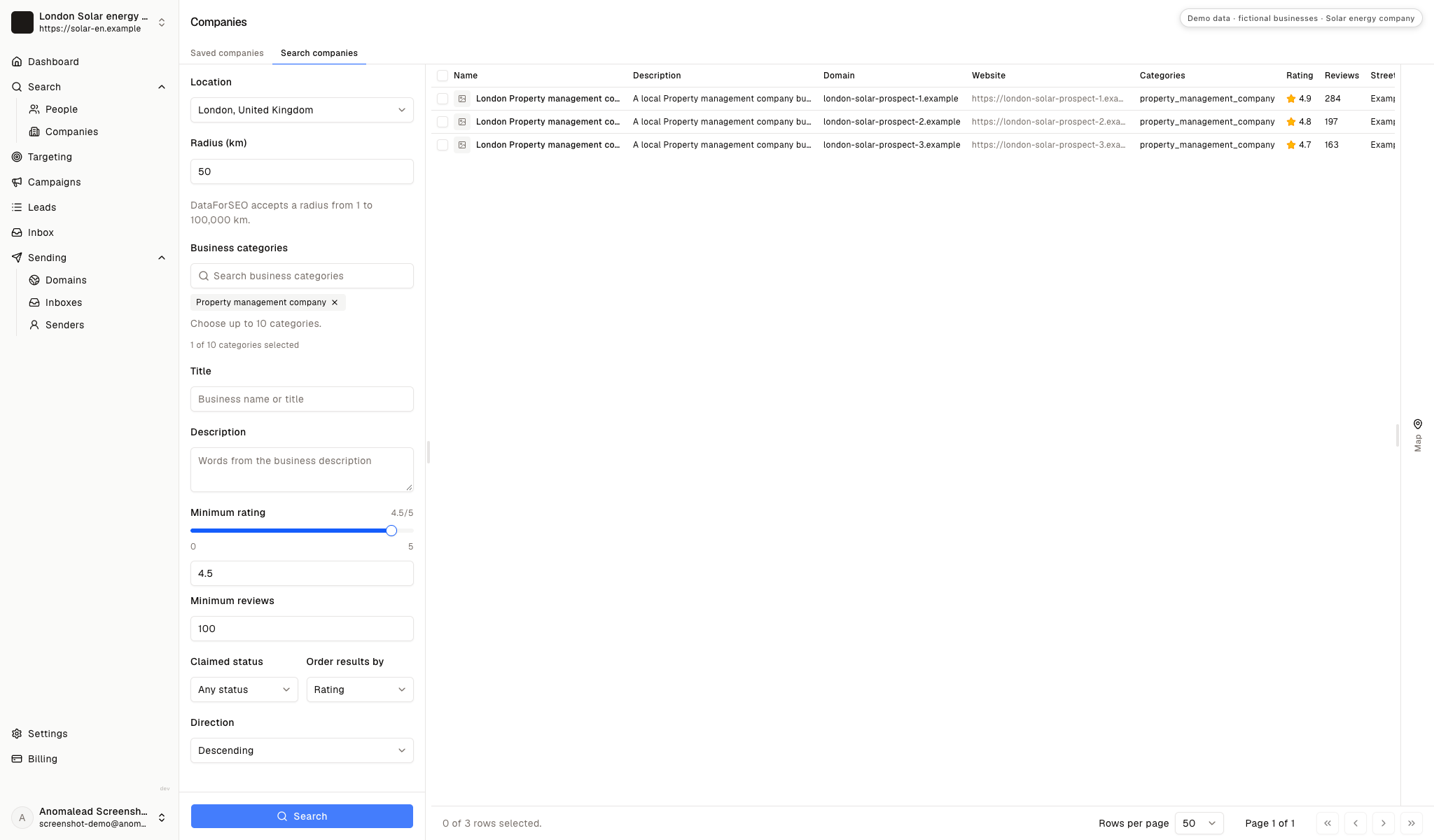
Review company records as research leads
Section titled: Review company records as research leadsThe results list contains fictional businesses with profile details, not building records. Review each organization's portfolio and ownership relationships elsewhere before deciding whether solar is a relevant topic.
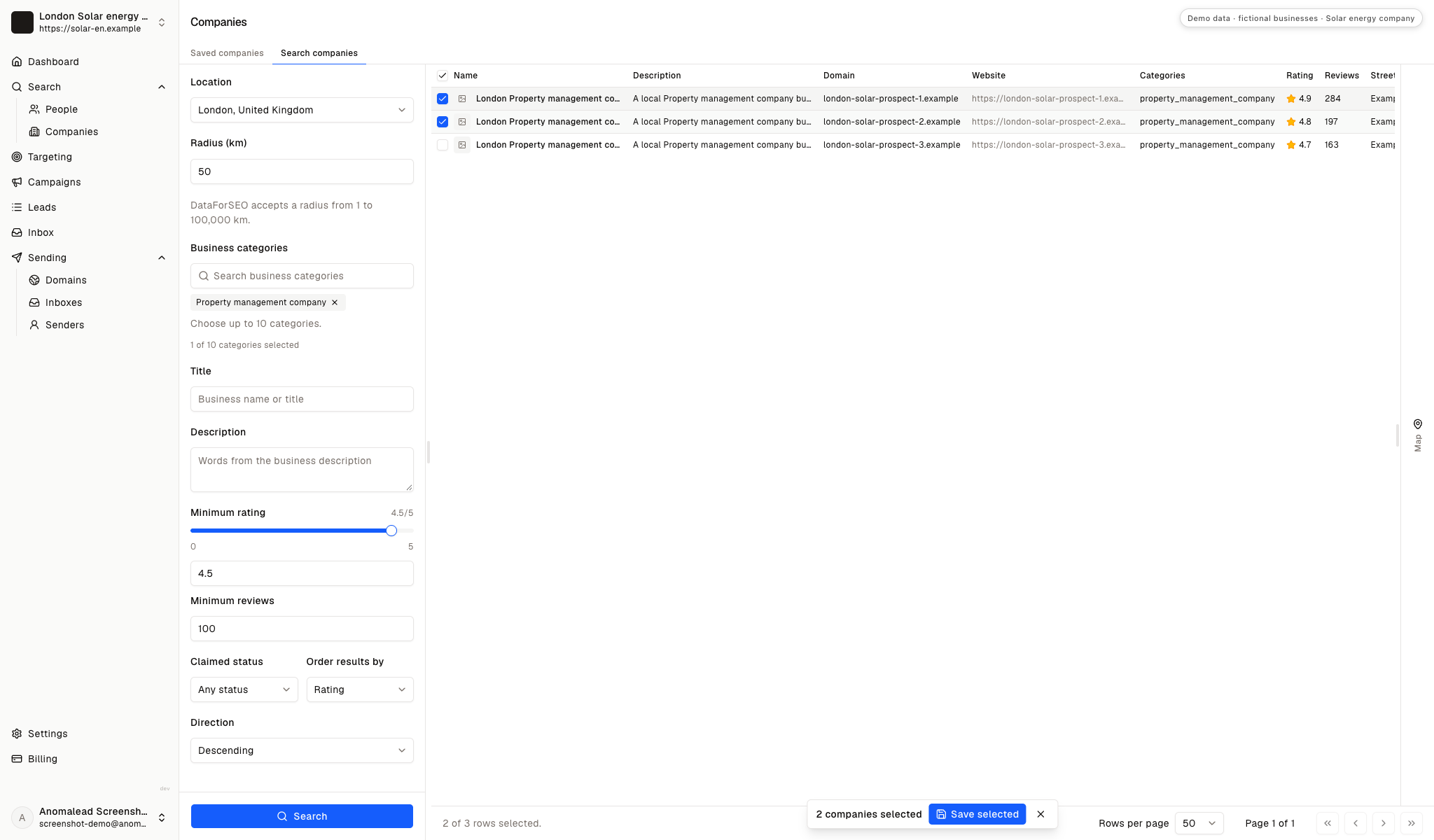
Save only firms that pass an initial screen
Section titled: Save only firms that pass an initial screenSave a company only when its location and property-management role justify further research. A shortlist is an internal work queue, not a claim that the selected firms need an installation.
Find the contact who can assemble a rooftop review
Section titled: Find the contact who can assemble a rooftop reviewStart with the property manager who can identify the owner, collect building records or introduce the facilities lead. The title alone is not enough: confirm whether this person coordinates vendors, handles technical operations or routes capital proposals.
A partnerships contact can open the conversation, while a facilities manager may know roof access and electrical documentation. Keep both roles in view, and ask who should join before proposing a site visit.
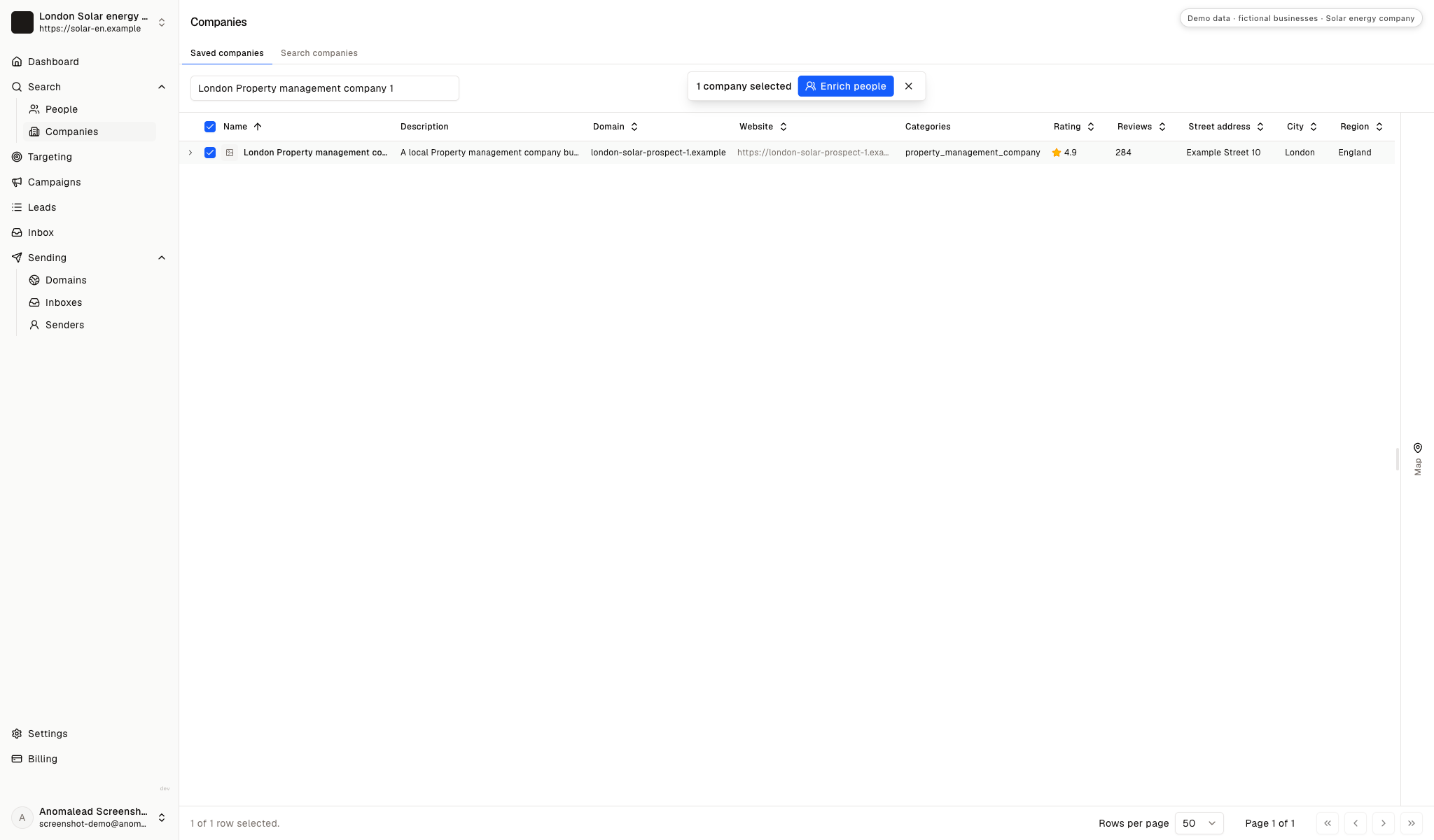
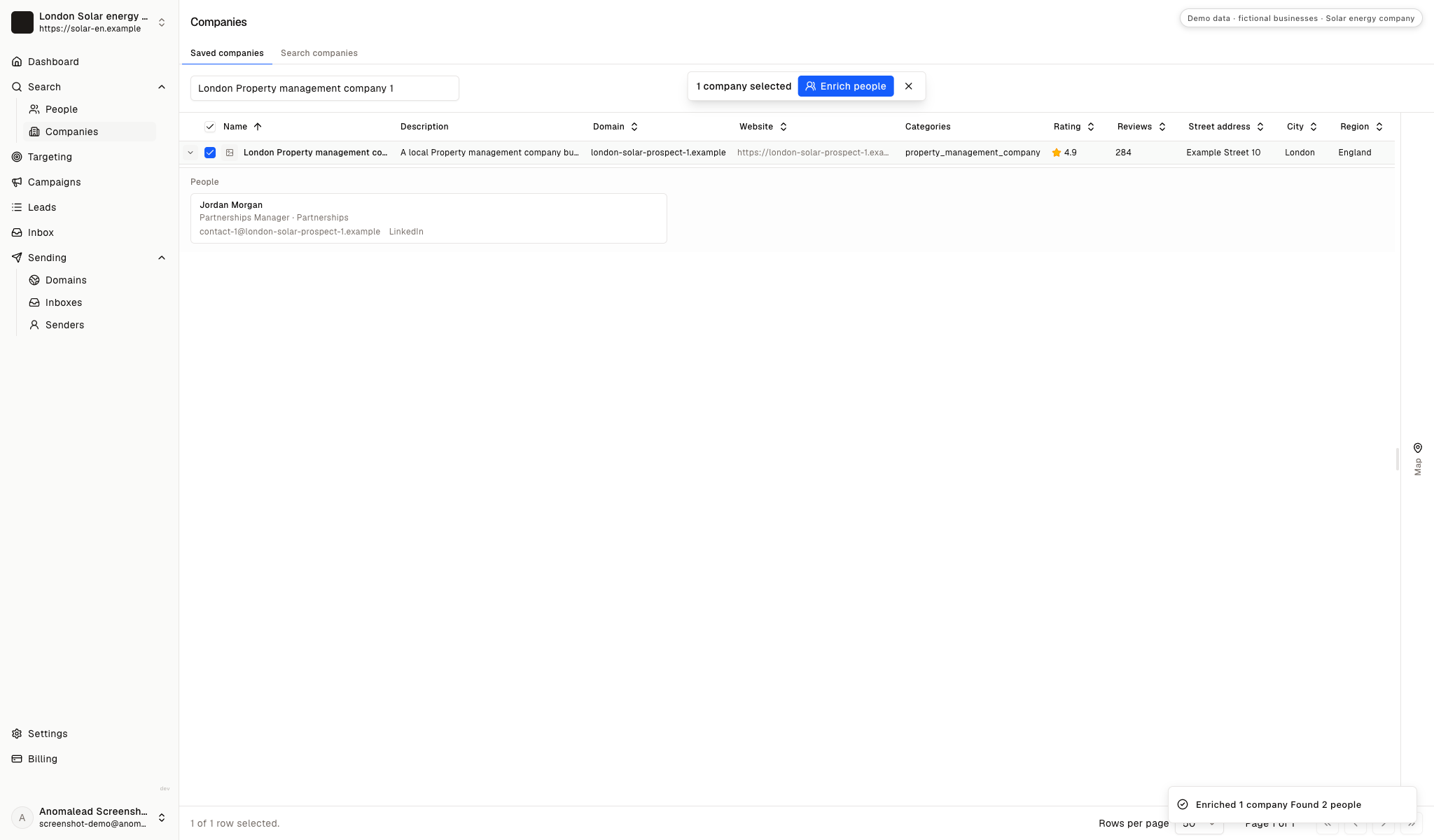
Recheck the saved portfolio candidates
Section titled: Recheck the saved portfolio candidatesBefore contact discovery, verify that the company is still a sensible fit for your coverage area and intended project type. If the profile gives no clue about managed properties, research the firm before moving forward.
Compare contact roles before choosing a recipient
Section titled: Compare contact roles before choosing a recipientThe demo returns two contacts for the selected company. Review each person's stated role and look for a path to the facilities or asset decision-maker; enrichment does not establish buying authority.
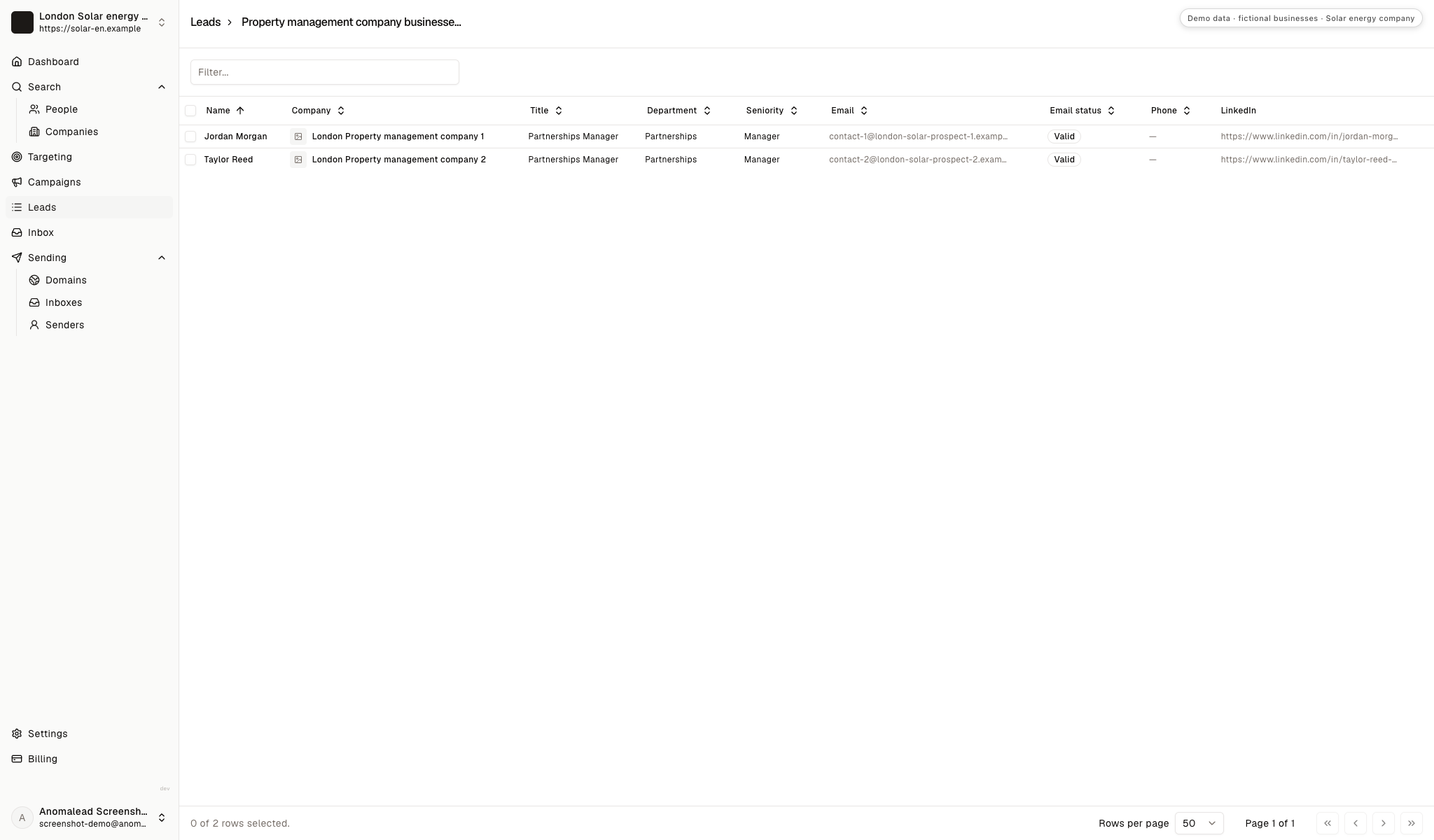
Keep the working list tied to a clear buyer
Section titled: Keep the working list tied to a clear buyerSave contacts only when their role connects to a property or owner you intend to research. Leave out people whose responsibilities do not touch building operations, vendor coordination or investment review.
Assess project scope before assigning account value
Section titled: Assess project scope before assigning account valueA managed property may involve an assessment, design coordination and installation planning, but the commercial scope depends on the building and the owner's decision process. Use the calculator to explore how your own project assumptions relate to outreach, not to estimate a property's energy savings.
Before using any estimate in a proposal, gather the site information and technical review your team requires. A company profile cannot establish generation potential, operating savings or project feasibility.
Enter your own assumptions for deal value, qualified meetings and close rate. The output is a planning exercise, not a forecast, benchmark, quote or promised result.
Do the math on one good deal
If one new customer is worth thousands, you don’t need magic. You need a few more meetings a month.
Projected monthly results
- Deals closed
- 2.0
- Projected revenue
- £10,000
- Growth plan (1 business)
- £79/mo
- ROI
- 12,558%
Conservative math on meetings you already believe you can book. One closed deal often pays for a year of Anomalead.
Keep project economics separate from early prospecting. A first conversation should establish ownership, building records and permission to explore the site.
Write about the owner's next decision, not panel features
Section titled: Write about the owner's next decision, not panel featuresA property manager is more likely to engage when your first note makes the next step easy to understand. Explain what information you would review, how you coordinate with the owner and which questions need a technical answer before an installation proposal is possible.
Keep a campaign to one property-management segment and one practical request. Use clear cold-email structure to keep the message brief, and mention roof or electrical details only when you can explain why they matter.
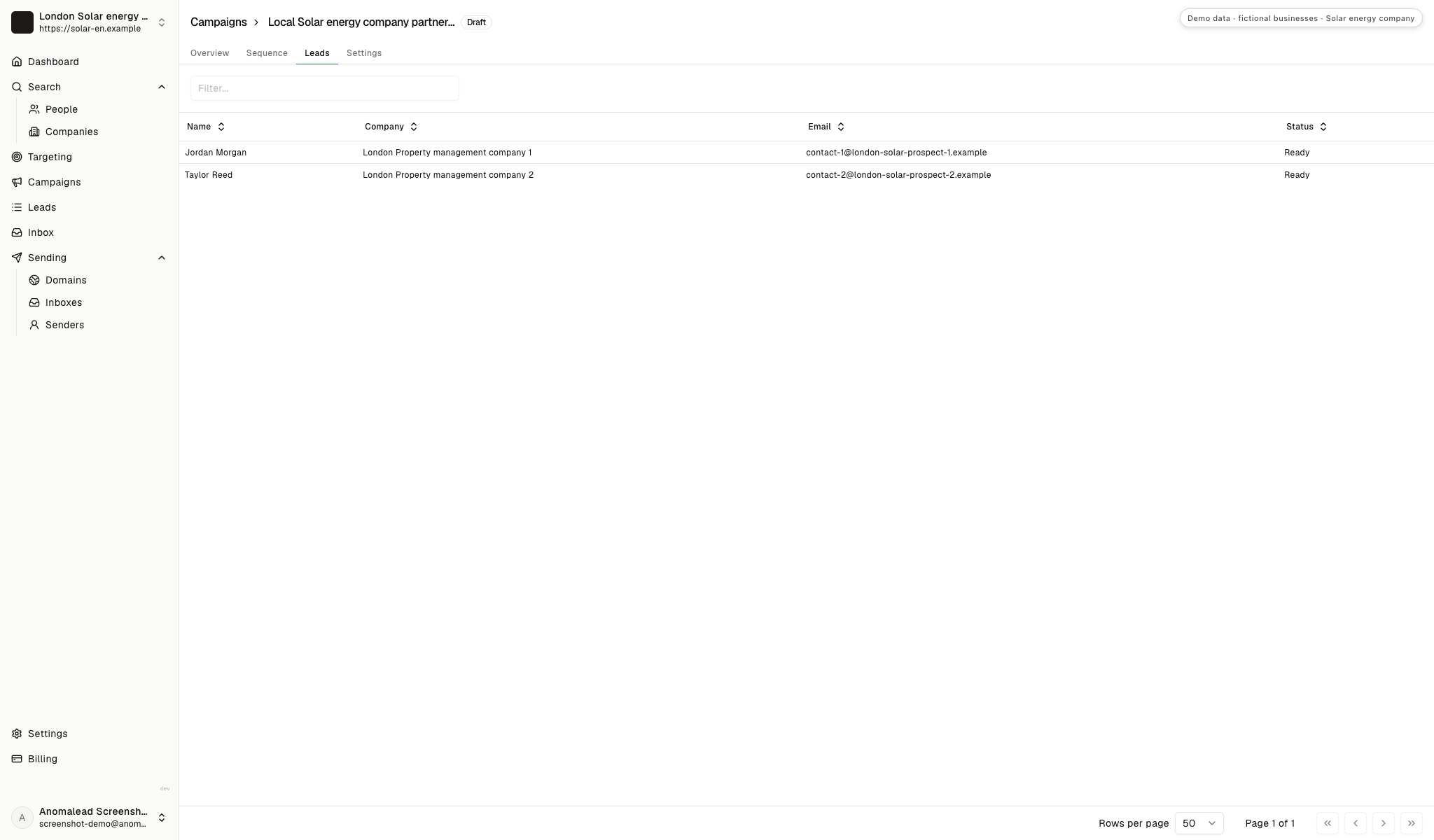
Choose recipients with a reason to reply
Section titled: Choose recipients with a reason to replyThe draft campaign has two recipients. Check that each person belongs to an account you have researched and that the message fits their role before adding them to an outreach sequence.
Inspect each follow-up before launch
Section titled: Inspect each follow-up before launchThe sequence view shows an initial email and scheduled follow-ups. Replace generic service claims with a specific question about the property's owner, roof plans or review process, and stop when a contact responds.
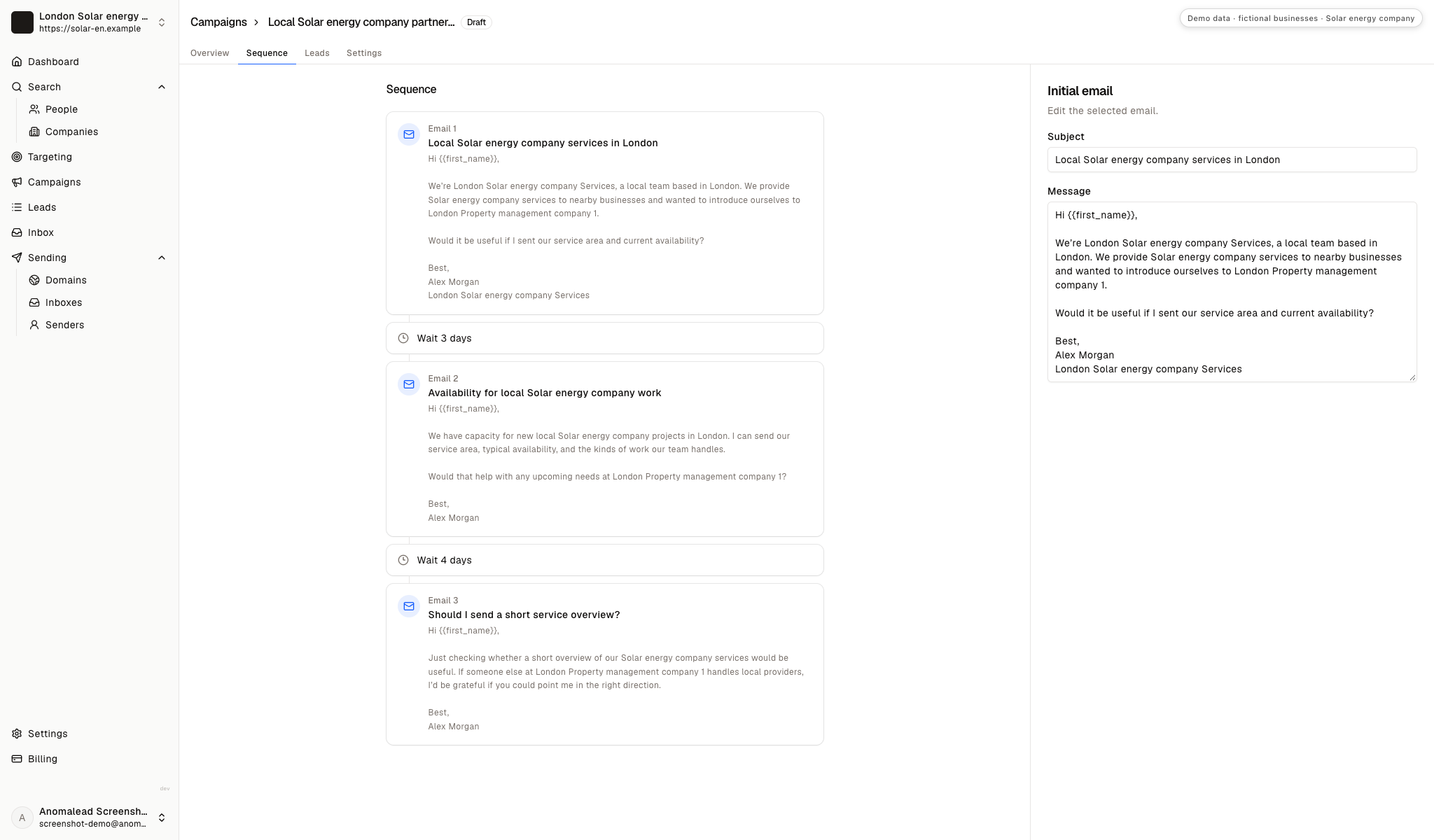
Offer a useful first step
Section titled: Offer a useful first stepThese examples are written for a property manager who can coordinate an introduction, not as a claim that a site is already suitable. Confirm each detail before sending and adapt the request to the recipient's role.
First note to a portfolio manager
Subject: A first step for a managed rooftop
Hi Jordan,
I’m Alex Morgan. We help property teams scope rooftop solar conversations before an owner reviews an installation proposal. The first discussion is about roof responsibility, planned maintenance and the records a technical team would need.
Would you be the right person to coordinate an introductory review with the building owner?
Best, Alex Morgan
Follow-up when facilities may own the detail
Subject: Who coordinates roof and electrical records?
Hi Taylor,
I’m following up on whether a rooftop assessment is relevant to any property your team manages. Before suggesting a visit, we would want to understand roof access, planned replacement work and who can share the available electrical information.
Does your facilities lead handle those records, or should I speak with someone else?
Regards, Alex Morgan
The sender names match the fictional inbox. Keep any claim about qualifications, service territory or project timing limited to what your team can verify.
Read inbox replies as separate project signals
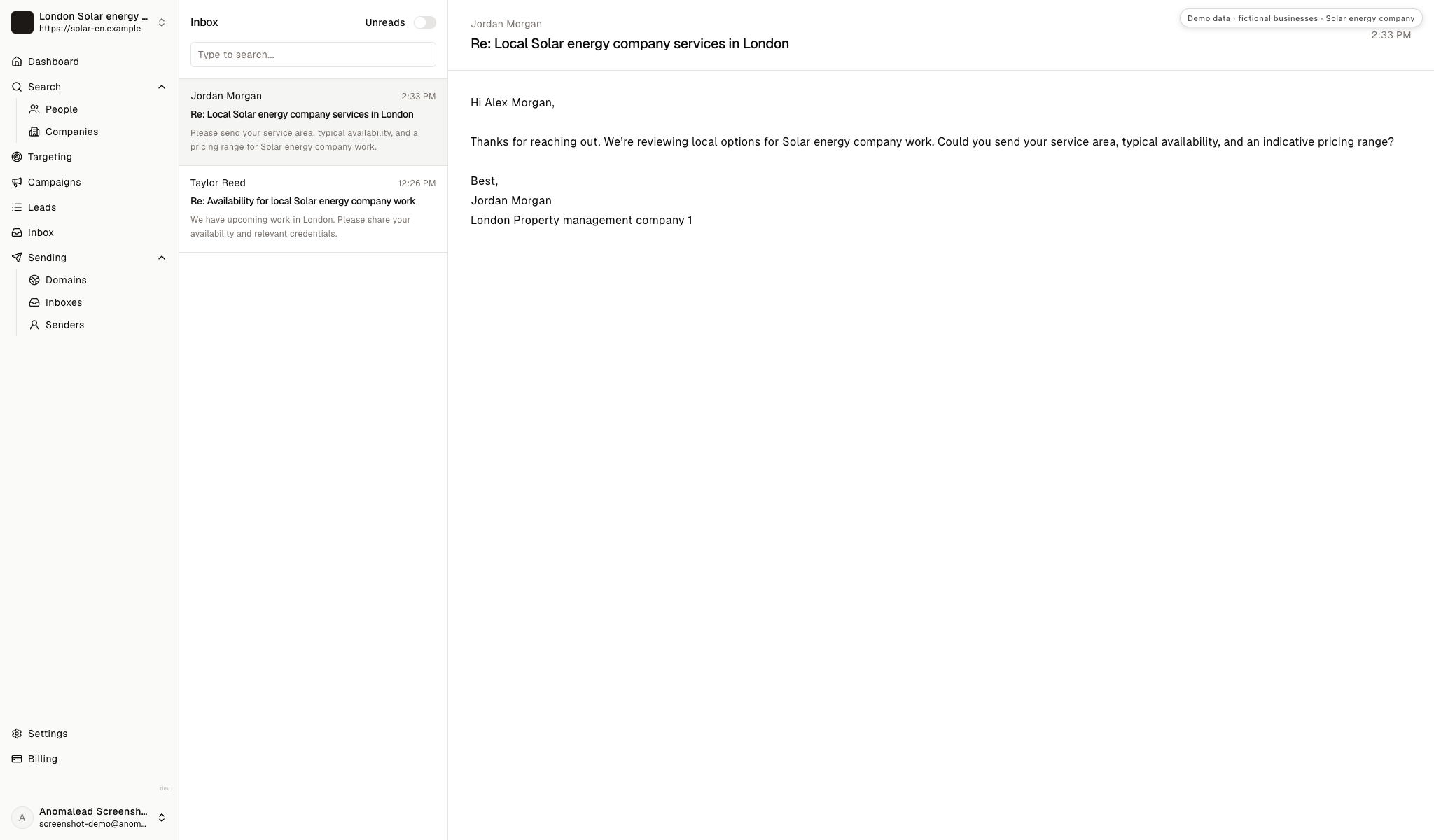
Section titled: Read inbox replies as separate project signalsThe inbox shows a request for service coverage and an enquiry about team availability and credentials. Neither reply confirms that a property has an approved or technically suitable solar project.
Answer solar enquiries without overstating project readiness
Section titled: Answer solar enquiries without overstating project readinessTreat each reply as an invitation to clarify scope, authority and the next useful document. Keep the discussion grounded in what is known about the building, and do not turn a request for information into a promise about savings or feasibility.
Jordan asks for coverage, availability and a price range
Section titled: Jordan asks for coverage, availability and a price rangeCould you send your service area, typical availability, and a pricing range for Solar energy company work?
This is the fixture reply from Jordan Morgan at London Property management company 1. Give an accurate service territory and explain what kind of preliminary information your team can share without inspecting the roof. Avoid a project quote until the building, scope and approval path are understood.
A grounded response could be:
Thanks, Jordan. Our team can confirm coverage once we know the property location and project type. Before discussing a proposal, we would need to understand who controls the roof, its maintenance plan and whether the owner is open to an assessment. Are you coordinating a particular building?
Taylor asks about upcoming work and credentials
Section titled: Taylor asks about upcoming work and credentialsWe have upcoming work in London. Please share your availability and relevant credentials.
Taylor Reed's fixture reply mentions possible work but does not identify a site. Send only current qualifications and insurance details that apply to your services, then ask whether the opportunity concerns an existing building or a planned project.
You could reply:
Thanks, Taylor. I can share our current service information and the qualifications relevant to the work we perform. Could you tell me the property type, the decision stage and who can provide roof and electrical records? That will help us confirm whether a site discussion makes sense.
The manager already has a solar contractor
Section titled: The manager already has a solar contractorOur portfolio already has a solar provider, so we are not looking to replace them.
Respect the existing relationship and do not argue about the incumbent. Ask whether the manager ever needs a second assessment for a different property, a separate project scope or coverage when the current provider is unavailable. If none applies, ask when it would be appropriate to reconnect.
A low-pressure answer might be:
Understood. I would not suggest changing a working arrangement. If a separate property needs an independent assessment or your current provider cannot cover a project, would it be useful to keep our details on file?
The buyer wants a savings guarantee before sharing site data
Section titled: The buyer wants a savings guarantee before sharing site dataCan you confirm the savings before we arrange a roof assessment?
Do not promise a result from a company profile or an aerial impression. Any estimate depends on building records, usage information, roof condition, system design and the applicable connection process; the technical team should explain assumptions in a formal assessment.
You can set a clear boundary and keep the conversation moving:
We cannot confirm savings without reviewing the site and the information behind the estimate. If the owner is open to an initial assessment, we can first list the records needed and explain what the review can and cannot establish. Would that be a useful next step?
Build the next outreach batch around a manageable project segment
Section titled: Build the next outreach batch around a manageable project segmentChoose one type of managed property, verify the owner route and note what evidence is still missing before you contact anyone. Draft a short message around that buyer's review process, then keep the next action limited to a conversation or document request you can fulfill.
If the discussion turns toward roof replacement, coordinate the sequence with the property's roofing adviser instead of treating solar and roof work as unrelated bids. Cold email examples for business outreach can help you refine follow-ups without losing the building-specific question.
Solar prospecting questions from installers
Section titled: Solar prospecting questions from installersWho should a solar installer contact at a property-management firm?
Section titled: Who should a solar installer contact at a property-management firm?Start with the manager who can identify the owner and coordinate building records or a facilities introduction. Confirm who approves roof access and capital work before treating that contact as the buyer.
What should an installer check before asking for a rooftop assessment?
Section titled: What should an installer check before asking for a rooftop assessment?Clarify roof ownership and maintenance plans, site access, the building's electrical context and the route for owner approval. The installer can then say which records are needed for a technical review.
Can a solar company quote a managed property from public company data?
Section titled: Can a solar company quote a managed property from public company data?A company profile is not enough to establish roof condition, electrical readiness or project scope. Ask for the building information your team needs, then follow its normal assessment process before preparing a proposal.
Are the businesses and replies in the screenshots real?
Section titled: Are the businesses and replies in the screenshots real?No. London Solar energy company Services, the property-management firms, Jordan Morgan, Taylor Reed and the replies are fictional demo records. They are not customers or real campaign results.
Does the ROI calculator predict a property's solar savings?
Section titled: Does the ROI calculator predict a property's solar savings?No. It combines the deal value, meeting volume and close rate you enter to support planning. It does not calculate energy production, savings, project feasibility or a guaranteed return.