


Handyman lead generation works best when property managers can see which small repairs you handle, how you take in work orders, and how you protect tenant access. A clear service boundary turns a broad offer into a practical vendor option for recurring maintenance across a local portfolio. Start with B2B lead generation basics, then apply the process to the buildings and jobs your crew can actually cover.
Property managers do not need another vague promise to fix anything. They need a dependable route for minor repairs, predictable communication when a tenant visit is needed, approval before work expands, and a closeout note they can attach to the property record. This guide shows how to find those buyers, qualify the fit, and write a first email that invites a useful next step.
Key takeaways
- Target property managers who coordinate recurring repair requests across homes or small commercial buildings in your service area.
- Define which jobs you accept, what requires a specialist, and what information you need before scheduling a visit.
- Ask about work-order approval, tenant access, materials, photos and closeout records before agreeing to portfolio coverage.
- Use a short first email to offer verified coverage and availability, then quote only after the scope is clear.
Which property managers are worth approaching?
Section titled: Which property managers are worth approaching?Prioritize buyers who receive repeat small-repair requests and can explain how work is approved. A local property-management portfolio is a better fit than a company that expects unplanned specialist work outside your trade.
- Residential property managers: They coordinate tenant reports, turnover touch-ups and common-area fixes. Ask whether they need one vendor for recurring jobs or a backup for overflow, and how residents are contacted before a visit.
- Small portfolio owners with an operations contact: An owner or manager responsible for several rental properties may value one intake path and consistent closeout records. Confirm that the portfolio has enough work to justify onboarding without implying a guaranteed volume.
- Commercial property managers: Offices and small retail sites can need door hardware, shelving, patching or fixture repairs. Check permitted work hours, building access, site induction and whether tenants or the manager approve the work.
- Letting and facilities teams: These teams may need help preparing units between occupants or resolving non-specialist defects. Distinguish a defined punch-list service from emergency response, which requires a separate capacity and coverage agreement.
Choose one buyer group first. A clear offer for local rental portfolios is easier to qualify than a general message to every business that owns a building.
Qualify the account before offering portfolio coverage
Section titled: Qualify the account before offering portfolio coverageA property manager is a fit when the work order, access plan and approval route match your crew’s operating limits. Use property management prospecting to identify likely buyers, then confirm the details below before adding an account to an active campaign.
- Work-order intake: Find out whether requests arrive through a portal, email or a named coordinator. Ask what a complete ticket includes, such as the unit, reported defect, photos and permission to contact the occupant.
- Job boundary: List the repairs your team can safely and competently complete, such as assembling fixtures, adjusting doors, patching small surface damage or replacing approved hardware. Route electrical, gas, plumbing, structural or other regulated work to a qualified specialist unless your credentials cover it.
- Access and tenant coordination: Agree who books the visit, how occupants receive notice, what identity or sign-in steps apply, and how keys or access codes are handled. Use the manager’s approved channel and retain only the information needed to complete the ticket.
- Estimate and change approval: Ask who approves labor, materials and any change in scope. Do not begin an expanded task because a tenant asks on site; pause and get authorization from the person responsible for the work order.
- Closeout evidence: Clarify whether the manager needs completion notes, before-and-after photos, a materials record or a follow-up recommendation. Confirm any insurance documents, trade qualifications or vendor onboarding records requested for the specific site.
About the demo companies and messages
London Handyman Services, London Property management company 1, London Property management company 2, the contacts and the replies are fictional demo data. They are not Anomalead customers, real companies or evidence of campaign results.
Handyman lead generation starts with a service area you can reach
Section titled: Handyman lead generation starts with a service area you can reachSet the search around a realistic travel boundary, not a city name copied from the demo. Include property-management businesses whose buildings cluster near your base, then review each record before saving it. A strong prospect has a visible portfolio or maintenance function, a local decision-maker and work that matches your defined repair list.
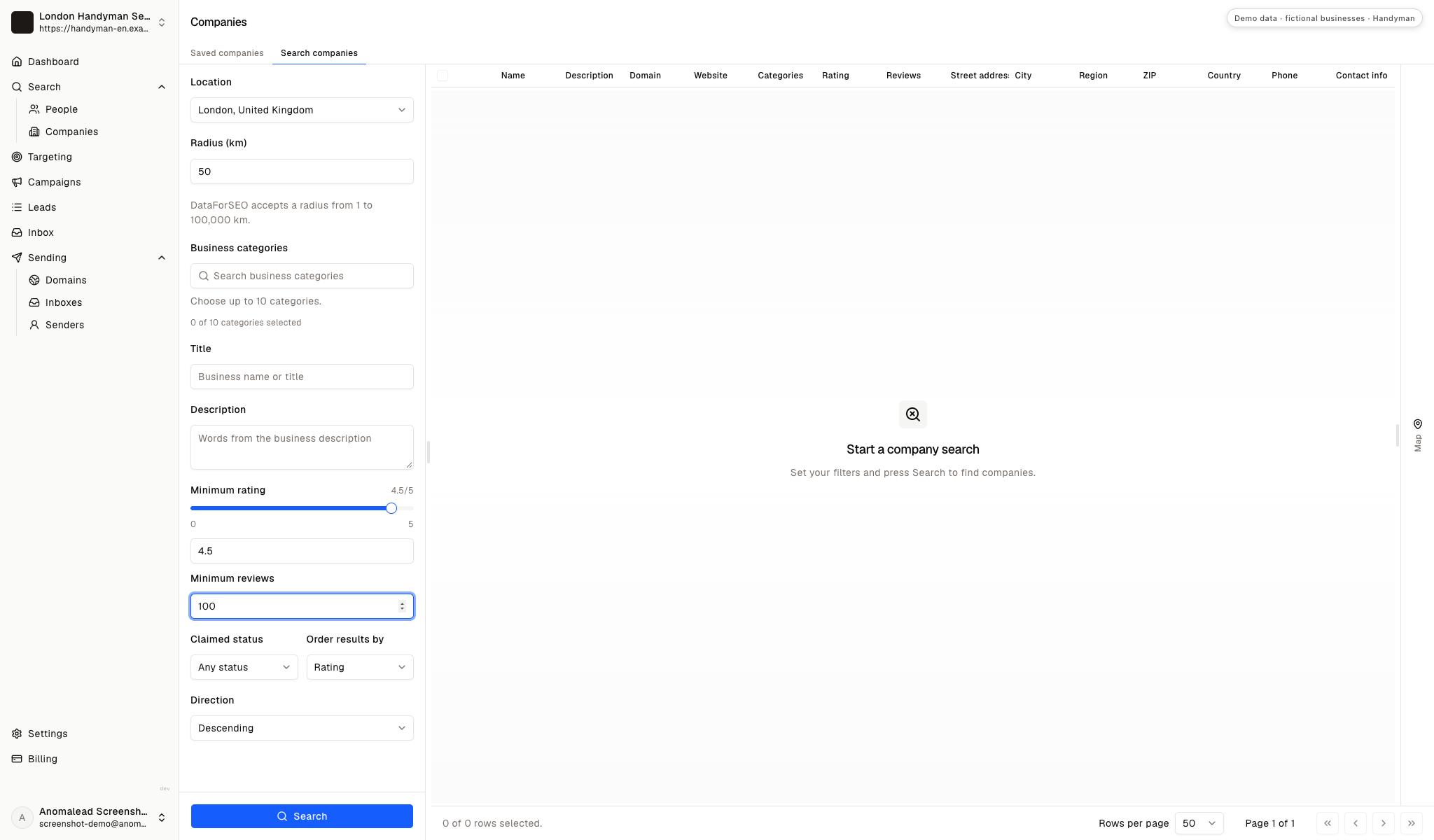
The search screen uses location, radius, category and rating filters. The results are fictional corporate listings with ratings and review counts, so treat them as interface examples rather than proof that a manager buys handyman work.
Set the geography and buyer category
Section titled: Set the geography and buyer categoryChoose a radius your team can cover while allowing for travel, parts pickup and return visits. Select property-management companies as the buyer category, then narrow the search with filters that help you review plausible local accounts.
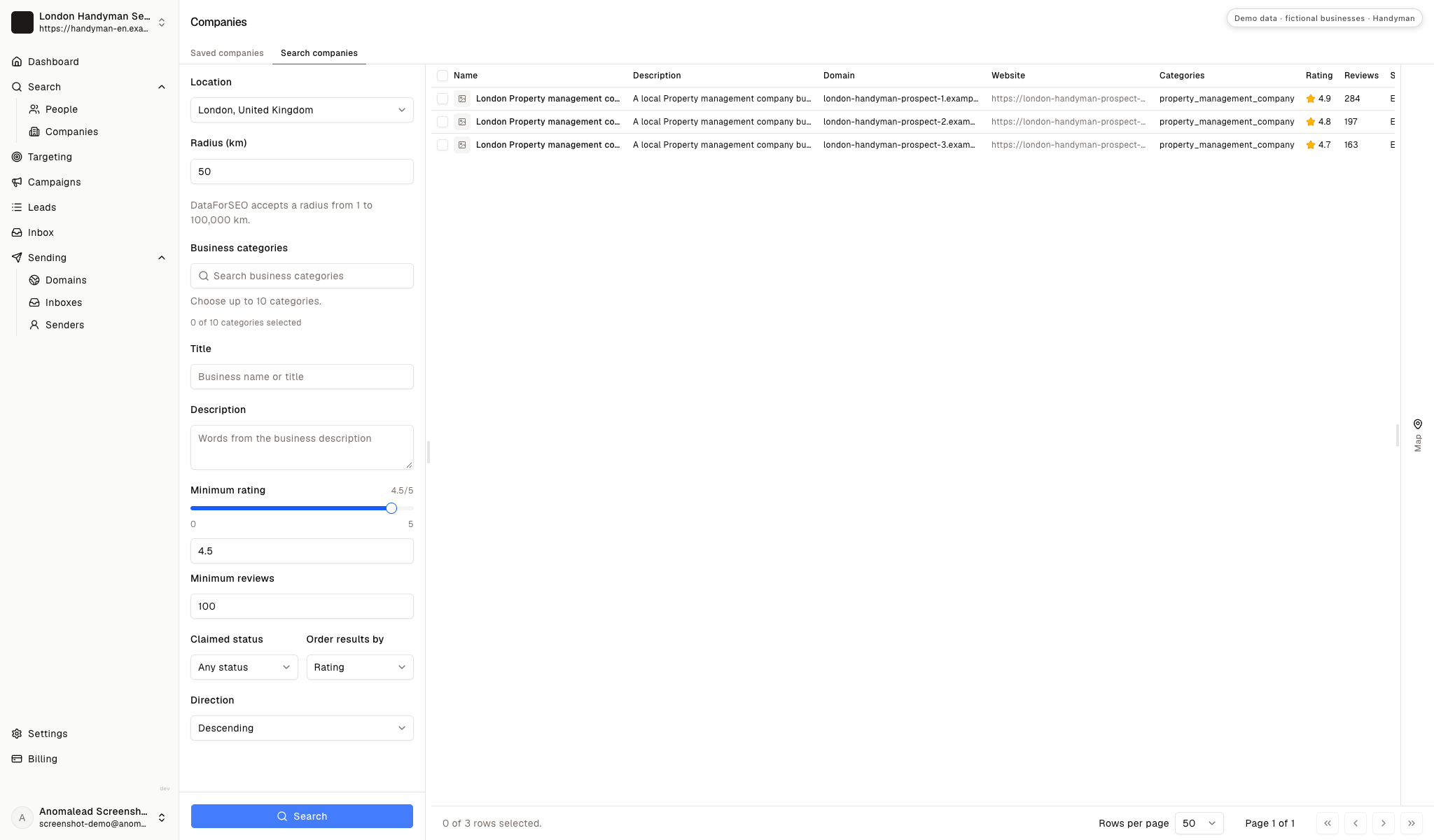
Review the fictional property-management results
Section titled: Review the fictional property-management resultsThe results page lists three fictional businesses with ratings and review counts. Review the business description and likely portfolio fit yourself; the seeded data does not establish that a company has an open repair contract.
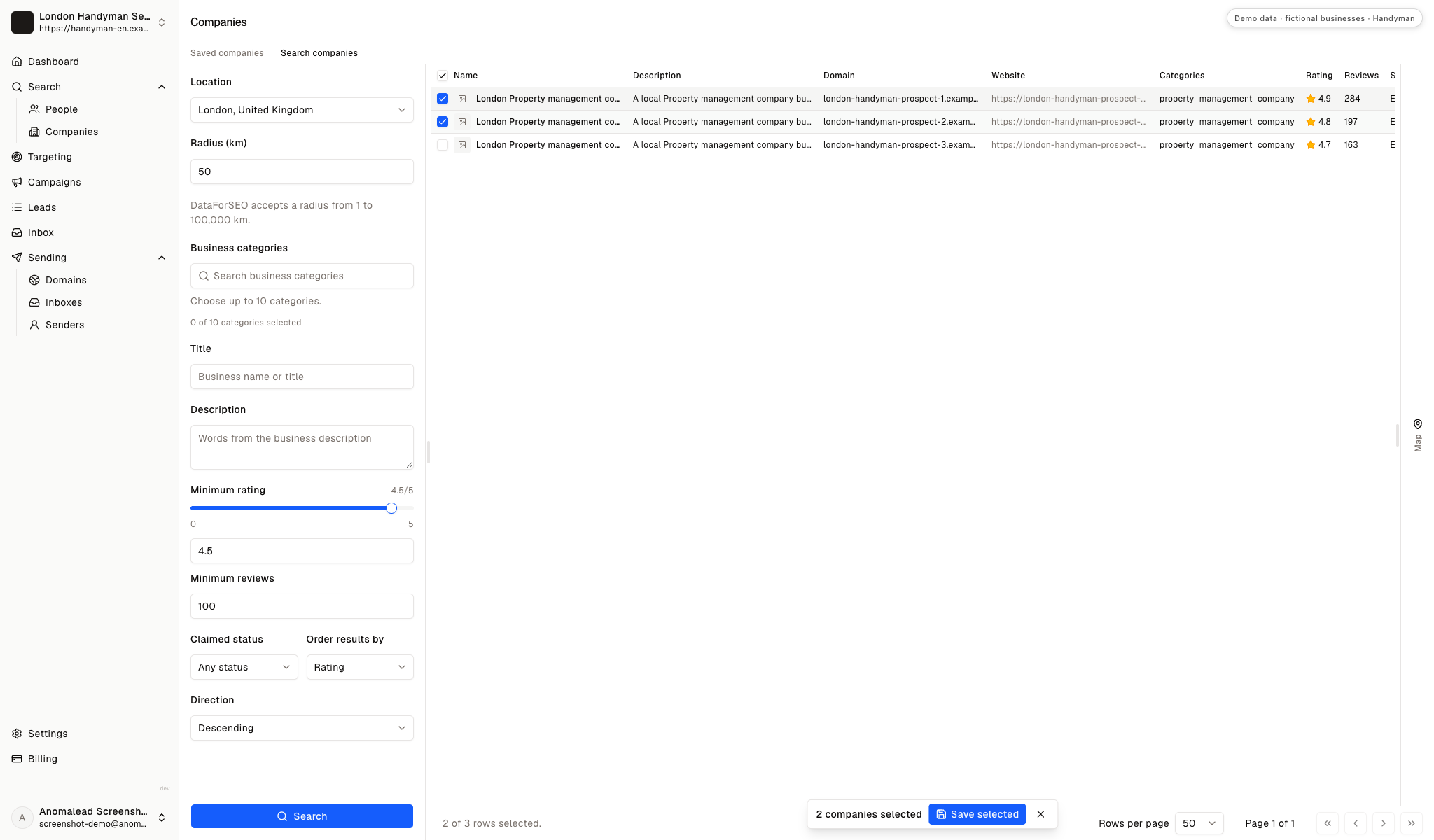
Save only accounts that match your repair scope
Section titled: Save only accounts that match your repair scopeThe demo selects two of the three fictional company results and saves them. In a real search, keep the shortlist to managers whose locations, property types and work-order process fit your service boundary.
Find the person who owns vendor coordination
Section titled: Find the person who owns vendor coordinationFor a small property-management company, the right contact may be a property manager, maintenance coordinator or operations lead. At a larger firm, vendor onboarding and work-order approval can sit with different people, so verify the role before sending a service pitch.
Contact enrichment should support a relevant introduction, not replace account research. Keep your notes about the company and buyer role separate from tenant reports, unit access details and maintenance records.
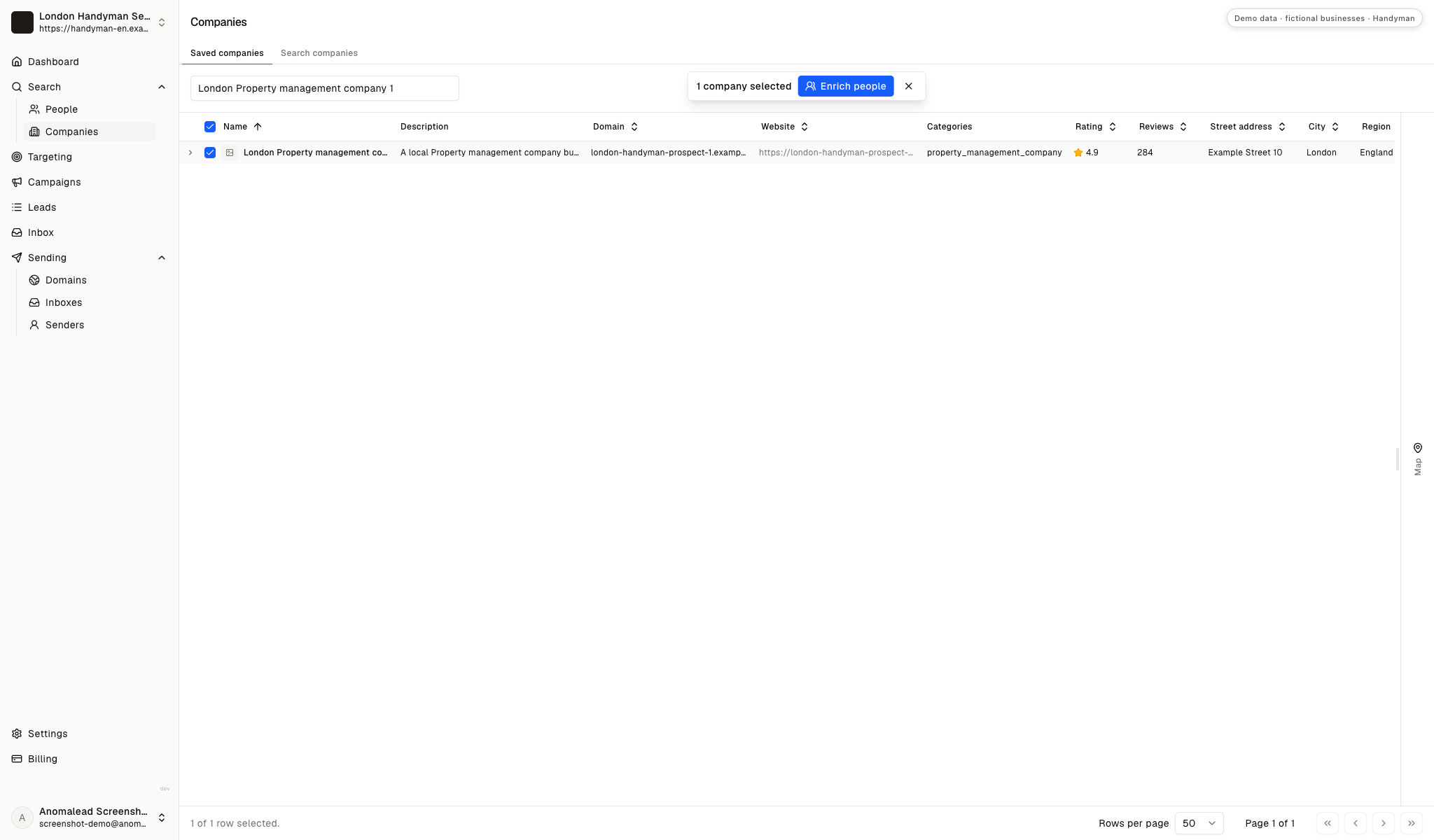
Choose one saved company to research further
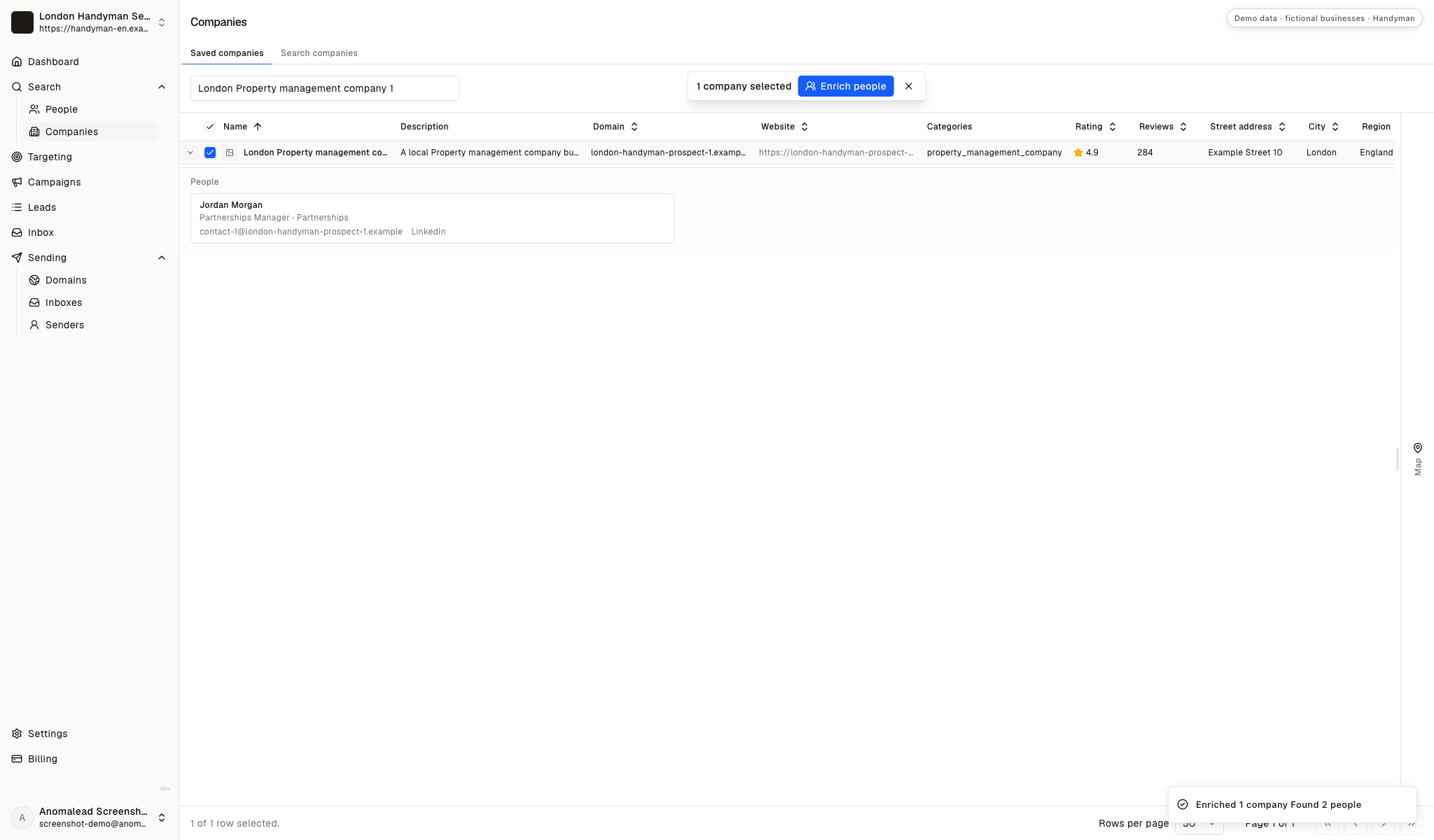
Section titled: Choose one saved company to research furtherThe demo opens a saved company and exposes an Enrich people action. Review the company first, then use that action only when the account appears relevant to your work and service area.
Check the suggested contacts against the buyer role
Section titled: Check the suggested contacts against the buyer roleThe contact view shows two fictional partnerships managers, Jordan Morgan and Taylor Reed. In real account research, confirm that a contact handles property vendors, maintenance or operations before you write.
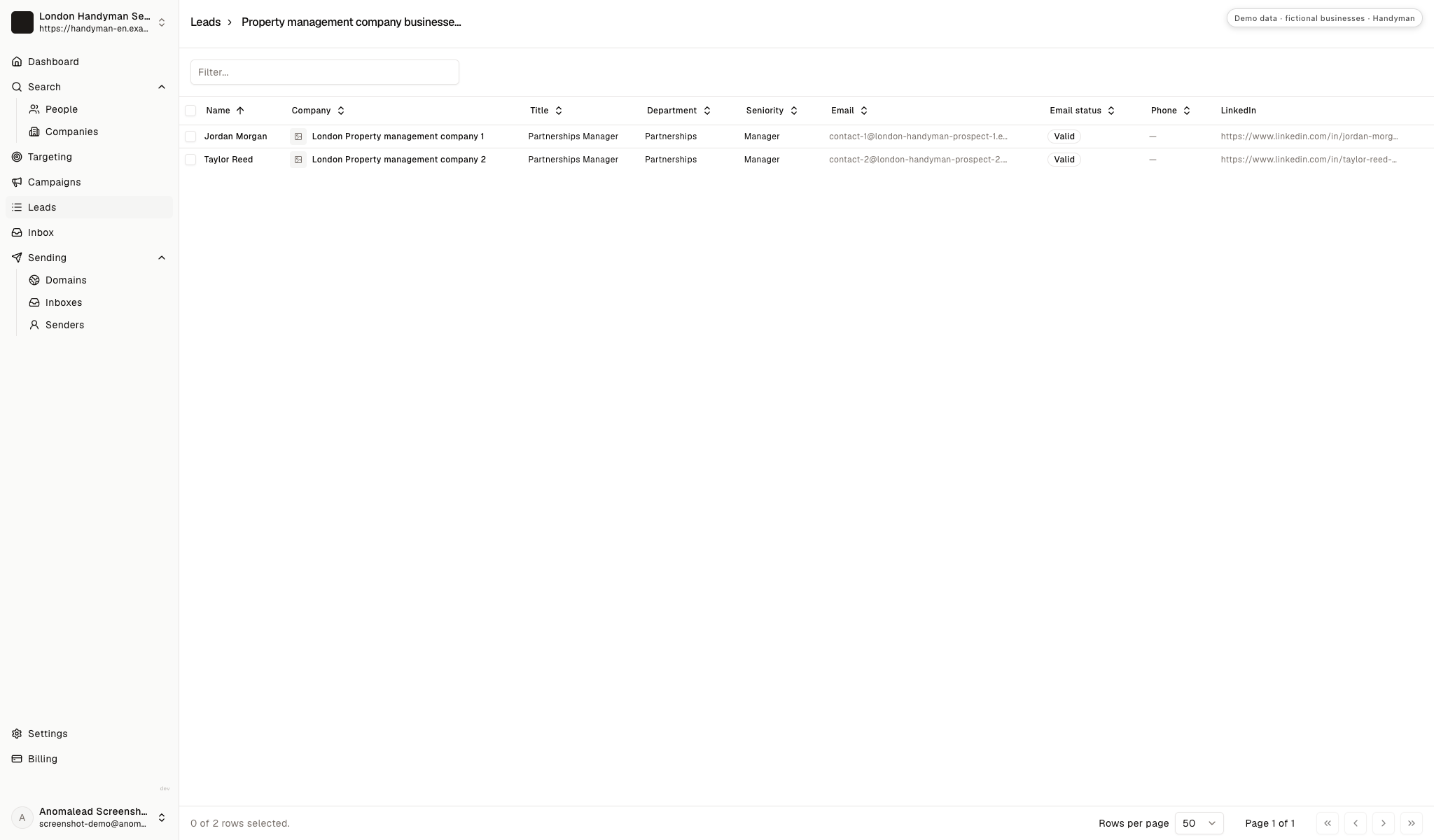
Keep a clean list for property-management outreach
Section titled: Keep a clean list for property-management outreachThe lead-list screen contains two contacts for outreach. Save only work contact details and role notes that are relevant to a vendor introduction, and keep tenant or property-level service data out of this prospecting list.
Estimate whether a property portfolio merits follow-up
Section titled: Estimate whether a property portfolio merits follow-upA property-management account can be valuable when its recurring ticket mix fits your route and crew capacity. Compare the expected work and onboarding effort using your own records, not a generic claim about what a portfolio should earn.
Enter your own assumptions for a potential account, sales effort and conversion. The calculator illustrates how those inputs relate; it does not predict repair volume, contract value, response times or revenue.
Do the math on one good deal
If one new customer is worth thousands, you don’t need magic. You need a few more meetings a month.
Projected monthly results
- Deals closed
- 2.0
- Projected revenue
- £10,000
- Growth plan (1 business)
- £79/mo
- ROI
- 12,558%
Conservative math on meetings you already believe you can book. One closed deal often pays for a year of Anomalead.
Include the time spent on vendor paperwork, travel, tenant coordination and closeout when you judge the opportunity. A portfolio is not attractive if its access rules or urgent-work expectations exceed your capacity.
Build a campaign around work orders your team can finish
Section titled: Build a campaign around work orders your team can finishA useful campaign names the repair categories you accept and asks who coordinates local maintenance vendors. It should not claim emergency coverage, all-trade capability or a response window that the team has not agreed to support.
Before sending, check the buyer role, service area and contact source. Keep the message about the property manager’s workflow: intake, approval, resident access and completion records. Do not scrape tenant details or ask an employer to share occupant information for prospecting.
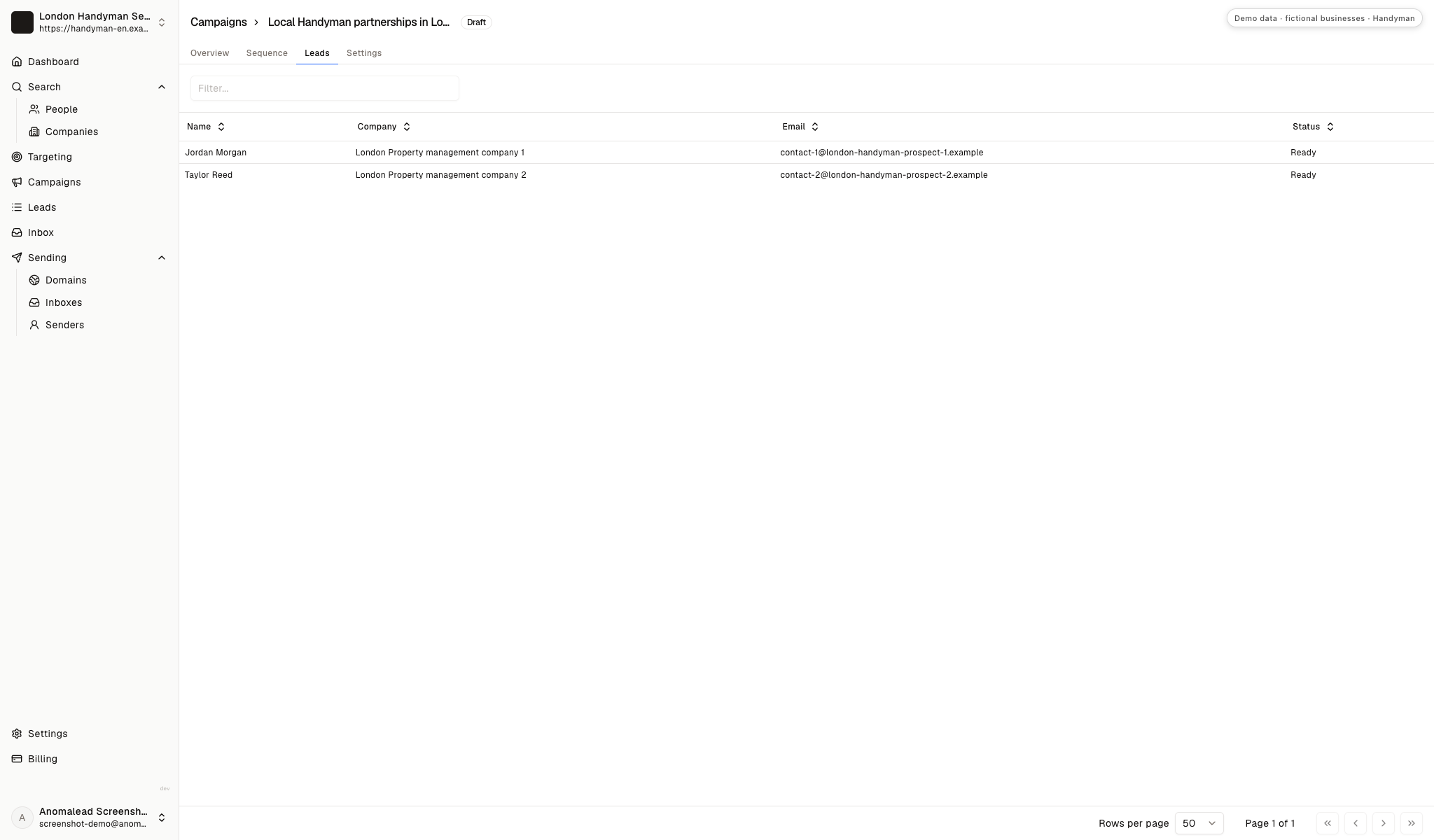
Select the buyer contacts for your campaign
Section titled: Select the buyer contacts for your campaignThe campaign screen shows two selected recipients. Confirm each record still fits the account and role you researched, and remove contacts who are not responsible for property operations or vendor coordination.
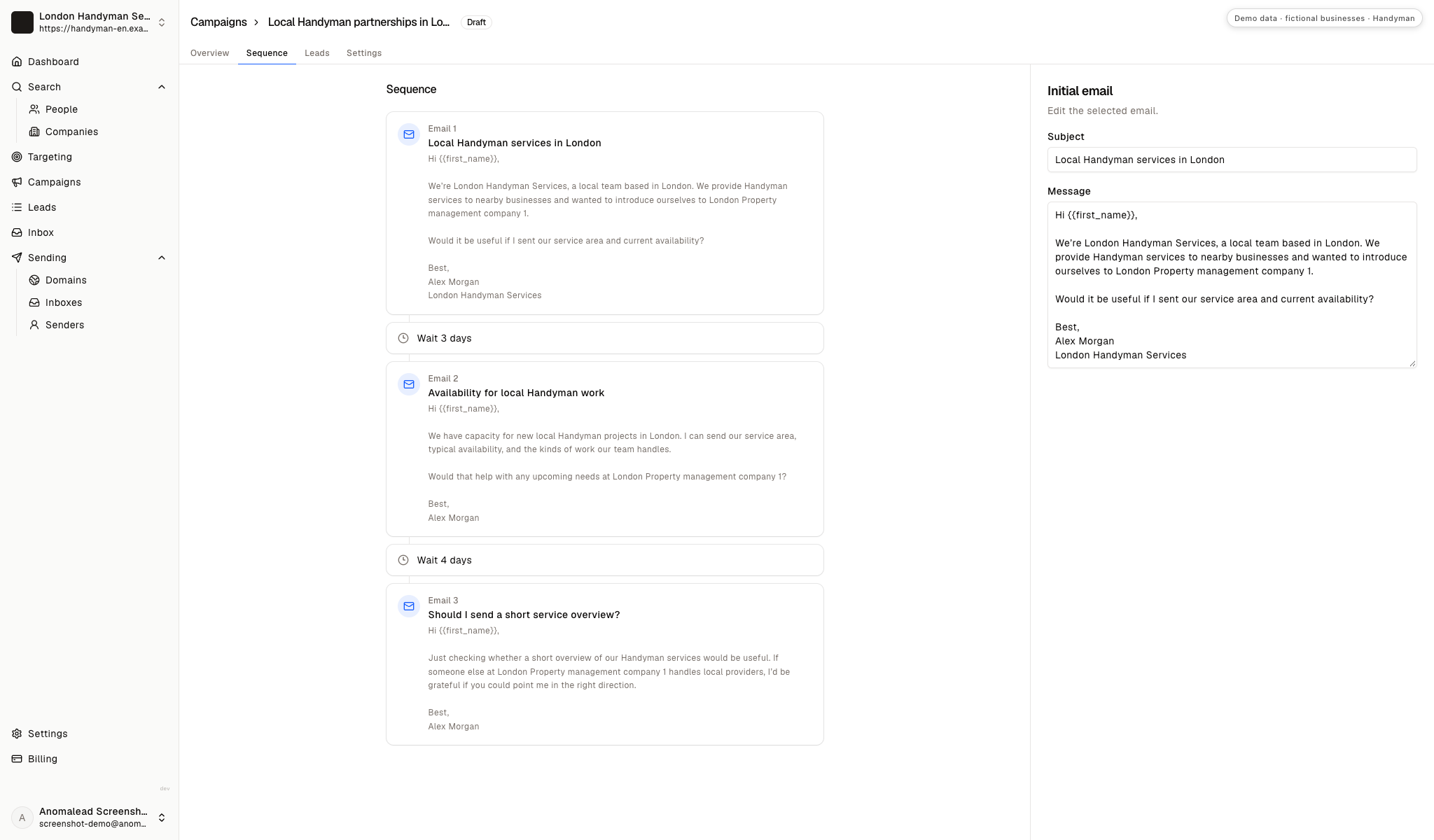
Review the follow-up sequence before activating it
Section titled: Review the follow-up sequence before activating itThe sequence editor shows three emails with a three-day wait and a four-day wait. Check that each touch adds context, respects a reply or opt-out, and does not create a false impression of a site visit or prior relationship.
Write a first note a property manager can answer
Section titled: Write a first note a property manager can answerJordan Morgan and Taylor Reed are fictional contacts from the demo. Replace generic language with your real repair scope and only the coverage your crew can support.
First note about recurring small repairs
Subject: A local option for property repair work
Hi Jordan,
I’m Alex Morgan from London Handyman Services. We handle defined small repairs for local property teams, including door adjustments, approved hardware swaps and minor patching. We agree the work order, access plan and approval route before a visit, then send completion notes for the property record.
Who coordinates handyman vendors for your managed properties?
Best, Alex Morgan, London Handyman Services
Follow-up about a defined maintenance list
Subject: Re: A local option for property repair work
Hi Taylor,
I’m following up with a practical outline rather than assuming your team needs another vendor. We can review a defined punch list, confirm which tasks fall within our scope, and flag work that needs a licensed specialist before anything is scheduled.
Would a short list of our service area and current availability help with an upcoming maintenance need?
Best, Alex Morgan
Use a plain cold email structure with a verified buyer role, one clear question and an easy way to decline further contact.
Use the inbox to qualify the next work order
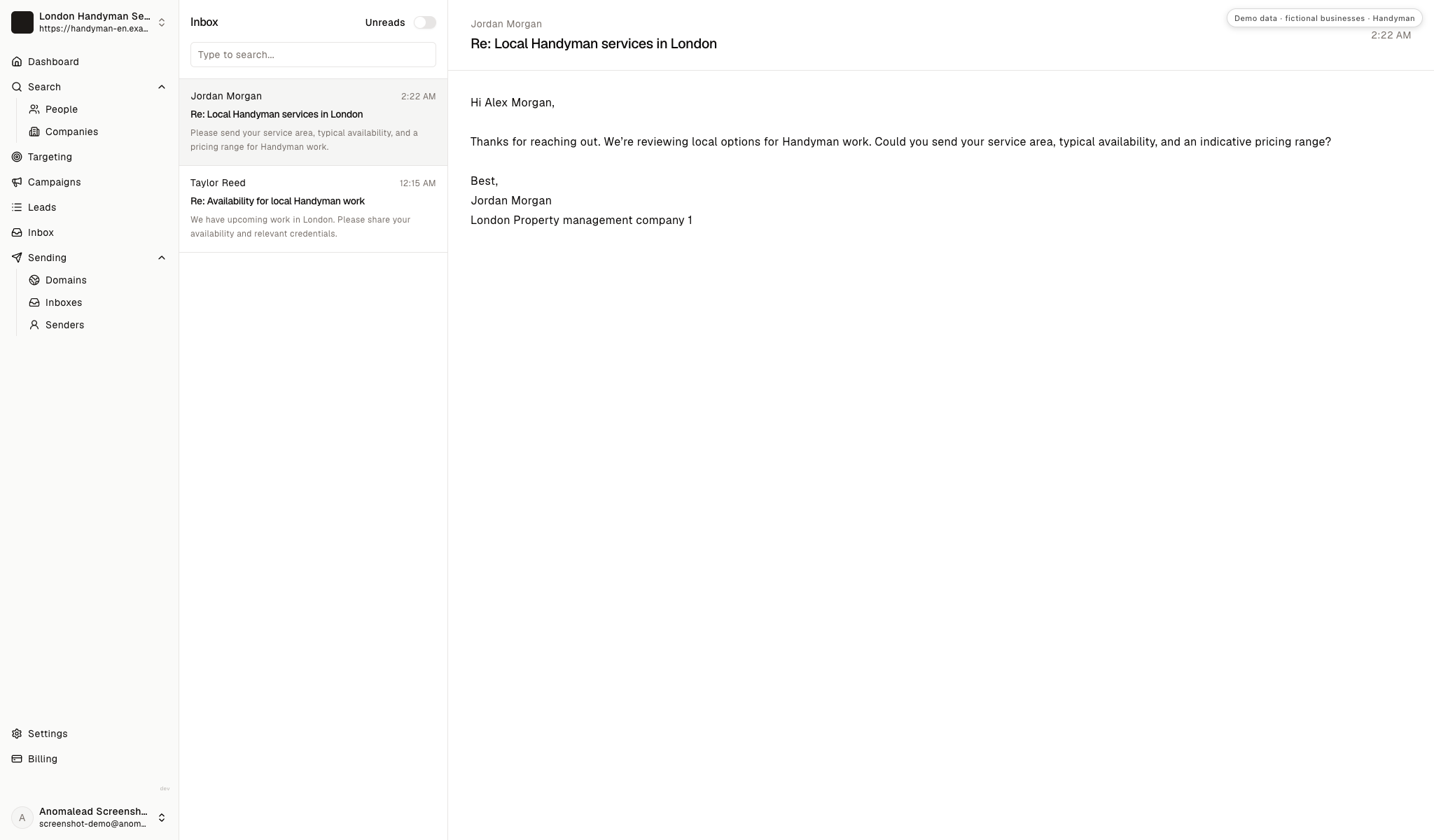
Section titled: Use the inbox to qualify the next work orderThe inbox displays two fictional replies from Jordan Morgan and Taylor Reed. The seeded messages ask for a service area, availability, pricing range or credentials; they are sample replies, not proof of a real campaign outcome.
Turn a property manager’s reply into a scoped next step
Section titled: Turn a property manager’s reply into a scoped next stepAnswer what the buyer asked, then request only the information needed to assess fit. Do not quote a job or promise a visit until the property, task, access and approval path are clear.
Jordan Morgan asks for coverage, availability and a price range
Section titled: Jordan Morgan asks for coverage, availability and a price range“Please send your service area, typical availability, and a pricing range for Handyman work.”
Send the actual areas your crew accepts and describe availability in terms you can keep current. Explain how you price a defined job, such as reviewing a work order or site details before estimating; do not invent a standard fee. Ask whether the manager can share a sample non-sensitive work order with tenant details removed.
A useful answer can be direct without pretending to quote unseen work:
“Thanks, Jordan. We cover the areas listed in our service summary and can confirm a current visit window once we understand the task and access needs. We price after reviewing the requested work and any materials, so we do not want to guess from a short description. Which repair categories come up most often for your team?”
Taylor Reed mentions upcoming work and asks for credentials
Section titled: Taylor Reed mentions upcoming work and asks for credentials“We have upcoming work in London. Please share your availability and relevant credentials.”
Reply with current capacity and the credentials or insurance records that apply to your actual scope. Ask for the task list, property type, approval contact and preferred completion window before reserving a slot. If any item belongs to a regulated trade beyond your qualifications, say so and recommend a suitably qualified provider.
Keep the next exchange focused on what must be verified:
“Thanks, Taylor. I can share our current availability and the documents relevant to the work we take on. Could you send the task list and the site’s access and approval process, with occupant details removed for now? I’ll confirm which items fit our scope before we discuss scheduling.”
The manager asks whether one handyman can cover every trade
Section titled: The manager asks whether one handyman can cover every trade“Can your team take all repair requests for the portfolio?”
Do not accept a blanket scope. Separate the small repairs your team is qualified to perform from electrical, gas, plumbing, structural or specialist jobs that need other credentials. A clear referral boundary protects the client relationship and prevents a small repair request from becoming an unsafe commitment.
A transparent reply might say:
“We can take the repair categories listed in our scope sheet, subject to reviewing each work order. We do not represent ourselves as a substitute for every specialist trade. If you share the categories you want covered, we can mark what we handle and what should go to another vendor.”
The manager needs a specific closeout process
Section titled: The manager needs a specific closeout process“Can you update our work-order system after a job and record what was completed?”
Confirm the required portal, completion notes, approved photos and materials record before accepting the first ticket. Agree who can authorize extra work and how an incomplete or blocked visit is reported, especially when access fails or the tenant is unavailable.
Set expectations before onboarding:
“We can review your closeout fields and confirm which records our team can provide for each ticket. Let’s also agree how we report blocked access and who approves a scope change before extra work begins.”
Start with a small, serviceable prospect list
Section titled: Start with a small, serviceable prospect listPick one kind of property manager and one repair category your crew can deliver consistently. Review a lead generation outreach strategies, verify the operations contact, and prepare a short scope sheet that explains intake, access, approvals and closeout.
Then contact a manageable set of qualified businesses with one specific question. Record who replied, what repair mix they handle and which vendor requirements remain open. If a plumbing request falls outside your scope, direct the buyer to a suitable plumbing service provider rather than stretching your offer.
Questions handyman owners ask about property-management leads
Section titled: Questions handyman owners ask about property-management leadsWhich property manager should a handyman contact first?
Section titled: Which property manager should a handyman contact first?Start with a local manager who coordinates recurring small repairs and can explain the vendor approval process. A maintenance coordinator, property manager or operations lead is usually more relevant than a contact with no role in building work.
What work should a handyman offer to a property portfolio?
Section titled: What work should a handyman offer to a property portfolio?Offer only tasks your team is qualified and equipped to complete, such as defined minor repairs or turnover punch-list items. State which specialist or regulated trades are outside your scope, and confirm site rules before accepting a ticket.
Are the property businesses and contacts in the screenshots real?
Section titled: Are the property businesses and contacts in the screenshots real?No. The company names, contacts and inbox replies in the walkthrough are fictional demo data, not Anomalead customers or real campaign outcomes.
What does the ROI calculator predict for a handyman account?
Section titled: What does the ROI calculator predict for a handyman account?It does not predict deal value, repair volume, revenue or conversion. It shows how assumptions you enter relate to one another, so use your own operating and sales inputs.
What should I verify before scheduling a tenant visit?
Section titled: What should I verify before scheduling a tenant visit?Confirm the approved work order, the person authorizing the task, the access and notice process, and the information your crew may retain. Agree how to report a failed visit or any request that expands the original scope.