


Commercial cleaning lead generation for a property manager starts with the buildings they oversee, not a broad list of nearby offices. A manager responsible for shared spaces, tenant handovers, and vacant-unit preparation needs a supplier whose service area, staffing, and cleaning scope fit the portfolio. A company record can point to a conversation, but it cannot confirm a contract, an upcoming vacancy, or dissatisfaction with the current provider.
This guide shows a cleaning business how to identify property-management accounts, qualify the work before estimating it, and propose a clear recurring arrangement. It separates portfolio-level vendor coverage from the day-to-day facility cleaning decision. Start with these commercial lead qualification principles, then tailor the questions to each building and its management process.
Key takeaways
- Target property managers whose managed buildings fall inside your service area and match the cleaning work your team can staff reliably.
- Qualify each site by cleaning scope, occupancy or turnover needs, access rules, service windows, and who approves the vendor and budget.
- Show how recurring coverage will be coordinated across properties, including a named point of contact and a process for scope changes or missed work.
- Price only after confirming the tasks, site conditions, frequency, supplies, and handover requirements; do not invent a rate or promise unverified capacity.
Commercial cleaning lead generation starts with portfolio fit
Section titled: Commercial cleaning lead generation starts with portfolio fitThe strongest prospect is a property manager who coordinates cleaning across buildings your team can actually cover. Look for a reason the manager may review vendors, then confirm scope and authority instead of treating a portfolio listing as an open contract.
- Commercial property managers: They may coordinate shared-area standards, recurring service, tenant complaints, and vendor access across one or more sites. Ask how the management team approves a cleaner and whether a site-level or portfolio-level review is under way. A property role alone does not prove a contract is available.
- Portfolio or regional operations leads: An operations lead may want consistent reporting and a dependable escalation path across properties. Explain where your team can provide coverage and how it handles local differences in scope. Do not promise identical staffing or service windows across sites you have not assessed.
- Leasing and tenant-transition coordinators: A leasing team may help plan a clean between occupants or prepare shared areas around a handover. Ask who owns the cleaning specification and when vendors are considered. Keep move-out or vacant-space work distinct from routine common-area coverage in the proposal.
- Owners and asset representatives: An owner representative may influence supplier standards or approve spend, while a property manager handles daily coordination. Learn who sets the service requirement, who compares bids, and who can authorize a contract before sending a full proposal.
A portfolio relationship can create several site conversations, but each property still needs its own scope, access plan, and service confirmation.
Build a site brief before you quote recurring work
Section titled: Build a site brief before you quote recurring workA credible estimate follows a defined building scope. Gather enough information to decide whether the site belongs in your pipeline, then arrange a walkthrough when the work depends on layout, finish, occupancy, or access details.
- The tasks are written down: Separate common corridors, entrances, shared washrooms, amenity rooms, and any vacant spaces that need turnover cleaning. Confirm what is excluded, such as specialist work your team does not provide, so no one assumes a broader service than the contract covers.
- The service window works for occupants: Ask when crews may enter, whether tenants remain on site, and how the manager handles keys, alarms, sign-in, and restricted areas. A schedule that looks convenient on paper may disrupt building access or conflict with tenant operations.
- Recurring work and turnover work are separated: Property managers often need a stable common-area routine as well as extra cleaning around a vacancy or handover. Record these as different scopes with different triggers. Do not fold occasional project work into a recurring fee without an agreed basis.
- Supply and waste duties are clear: Confirm who provides consumables, equipment, liners, and any site-specific products, and how waste is sorted or removed. Where required, prepare current insurance and safety documents, including product information relevant to the work.
- Coverage has a real owner: Name the person who receives site feedback, approves a scope change, and reports an access problem. Explain how your team handles absence or a missed visit only if you have a workable process and capacity to do so.
What the demo records represent
The walkthrough uses fictional London Commercial cleaning service Services, three generic London Property management company records, and the fictional contacts Jordan Morgan and Taylor Reed. These entries and their inbox messages are demo fixtures, not Anomalead customers or campaign results. The company labels do not reveal managed building types, cleaning requirements, contract dates, or vendor authority.
Research property managers before saving an account
Section titled: Research property managers before saving an accountUse the search screens to assemble a local list of property-management companies, then verify each account through its public portfolio and service area. The fixture shows location and category filters, three generic results, two saved companies, contact enrichment, a two-person list, a campaign draft, an email sequence, and inbox replies. It does not show buildings, site condition, current cleaning vendors, or an active tender.
Check public portfolio pages for property types, locations, and the management services the company provides. That research tells you whether a site visit or a vendor conversation might be relevant, not what work is required. Keep the source and the reason for reviewing each account in your notes. Use property account research methods to organize the shortlist without assuming that every managed site fits your crew.
Set the search to the properties your crew can reach
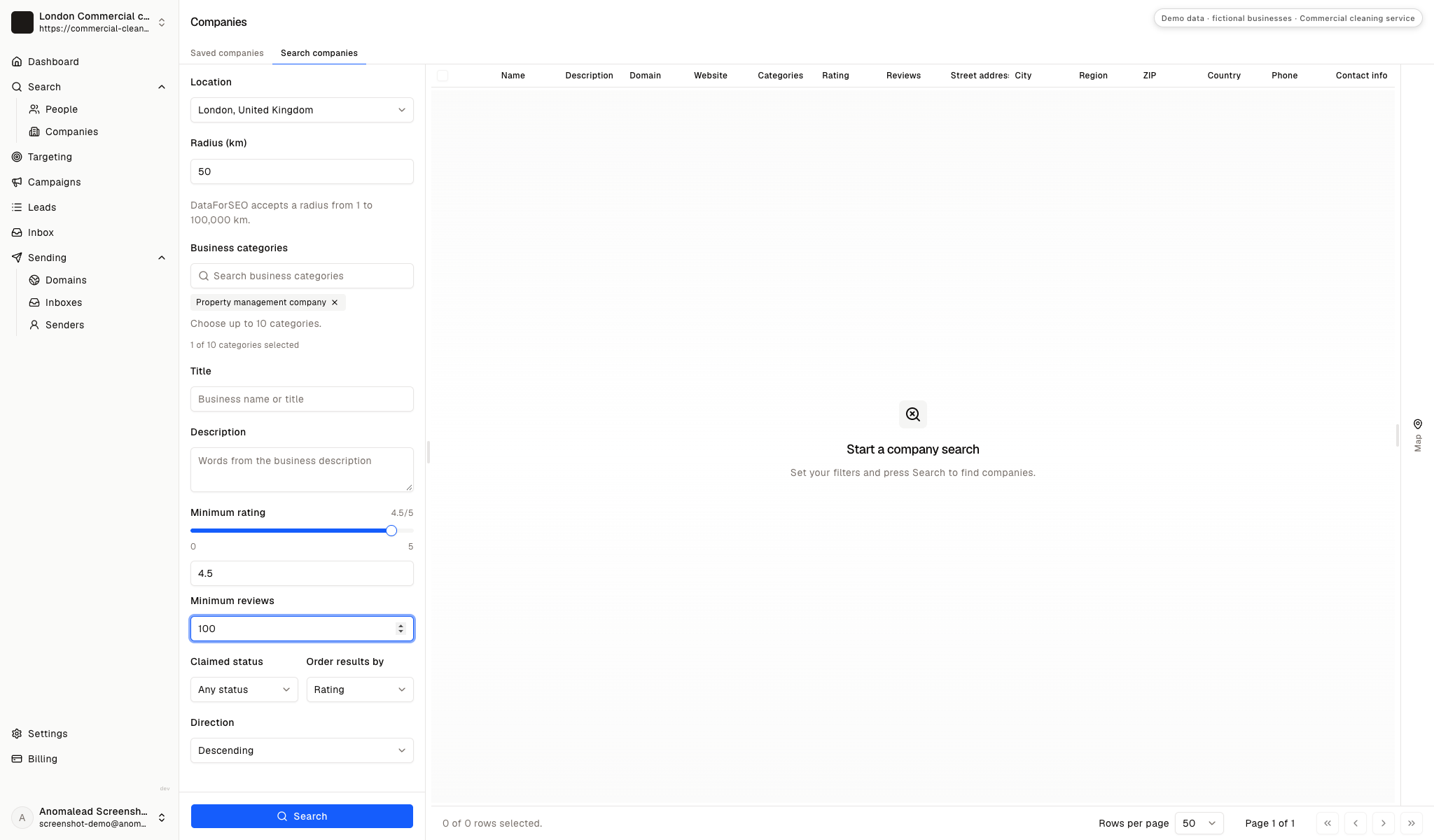
Section titled: Set the search to the properties your crew can reachChoose a service area and the property-management category used by the demo. The radius helps find company records; it does not map a managed portfolio or confirm travel time between individual sites.
Review property firms as possible vendor contacts
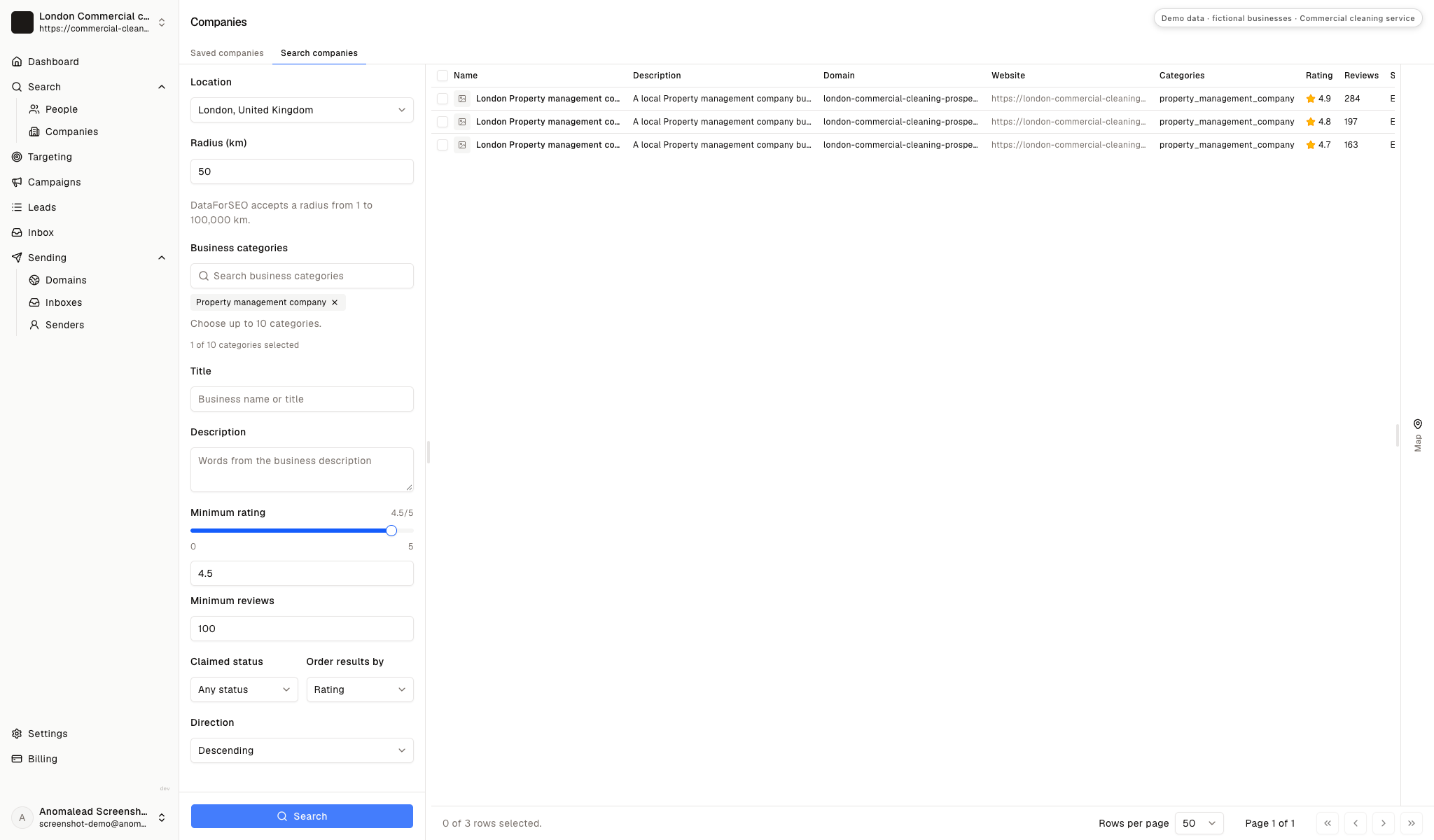
Section titled: Review property firms as possible vendor contactsThe results show three fictional property-management companies with brief descriptions, domains, ratings, and review counts. Their records contain no building schedules, cleaning specifications, or proof of an upcoming vendor review.
Save firms with a plausible portfolio match
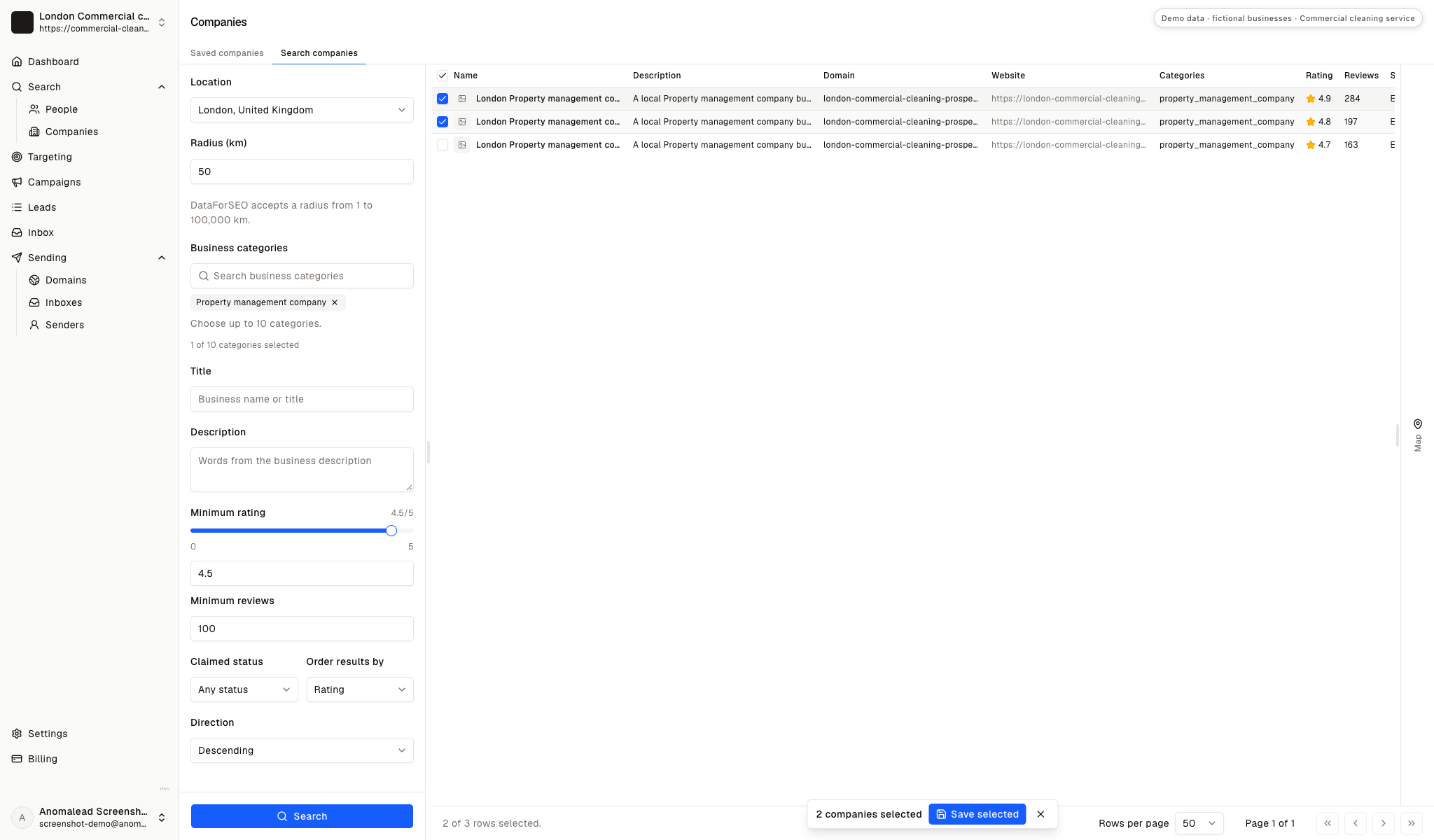
Section titled: Save firms with a plausible portfolio matchThe demo selects two of the three company records. In a real list, save a firm when its public portfolio and locations justify checking whether your team can cover the managed sites.
Check the economics before pursuing a portfolio
Section titled: Check the economics before pursuing a portfolioA multi-property account can require estimating, onboarding, site coordination, and service reporting in addition to cleaning labor. Compare those commitments with the work your team could realistically schedule.
Enter your own assumptions for site visits, crew time, supplies, travel, supervision, and the scope the property manager would authorize. The calculator does not forecast contract value, occupancy, bid success, or margins.
Do the math on one good deal
If one new customer is worth thousands, you don’t need magic. You need a few more meetings a month.
Projected monthly results
- Deals closed
- 2.0
- Projected revenue
- £10,000
- Growth plan (1 business)
- £79/mo
- ROI
- 12,558%
Conservative math on meetings you already believe you can book. One closed deal often pays for a year of Anomalead.
If a portfolio only appears worthwhile when every site signs, recalculate with the properties your team can staff and price on their own terms.
Find who reviews vendors across the managed properties
Section titled: Find who reviews vendors across the managed propertiesA property manager may coordinate the service while a regional operations lead, procurement contact, or asset representative approves the vendor. The fictional Jordan Morgan and Taylor Reed appear as Partnerships Managers in the demo; those seeded titles do not prove responsibility for cleaning contracts. Verify who owns specifications, bids, site access, and budget before preparing a quote.
Look for a current work contact on the management company’s own site or in a public professional listing. Keep notes about portfolio fit and vendor process, not assumptions about a building’s condition. When the contact handles partnerships but not cleaning operations, ask for the person who manages service providers for the relevant properties.
Check the shortlist before contact enrichment
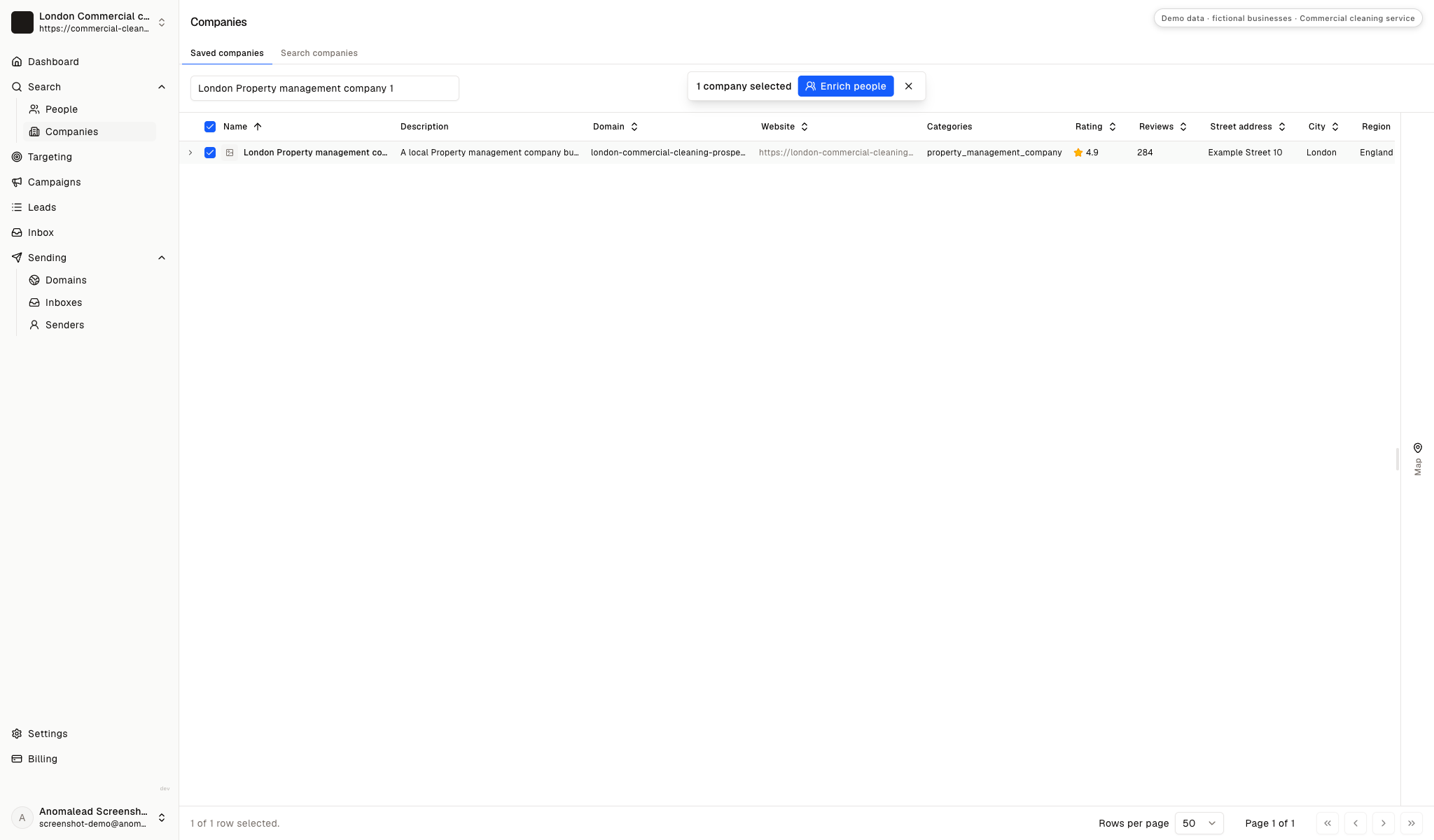
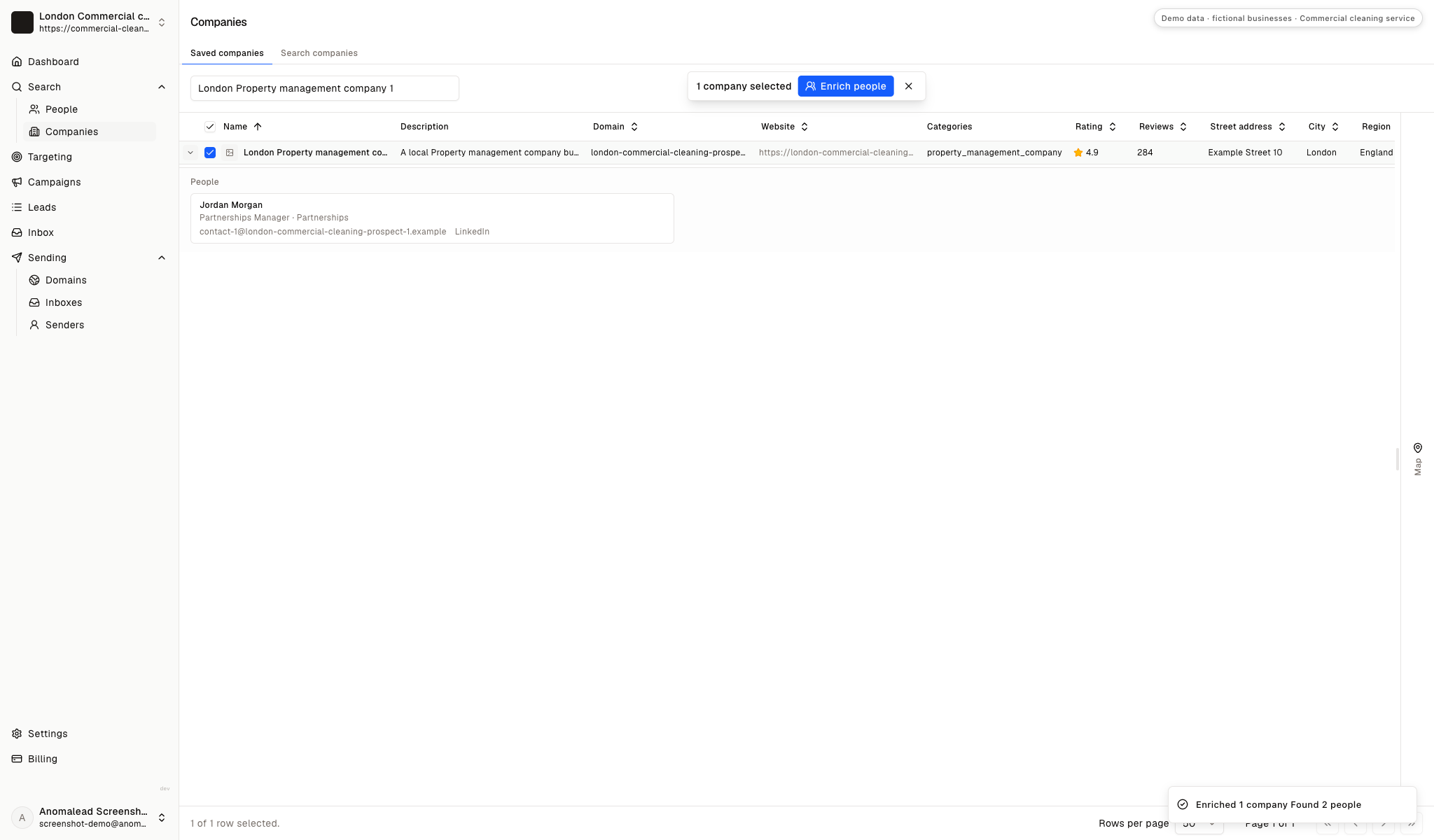
Section titled: Check the shortlist before contact enrichmentThe saved view shows one fictional company selected and an Enrich people action. Recheck the portfolio locations and cleaning fit before adding contacts.
Check the remit of each enriched contact
Section titled: Check the remit of each enriched contactThe fixture lists Jordan Morgan and Taylor Reed as fictional Partnerships Managers. A real property firm may route cleaning vendor questions through property operations, procurement, or an individual site manager.
Keep the account list useful for property follow-up
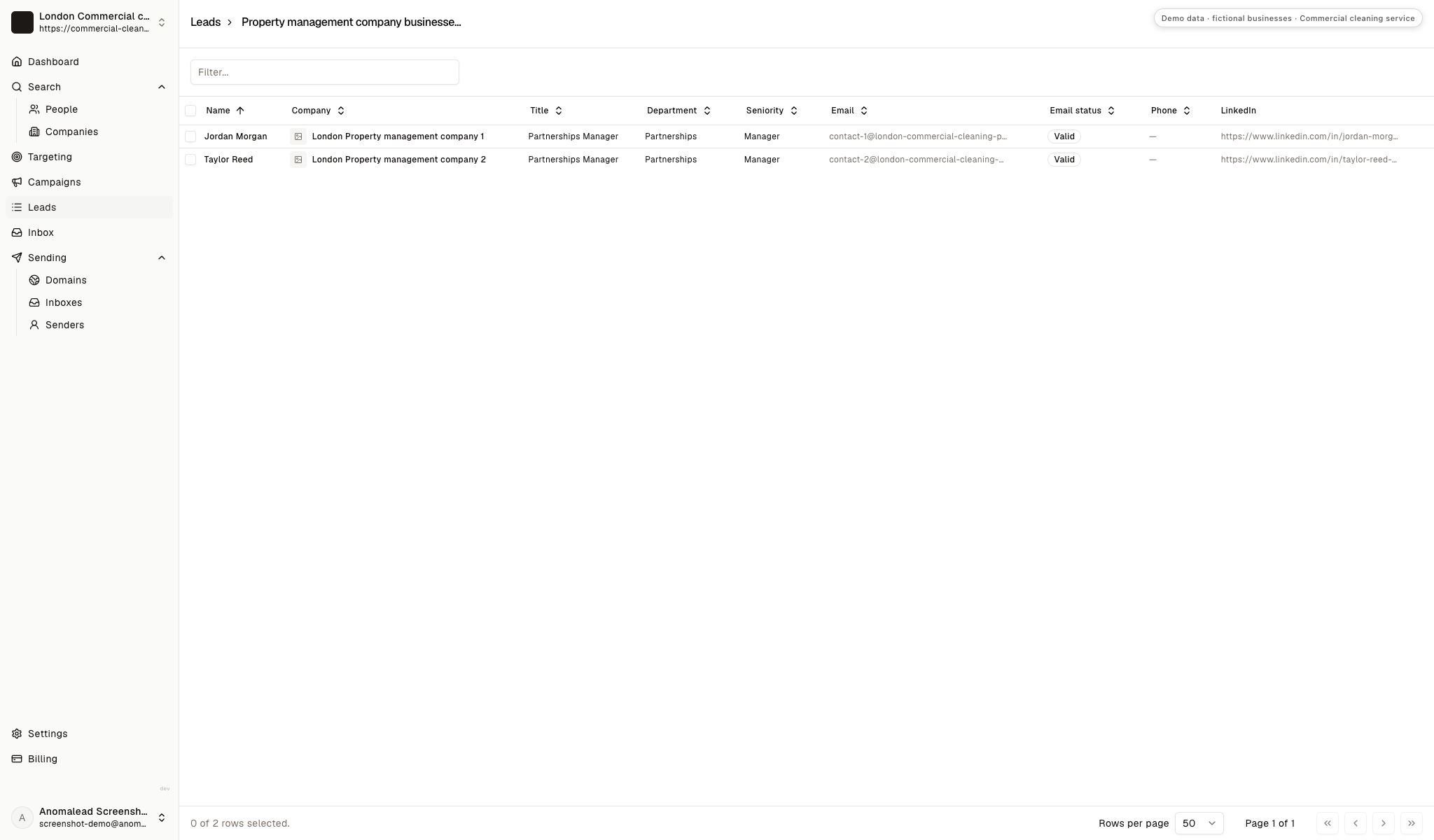
Section titled: Keep the account list useful for property follow-upThe demo lead list contains two fictional contacts with a valid email status. Record each person’s verified role and the property portfolio that made the account relevant.
Lead with dependable coverage and a clear scope
Section titled: Lead with dependable coverage and a clear scopeA property manager needs to see how your company would coordinate sites, not a broad claim that you clean commercial spaces. Say which locations you cover, which cleaning tasks are in scope, how you confirm site requirements, and who responds when a manager reports a problem. Treat turnover cleaning as a distinct option if the team can take it on.
Before you describe insurance, staffing continuity, inspection records, supplies, or response times, check that your company can provide the evidence and service. Invite a site walkthrough or request for specifications instead of quoting from an office profile. For concise vendor introduction emails, make the proposed next step easy to accept or decline.
Verify the recipients before a vendor introduction
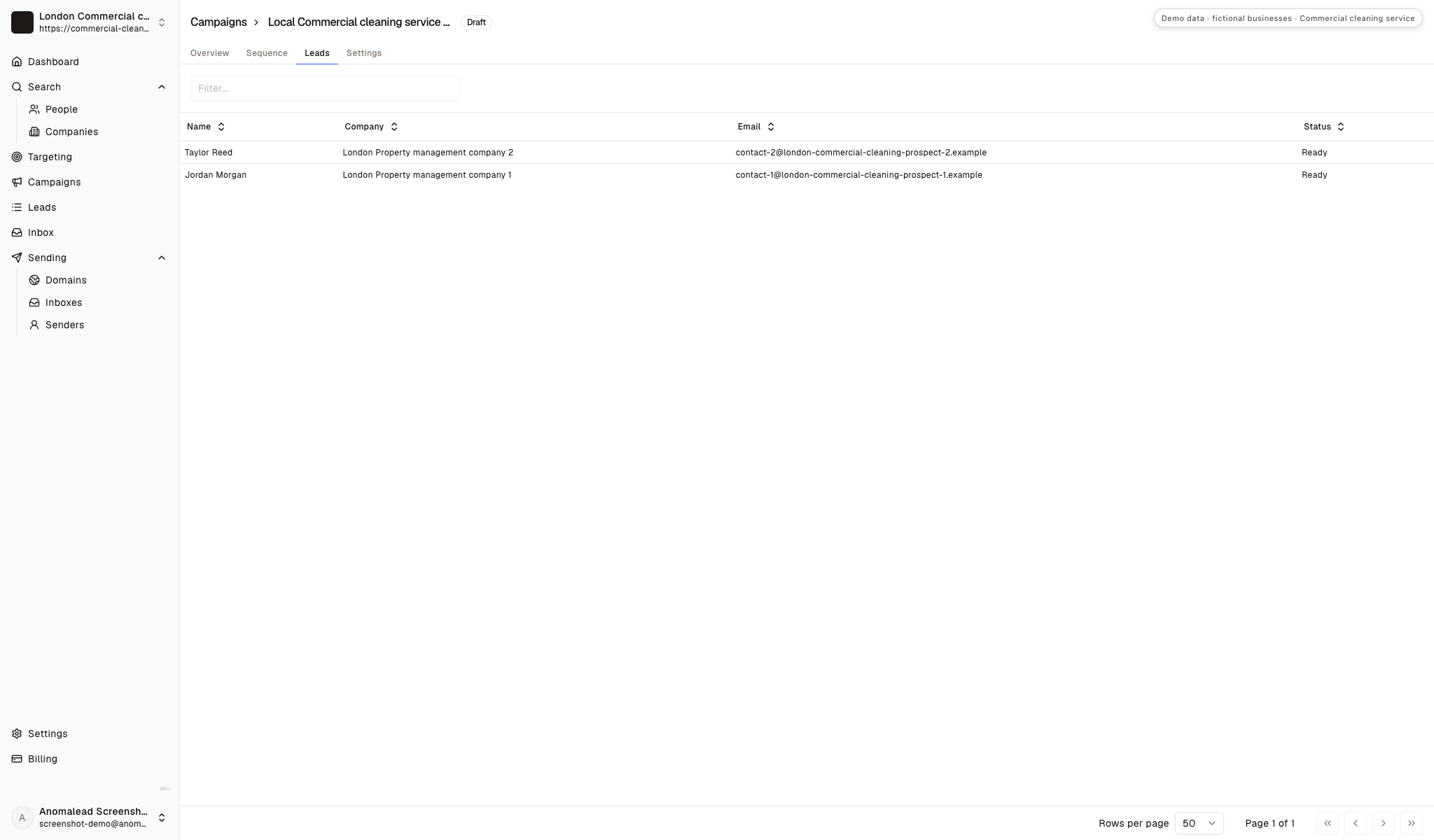
Section titled: Verify the recipients before a vendor introductionThe draft campaign shows two recipients and the fictional London partnership name. Check that each person handles property vendor introductions and that your message fits their work remit.
Make each follow-up add a useful detail
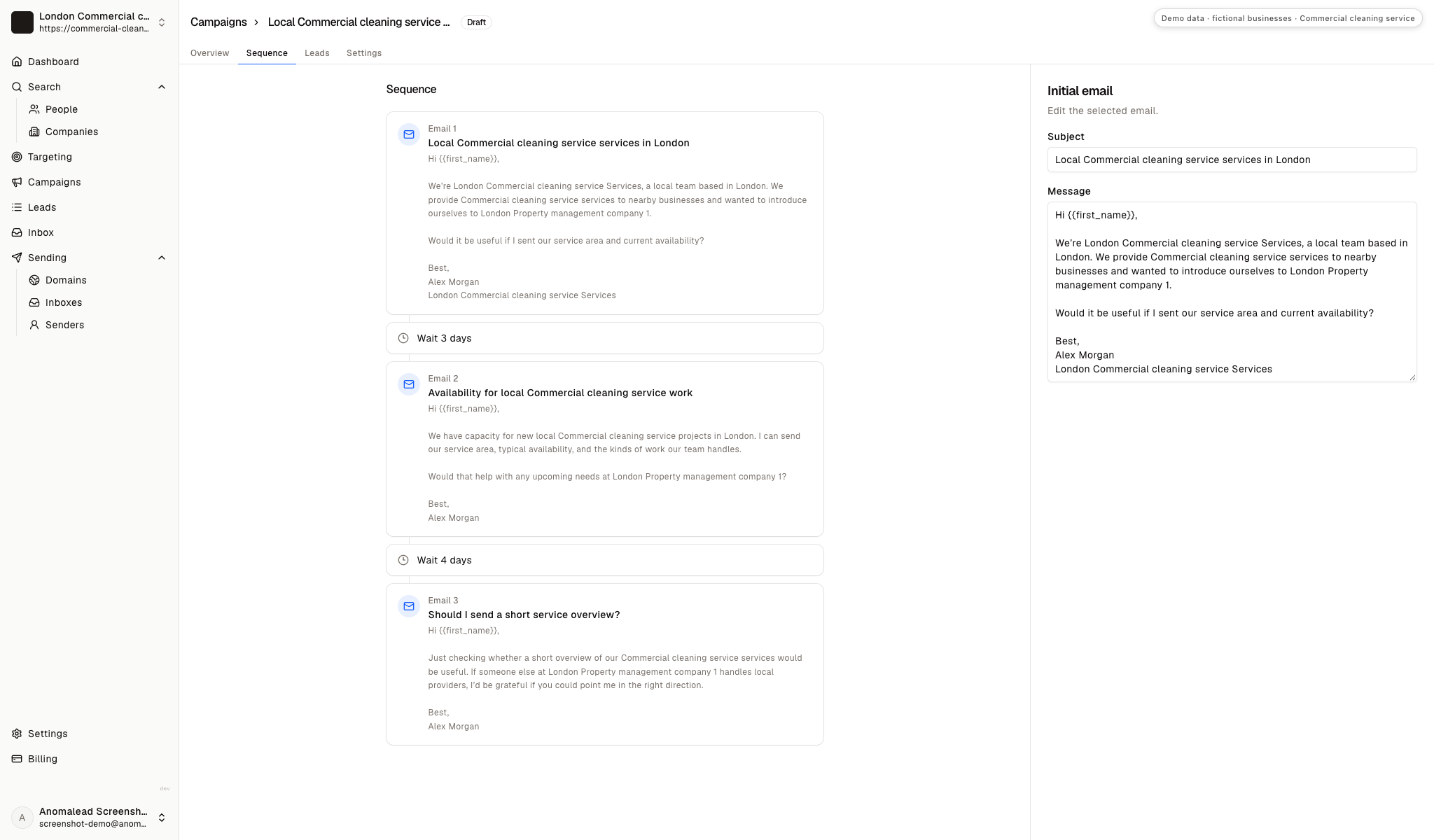
Section titled: Make each follow-up add a useful detailThe sample sequence contains three generic emails with wait intervals. Replace generic service claims with your coverage area, scope process, and evidence, and stop when a contact declines or opts out.
Ask for the site scope before sending a rate
Section titled: Ask for the site scope before sending a rateA first note should name the portfolio-level reason for contact and propose a useful next step. These examples use the fictional contacts from the demo; verify every claim and replace the service details with your actual coverage.
First note to a property contact
Subject: Cleaning coverage for managed properties
Hi Jordan,
I’m writing from London Commercial cleaning service Services. We support property teams that need recurring coverage across managed buildings, with a separate scope for vacant-space preparation when that is part of the service.
If you review local cleaning vendors, I can send our service area and a short outline of how we confirm shared-area tasks, access requirements, and site handovers before pricing. Does your team review those arrangements, or is there a property operations contact I should reach?
Best, Alex Morgan, London Commercial cleaning service Services
Reply after a request for credentials
Subject: Re: Cleaning coverage for managed properties
Hi Taylor,
I can send our current service scope, coverage area, and the insurance or safety documents your vendor process requires. For a useful estimate, we would first confirm the building tasks, access window, supply responsibilities, and whether you need recurring common-area work or a separate turnover clean.
If you share the right specification or site-visit process, I’ll prepare the information for the properties under review. We will confirm availability before making a commitment.
Best, Alex Morgan
Confirm your service list, coverage, insurance documents, staffing plan, and ability to visit the site before sending. The commercial cleaning outreach examples can help you tighten the note without making the scope vague.
Treat a reply as a request to define the work
Section titled: Treat a reply as a request to define the workAn enquiry about availability, pricing, or credentials is a prompt to qualify the site, not permission to assume a portfolio award. Ask which property is under review, who will provide the scope, how access is arranged, and when a site visit can happen. Share only current documents and a price after the work can be described.
Use the inbox to move toward a defined brief
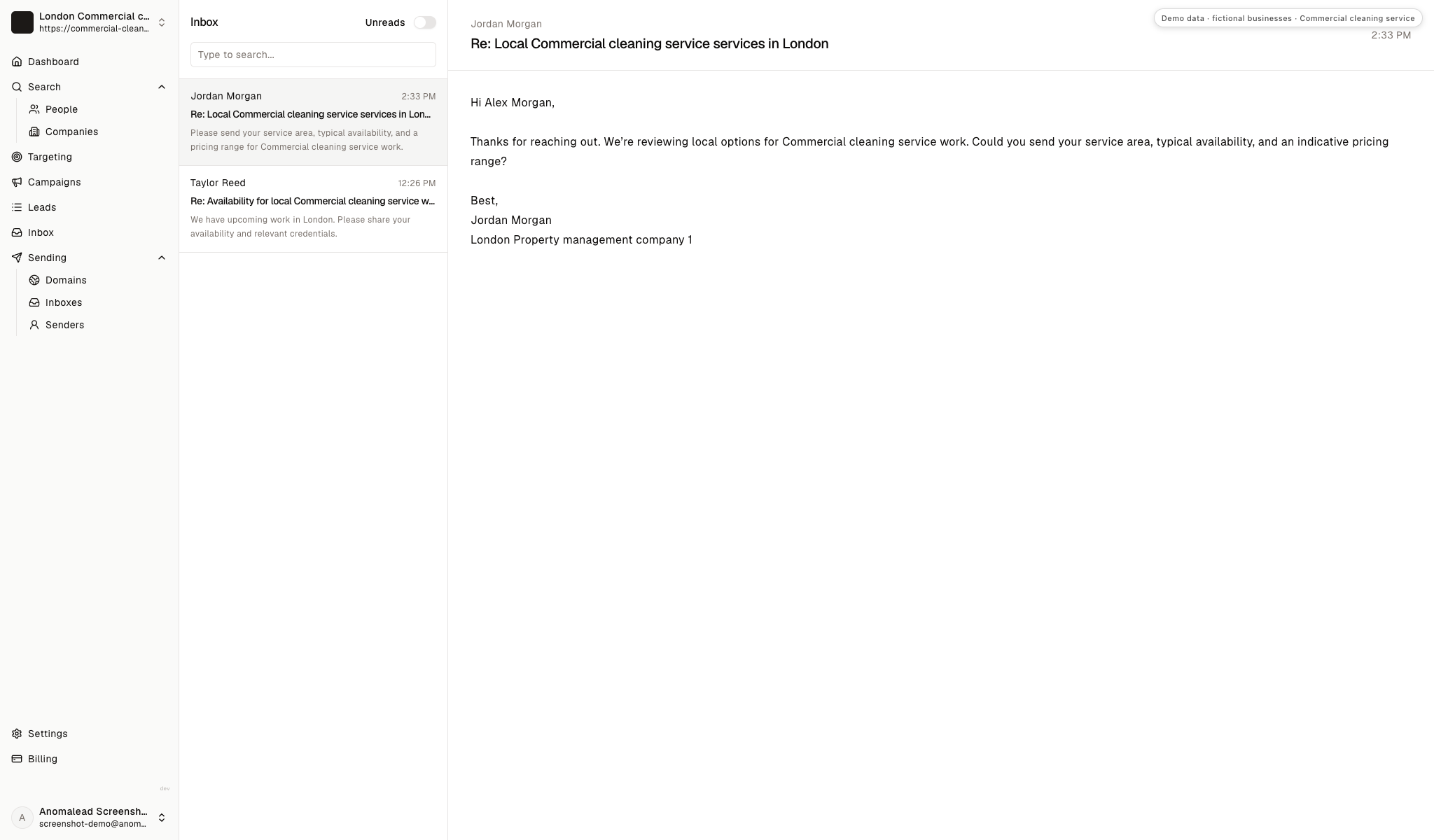
Section titled: Use the inbox to move toward a defined briefThe fictional inbox shows one reply asking for coverage, availability, and pricing information and another asking about service scope and credentials. Those messages do not identify a real building, confirmed tender, or contract decision.
Answer property managers with scope and proof
Section titled: Answer property managers with scope and proofRespond to the stated question, then identify what is missing from the site brief. Keep common-area coverage, vacancy turnover, and any specialist task separate so the manager can compare the proposal with the building’s actual requirement.
A portfolio contact asks how a site visit informs the price
Section titled: A portfolio contact asks how a site visit informs the priceWe are reviewing cleaning providers for a managed building. What details would you need before estimating the shared areas and any tenant handover work?
Ask for the building address, permitted access window, task list, occupancy status, and any site-specific safety requirements before estimating. Explain which tasks your company can cover and request a walkthrough when layout or condition changes the labor plan. Do not send a rate based on the company’s office listing.
A practical answer could say:
Hi Jordan, thanks for asking. We would first confirm the areas in scope, service window, access process, supply responsibilities, and whether the request includes a separate vacant-space clean. A site visit can clarify layout and condition before we provide a written estimate. If you share the vendor process and the right property contact, I can arrange that review. Best, Alex Morgan
A property manager asks about capacity and vendor documents
Section titled: A property manager asks about capacity and vendor documentsCan you share which properties your team can cover, the work you include, and the insurance or safety documents available for vendor review?
Send current coverage information and documents the company actually holds. Clarify who supervises work across sites, how the team reports completion, and what happens when a scheduled visit cannot proceed because of access. Do not claim certifications, backup crews, or inspection systems without evidence.
Keep the commitment verifiable:
Hi Taylor, I can send our current service description, coverage area, and the insurance and safety records we maintain. We can confirm crew availability after we understand the sites and service windows. Please let me know which vendor documents and property specifications your team uses so I can respond with the relevant material. Best, Alex Morgan
The property manager already has a cleaning supplier
Section titled: The property manager already has a cleaning supplierWe have a provider in place for the properties we manage.
Respect the current arrangement. Ask whether the manager accepts an additional vendor for turnover or overflow work only if your business offers that service and the property process permits it. Otherwise, record the timing for a future review and end the sequence.
If separate turnover coverage is relevant:
Thanks for clarifying. I would not want to interrupt a supplier arrangement that is working. If your team reviews a separate vacancy or handover clean, and that work fits our service, I can send a concise scope for consideration. If you are not looking at alternatives, I’ll leave it here.
Commercial cleaning lead generation questions
Section titled: Commercial cleaning lead generation questionsWho usually reviews a cleaner for a managed property?
Section titled: Who usually reviews a cleaner for a managed property?A property manager may coordinate the work, but portfolio operations, procurement, the owner, or a site contact may approve parts of the arrangement. Ask who controls the specification, vendor review, site access, and budget before preparing a detailed bid.
How should a cleaning company qualify a property manager?
Section titled: How should a cleaning company qualify a property manager?Check that the managed locations are inside your service area and that the manager has a relevant building or vendor need. Then confirm tasks, frequency, occupancy, access, supplies, approval path, and timing before estimating.
Should turnover cleaning be included in a recurring contract?
Section titled: Should turnover cleaning be included in a recurring contract?Treat vacancy or tenant handover work as its own scope unless both sides define a clear basis for including it. Its timing and condition can differ from shared-area service, so confirm the trigger, tasks, and authorization process.
What documents might a property manager request?
Section titled: What documents might a property manager request?A vendor review may ask for current insurance, safety procedures, product information, references, or service records. Provide only material your company holds and can verify; requirements vary by property and management process.
Can a company directory show an upcoming cleaning contract?
Section titled: Can a company directory show an upcoming cleaning contract?No. A company profile helps identify a possible account but does not reveal a building’s scope, current supplier, contract date, or budget. Verify public portfolio fit and ask the responsible person whether they are reviewing providers.
Choose one portfolio and define the first site question
Section titled: Choose one portfolio and define the first site questionPick a property manager whose public portfolio overlaps your actual service area. Check who coordinates vendor reviews, then prepare a short list of questions about common areas, occupancy changes, access, supplies, and approval timing before requesting a site visit. A well-defined first property is more useful than a broad promise to cover every building.
When you send a relevant cleaning follow-up, respond to the manager’s stated property need and give them an easy way to decline or name the right contact. Review your own service capacity and contract terms before offering wider portfolio coverage.