


Car dealership lead generation for business sales starts with identifying who reviews company vehicles, not treating every nearby office as a likely buyer. A fleet coordinator may compare replacement needs, vehicle classes, operating locations, and purchasing schedules. A procurement lead may own supplier reviews, while a managing owner approves the final decision. Those roles vary by company, so a public business record is only a research starting point.
This guide shows how a dealership can build a careful list of local organizations, find the person who handles fleet or procurement conversations, and make a relevant first offer. The strongest outreach explains which vehicle categories the dealership handles and how a business can discuss current availability, trade-ins, finance, or a test drive. For the research basics behind the workflow, see B2B lead generation fundamentals.
Key takeaways
- Target businesses with a plausible vehicle need and verify who manages fleet, procurement, or company-car decisions before outreach.
- Use public company information to qualify the business, not to assume its staff need vehicles or that a replacement is due.
- Make the next step concrete: a conversation about vehicle class, service area, stock status, trade-in process, or a business test drive.
- Keep every inventory, price, finance, delivery, and savings statement current and supportable; check the advertising and finance rules that apply in your market.
Car dealership lead generation for company vehicle buyers
Section titled: Car dealership lead generation for company vehicle buyersA local business may buy or lease vehicles for work, staff mobility, or customer operations, but the buying group differs from one organization to another. Start with companies whose public operations make vehicle procurement plausible, then confirm the role before presenting an offer.
- Fleet managers at owner-led businesses: A fleet lead may compare the vehicles used by field teams, sales staff, or service crews. Ask about the vehicle classes, routes, payload, passenger needs, and locations the dealership can support. Do not assume the prospect has a replacement planned because its business category suggests driving.
- Procurement and operations managers: A procurement manager may review suppliers, purchase terms, and internal approvals. An operations lead may define the practical requirements first. Explain the dealership’s business sales process and ask who owns the next decision rather than sending a consumer promotion to a generic office contact.
- Rental, delivery, and local service operators: These organizations may consider multiple vehicle types and more than one delivery location. Confirm whether the dealership handles the models, commercial specifications, or service coverage they need. A local company listing does not establish fleet size, budget, or replacement timing.
- Businesses with employee vehicle programs: Some employers coordinate company cars or employee mobility through facilities, people operations, or finance. Ask which team evaluates vehicle suppliers and whether the dealership’s offer fits the program. Keep personal employee details out of the prospecting record.
A useful fleet conversation begins with a verified business need and the person responsible for reviewing options. It does not depend on guessing how many vehicles a company owns.
Qualify a business before researching decision-makers
Section titled: Qualify a business before researching decision-makers- The operating model suggests a real vehicle use: Look for public descriptions of field service, deliveries, sales travel, passenger transport, or multiple work sites. Treat these as reasons to check fit, not proof that the company is shopping for vehicles.
- The dealership handles the relevant category: Confirm whether the sales team supports passenger cars, vans, commercial vehicles, electric models, or a particular business purchase route. If a need falls outside the current range or service area, say so and remove the company from that campaign.
- The contact role matches the buying process: A fleet manager, procurement lead, operations director, or company owner may shape the decision. A receptionist or general office contact may not know who manages vehicles. Use the public organization chart or ask for the correct business contact.
- Location and handover are practical: Check where vehicles would be registered, used, serviced, and handed over. Confirm which dealership location can handle a business conversation and what delivery arrangements are actually available before describing them.
- Commercial terms can be explained accurately: Know who can discuss current stock, trade-in appraisal, business finance, leasing, warranties, and delivery. Verify applicable advertising, consumer, and finance disclosure rules for your market, and do not imply that every business buyer qualifies for the same terms.
What the demo data represents
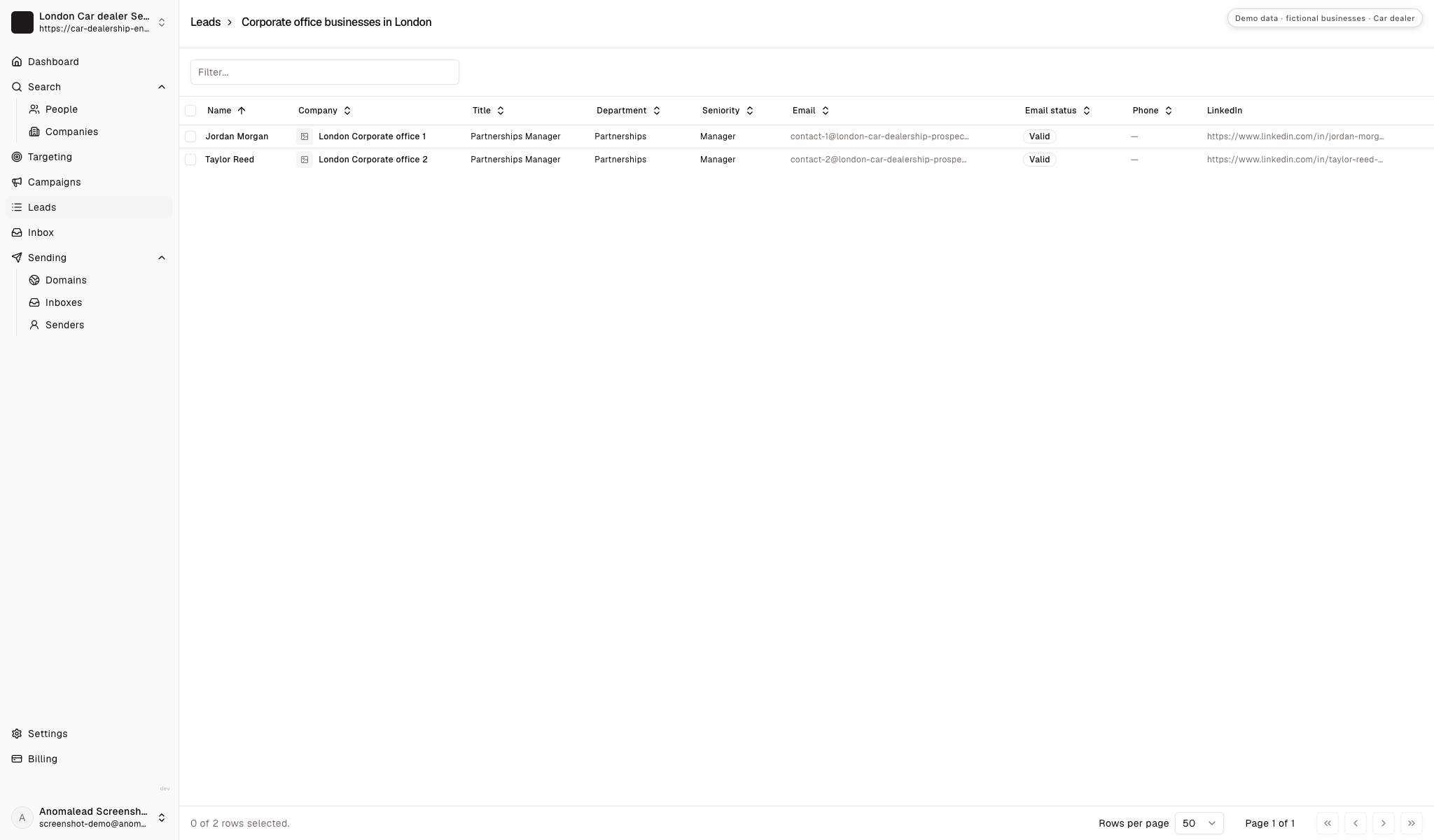
The screens show the fictional operator London Car dealer Services, generic company records including London Corporate office 1 and London Corporate office 2, and fictional contacts Jordan Morgan and Taylor Reed. These are not Anomalead customers. The inbox replies are examples rather than real buyers or campaign outcomes. The generic corporate-office records do not confirm vehicle ownership, fleet size, procurement plans, or buying authority.
Find and review business prospects in Anomalead
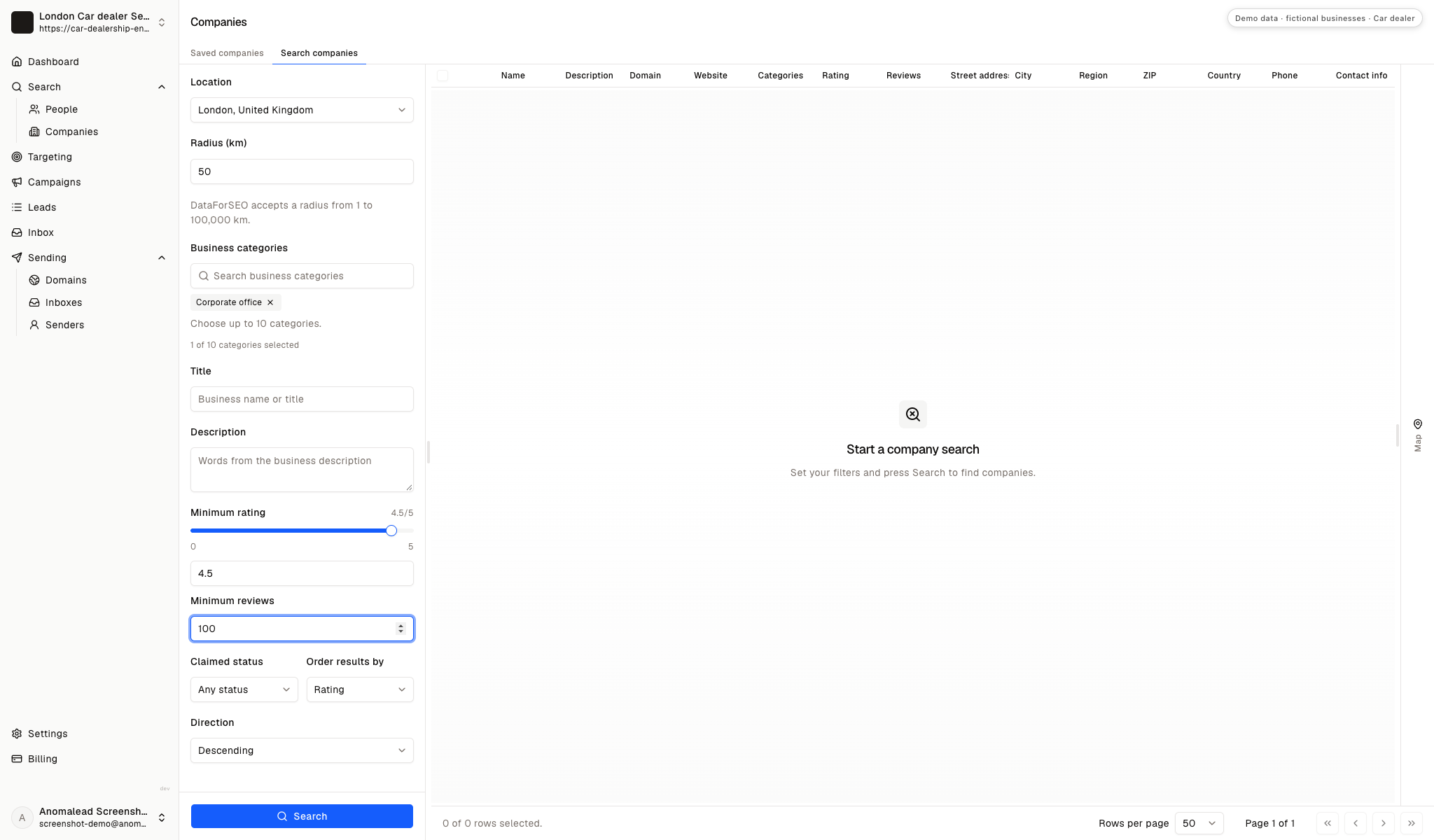
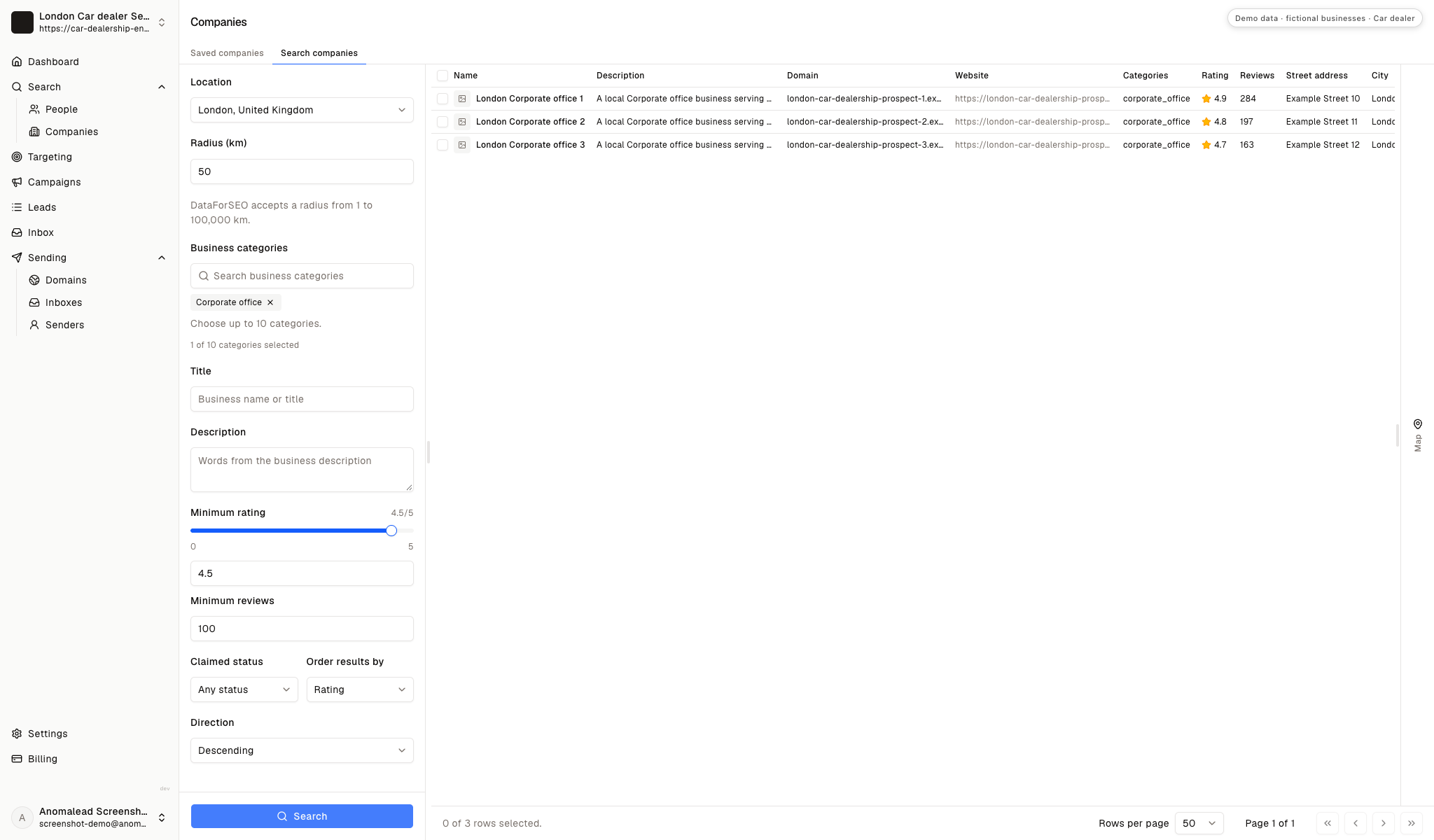
Section titled: Find and review business prospects in AnomaleadThe search screens show how to assemble and review a company list, not how to detect vehicle demand or identify a fleet purchase in progress. Select the location and configured corporate-office category to create a research set. Then check each organization’s public site for its operating model, locations, business lines, and evidence of fleet or procurement ownership. A rating, domain, or office label is not proof that the company buys vehicles. Record the public reason for researching the business and the role you still need to confirm. The guide to finding business leads explains how to turn a search into a usable list.
Set a search area your dealership can serve
Section titled: Set a search area your dealership can serveSet the search to an area the business sales team can actually serve.
Review organizations as possible fleet prospects
Section titled: Review organizations as possible fleet prospectsCompany fields support research but do not establish a vehicle need or buying plan.
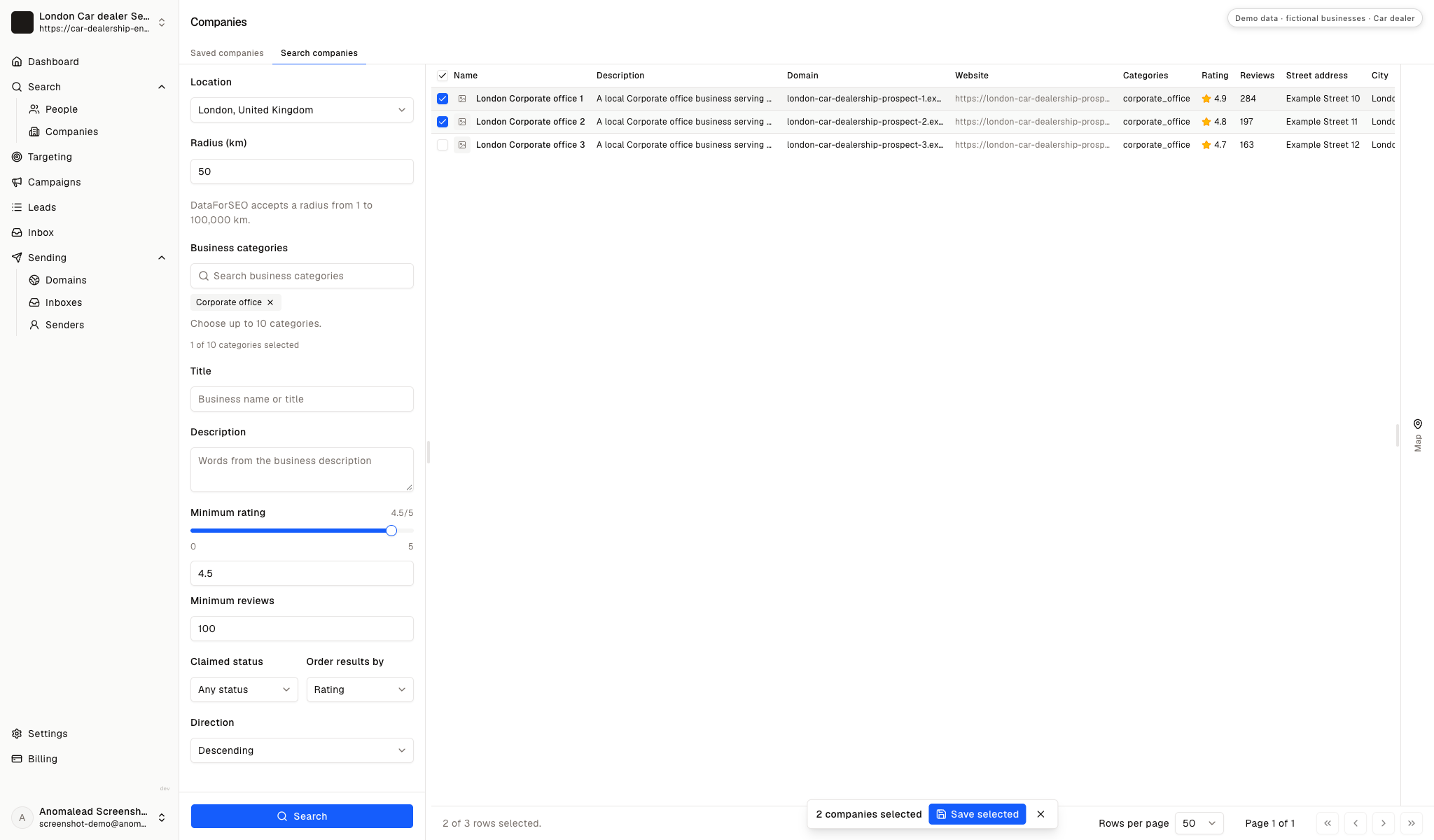
Save only companies with a plausible vehicle use
Section titled: Save only companies with a plausible vehicle useKeep a company only when public operations justify a closer fit check.
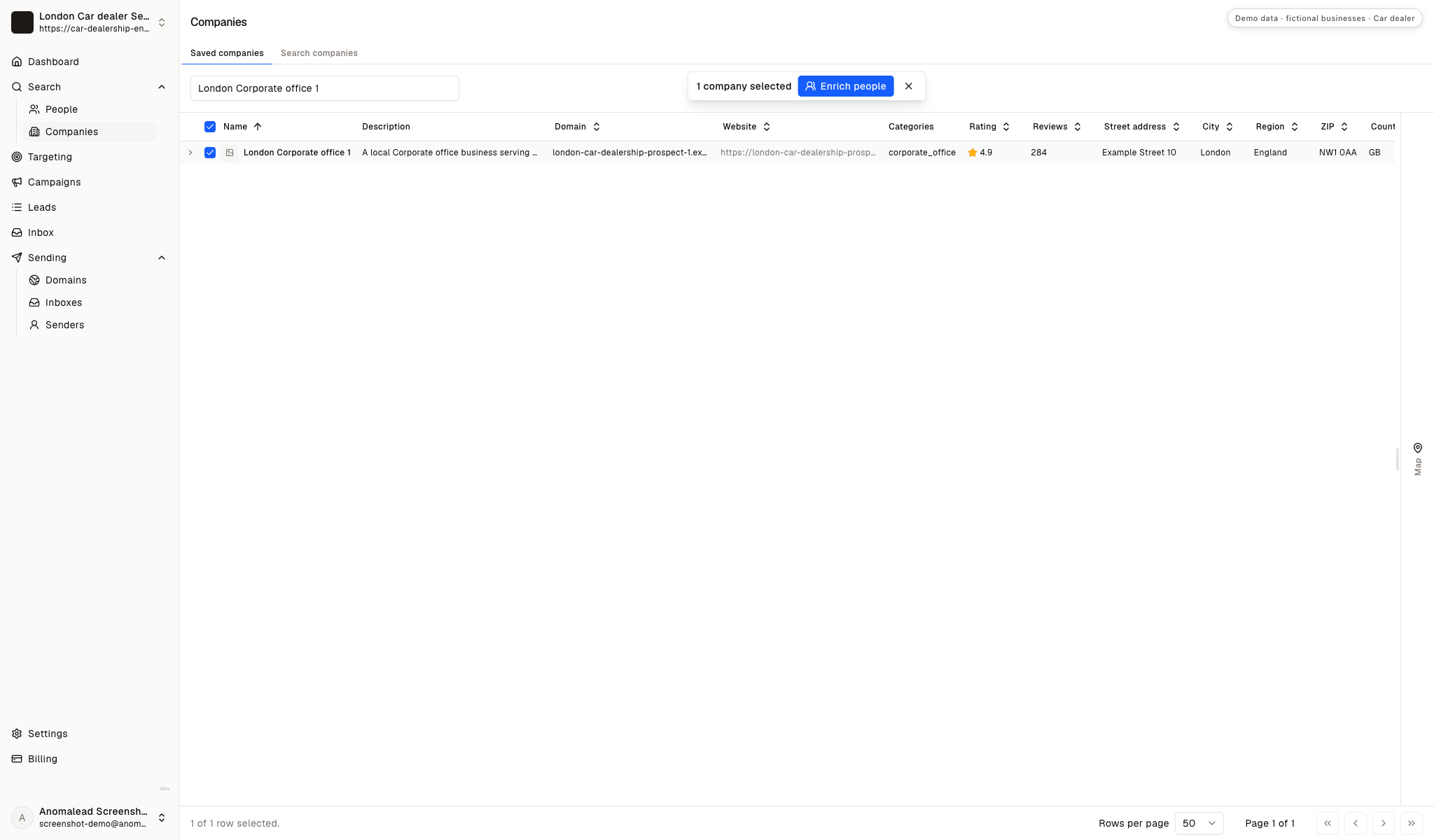
Find the person responsible for fleet or procurement
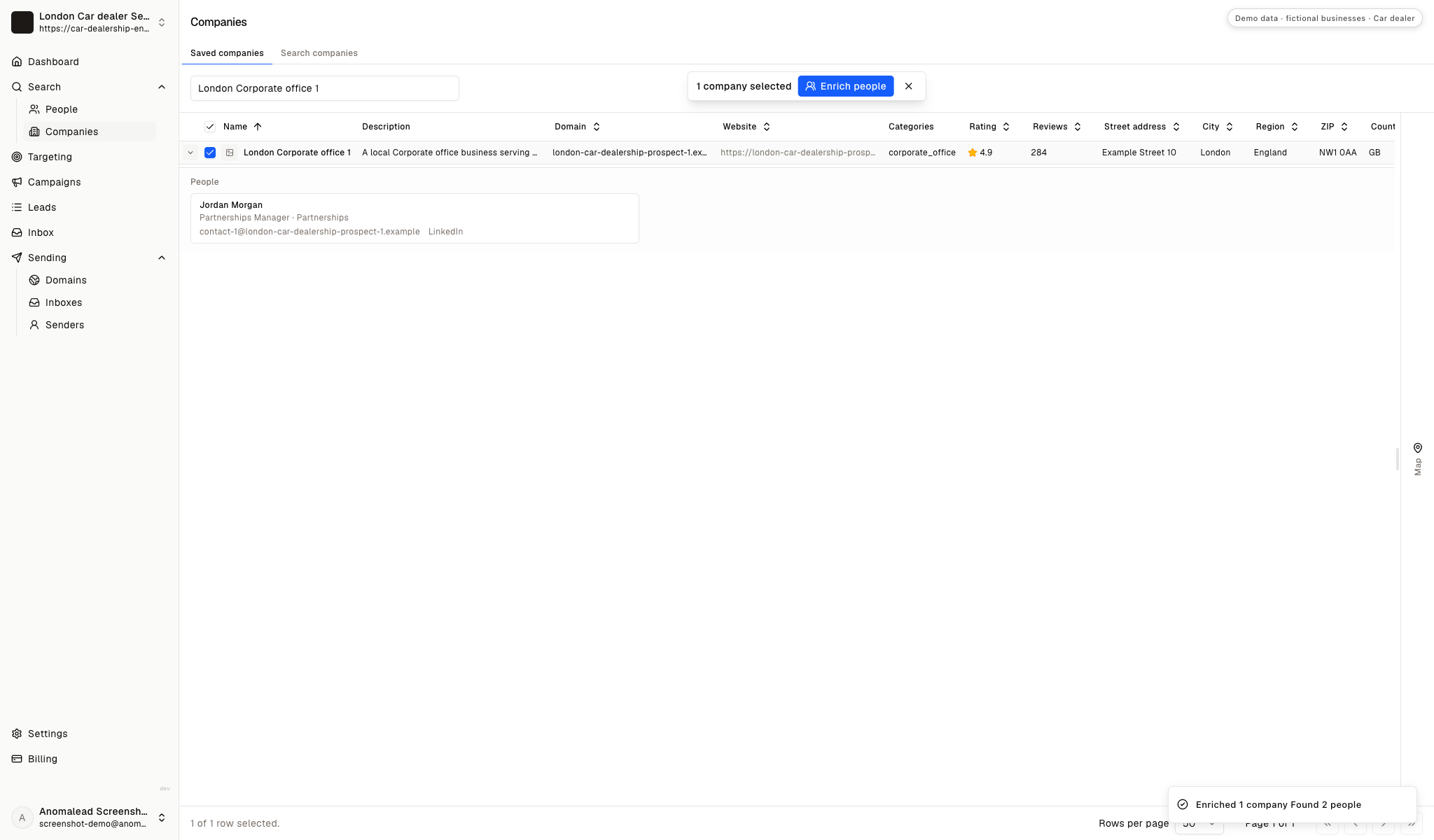
Section titled: Find the person responsible for fleet or procurementEnrich a company only after its public operations make a business vehicle conversation plausible. A fleet manager may own specifications and replacement planning; procurement may compare suppliers; an operations lead may know how vehicles are used. Ask for the person responsible rather than guessing from a title alone.
Check the contact name, role, and business email against the company’s own site or another current public source. Update or remove a record when the role changes. Keep notes about business fit and the next question, not assumptions about a staff member’s personal vehicle needs.
Recheck the shortlist before contact research
Section titled: Recheck the shortlist before contact researchThe fictional record does not confirm vehicle use or a procurement project.
Find the person who owns the business vehicle discussion
Section titled: Find the person who owns the business vehicle discussionVerify who owns fleet, supplier, or procurement discussions before writing.
Keep a focused list of business decision-makers
Section titled: Keep a focused list of business decision-makersKeep the list about business roles, not personal vehicle assumptions.
Is developing a business fleet relationship worthwhile?
Section titled: Is developing a business fleet relationship worthwhile?A dealership relationship can open a conversation about vehicle requirements, trade-ins, finance, and future availability. Its value depends on the business need, sales-team time, the vehicles you can support, and whether the purchase process fits your inventory and delivery operations.
Use the calculator with your own assumptions about gross contribution, sales effort, conversations, and possible purchases. It does not predict leads, fleet size, buying timing, finance approval, vehicle availability, or campaign performance.
Enter your own assumptions about contribution, conversations, staff time, and possible purchases. The estimate does not forecast buyer demand, stock, delivery, or finance approval.
Do the math on one good deal
If one new customer is worth thousands, you don’t need magic. You need a few more meetings a month.
Projected monthly results
- Deals closed
- 2.0
- Projected revenue
- £10,000
- Growth plan (1 business)
- £79/mo
- ROI
- 12,558%
Conservative math on meetings you already believe you can book. One closed deal often pays for a year of Anomalead.
If the estimate only works when every business conversation becomes a purchase, revisit the assumptions. A prospect may be comparing options or planning ahead rather than ready to order.
Prepare an accurate first business offer
Section titled: Prepare an accurate first business offerA fleet or procurement contact needs enough detail to decide whether a conversation is relevant. Explain which vehicle categories your team handles, where you can support a buyer, and what the next step could be. Offer to discuss requirements before suggesting a model.
Keep stock, pricing, finance, trade-in, warranty, and delivery statements current. Do not claim savings or availability that the sales team has not verified. Check the advertising and finance disclosure rules that apply in your market before sending a promotion. For a concise structure, see how to write a cold email.
Select recipients who manage supplier or fleet decisions
Section titled: Select recipients who manage supplier or fleet decisionsReview all claims about stock, finance, delivery, and availability before sending.
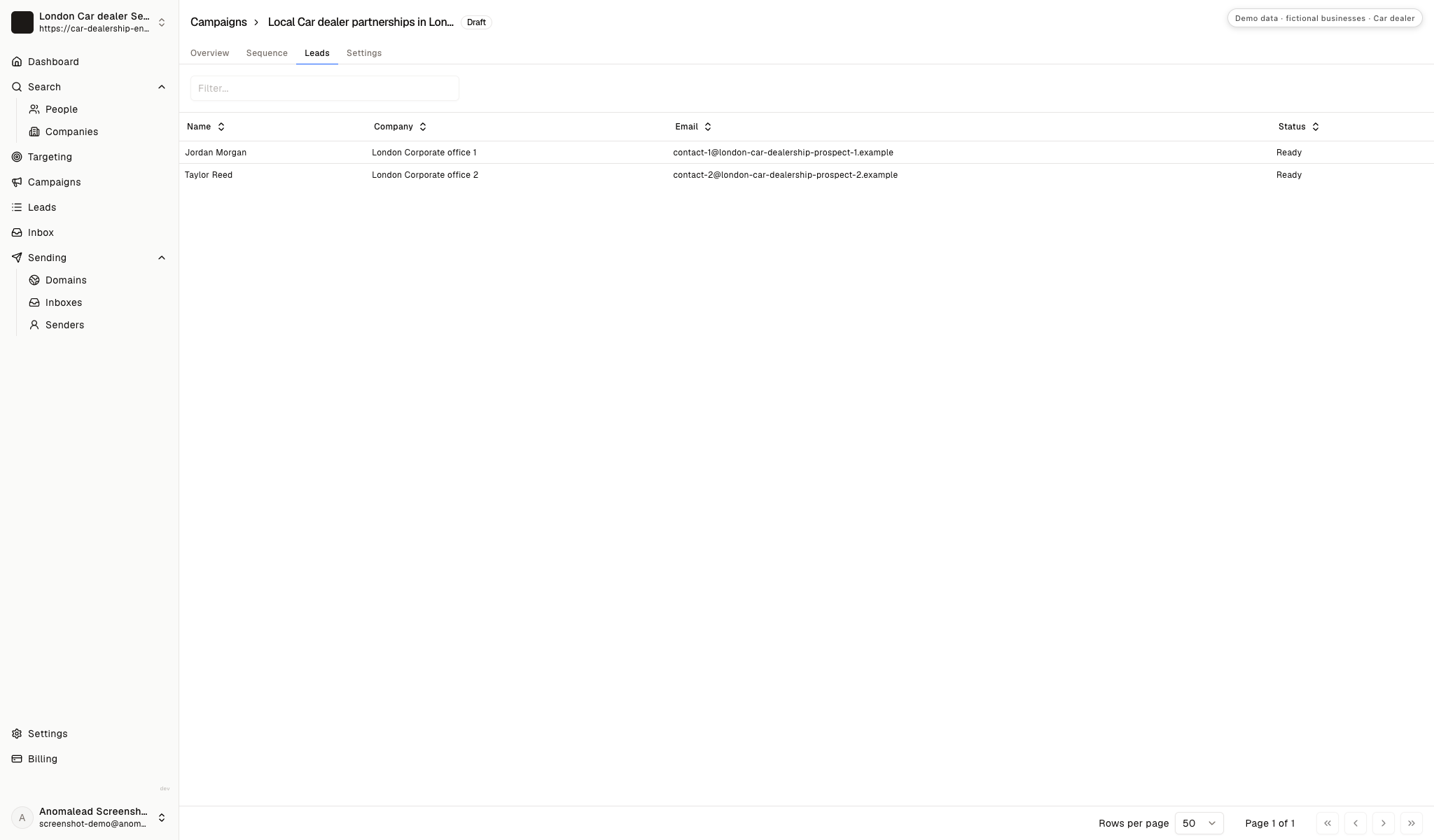
Review follow-ups for accuracy and timing
Section titled: Review follow-ups for accuracy and timingThe displayed wait settings are examples, not a recommended sales cadence.
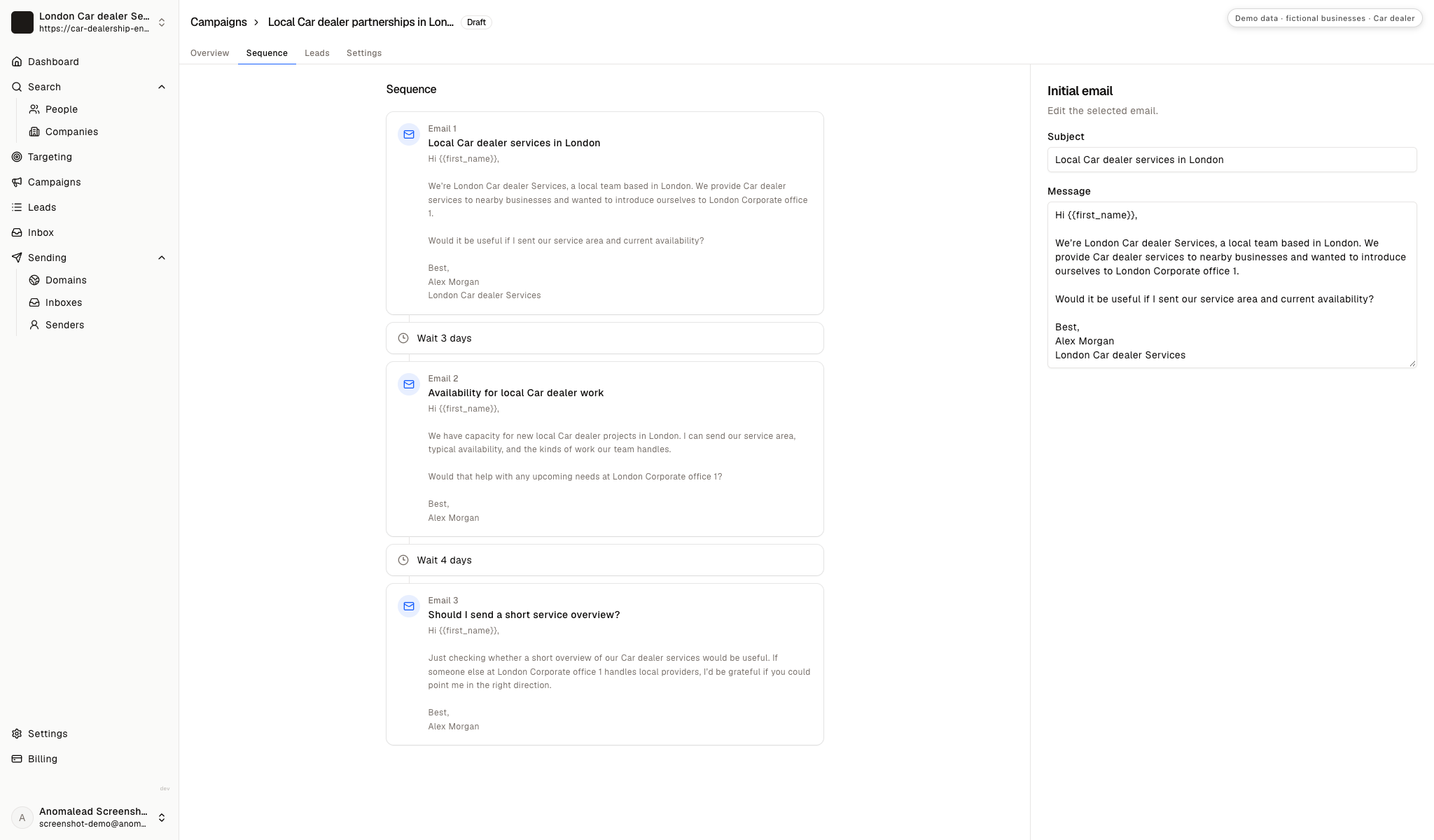
Offer a useful first conversation about company vehicles
Section titled: Offer a useful first conversation about company vehiclesThese examples invite a business discussion; they do not claim that the recipient has a fleet need. Replace the sample service area and vehicle details with facts your dealership can verify.
First email to a business contact
Subject: Company vehicle planning in London
Hi Jordan,
I’m Alex Morgan at London Car dealer Services. We speak with local businesses reviewing vehicles for work teams and company travel. Our sales team can discuss vehicle categories, the locations we serve, and how to check current stock before a buyer decides whether to visit.
If your team reviews company vehicles, I can send a short overview of our business sales process and arrange a conversation about the types of vehicles you need. We would confirm availability and any finance or delivery details before quoting them.
Would a short call about your purchasing process be useful?
Best, Alex Morgan, London Car dealer Services
Follow-up with a practical next step
Subject: A short overview of business vehicle options
Hi Jordan,
I’m following up in case a brief overview of our business vehicle process would help. We can discuss the vehicle classes your team uses, trade-in questions, and how to confirm what is currently available.
If you are not the person who reviews fleet or supplier options, could you point me to the right business contact? I will keep any offer specific to current information and your team’s stated requirements.
If this is not relevant, just let me know and I will close the loop.
Best, Alex Morgan
For a concise subject line, see cold email subject line ideas. Keep claims current and avoid implying a confirmed need.
Read the buyer questions in the shared inbox
Section titled: Read the buyer questions in the shared inboxThese sample questions are not orders or confirmed purchasing plans.
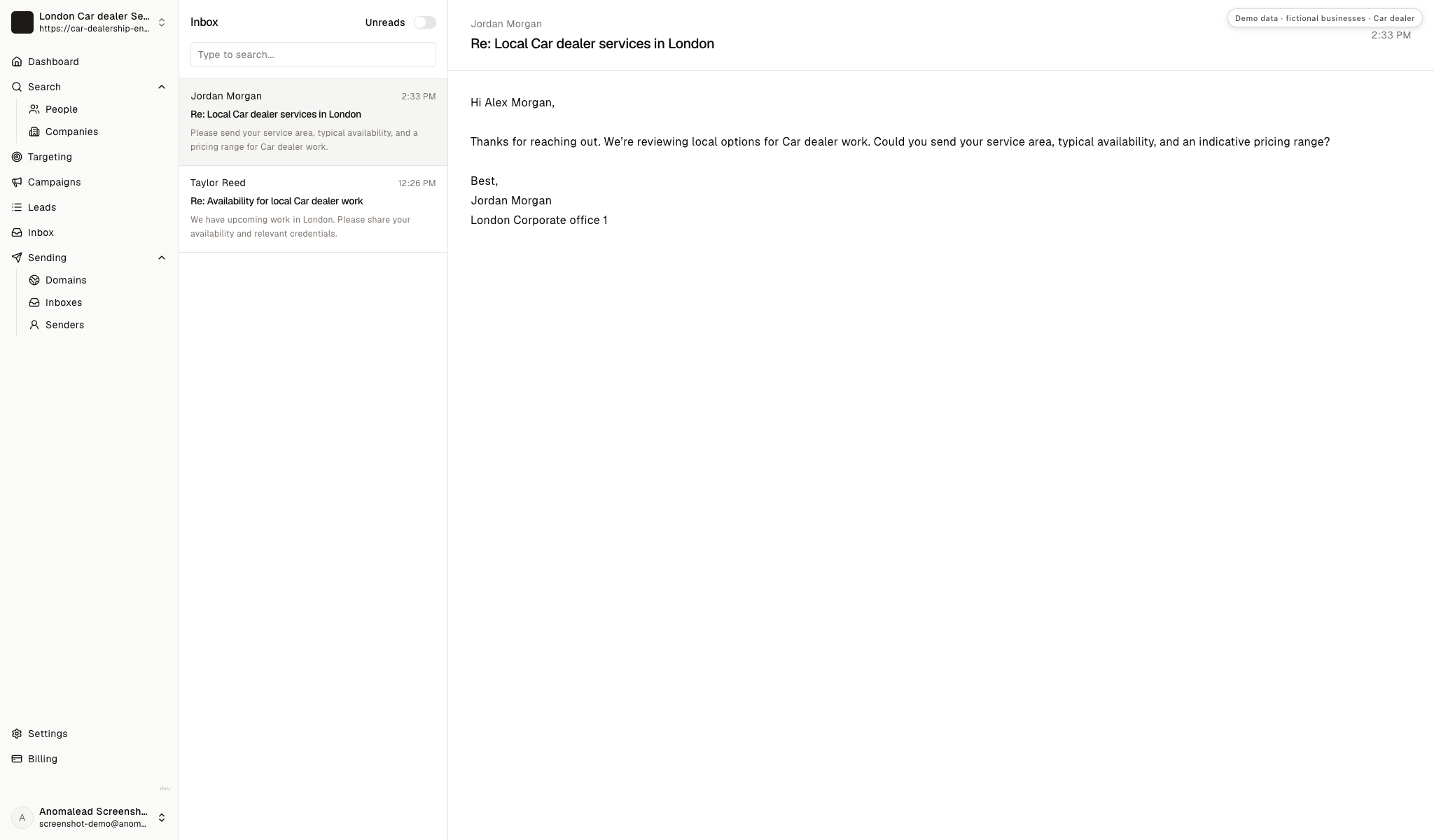
Answer fleet questions without guessing at the purchase
Section titled: Answer fleet questions without guessing at the purchaseRespond to the business requirement the contact actually stated. Confirm changing sales details internally, and keep exploratory questions separate from a purchase commitment.
The contact asks about service area, availability, and pricing
Section titled: The contact asks about service area, availability, and pricingJordan asks where the dealership serves businesses, what may be available, and how a pricing range can be discussed.
Name the dealership locations and service area that the business team currently supports.
Check live stock and the right sales contact before describing a vehicle or expected delivery.
Explain which details affect a quote, such as vehicle class, quantity, specification, trade-in, and purchase route. Avoid sending a made-up range.
A useful reply could say:
Thanks for asking. Our business sales team can confirm the locations we serve and review current availability with you. A quote depends on the vehicle specification and purchase route, so we would confirm those details before sharing figures. If you can tell me which vehicle category your team is reviewing, I can connect you with the right person.
The contact mentions possible upcoming purchases and asks about credentials
Section titled: The contact mentions possible upcoming purchases and asks about credentialsTaylor asks about the dealership’s relevant business experience and the information needed for future purchasing discussions.
Share verifiable dealership information, business sales contacts, and the vehicle categories the team currently handles.
Describe the quote, test-drive, trade-in, finance, or delivery process only where the sales team can confirm the details.
Ask what the business needs before suggesting a vehicle. Do not imply finance approval, stock allocation, or a delivery commitment.
Keep the answer factual:
Thanks for reaching out. I can send an overview of our business sales team and the vehicle categories we handle. If a purchase is being considered, we can discuss the operating requirements and confirm current stock, finance information, and delivery options with the appropriate colleague. Nothing is reserved until the dealership confirms the terms.
The contact shares employee or driver details too early
Section titled: The contact shares employee or driver details too earlyA buyer may send names, routes, or personal vehicle information before the dealership needs it to discuss a business requirement.
Ask for an aggregate requirement, such as vehicle class or operating location, when that is enough for an initial conversation.
Do not copy personal employee details into prospecting notes or forward them to people who do not need them.
Follow your dealership’s privacy process if sensitive information has already arrived.
You could reply:
Thanks for the context. For an initial discussion, a general vehicle category and the locations your team needs to cover should be enough. Please do not send employee or driver details at this stage. We can identify any information needed for a quote if your team decides to continue.
The company already works with a preferred dealer
Section titled: The company already works with a preferred dealerA business may explain that it has an established supplier for company vehicles.
Respect the existing relationship and do not ask for an exception tied to a particular employee.
Ask only whether a general business sales overview would be useful for a future comparison.
Close the sequence if the contact does not want additional messages.
A simple reply is enough:
Thanks for letting me know. We respect your current supplier relationship. If a general overview of our business vehicle categories would be useful for a future review, I can send one. I will not follow up again unless you ask.
Use buyer responses to refine the next company list
Section titled: Use buyer responses to refine the next company listReview which organizations asked about business sales, vehicle categories, service coverage, or the quote process. Separate active questions from general interest and from contacts who own a supplier review. This helps you choose a useful next conversation without treating every reply as an order.
Search for businesses with similar operating needs, then verify each company’s locations and vehicle-related roles through public information. Record the reason for selection, the contact role, and when you checked the details. Remove companies outside your range or sales coverage. A shorter list with a clear business reason makes it easier to keep each offer current and relevant.
See B2B cold email examples for a concise follow-up structure.
Questions about dealership leads and fleet buyers
Section titled: Questions about dealership leads and fleet buyersWhich companies should a dealership approach about fleet sales?
Section titled: Which companies should a dealership approach about fleet sales?Start with organizations whose public operations make work vehicles plausible, such as mobile service, delivery, passenger transport, or multiple-site businesses. Verify who owns fleet, procurement, or operations decisions and confirm that your dealership handles the category and area. A business type alone does not show that a purchase is planned.
Can a corporate-office record confirm that a company owns vehicles?
Section titled: Can a corporate-office record confirm that a company owns vehicles?No. The demo uses generic corporate-office records and does not show vehicle ownership, fleet size, budget, or buying authority. In real research, confirm a relevant business operation and contact role from current public information before making an offer.
Are the businesses and replies in the screenshots real?
Section titled: Are the businesses and replies in the screenshots real?No. London Car dealer Services, London Corporate office 1 and 2, Jordan Morgan, and Taylor Reed are fictional demo data. The inbox replies are examples rather than real buyers, orders, or campaign results.
Does the calculator forecast fleet purchases or finance approval?
Section titled: Does the calculator forecast fleet purchases or finance approval?No. It uses assumptions you enter about sales effort, contribution, conversations, and possible purchases. It does not forecast demand, timing, vehicle stock, delivery, financing approval, or campaign results.
What should a dealership include in an introductory email?
Section titled: What should a dealership include in an introductory email?State the business vehicle categories you handle, the area you serve, and a low-pressure next step such as a conversation about requirements or a current-stock review. Verify claims about price, finance, availability, and delivery before sending. Ask for the right business contact if the recipient does not manage fleet decisions.